November is the coldest month of Mardi Himal's main autumn season, and also one of its most reliable. Rainfall is essentially gone, mountain visibility stays excellent, and the trail is at its driest all year. The trade-off shows up at altitude: High Camp nights sit at −5 °C or colder, and by the back half of the month there's a real, rising chance of snow above 3,500 m. Early-to-mid November is the sweet spot — late autumn conditions without late-autumn crowds.
Is November a Good Time to Trek Mardi Himal?
Yes, with a shape to it. November inherits October's dry, stable weather pattern — by this point the monsoon has been over for weeks in every year on record — but it's colder, quieter, and edges toward winter as the month goes on.
What makes November work: dry trails from day one (no early-month monsoon hedge, unlike October), consistently strong mountain visibility, noticeably thinner crowds than October, and High Camp beds that get easier to find as the month progresses.
What it costs you: real cold, shorter daylight, and — mainly in the second half of the month — a chance of an early snowfall on the exposed ridge above 3,500 m.
Who this suits: trekkers who want October's views without October's crowds, and who are properly equipped for freezing nights.
Who might prefer October: anyone who wants the mildest possible High Camp nights, or who's uneasy about any chance of snow at all. Neither month is objectively better — they trade crowds for cold in opposite directions.
Why November Works for Mardi Himal
Four things line up, and one thing gets harder as the weeks pass.
The air stays clear. November inherits the same post-monsoon clarity that makes October the region's benchmark month. Machhapuchhre and the Annapurna wall don't get any less sharp just because the calendar turned — if anything, drier, colder air can hold even less haze than early-to-mid October.
Rainfall is close to zero. Independent climate records for Pokhara put November's total monthly rainfall at under 20 mm, spread across perhaps one or two days all month — the driest stretch of the year at the valley floor, and the upper trail follows the same pattern. Unlike October, there's no monsoon-withdrawal hedge to build in: by 1 November, the monsoon has finished in every year Nepal's Department of Hydrology and Meteorology has on record, including the unusually late 2025 season.
Crowds thin out. October is Nepal's busiest trekking month. November starts busy — plenty of trekkers simply shift their October plans a week or two later — but eases steadily, and by the last third of the month the trail and the teahouses feel like a different, quieter place.
Cold is the honest cost. High Camp nights run at −5 °C or below through the month and get colder as it goes on. That's a real physical demand on summit morning, not a minor inconvenience, and it's the one thing that makes November a harder sell than October to someone packing casually.
What November doesn't guarantee: a snow-free upper ridge in the back half of the month, or High Camp nights as mild as early October's. It's an excellent month with a and growing cold-weather condition attached, not a loophole that beats October on every metric. 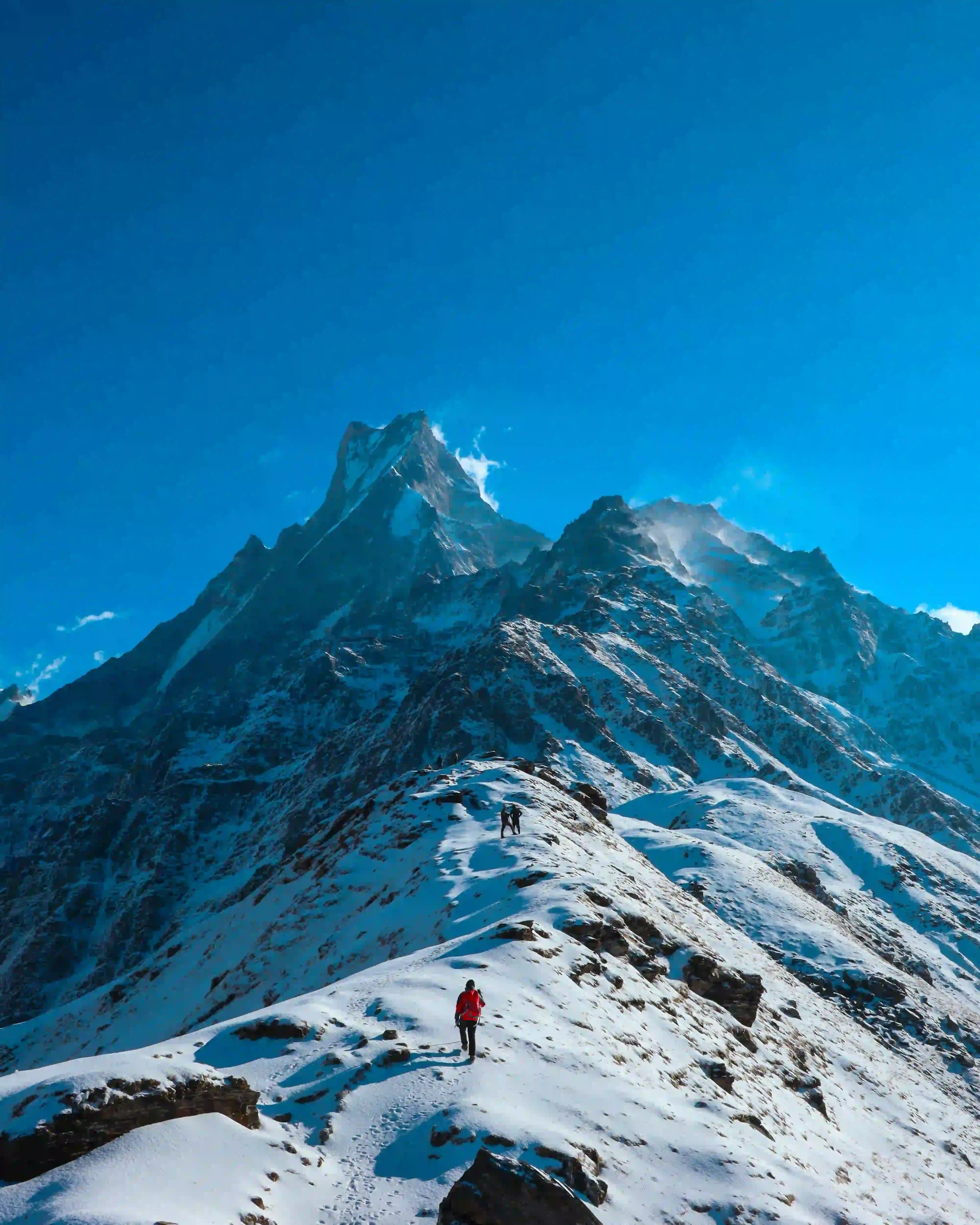
Early, Mid and Late November Are Three Different Treks
This is the section that should decide your dates, so it's worth reading in full.
October's uncertainty is about whether the monsoon has actually left. November doesn't have that problem — it's unambiguously post-monsoon from day one. November's uncertainty runs the other direction: how far the month has slid toward winter by the time you're on the ridge.
Early November (roughly 1st–10th)
What to expect: conditions that are barely distinguishable from late October — dry trail, sharp visibility, and High Camp nights around the −5 °C mark rather than deep into negative double digits. Some trekkers who couldn't get October dates shift here deliberately, so the trail can still feel like the tail end of peak season.
Crowds: still meaningful. Teahouse demand at High Camp hasn't dropped off yet, and booking a night or two ahead through your guide is still sensible.
Snow risk: low. Early-season snow events on this specific ridge are uncommon this early, though not unheard of in an unusual year.
Mid November (roughly 11th–20th)
What to expect: the month's clearest transition window. Mornings stay reliably clear, the trail is fully dry, and cold has become a settled fact of evenings and nights rather than an occasional dip. Daytime walking is still comfortable in layers.
Crowds: noticeably lighter than early November and lighter again than any part of October. High Camp is easier to secure, though it's never empty in a normal season.
Snow risk: still generally low, ticking upward toward the back end of this window. This is arguably the best-balanced ten days of the entire autumn season on this route — October's weather reliability with a materially quieter trail.
Late November (roughly 21st–30th)
Driest, clearest, coldest — and the window where winter starts to arrive early. Air clarity is at its best all month. The lower forest has fully turned amber and gone quiet.
The cost is temperature and timing. High Camp nights commonly run colder than −5 °C by this point, occasionally reaching toward −10 °C on a still, clear night. Daylight is at its shortest of the season, which matters on Day 4's long out-and-back.
And this is when the odds of snow rise. Multiple independent trekking and climate sources place the first reliable snow probability above 3,500 m in the Annapurna region from around mid-to-late November, and Places Nepal's own seasonal notes for this route flag late November as the point where a first serious snowfall above 3,500 m arrives in some years. It isn't universal — some years stay dry into December — but from this point on, asking your guide about current upper-ridge conditions before the summit push stops being optional caution and starts being standard practice.
| Early Nov | Mid Nov | Late Nov |
|---|
| Feel | Late-October carryover | Clearest, most balanced | Coldest, driest, quietest |
| Rain risk | Essentially none | Essentially none | Essentially none |
| Visibility | Excellent | Excellent | Best of the month |
| Trail | Dry, firm | Dry, firm | Dry, firm, possible frost |
| Crowds | Still busy | Easing | Quietest of the season |
| High Camp nights | Around −5 °C | −5 °C to colder | Often colder than −5 °C, occasionally near −10 °C |
| Snow above 3,500 m | Low probability | Low, rising later in the window | Real and rising possibility |
| Daylight | Shrinking | Shrinking | Shortest of the month |
Mardi Himal November Weather by Altitude
Quoting Pokhara's temperature as though it describes the trek is the most common mistake in seasonal trekking content, and it matters even more in November than in October, because the gap between valley and ridge is at its widest all autumn.
Pokhara (827 m). Independent climate records put November days in the high teens to low-mid 20s °C, cooling steadily through the month, with nights around 7–12 °C. This is the mildest, least representative point on the whole route.
Phedi and the lower trail (1,130–1,650 m). Comfortable and mild by day, pleasant walking weather. The stone-step climb out of Phedi still works up a sweat even in November's cooler air.
Pitam Deurali (1,925 m). Comfortable in the afternoon sun, cool enough after dark that a fleece stops being optional on the first night.
Low Camp (2,985 m). This is where November announces itself. Nights sit close to or below freezing, and the open-ridge wind here can bite harder than the thermometer suggests.
High Camp (3,550 m). Cold, full stop. Nights at −5 °C or colder are the norm rather than the exception from here on, trending colder as the month progresses. A sleeping bag rated to at least −10 °C stops being a nice-to-have in November.
Mardi Himal Base Camp (4,500 m). Cold and exposed, and you arrive not long after a 04:30 departure — the coldest window of the whole day, on the coldest ground on the route. Wind on the exposed ridge matters as much as the number on the thermometer.
November temperature table
| Location | Elevation | Typical November feel | Daytime | Night / early morning |
|---|
| Pokhara | 827 m | Mild, driest month of the year | 19–24 °C | 7–12 °C |
| Phedi / lower trail | 1,130–1,650 m | Comfortable, sweaty on the climb | 17–22 °C | 7–11 °C |
| Pitam Deurali | 1,925 m | Comfortable day, cool evening | 16–21 °C | 6–10 °C |
| Forest Camp | 2,550 m | Cool and dry under the canopy | 12–16 °C | 2–6 °C |
| Low Camp | 2,985 m | Cold nights, sharp ridge wind | 8–13 °C | −1 to 3 °C |
| High Camp | 3,550 m | Cold, freezing overnight, colder late month | 4–8 °C | −5 to −10 °C |
| Mardi Himal Base Camp | 4,500 m | Cold and exposed, coldest at sunrise arrival | 0–4 °C | −12 to −7 °C |
Read this table as a range, not a forecast. These figures describe how November usually behaves on this route based on our own operating experience and published climate records for the region — they aren't a guarantee for any specific date, and late November consistently runs colder than early November at every altitude on this list.
Does It Rain on Mardi Himal in November?
Essentially no. November is the driest month of the year on this route, more reliably so than October, which still carries a monsoon-tail risk in its first week or two. By November there's no such hedge — independent records for Pokhara show total monthly rainfall under 20 mm, often falling on a single day, if it falls at all.
What this means in practice: no mud on the Pitam Deurali–Low Camp forest section, no leeches (a monsoon problem that's long gone by November), and no rain gear drama. It also means the one form of "wet weather" worth planning for in November isn't rain at all — it's the small but real chance of snow at altitude, which behaves completely differently underfoot and is covered in its own section below.
Carry a waterproof shell anyway. It's cheap insurance on a route that can still surprise you, and it doubles as a windproof layer on the exposed ridge, which you'll want regardless of rain.
Are the Mountain Views Good on Mardi Himal in November?
Yes — November holds onto most of October's air clarity, and colder, drier air arguably keeps it that way for longer into the day.
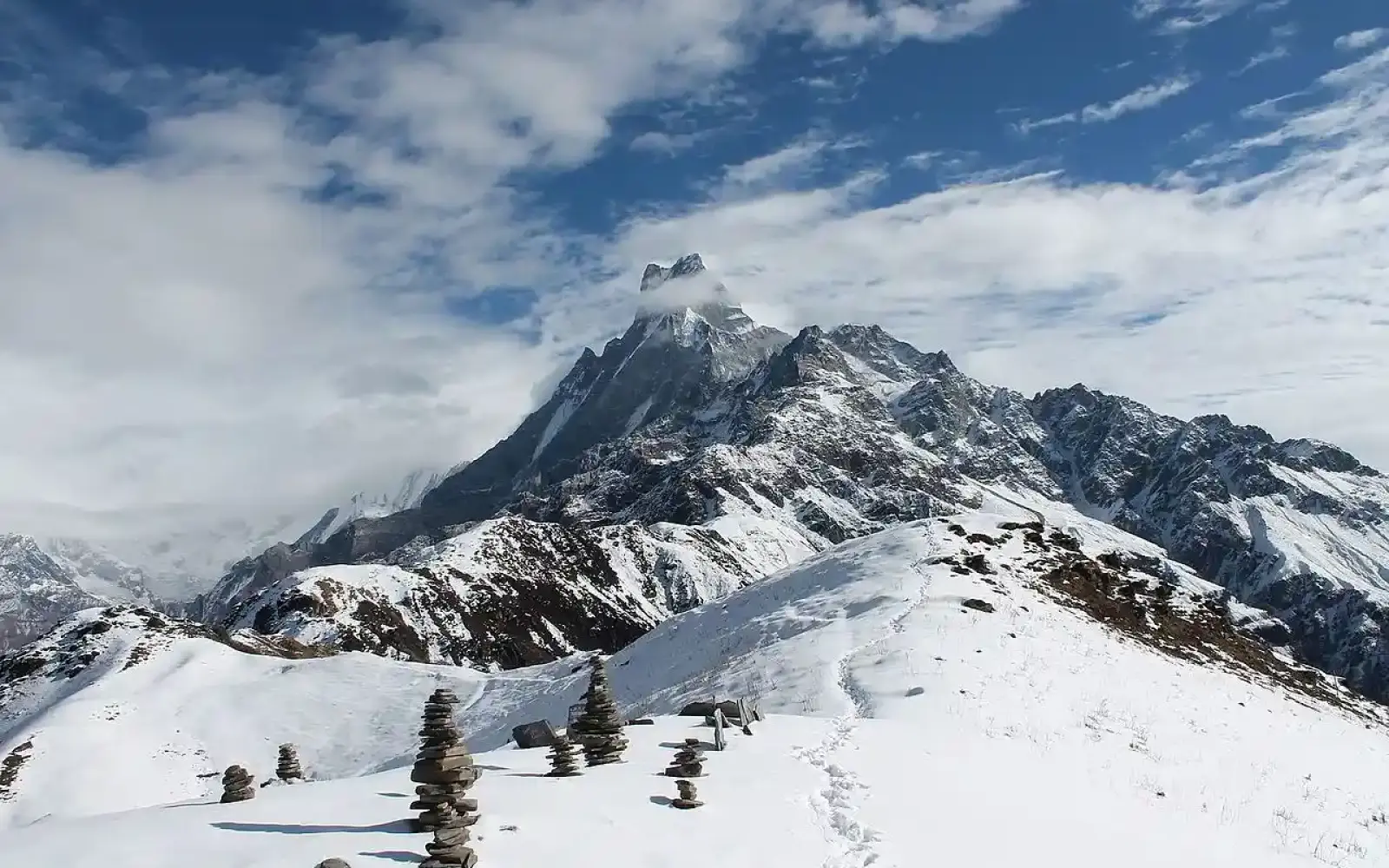
What you'll see: Machhapuchhre (6,993 m) at close range from High Camp onward, Annapurna South (7,219 m) and Hiunchuli (6,441 m) from Low Camp, the Annapurna I–IV line from the upper viewpoint, and Mardi Himal's own summit ridge above Base Camp.
The pattern that decides your view: mornings are reliably clear; cloud tends to build from the valley through the late morning, most days between roughly 10:00 and 11:00. This is exactly why the itinerary leaves High Camp at 04:30 — every hour of delay on Day 4 morning is a worse view at the top, in November as much as October.
The honest caveat: cloud on the exposed upper ridge can roll in inside ninety minutes even on an otherwise clear day, and November's colder air can carry its own fast-moving weather. Excellent odds, not a guarantee. 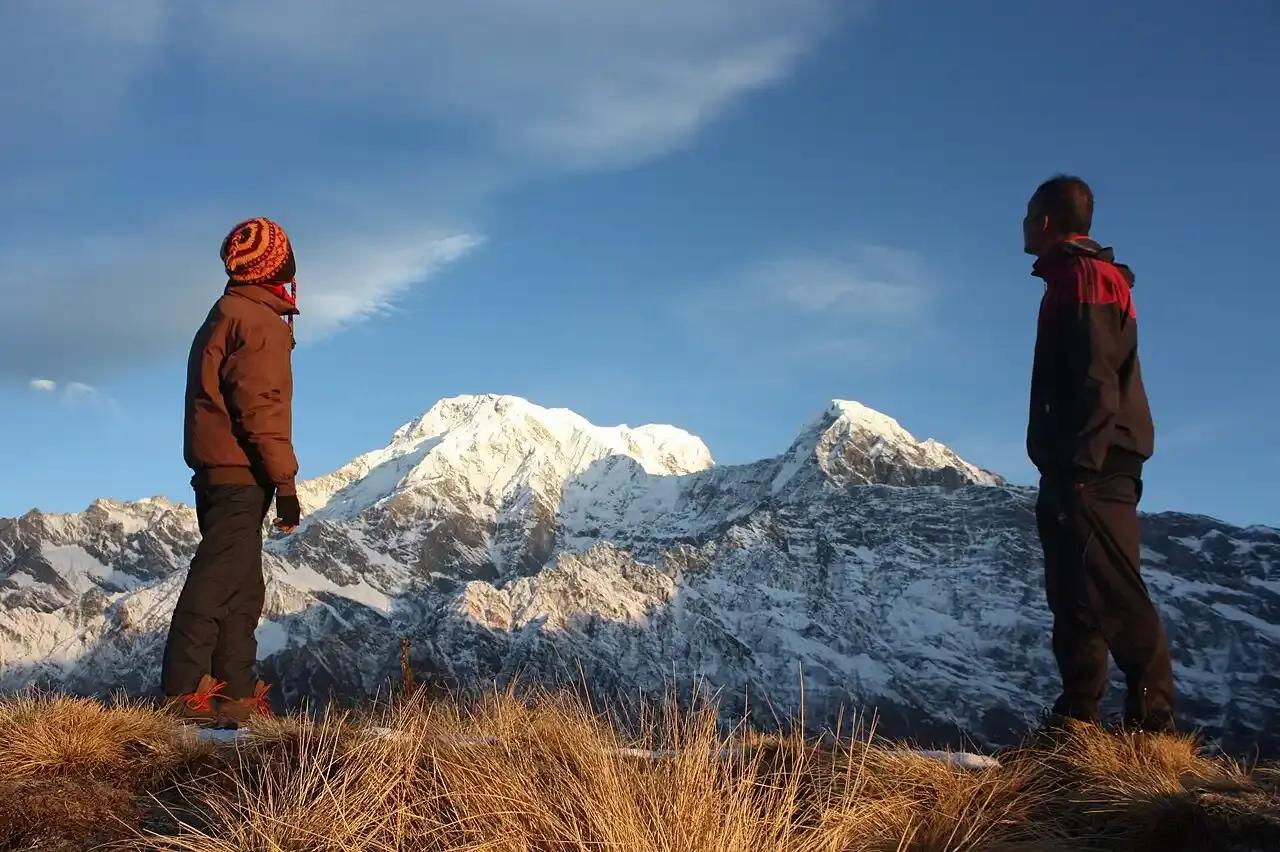
Does It Snow on Mardi Himal in November?
Sometimes — and November is the month where the honest answer stops being "rarely" and starts being "increasingly possible, especially later in the month."
Below about 3,000 m — Pitam Deurali, Forest Camp, Low Camp — snow settling on the ground in November isn't something to plan around.
Above 3,500 m — High Camp and the ridge to Base Camp — this is where it becomes a real consideration. Independent Himalayan trekking sources place the first meaningful snow probability above 3,500 m in the Annapurna region from around mid-November, with the odds rising through the back half of the month. Places Nepal's own seasonal guidance for this specific route flags late November as when the first serious snowfall above 3,500 m tends to arrive in years it happens at all — and it doesn't happen every year.
What a typical event looks like: these are usually short, sharp systems — often 5–15 cm at these elevations with clear skies returning between storms — rather than prolonged multi-day storms. That's meaningfully different from a Himalayan winter snowstorm, and it's worth not picturing one when you read "snow in November."
What it would mean for your trek: if snow does fall on the upper section, the High Camp–to–Base Camp stretch gets slower and needs more careful footing, and microspikes shift from an optional extra to useful kit. One snowfall event doesn't mean the whole route is snow-covered — it affects the exposed ridge above roughly 3,500 m and leaves the lower camps untouched.
We won't tell you there'll be snow on your November dates, and we won't tell you there won't be. What we will say: if you're trekking from around mid-November onward, pack microspikes and ask your guide about current upper-ridge conditions the evening before the summit push, rather than finding out at 04:30.
How Much Daylight Do You Have in November?
Less than October, and it keeps shrinking as the month goes on. Independent sunrise/sunset data for Pokhara puts daylight at a little under 11 hours at the start of November, narrowing toward roughly 10.5 hours by month's end, with sunrise drifting from around 6:20 am toward 6:45 am and sunset pulling in from around 5:25 pm to roughly 5:10 pm.
Why this matters on the trail: ridge terrain can push local sunrise later and sunset earlier than the valley numbers by anywhere from a few minutes to half an hour, depending on which side of the ridge you're standing on. Combined with the cold, this is exactly why the 04:30 departure on Day 4 is treated as fixed rather than a suggestion — a late start eats into an already-shorter window before afternoon cloud and dropping temperatures make the descent to Low Camp less pleasant.
Build your other days around finishing walking by mid-to-late afternoon rather than pushing into dusk, particularly on Day 2's six-hour forest stretch.
What Are the Mardi Himal Trails Like in November?
Dry, firm, and — unlike October — dry from the very first day of the month, since there's no monsoon tail to wait out.
Throughout the month: the trail is well-defined and well-marked from Phedi to Base Camp, and its character shifts three times exactly as it does in October — stone steps low down, rooted forest through the middle third, open alpine ridge above the treeline. None of that changes with the season; what changes is the surface underfoot.
Frost, not mud. Where October's risk is residual monsoon mud on the forest sections, November's equivalent is morning frost on the upper trail, particularly from mid-month onward. It clears with the morning sun on most days but can leave a slick first hour if you're moving before full light.
Late in the month, watch the upper ridge specifically. After any snowfall event above 3,500 m, the High Camp–to–Base Camp stretch can hold ice in shaded sections even once the snow itself has mostly gone. This is the one part of the trail where November behaves differently from October, and it's worth asking your guide directly rather than assuming dry ground.
The Route in November
Pokhara → Phedi → Pitam Deurali → Low Camp → High Camp → Mardi Himal Base Camp → Low Camp → Siding → Pokhara
This is the Places Nepal 5-day itinerary, and it's what every day-by-day section below refers to. Other Mardi Himal routes exist — starting from Kande via Australian Camp, or exiting through Landruk or Ghandruk — and they're legitimate alternatives, just not this one.
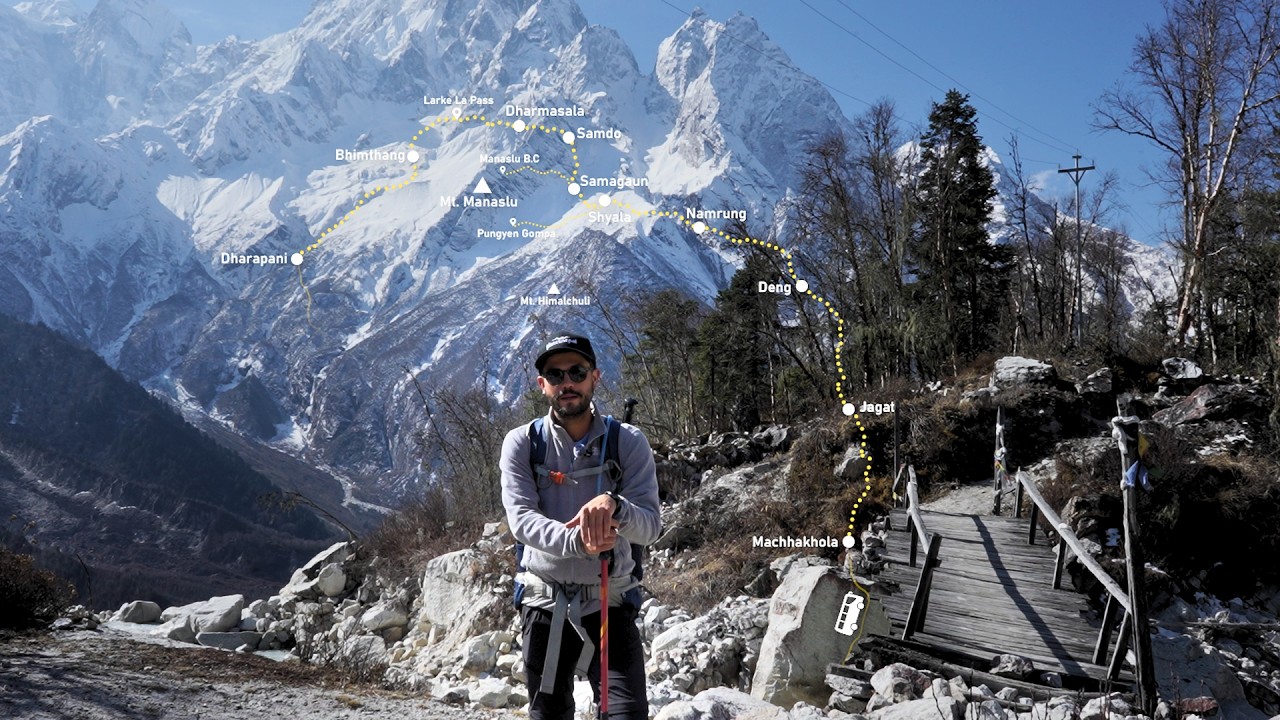
For November specifically, the useful thing to take from the map is the altitude ladder: 827 m to 4,500 m across four days of ascent, with the weather changing character at roughly 3,000 m regardless of month. This map shows the recorded route, not current conditions — check trail status with your guide close to departure, particularly if you're trekking after mid-November. Full route and elevation detail is in our Mardi Himal Trek map guide.
Mardi Himal Trek in November: Day-by-Day
Day 1 — Pokhara → Phedi → Pitam Deurali (1,925 m)
How it feels: comfortable rather than sweaty — November's cooler air takes the edge off the stone-step climb out of Phedi that makes this hour hard work in October. The trail climbs almost immediately through Gurung farmland and terraced fields to Dhampus (1,650 m), then along the ridge to Pitam Deurali. Around 4 hours of walking and 1,098 m of gain from Pokhara.
Wear: light layers for the climb, with a fleece and shell in the daypack for the moment you stop moving. Sun is still strong at this elevation even in November.
Evening: cool enough at Pitam Deurali for a proper fleece after dark. This is the first night you'll notice the season.
Day 2 — Pitam Deurali → Forest Camp → Low Camp (2,985 m)
The longest walking day on the itinerary: roughly 6 hours, 10 km, and 1,060 m of climbing through dense rhododendron and oak forest.
Trail conditions: dry and firm throughout in November, without the lingering monsoon dampness that can slow this section in early October. Tree roots still crisscross the path regardless of season — trekking poles help.
Temperature shift: this is the day the trek changes climate, in any month. You start in mild forest and finish somewhere approaching freezing overnight. Have your fleece and shell accessible before you break out of the trees at Low Camp — November's ridge wind at the top of this climb is sharper than October's.
Views: limited through the canopy for most of the day; the reward arrives at Low Camp, where the trail breaks onto open ridge and the Annapurna range appears.
Day 3 — Low Camp → High Camp (3,550 m)
The shortest full walking day: around 4 hours and 565 m of gain, past Middle Camp and Badal Danda (3,210 m) — "cloud hill" — onto increasingly open ridge above the treeline.
Wind and exposure: with tree cover gone, wind becomes a real factor for the first time on the trek, and it carries more bite in November's colder air than it does in October.
Layering matters most today. You may be in a base layer under sun at midday and in an insulated jacket standing still by mid-afternoon. Layers you can add and remove without stopping are worth more than one heavy coat.
Arriving: High Camp at 3,550 m is the highest you sleep. Nights here sit at −5 °C or colder in November and keep dropping as the month goes on. A sleeping bag rated to at least −10 °C is the right call, not a precaution.
Day 4 — High Camp → Mardi Himal Base Camp → Low Camp
The day the whole trek is built around, and the day November's cold is most obvious.
04:30 start, in the dark, at or below freezing. This is the coldest you'll be all trek, and in November that cold has real teeth. Frost on the ground is normal. You're climbing an exposed ridge into whatever wind exists, before sunrise, with less daylight margin than October affords. Warm hat, insulated gloves, and a jacket you can actually walk in, plus a headlamp with fresh batteries and a spare set.
Why the early start matters even more in November: shorter days mean less buffer if the pace slows, and clear mornings are still the month's gift — cloud builds from mid-morning, same pattern as October. Reaching the Upper Viewpoint (4,200 m) for sunrise and Base Camp (4,500 m) by around 08:00 is what buys the view.
Ice and snow: possible on the upper section from around mid-November after any snowfall event, more likely by late November. Ask your guide or teahouse host about current conditions the night before rather than finding out at 04:30.
Then the descent: 1,515 m back down to Low Camp in the afternoon. Dry, frosty ground makes this firmer underfoot than October's early-month mud, but tired legs and loose rock are a constant regardless of season. Poles from the top.
Turning around at the Upper Viewpoint is a complete outcome, not a failure, in November as in every month — it offers nearly the same panorama as Base Camp for meaningfully less exposure to cold and wind.
Day 5 — Low Camp → Siding Village → Pokhara
A 2.5-hour descent southwest to Siding (1,700 m) — 1,285 m of downhill through progressively warmer, greener country — then roughly 1.5 hours by road back to Pokhara.
Temperature reverses fast. What felt cold at breakfast is comfortable by mid-morning as you drop altitude; start in layers you can shed.
Trail: dry and generally good by November. Tired legs plus loose gravel is the standard late-trek hazard in any season — keep the poles out.
Arrival: Lakeside, a hot shower, and a proper meal. Give yourself a rest day in Pokhara before a long onward journey — five days at altitude, including several cold nights, is real physical work.
Mardi Himal Trek November Packing List
The design problem is the same one October poses, just shifted colder: a single day that can span more than 25 °C between Phedi at midday and Base Camp at dawn. Layers solve it; one heavy coat doesn't.
- Broken-in waterproof trekking boots with good ankle support
- Moisture-wicking base layers, 2–3 sets
- Fleece or softshell mid-layer
- Insulated down jacket — non-negotiable for High Camp and Base Camp
- Waterproof and windproof shell jacket and trousers
- Sleeping bag rated to at least −10 °C
- Warm hat and a separate sun hat
- Insulated gloves for summit morning, lighter gloves for daytime
- Buff or neck gaiter — wind on the upper ridge matters as much as temperature
- Sunglasses with UV protection and SPF 50 sunscreen
- Headlamp with spare batteries
- Trekking poles
- Water bottles or bladder, 2–3 L, plus purification
- Power bank — cold drains batteries faster at High Camp
- Personal medication and a basic blister kit
- Microspikes if trekking from around mid-November onward — worth asking your guide about current conditions before you decide to carry them
The full category-by-category list, including toiletries and miscellaneous items, is on the Mardi Himal Trek page.
Do You Need Winter Gear for Mardi Himal in November?
Partly, and it depends on where you are in the month.
Early-to-mid November asks for a strong three-season kit: insulated down jacket, −10 °C sleeping bag, proper gloves and headwear. This isn't winter equipment yet — it's the upper end of autumn gear, taken seriously.
Late November starts to blur into early-winter territory. If snow has fallen on the upper ridge, microspikes move from "worth packing" to useful, and an extra warm layer for the pre-dawn Day 4 start is a reasonable addition.
What you don't need, in a normal November: crampons, an ice axe, or mountaineering-grade insulation. Those become relevant from around December onward, once winter conditions are the rule rather than an occasional late-month possibility. Don't over-equip for a scenario that's still the exception in November — a solid layering system plus microspikes as insurance covers the range of what actually happens.
Is Mardi Himal Crowded in November?
Less than October, and progressively less as the month goes on — this is one of November's clearest advantages.
Early November still carries some of October's energy. Trekkers who couldn't get October dates often shift a week or two later, so Forest Camp and High Camp can still feel busy, particularly on weekends.
By mid-to-late November, the trail eases considerably. Teahouses that were full-and-phoning-ahead in October have real spare capacity, and long stretches of ridge feel quiet without sacrificing the weather that makes autumn worth trekking in.
High Camp remains the pressure point in any part of November, simply because it has very few lodges regardless of season. Trekking with a guide who calls ahead from Low Camp is still the most reliable way to guarantee a bed, though the margin for error is far more forgiving in November than in peak October.
The honest comparison: November never reaches October's crowds, and definitely doesn't reach solo-feeling emptiness the way January or February can. It sits in the comfortable middle — enough other trekkers for company and easy navigation, few enough that the ridge doesn't feel managed.
Should You Book Mardi Himal in November?
Yes, though the urgency is lower than October's.
Early November is worth booking a couple of weeks out, mainly because some trekkers treat it as an October extension and demand hasn't fully eased yet.
Mid-to-late November is more forgiving. Accommodation pressure drops, transport is easier to arrange on shorter notice, and guides have more flexibility. That said, our fixed group departures run on set weekly dates through the month and are marked as guaranteed to run — booking ahead is still the way to lock in a specific week rather than hope one has space.
There's no need for urgency-for-its-own-sake here: November gets easier to book as it progresses. If your dates are flexible, that's useful information in itself.
How Much Does the Mardi Himal Trek Cost in November?
The package price doesn't change in November, or in any month. Rates are flat year-round:
| How you book | Price per person |
|---|
| Solo private trek | US$470 |
| Private trek, 2–5 people | US$360 |
| Private trek, 6–10 people | US$340 |
| Private trek, 11–15 people | US$300 |
| Joining a fixed group departure | US$360 |
Included: a government-licensed, English-speaking guide; ACAP and TIMS permits plus government fees; teahouse accommodation throughout; all meals on the trek; private transfer from Pokhara to Phedi and a shared jeep back from Siding; and all guide and porter expenses.
Not included: travel insurance covering trekking to 4,500 m and helicopter evacuation (non-negotiable — arrange this before you fly); porter service (US$130 for the trek, one porter shared between two trekkers, 20 kg); the Nepal visa; hotels and meals in Kathmandu or Pokhara; and personal spending on the trail.
Where November can cost less than October, indirectly: flights into Nepal and hotels in Kathmandu and Pokhara tend to ease off their October peak pricing as the month goes on, particularly by late November. The trek package itself is identical either way.
Full breakdown of where the money goes is in our Mardi Himal Trek cost guide.
Is Mardi Himal Difficult in November?
The trek's underlying difficulty rating — 3.5 out of 5, moderate to challenging — doesn't move with the calendar. The altitude, the roughly 3,700 m of cumulative climbing, and the 1,515 m Day 4 descent are identical in every month. What November changes is the conditions those numbers get attempted in.
What November makes easier: a dry, firm trail without October's early-month mud risk; excellent, predictable morning visibility; and a quieter High Camp, which usually means a better night's sleep before the hardest day.
What November makes harder: cold nights and a colder pre-dawn start than October offers, shorter daylight to work with, and — mainly from mid-month on — the added judgement call of possible ice or snow on the exposed upper ridge.
Net effect: November and October land in a similar place on overall difficulty, trading October's crowds and slightly milder nights for November's quiet trail and colder mornings. Neither one is the easy version of this trek. The full day-by-day difficulty breakdown is in our Mardi Himal Trek difficulty guide.
Is Mardi Himal Good for Beginners in November?
Yes, with the same honest caveat that applies to every month: "good for beginners" doesn't mean easy.
What November gives a first-timer: dry, predictable trail conditions; strong visibility; a quieter trek than October's peak-season version, which can make a hard trail easier to focus on; and full teahouse service throughout.
What November doesn't change: the altitude is still 4,500 m at Base Camp and 3,550 m at High Camp. Day 4 is still 950 m up and 1,515 m down in 7–8 hours. And November adds one specific demand October doesn't ask for as strongly: cold-weather discipline on summit morning, when temperatures are lower and daylight shorter.
If you're a beginner choosing November dates: early-to-mid November gives you the most autumn-like conditions with the least crowding. Late November is entirely doable for a trained, well-equipped beginner, but it's the point in the season where preparation matters most. Our Mardi Himal Trek for beginners guide covers the honest fitness and training picture in full.
Is November Good for a Solo Mardi Himal Trek?
Yes — November sits alongside October as one of the two best months of the year to trek this route alone, and by some measures it's the more comfortable of the two for a solo traveller.
What helps: enough other trekkers on the trail for company and easy navigation, especially in the first half of the month; teahouses fully staffed and open throughout; and — unlike October — a trail that gets quieter rather than busier as your trek goes on, if you're trekking later in November.
What doesn't change: foreign nationals still need a licensed guide from a registered agency throughout the Annapurna Conservation Area, in November as in every month. Being around other trekkers reduces risk; it doesn't replace proper preparation, insurance, or honest self-monitoring for altitude symptoms.
For solo female travellers specifically: November's combination of decent trail traffic and manageable teahouse demand makes it one of the more comfortable months to trek alone, without needing to navigate October's fullest lodges. The same practical basics apply regardless of season — share your itinerary with someone before you start, confirm room arrangements at busier camps rather than assuming, and raise any preferences about your guide directly with your operator at booking.
Full detail on solo rules, costs, and the group-versus-private decision is in Mardi Himal Trek solo.
Which Trekker Type Fits November?
| Trekker type | November verdict |
|---|
| First Himalayan trek | Good, especially early-to-mid month. Train properly; the cold adds a real demand October doesn't ask for as strongly |
| Regular hiker, no high-altitude experience | Strong fit. Dry trail and good visibility reduce the unknowns; the cold is the main new variable to plan for |
| Experienced high-altitude trekker | Excellent. Quieter trail, still-strong views, and conditions well within normal operating range |
| Solo experienced trekker | One of the two best months of the year for this, alongside October |
| Dislikes cold | Reconsider, or commit to warm kit. This is the coldest reliable month of the main season |
| Wants quieter trails without giving up views | November is close to the best answer available — particularly the back half of the month |
How to Check Mardi Himal Weather Before Trekking in November
Four different things get called "the forecast," and they're useful at different distances from your trek — the same distinction that matters for October, but with a colder margin for error in November.
Seasonal expectations (months out). The temperature table earlier in this guide is exactly this — historical pattern, not prediction. Useful for packing and choosing dates; not useful for a specific day.
Extended forecasts (7–14 days out). Broad direction only. In November, watch particularly for any signal of an incoming cold snap or precipitation system, since that's what would bring snow to the upper ridge.
Short-term mountain forecasts (1–3 days out). The most useful window. Look for forecasts that model by altitude rather than giving one number for the whole region.
Local, current conditions. The best source, and free: teahouse hosts at Low Camp and High Camp know what the ridge has actually been doing, and your guide will be asking them directly, especially from mid-November onward when upper-ridge conditions become more variable.
No forecast is reliable at 3,500–4,500 m on an exposed ridge, in November or any month. Use forecasts to plan the trip and local knowledge to make the call on the morning.
What Happens If It Snows on Mardi Himal?
A practical answer, not a dramatic one.
If snow falls on the upper ridge: the High Camp–to–Base Camp section takes longer, footing needs more care, and your guide may bring microspikes into use or adjust the summit-morning timing. Visibility can also drop, which affects the case for continuing versus turning back.
What usually doesn't happen: the whole route shutting down. A November snowfall event affects the exposed ridge above roughly 3,500 m and leaves Low Camp and everything below it essentially unaffected. Teahouses stay open and operating.
The turn-around point still works exactly as it does in clear conditions. The Upper Viewpoint at 4,200 m offers nearly the same panorama as Base Camp, and reaching it counts as a complete trek if conditions above it aren't cooperating.
We're not going to promise your itinerary runs exactly as planned regardless of weather — it shouldn't, on a route that reaches 4,500 m. A guide who adjusts the plan when conditions call for it is doing the job correctly, not failing to deliver what you booked.
Mardi Himal Trek in October vs November
| Factor | October | November |
|---|
| Rainfall | Low from mid-month; early October can still carry monsoon tail | Essentially none, from day one |
| Temperature | Freezing overnight at High Camp by month's end | Colder throughout; −5 °C or below at High Camp for most of the month |
| Visibility | The year's benchmark month for clarity | Excellent, close behind October |
| Snow chance | Low, rising slightly very late in the month | Low early, rising meaningfully from mid-month |
| Crowds | Busiest month of the year | Busy early, easing considerably by late November |
| Daylight | Longer than November | Shorter, and shrinking through the month |
| Trail conditions | Mud risk early month, firm and dry later | Dry and firm throughout |
| Beginner suitability | Best of the year, if you avoid the first week | Excellent, especially first half of the month |
| Overall feel | Reliable and busy | Reliable, colder, and considerably quieter |
Choose October if you want the single clearest air of the year, the mildest High Camp nights of the autumn season, and don't mind sharing the trail with everyone else who read the same advice.
Choose November if you want October's core weather reliability with meaningfully fewer people, you're properly equipped for real cold, and you're comfortable with a rising — not guaranteed — chance of snow on the exposed ridge from mid-month on.
Full month-by-month detail for October specifically is in Mardi Himal Trek in October.
Early November vs Late November
| Factor | Early November | Late November |
|---|
| Temperature | Closest to October's late-month conditions | Coldest of the month; High Camp nights often below −5 °C |
| Crowds | Still busy, October carryover | Quietest window of the season |
| Snow risk | Low | Rising, possible from around mid-month on |
| Daylight | Longest of the month | Shortest of the month |
| Trail conditions | Dry and firm | Dry and firm, with possible frost or ice on the upper ridge |
| Accommodation demand | Book a week or two ahead | More forgiving; easier to arrange on shorter notice |
If you want the more autumn-like experience, aim for the first ten days. If quiet trails matter more than avoiding the coldest nights, the last ten days deliver that trade cleanly.
November vs December
December is where November's trends stop being occasional and start being the rule.
Cold becomes the default, not the exception. High Camp nights that sometimes dip below −5 °C in November are routinely well below it in December, heading toward the −10 to −15 °C range that defines Nepal's winter trekking season on this route.
Snow becomes far more likely. What's a real but rising possibility in late November is closer to an expectation by December, and microspikes shift from situational kit to standard equipment.
Crowds keep thinning. December trades November's still-reasonable trail traffic for something close to solitude — appealing for experienced, well-equipped trekkers, less so for anyone wanting company or a straightforward first Himalayan trek.
December is a legitimate month for this route if you're prepared for it properly. It's a materially different trek from November, not a slightly colder version of the same one.
Permits for the Mardi Himal Trek in November
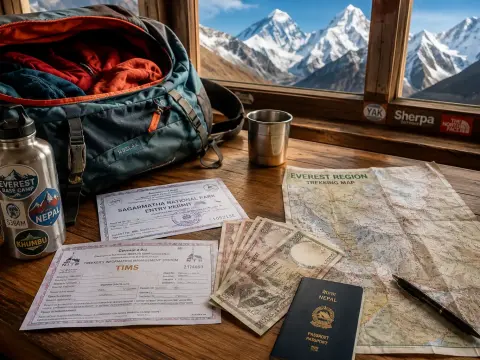
Permit requirements and costs don't change with the season. You need an ACAP permit (Annapurna Conservation Area Permit — NPR 3,000 for foreign nationals, NPR 1,000 for SAARC nationals, tax included, free under 10) and, officially, a TIMS card (NPR 2,000 / NPR 1,000), which can only be issued through a registered trekking agency. Foreign nationals also need a licensed guide, a requirement in force throughout the Annapurna Conservation Area since 1 April 2023.
One nuance worth knowing: Mardi Himal remains named on the Nepal Tourism Board's official list of routes requiring TIMS, but enforcement of the TIMS check specifically at Annapurna checkpoints has been inconsistent in recent seasons — what checkpoints reliably verify is your ACAP permit and your guide's credentials. We arrange both documents for every trekker regardless, since the guide requirement already routes you through a registered agency, and it's not worth being the exception if enforcement tightens.
There's also a small local Machhapuchhre Rural Municipality levy (NPR 500 for foreign visitors), collected on the trail rather than at a permit office. None of these fees vary by month.
Government fees can change year to year through Nepal's national budget process, so treat the figures above as current rather than permanent. Full detail — documents needed, where to apply, and what's actually checked at Pothana — is in our Mardi Himal Trek permits guide.
Mardi Himal Trek in November: Pros and Cons
Pros
- Essentially rain-free from the first day of the month
- Strong, reliable mountain visibility, close behind October's peak
- Noticeably fewer trekkers than October, especially from mid-month
- Dry, firm trail throughout, without October's early-month mud risk
- Easier High Camp accommodation than October's peak-season squeeze
- Quiet trail by the last week of the month, without sacrificing weather reliability
Cons
- Colder nights than October at every camp, worst at High Camp and Base Camp
- Shorter daylight, tightening the margin on longer days
- A real, rising chance of snow above 3,500 m from around mid-month
- Early November still carries meaningful crowds
- A colder, more demanding 04:30 start on summit day than October offers
Should You Trek Mardi Himal in November?
November is a strong choice if you want:
- October's dry trail and strong visibility with a quieter experience
- Cooler, crisper trekking conditions and don't mind real cold at altitude
- Late-autumn atmosphere without peak-season crowding
- Flexibility to trek later in the month if solitude matters more to you than avoiding the coldest nights
Consider October or spring instead if you want:
- The mildest possible High Camp nights of the autumn season
- Zero chance of snow above 3,500 m, however small that chance is in November
- Rhododendron forest in bloom, which is a spring-only experience
November doesn't ask you to accept worse views or a harder route than October — it asks you to accept more cold in exchange for fewer people. For a properly equipped trekker, that's a good trade, not a compromise.
Trekking Mardi Himal This November?
Our Mardi Himal group departures run every week through November on fixed dates, and they're marked as guaranteed to run — useful to know when you're booking flights around them. Joining one costs US$360 per person, the same rate as a private trek for 2–5 people, and it's the most affordable legal way to do this trek if you're travelling alone.
Prefer your own dates, pace, or a private group? A private trek runs from US$470 solo down to US$300 per person for larger groups, on whatever dates suit you — send us your dates on WhatsApp or through our contact page and we'll confirm availability and current conditions for the week you're considering.
Either way, check the current Mardi Himal Trek itinerary, inclusions and live departure calendar before locking in your dates — prices, availability and conditions notes are kept current there.
Mardi Himal Trek in November: FAQs
Is November a good time to trek Mardi Himal? Yes. It's dry, visibility stays excellent, and crowds are noticeably lighter than October. The trade-off is real cold at altitude and a rising chance of snow above 3,500 m later in the month.
What is the weather like on Mardi Himal in November? Mild and dry at Pokhara and the lower trail, cold at Low Camp, and at or below −5 °C overnight at High Camp (3,550 m), colder as the month progresses. Mornings are clear with cloud building from mid-to-late morning.
How cold is Mardi Himal in November? Roughly 19–24 °C in Pokhara by day, 8–13 °C at Low Camp, 4–8 °C at High Camp by day and −5 to −10 °C overnight, and −12 to −7 °C at Base Camp around sunrise. Late November runs colder than early November throughout.
Does it rain on Mardi Himal in November? Almost never. November is the driest month of the year on this route, with total monthly rainfall in Pokhara typically under 20 mm.
Does it snow on Mardi Himal in November? Not usually below 3,000 m. Above 3,500 m, the chance rises through the month, becoming a real possibility from around mid-November and more likely by late November. It isn't guaranteed in any given year.
Can you see the mountains clearly in November? Yes — visibility stays close to October's benchmark. Mornings are clear, with cloud building from mid-to-late morning, which is why summit day starts at 04:30.
Is early November good for Mardi Himal? Yes, and it's the closest November gets to October's conditions — similar temperatures to late October, still-strong crowds, and low snow risk.
Is late November good for Mardi Himal? Yes, for a well-equipped trekker. It's the driest, clearest, and quietest part of the month, at the cost of the coldest nights and the highest (though still not guaranteed) chance of snow above 3,500 m.
Is Mardi Himal crowded in November? Less than October. Early November still carries meaningful crowds; the trail eases steadily and is quiet by the last week of the month.
Is November less crowded than October? Yes, throughout the month, and increasingly so as November progresses. October remains the busiest month of the year on this route.
What is the temperature at High Camp in November? Roughly 4–8 °C by day and −5 to −10 °C overnight, trending colder as the month goes on.
How cold is Mardi Himal Base Camp in November? Around 0–4 °C in the short window you're there and −12 to −7 °C in the pre-dawn hours you're climbing toward it.
What should I pack for Mardi Himal in November? A full layering system, a sleeping bag rated to at least −10 °C, waterproof and windproof outer layers, insulated gloves and a warm hat for summit morning, a headlamp with spares, and microspikes if trekking from around mid-November onward.
Do I need winter clothing? Strong three-season gear covers most of November. From around mid-to-late November, treat microspikes and an extra warm layer as sensible additions rather than overkill.
Do I need special snow gear? Not usually. Crampons and mountaineering-grade equipment become relevant from around December onward. Microspikes are the practical, proportionate answer to November's occasional icy patches.
Is Mardi Himal suitable for beginners in November? Yes, for a trained, properly equipped beginner, especially in the first half of the month. The altitude and the demanding Day 4 don't change with the season — November adds cold-weather discipline as an extra requirement.
Is Mardi Himal safe in November? As safe as any month for a prepared trekker with a licensed guide and proper insurance. The specific risks worth respecting are cold-related — frost, wind chill, and the small but real chance of ice on the upper ridge later in the month.
Is November better than October for Mardi Himal? Neither is objectively better. October has milder nights and the very clearest air of the year; November has meaningfully fewer people for close to the same visibility, at the cost of real cold and a rising chance of snow late in the month.
How much does Mardi Himal cost in November? The package price is unchanged: US$470 solo private, US$360 for a private group of 2–5 or to join a fixed group departure, down to US$300 per person for larger private groups.
Can I trek Mardi Himal solo in November? Yes. November is one of the two best months of the year for solo trekking on this route, alongside October. Foreign nationals still need a licensed guide throughout the Annapurna Conservation Area, as in every month.
Learn more: Mardi Himal Trek in October · Mardi Himal Trek Permits · Mardi Himal Trek Difficulty · Mardi Himal Trek for Beginners