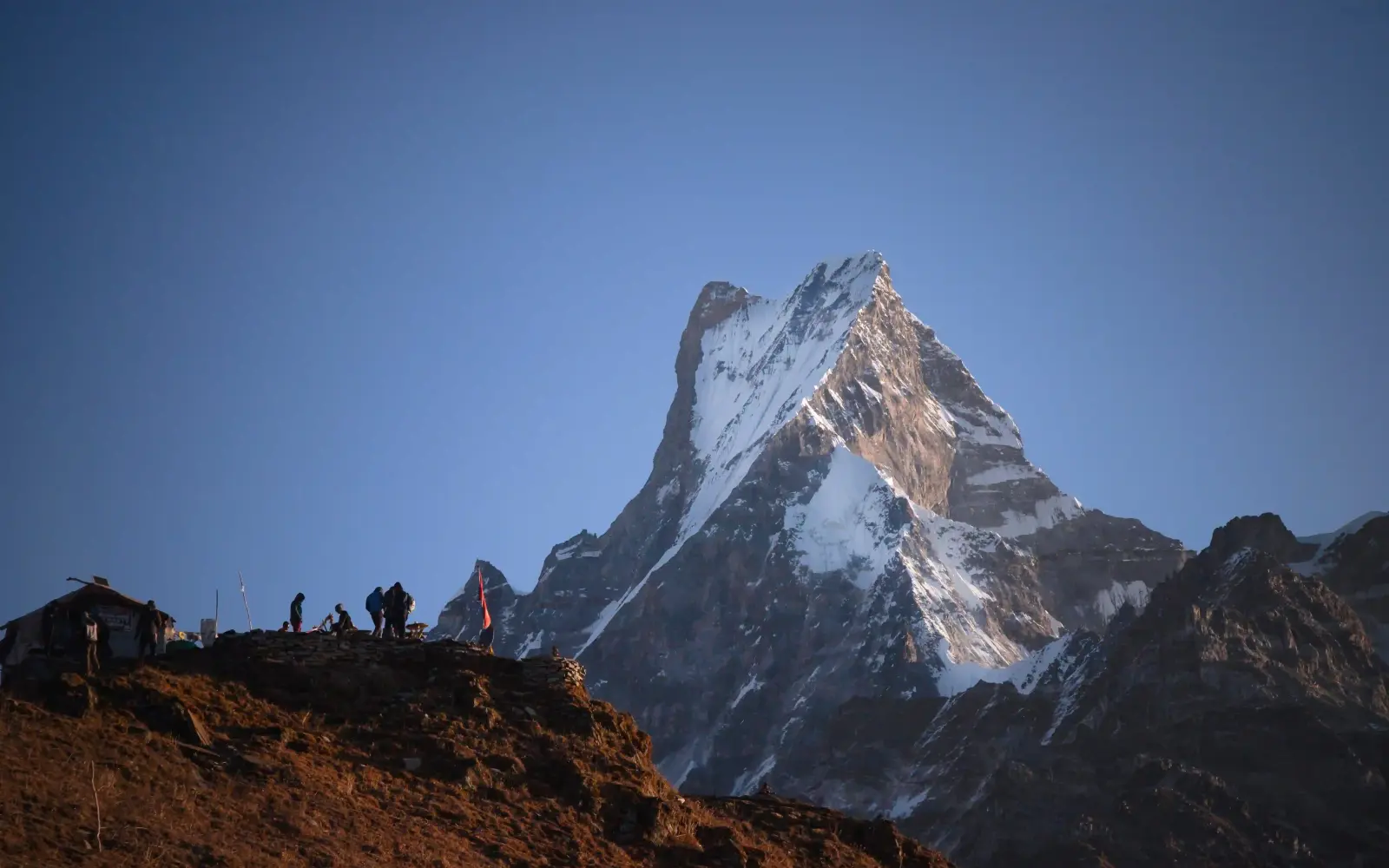
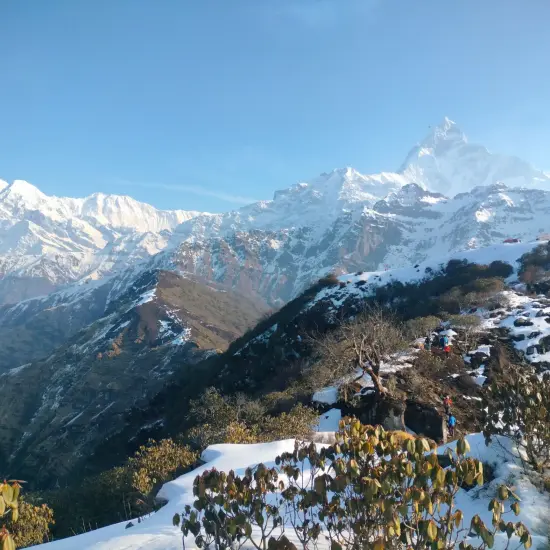
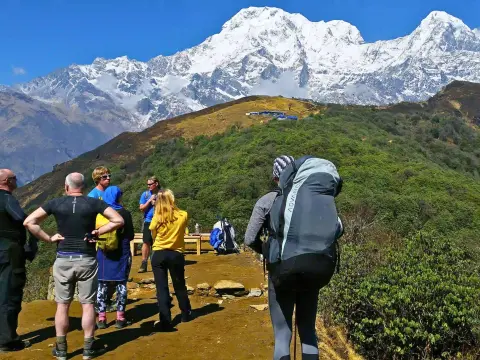
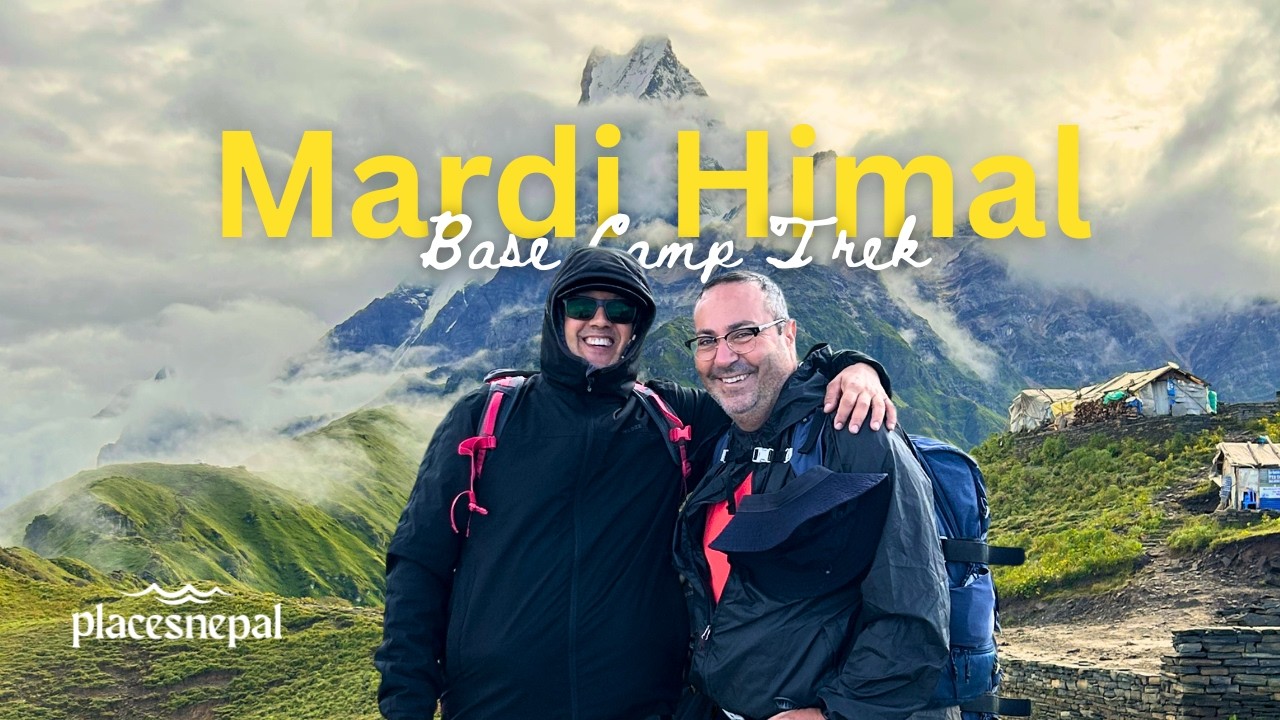
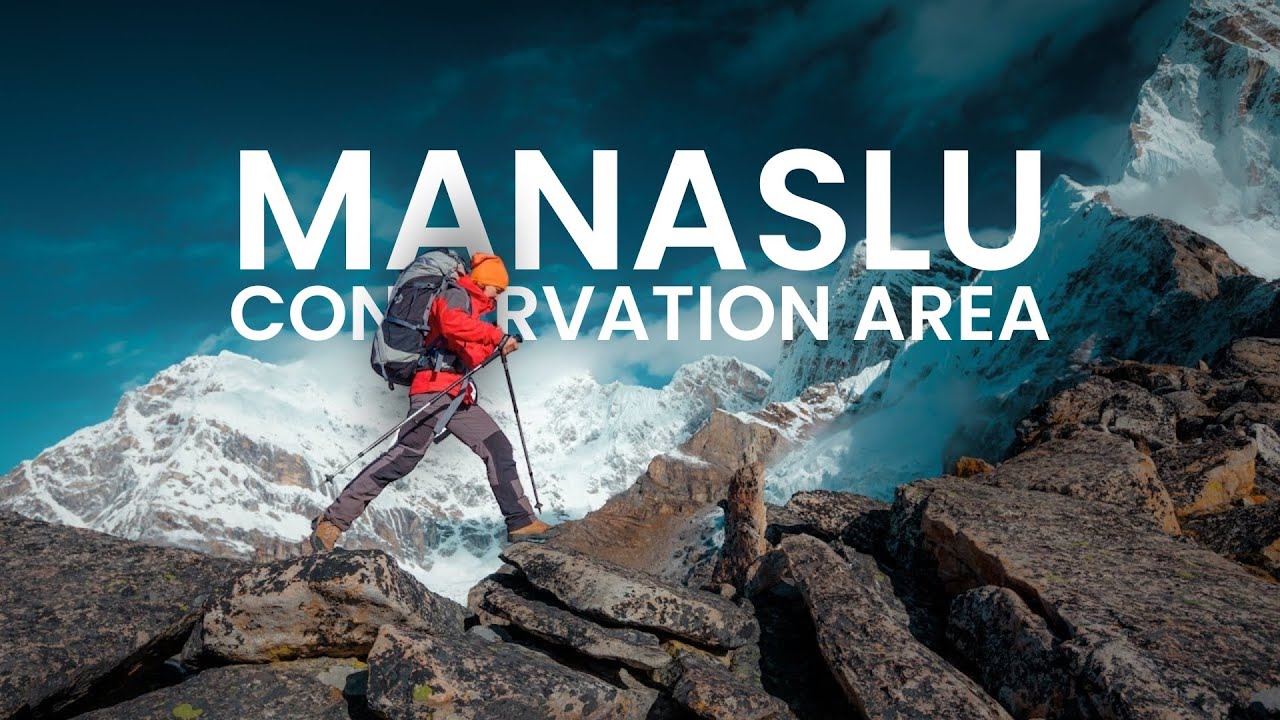
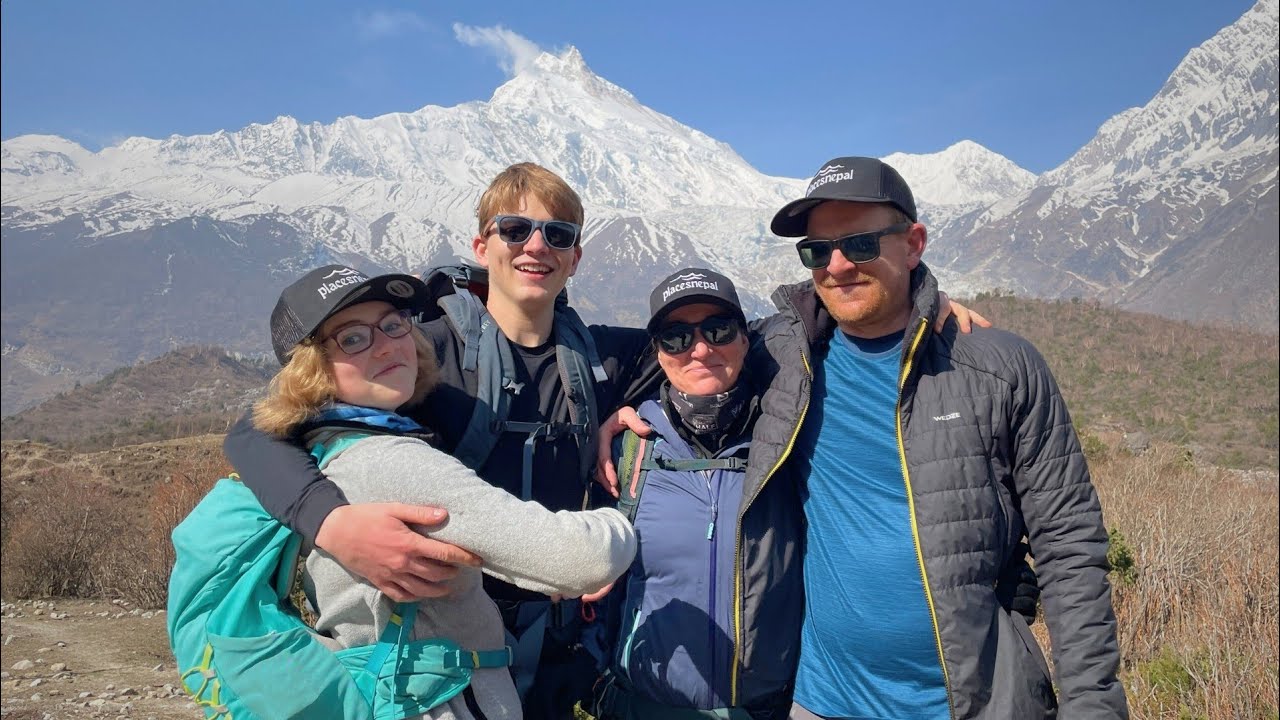
Five days, roughly 50 km, and a finish line at 4,500 metres. On paper the Mardi Himal Trek looks like one of the more forgiving ways to stand in front of the Annapurna wall. On the trail, most people find out on Day 2 or Day 4 that "short" and "easy" are not the same word.
This article is only about difficulty — not the full itinerary, not cost, not gear lists. If you want those, they're linked throughout. What you'll find here is a straight answer to "how hard is this trek," where that difficulty actually comes from, which day breaks people, and what changes the outcome in your favour.
How Difficult Is the Mardi Himal Trek?
Mardi Himal is a moderate-to-challenging trek — a 3.5 out of 5 on Places Nepal's difficulty scale, roughly 70% of the way up the full difficulty range we use across our Nepal treks. It sits above Poon Hill and Langtang Valley, below Annapurna Base Camp and Everest Base Camp, and nowhere near the technical territory of a climbing peak like Island Peak.
It is not hard because of skill. There's no rope work, no glacier travel, no scrambling. It's hard because the 5-day Mardi Himal Trek packs roughly 3,700 m of cumulative ascent into five days, tops out at 4,500 m, and asks you to do the single biggest day — 950 m up and 1,515 m back down — on Day 4, above 3,500 m, on a pre-dawn start. Nobody finds that "easy." Reasonably fit trekkers find it very doable.
The short version: expect real physical effort on Day 2 and Day 4, manageable walking on the other three days, no technical difficulty at any point, and a trek that punishes trekkers who show up untrained more than it punishes trekkers who show up slow. Slow and prepared beats fast and unprepared on this route, every season.
Trek the Mardi Himal Trek
Five days, one ridge, and the closest you'll legally get to Machhapuchhre.
Difficulty at a glance
| Difficulty factor | Rating | Why |
|---|
| Overall difficulty | 3.5 / 5 — Moderate–Challenging | Short trek, but altitude and elevation gain are compressed into 5 days |
| Daily walking | Moderate | Most days are 4–6 hrs; Day 4 runs 7–8 hrs |
| Elevation gain | High | ~3,700 m cumulative ascent over the trek |
| Altitude | High | Tops out at 4,500 m; sleeps as high as 3,550 m |
| Terrain | Low technicality | Stone steps, forest roots, open ridge — no scrambling |
| Steepness | Moderate–high | Sustained climbs, especially Day 2 and the Day 4 ascent |
| Technical difficulty | Low | No ropes, no crampons required under normal dry conditions |
| Endurance required | Moderate–high | Back-to-back climbing days with one true crux day |
| Descent strain | High | 1,515 m of knee-loaded descent in a single afternoon |
| Navigation | Low | Well-marked trail throughout; always guided under current ACAP rules |
Technical Difficulty vs. Physical Difficulty — The Distinction That Actually Matters
This is the single most misunderstood thing about Mardi Himal, and it's worth stating plainly up front: Mardi Himal is not technically difficult. It is physically demanding.
You do not need mountaineering experience, a rope, an ice axe, or any climbing background. The trail is a defined path from the first step at Phedi to the last one at Mardi Himal Base Camp — under normal dry-season conditions, nobody is scrambling, roping up, or using their hands.
What you do need is less glamorous and more decisive: endurance for back-to-back climbing days, leg strength for a trail that rarely flattens out, balance on rooted forest ground and loose ridge scree, the ability to hold a 5–7 hour walking day without falling apart, and enough altitude awareness to slow down when your body tells you to. None of that shows up on a gear list. All of it shows up on Day 4.
This is exactly where trekkers misjudge the trek in both directions. Gym-fit city dwellers sometimes assume treadmill hours translate directly to hours on a steep, uneven trail at altitude — they don't, not fully. And experienced hikers sometimes assume "no technical difficulty" means "low effort" — it doesn't. Physical difficulty and technical difficulty are separate axes, and Mardi Himal scores low on one and moderate-to-high on the other.
Trek the Mardi Himal Trek
Five days, one ridge, and the closest you'll legally get to Machhapuchhre.
Why the Mardi Himal Trek Feels Harder Than the Distance Suggests
Fifty kilometres over five days doesn't sound like much — about 10 km a day, which most reasonably fit people could walk on flat ground without training. The reason the trek feels harder than that number implies comes down to what those kilometres are doing vertically, not horizontally.
Total elevation gain across the trek runs to roughly 3,700 m — more climbing, cumulatively, than the trek's total distance in kilometres. Day 2 alone gains 1,060 m through dense, rooted forest with almost no flat sections to recover on. The trail is built from stone steps for long stretches of the lower route, and stone steps load your legs differently than a dirt path — there's no "cruise" pace on stairs. Above the treeline the trail follows an exposed ridge where wind and cold add fatigue that flat-terrain hiking never does. And the itinerary is short: five days leaves a narrow window to adjust to altitude compared with a 10–14 day trek covering similar terrain gradually.
Then there's the part most articles skip: the descent. Losing 1,515 m from Base Camp back to Low Camp in one afternoon does more damage to unprepared knees than the entire climb that got you there. Add all of that up — steep stairs, rooted forest, an exposed ridge, a compressed schedule, and a brutal one-day descent — and the "just 50 km" framing stops making sense. Distance was never the right way to measure this trek.
Trek the Mardi Himal Trek
Five days, one ridge, and the closest you'll legally get to Machhapuchhre.
How Much Does Altitude Affect the Mardi Himal Trek?
Altitude is the single biggest factor in the trek's difficulty rating, and it's also where most competing guides get sloppy. Here's the actual progression, camp by camp, on the Places Nepal Mardi Himal Trek itinerary:
| Stage | Approx. elevation | Why it matters |
|---|
| Pokhara (start) | 827 m | Baseline — no altitude effect |
| Phedi (trailhead) | 1,130 m | Trek begins here after a short drive |
| Pitam Deurali (Night 1) | 1,925 m | First night; altitude is a non-issue but the 1,098 m gain from Pokhara in half a day is tiring |
| Forest Camp | 2,550 m | Rest stop only, not an overnight — dense forest, cooler air |
| Low Camp (Night 2) | 2,985 m | First night where altitude starts to matter |
| High Camp (Night 3) | 3,550 m | Highest sleeping point of the trek — AMS becomes a real consideration here |
| Upper Viewpoint | 4,200 m | Optional stop on summit morning; near-identical views to Base Camp |
| Mardi Himal Base Camp | 4,500 m | Highest point reached on the trek |
Altitude sickness becomes a genuine risk above roughly 2,500–3,000 m, and this trek spends its final three days entirely in that zone. The five-day schedule is efficient, but it is not generous with acclimatization time compared with longer treks that spread the same elevation gain over a week or more. That's a trade-off, not a flaw — but it's one you should walk in knowing about, not discover on Day 3.
The highest you sleep vs. the highest you walk
This distinction gets muddled constantly in Mardi Himal content online, so it's worth being precise: your highest sleeping point on this trek is High Camp at 3,550 m. Your highest point reached is Mardi Himal Base Camp at 4,500 m — 950 m higher, on a single out-and-back day, without an overnight there.
That's not a technicality. It changes how you should think about acclimatization. You are not adapting to sleeping at 4,500 m — nobody does on this itinerary. You are pushing to 4,500 m for a few hours during daylight, on legs that have already adjusted to nights at progressively higher camps, then returning to sleep far lower. This "climb high, sleep low(er)" structure is deliberately built into the itinerary, and it's the main reason a 4,500 m day trip is survivable on a 5-day schedule that would be reckless if you were sleeping at that altitude.
If you're comparing Mardi Himal's altitude to other Nepal treks, always ask which number a source is quoting — the sleeping altitude or the highest point reached. They're frequently reported as if interchangeable, and on this trek in particular, they're 950 m apart.
Mardi Himal Trek Difficulty, Day by Day
| Day | Route | Walking time | Elevation change | Difficulty |
|---|
| 1 | Pokhara → Phedi (drive) → Pitam Deurali | 4 hrs | +1,098 m | Moderate |
| 2 | Pitam Deurali → Forest Camp → Low Camp | 6 hrs | +1,060 m | Challenging |
| 3 | Low Camp → High Camp | 4 hrs | +565 m | Moderate |
| 4 | High Camp → Upper Viewpoint → Base Camp → Low Camp | 7–8 hrs | +950 m / −1,515 m | Strenuous |
| 5 | Low Camp → Siding Village → Pokhara (drive) | 2.5 hrs | −1,285 m | Easy |
Day 2 and Day 4 are where this trek earns its rating. Day 1, 3, and 5 are manageable for anyone with reasonable hiking fitness.
What Is the Hardest Day of the Mardi Himal Trek?
Day 4 — High Camp to Mardi Himal Base Camp and back down to Low Camp — is the hardest day on the trek, by a wide margin. It combines four separate stressors that never overlap on any other day: a 4:30 a.m. pre-dawn start in freezing temperatures, 950 m of ascent to the highest point of the trip at 4,500 m, a 1,515 m descent back down to Low Camp in the same afternoon, and 7–8 hours of total walking time.
Any one of those alone would be a moderate day. Stacked together, at altitude, on five days of accumulated fatigue, they're what separates Mardi Himal from a casual hill walk.
The ascent gets the attention — headlamps, sunrise, the summit-day drama — but it's usually not what breaks people. The descent is. Losing 1,515 m of elevation on tired legs, on a trail with loose rock and root systems, is harder on knees and stamina than most trekkers expect, and it comes after the "hard part" already feels finished. Trekking poles are not optional on this day; they're the difference between a manageable afternoon and a painful one. Cold is the other underestimated factor — leaving High Camp before 5 a.m. in temperatures that can sit well below freezing tests trekkers who trained for distance but not for cold-start mornings.
If you only prepare specifically for one day of this trek, prepare for Day 4. Everything else is forgiving by comparison.
Is the Mardi Himal Base Camp / Viewpoint Hike Difficult?
The final push from High Camp is steep, cold, and — depending on the week — potentially icy, but it does not require technical climbing under normal conditions. The trail climbs steadily along an exposed ridge to the Upper Viewpoint at 4,200 m, where most of the mountain panorama is already fully visible, then continues another 300 vertical metres to Base Camp at 4,500 m along ground that gets progressively more exposed.
Realistically: expect cold enough that a warm base layer and insulated jacket aren't optional, wind that picks up as you gain the ridge, and — from December onward, and occasionally after early snowfall in late autumn — icy sections that call for microspikes or crampons. Outside of winter conditions, this is not a technical scramble; it's a sustained, high-altitude walk on a well-defined trail.
Turning around at the Upper Viewpoint instead of pushing to Base Camp is a completely legitimate call, not a failure. The two points offer nearly identical views, and the extra 300 m to Base Camp adds real effort and time for a marginal visual gain. Weather, energy levels, and how your body is handling the altitude should decide this call on the morning itself — not a plan made the night before at sea level.
What Is the Terrain Like on the Mardi Himal Trek?
The trail changes character three times over the course of the trek, and each section demands something different from your legs.
Lower trail (Phedi to Pitam Deurali): stone steps through Gurung farmland and terraced fields, well-maintained but relentless — this is where the trek's reputation for stairs starts.
Middle section (Pitam Deurali to Low Camp): dense rhododendron and oak forest with tree roots crisscrossing the path, mossy ground, and repeated short climbs rather than one sustained gradient. Trekking poles earn their place here well before the exposed ridge does.
Upper section (High Camp to Base Camp): open alpine ridge, no tree cover, exposed to wind, with terrain that can shift from dry trail to icy patches depending on season and recent weather. This is the only section where conditions change the character of the walk.
At no point does the standard route require hands-on scrambling, exposed climbing moves, or fixed ropes. The technical bar stays low throughout — what changes is the physical and environmental load.
Why the stairs matter
A meaningful stretch of the lower trail, particularly out of Phedi, is built from stone steps rather than a graded dirt path. Steps load your quads and calves differently than an inclined trail — there's no steady rhythm to settle into, and the eccentric loading on the way down works muscles that flat hiking never touches. This is precisely why stair climbing shows up as the top-priority training exercise below: nothing else in a standard fitness routine mimics this specific demand as closely.
Is the Descent on Mardi Himal Difficult?
Yes — and it's the part of this trek most competing guides underplay. The Day 4 descent from Mardi Himal Base Camp (4,500 m) back to Low Camp (2,985 m) drops 1,515 m in a single afternoon, and it is consistently reported by trekkers and guides as harder on the body than the ascent that preceded it.
Descent strain comes from eccentric muscle loading — your quads and knees braking your weight with every step, rather than propelling it — and it compounds with every hour on already-tired legs. Loose gravel and root systems on the lower sections turn ordinary fatigue into a genuine slip risk. Most of the trail injuries reported on this route happen on descent, not ascent, and mostly on Day 4 specifically.
What actually helps: trekking poles used consistently, not just pulled out when the trail turns steep — they cut knee-loading by a meaningful margin. A slower, controlled pace rather than the instinct to hurry now that "the hard part is over." And, for anyone with a history of knee issues, seriously considering a porter for the main bag — carrying less weight downhill is one of the few variables you can control completely.
How Many Hours Do You Walk Each Day?
| Day | Walking time |
|---|
| 1 | 4 hrs |
| 2 | 6 hrs |
| 3 | 4 hrs |
| 4 | 7–8 hrs |
| 5 | 2.5 hrs |
Three of the five days run 4–6 hours, which is manageable for most reasonably active trekkers. Day 4 is the outlier at 7–8 hours, and it's worth building your fitness expectations around that day specifically rather than the trek's average.
None of these figures are guarantees. Pace varies with fitness, weather slows people down on exposed sections, photography stops add real time on a trek this scenic, and altitude above 3,000 m slows almost everyone compared with their sea-level pace — that's normal, not a warning sign, provided you're not pushing through actual AMS symptoms to keep to a schedule.
How Fit Do You Need to Be for Mardi Himal?
You don't need gym-athlete fitness, and you don't need to be able to run. What you do need, practically: the ability to walk 5–7 hours continuously on uneven terrain with a daypack, comfort climbing steep stairs and inclines without stopping every few minutes, enough leg strength to handle a long descent without your knees giving out by hour three, and the capacity to recover overnight and walk again the next morning — repeated for five consecutive days.
If you can currently walk uphill for 2–3 hours without feeling completely wrecked, you have a workable baseline. If stairs already feel hard at sea level, that's a clear signal to start training before you book, not after.
Can a Beginner Do the Mardi Himal Trek?
Mardi Himal is accessible to first-time Himalayan trekkers — but only the ones who prepare properly. It is one of the more forgiving high-altitude treks in Nepal for a first attempt, and that reputation is deserved. It is not, however, an effortless beginner hike, and treating it as one is where first-timers run into trouble.
Prior trekking experience helps, mainly because it teaches pacing instincts and altitude awareness, but it isn't mandatory — fitness matters considerably more than experience on this specific route. What experience doesn't excuse is skipping preparation: the steep terrain above Low Camp surprises inexperienced hikers who assumed "moderate" meant "flat with nice views," and proper pacing — walking slower than feels necessary, especially on Day 2 and Day 4 — makes a larger difference to how the trek feels than almost any other single factor.
Can You Do Mardi Himal With No Hiking Experience?
Yes, with an important distinction: no trekking experience is very different from no physical preparation, and only one of those two things actually disqualifies you.
Someone with zero Himalayan trekking experience but a solid base of general fitness — regular walking, some cardio, comfortable on stairs — can complete this trek without major issues. Someone with plenty of gym experience but no history of walking steep, uneven trails for several consecutive days often struggles more than expected, because treadmill and machine fitness doesn't fully transfer to trail-specific demands like balance on loose rock, sustained stair-climbing, and multi-hour eccentric loading on descent. If this is your situation, weight the training plan below toward stairs and loaded hill walks specifically, not just general cardio.
Is Mardi Himal Suitable for Older Trekkers?
There's no useful blanket age cutoff here — suitability depends far more on fitness, prior hiking experience, and any existing medical conditions than on age itself. What actually matters: current fitness level and consistency of activity, previous experience at altitude if any, walking pace and willingness to move at that pace without pressure, itinerary length (a slower, longer version of this trek reduces daily strain considerably), and altitude tolerance, which varies by individual regardless of age.
Anyone with a history of heart or lung conditions, or anyone over 50 taking on their first high-altitude trek, should get a medical check-in before training begins — the altitude and exertion here are real enough to warrant that conversation, not because Mardi Himal is unusually risky for older trekkers specifically.
Can Families Trek Mardi Himal?
Families should weigh the same factors that apply to any trekker on this route, just with a lower margin for error: the 7–8 hour Day 4 is a long day for a child or a less mobile family member, nights at High Camp and above drop well below freezing, the steep sections demand real footing confidence, teahouse accommodation gets more basic the higher you go, and weather above the treeline can shift faster than lower-elevation family treks tend to prepare people for. A longer, gentler-paced version of this itinerary — rather than the standard 5-day compression — is the more sensible route for families, spreading the same altitude gain over more days with shorter daily walks.
Is Mardi Himal Difficult for Women?
The terrain, altitude, and effort required are identical regardless of who's walking the trail — nothing about Day 4's descent or the altitude at Base Camp changes based on gender. What's worth flagging honestly: solo women trekkers sometimes have additional questions around guide arrangements, group composition on fixed departures, and general trail logistics that have nothing to do with physical difficulty and everything to do with trip planning. Those are worth raising directly with your operator when booking, separately from anything covered in this article.
How to Train for the Mardi Himal Trek
A practical 6–8 week window is enough for most reasonably active people; give yourself 10–12 weeks if you're currently sedentary, and 4 weeks is workable if you're already hiking regularly.
Cardiovascular endurance: brisk walking, hiking, cycling — anything that holds your heart rate up for 30–60 minutes builds the aerobic base multi-hour trail days demand.
Stair climbing (top priority): the single closest match to this trek's actual demands. Use stairs, a stadium, or a car park stairwell, and build toward 30–45 minutes continuous.
Loaded hill walks (top priority): walk uphill carrying the 6–8 kg you'll actually carry on the trail. This trains the specific muscles and joints the trek uses — not just fitness in general.
Downhill training (commonly skipped): deliberately practise descending on trails or steps. Eccentric loading is a different demand than climbing, and untrained descent muscles are the main reason Day 4 hurts more than it should.
Leg strength: squats, lunges, step-ups, and single-leg work — 2–3 sessions a week builds the quad and glute strength that both climbing and descending depend on.
Core and balance: planks and single-leg balance work pay off directly on root-covered and rocky sections where footing matters as much as raw strength.
Two things that matter as much as the exercises themselves: break in your boots on every training walk from week one — new boots on trek day is one of the most common causes of blister and ankle problems — and train with trekking poles from week three onward if you plan to use them, since deploying poles for the first time on the mountain is not the moment to learn the technique.
Training timeline
| Weeks before trek | Focus |
|---|
| 8–6 weeks out | Build general endurance |
| 6–4 weeks out | Add hills and stairs |
| 4–2 weeks out | Longer loaded hikes with daypack |
| Final 2 weeks | Maintain fitness, avoid overtraining |
| Final days | Rest and arrive fresh |
Ways to Make the Mardi Himal Trek Easier
- Walk slower than feels necessary — especially on Day 2 and Day 4; the correct altitude pace lets you breathe fully through your nose the whole time.
- Use trekking poles every day, not just on the descent — they reduce knee loading noticeably and help with balance on rooted forest trail.
- Keep your daypack in the 6–8 kg range; anything past 10 kg makes every climb harder than it needs to be.
- Hire a porter for your main bag if you haven't trained specifically with a loaded pack, or if you have any history of knee or back issues.
- Stay ahead of hydration — 3–4 litres a day, more as you climb, rather than drinking only when thirsty.
- Eat fully at every meal, even when altitude suppresses appetite — your body is burning more than usual just staying warm.
- Sleep at Low Camp before High Camp exactly as the itinerary schedules it — don't compress this to save a day.
- Layer deliberately rather than packing generically; the temperature range across a single trek day can exceed 25°C.
- Know AMS symptoms and act on them early rather than pushing through to keep to a schedule.
- Break in your boots properly before you fly to Nepal, not on the trail.
What Can Make Mardi Himal Much Harder?
- Arriving with no physical preparation, particularly no stair or hill training.
- A heavy daypack — anything meaningfully over 10 kg changes the character of every climb.
- Rushing, especially on Day 2 and the Day 4 ascent — setting an unsustainable pace early is the most common mistake on this trek.
- Poor sleep or dehydration heading into the summit push.
- Bad weather on summit morning — wind and cold on the exposed ridge above High Camp compound quickly.
- Snow or ice above 3,500 m without appropriate footwear, typically from late November onward.
- Skipping the acclimatization value of the Low Camp night to compress the schedule.
- Poor footwear — worn or unbroken-in boots are a frequent, entirely avoidable cause of a miserable Day 4.
Is Mardi Himal Harder in Winter or Monsoon?
Autumn (October–November) and spring (March–April) are the two windows where the trek's difficulty rating holds as written — stable weather, dry trail, and predictable conditions. Outside those months, the same trek gets meaningfully harder for different reasons.
Spring (March–April): warm, pleasant lower-trail temperatures and the rhododendron forest in full bloom, but afternoon cloud builds more readily than in autumn, making an early summit-morning departure even more important. Snow can linger above 3,500 m into early March.
Monsoon (June–August): not recommended, and not primarily because of difficulty in the physical-effort sense — because of risk. Persistent rain turns the rooted forest sections into a slick, hazardous surface, the Day 4 descent becomes a real injury risk on wet ground, mountain visibility disappears for days at a stretch, and leeches are unavoidable on the lower forest trail from June through August.
Winter (December–February): the clearest skies of the year, but snow covers the trail above Low Camp, and crampons or microspikes shift from optional to necessary safety equipment. High Camp overnight temperatures can drop to −10°C or colder, and some teahouses close entirely in December and January. Winter is doable, but only for trekkers arriving fully equipped and prepared for those conditions — not a beginner window.
Is There Snow on the Mardi Himal Trek?
Snow conditions on this trek depend entirely on season, altitude, and recent weather — there's no fixed answer that holds year-round. From roughly December onward, snow above Low Camp is common enough that microspikes or crampons should be treated as standard kit, not a maybe. In autumn and spring, snow above 3,500 m is possible but not guaranteed, more likely toward the edges of each season (late November, early March) than in the settled middle weeks. Crampons are never blanket-required for the standard trek — but check current trail conditions with your guide before the summit push, because this is one of the few variables on this route that changes week to week.
Do You Need Mountaineering Experience for Mardi Himal?
No. The standard trek does not require technical climbing skills, ropes, or prior mountaineering experience of any kind. Standard trekking skills — steady footing, comfort on uneven ground, sensible pacing — are sufficient for the entire route under normal conditions.
This is worth separating clearly from physical difficulty, which is real and covered throughout this article. Technical difficulty and physical difficulty are different questions, and Mardi Himal answers them very differently: low on the first, moderate-to-high on the second.
Do You Need Crampons or an Ice Axe?
Not as a default — but the answer is conditional, not universal. Under normal dry-season conditions (autumn and most of spring), neither is necessary. From roughly December through the coldest stretch of winter, and occasionally after early snowfall in late November, microspikes or crampons become useful on the upper ridge above High Camp. An ice axe is not standard equipment for this trek in any season under normal route conditions. Check current conditions with your guide or teahouse host before the summit push — this is the one piece of gear advice on this trek that's season-dependent rather than fixed.
Are Trekking Poles Useful on Mardi Himal?
Essential rather than optional, and useful on every day of the trek, not just the descent. They help most on the steep ascent through forest terrain, on the exposed and occasionally uneven upper ridge, and — most importantly — on the long knee-loaded descent from Base Camp to Low Camp, where they measurably reduce strain compared with walking without them.
How Much Should Your Backpack Weigh?
The sweet spot is 6–8 kg for the daypack you're actually carrying on the trail. Trekkers arriving with packs meaningfully over 10 kg consistently move slower, tire earlier, and enjoy the trek less than those who packed light. If you're hiring a porter for your main bag — worth considering for first-time trekkers, anyone with knee or back history, or anyone who hasn't trained with a loaded pack — that leaves your daypack carrying only water, layers, snacks, and camera gear for the day, which is exactly the load your training should have prepared you for.
Is Altitude Sickness a Risk on Mardi Himal?
Yes — altitude becomes relevant above roughly 2,500–3,000 m, and this trek spends its final three nights in or above that range. Fitness does not guarantee protection from AMS; ascending too quickly is the real risk factor, and it can affect very fit trekkers just as readily as unfit ones. Symptoms — persistent headache, nausea, poor sleep, unusual fatigue — should always be taken seriously rather than pushed through.
This article isn't the place for medical guidance beyond that: don't self-diagnose, and don't self-medicate. Follow your guide's safety protocols, and if symptoms don't improve with rest and hydration, descend — never ascend with active AMS symptoms — and seek medical attention if anything worsens.
Does Mardi Himal Need Acclimatization?
Yes, and the standard itinerary is built around a real trade-off worth understanding: it's short, and it gains elevation relatively quickly compared with longer treks covering similar terrain. That's precisely why the built-in Low Camp night before High Camp matters — it's not a scheduling convenience; it's the trek's main acclimatization buffer, and skipping it to save a day is one of the more common mistakes trekkers make when customizing their own itinerary.
Within that structure: pace yourself rather than trying to keep up with faster trekkers in your group, stay ahead of hydration, monitor how you're actually feeling rather than how you expected to feel, and avoid rushing the summit push specifically — it's the point in the trek where altitude stress peaks.
Mardi Himal vs. Poon Hill: Which Is Harder?
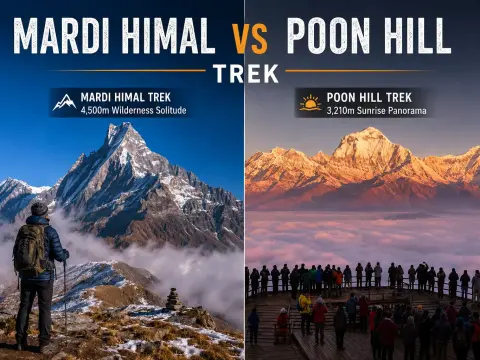
Mardi Himal is meaningfully harder — 3.5 out of 5 on our scale versus 1.8 for Poon Hill. Poon Hill tops out around 3,210 m over 4 days on a well-established, heavily trafficked trail; Mardi Himal reaches 4,500 m over 5 days on a quieter route with a genuine high-altitude summit day. If you're deciding between the two on difficulty alone, Poon Hill is the shorter, gentler introduction to Nepal trekking, and Mardi Himal is the step up for trekkers who want a real high-altitude day without a two-week commitment. For the full side-by-side on scenery, crowds, and cost as well as difficulty, see our Mardi Himal or Poon Hill Trek comparison.
Mardi Himal vs. Everest Base Camp: Which Is Harder?
EBC is substantially harder overall — 4.1 out of 5 versus Mardi Himal's 3.5. The gap comes from altitude (EBC reaches 5,364 m versus Mardi's 4,500 m), duration (12–14 days versus 5), and the cumulative fatigue of a much longer trek at sustained high altitude. Mardi Himal is still a genuine high-altitude trek in its own right — reaching 4,500 m is not a small undertaking — but EBC asks considerably more of the body over a much longer window. For the full comparison across cost, itinerary, and scenery as well as difficulty, see Everest Base Camp vs Mardi Himal Trek.
Mardi Himal vs. Annapurna Base Camp: Which Is Harder?
These two sit closer together — 3.5 for Mardi Himal versus 3.0 for ABC — and the reason is compression, not raw difficulty. ABC reaches a similar altitude (4,130 m) but spreads the effort across 7–10 days; Mardi Himal does comparable vertical work in 5. That compression is exactly what pushes Mardi Himal's rating slightly higher despite ABC being the longer, more famous route. For a full breakdown of duration, terrain, and cost differences, see Mardi Himal vs Annapurna Base Camp.
Mardi Himal vs. Annapurna Circuit: Which Is Harder?
The Annapurna Circuit is the harder undertaking, mainly because of scale rather than any single day being tougher than Mardi Himal's Day 4. It's a multi-week high-altitude circuit crossing Thorong La Pass at 5,416 m — considerably higher than Mardi Himal's 4,500 m ceiling — with sustained days at altitude spread across far more time on trail. Mardi Himal remains the shorter, more compressed, more accessible option for trekkers who want a genuine high-altitude experience without the multi-week commitment a full circuit demands. If you're weighing the two directly, our Annapurna Circuit Trek page has the current route and itinerary details.
Is the 5-Day Mardi Himal Trek Too Fast?
For a well-prepared, reasonably fit trekker: no. Five days is efficient, not reckless — the itinerary is built with a Low Camp acclimatization night positioned deliberately before High Camp, and it works well for the trekker profile it's designed around.
That said, it isn't the only sensible way to walk this route, and it isn't automatically the right choice for everyone. A 4-day version compresses the schedule further and suits only fit trekkers, ideally ones already acclimatized from recent time at altitude — the altitude gain per day rises accordingly. A 7-day version spreads the same elevation gain across more nights, which meaningfully reduces daily strain and gives more weather buffer for the summit morning, at the cost of extra time and budget.
| 4-Day (faster) | 5-Day (standard) | 7-Day (gentler) |
|---|
| Best for | Fit trekkers, tight schedules | Most trekkers, first-timers | Families, older trekkers, altitude-cautious |
| Pace | Long days, faster altitude gain | Balanced, comfortable ascent | Relaxed, shorter daily walks |
| Altitude profile | Compressed — feel it more | Comfortable, built-in buffer night | Gentlest of the three |
If you've never trekked above 3,000 m before, the 5-day version is the sensible default — the extra acclimatization night is cheap insurance against a rough Day 3 or Day 4. For the complete breakdown across every itinerary length from 3 to 9 days, including which situations call for which pacing, see our Best Mardi Himal Trek Itinerary guide.
How Places Nepal Helps You Handle the Mardi Himal Trek
A short, altitude-compressed trek like this one is exactly where a guide earns their keep rather than being a box to tick. Every Mardi Himal trekking package includes a government-licensed, English-speaking guide, full-board teahouse accommodation, all required permits (ACAP and TIMS), and private transport from Pokhara to Phedi with a shared jeep back from Siding.
What that actually buys you on this specific trek: a guide controls pace on the days that matter most — nobody sets an unsustainable speed on Day 2 or the Day 4 ascent under proper guiding — monitors for AMS symptoms before they become serious, and makes the weather and turnaround calls on summit morning that are hard to make objectively about yourself at 4 a.m. and 4,200 m. A guide does not prevent altitude sickness; nothing does. What a licensed guide does is reduce the risk of a manageable symptom becoming a serious one, through pacing, monitoring, and early intervention — which, on a trek that compresses this much altitude gain into five days, is a meaningful piece of risk management rather than a luxury add-on.
Since April 2023, a licensed guide has been mandatory for all foreign trekkers in the Annapurna Conservation Area regardless of operator — this isn't a Places Nepal upsell, it's how the trek is legally done today.
Trek the Mardi Himal Trek
Five days, one ridge, and the closest you'll legally get to Machhapuchhre.
Group and private departures
Places Nepal runs both group-joining departures on fixed dates and private treks on your own schedule. Group joining means a shared trail experience on a set departure; private treks offer more flexibility on pace and dates, which matters if you're planning around the training timeline above or want to build in extra acclimatization days beyond the standard 5-day framework.
Gear That Makes Mardi Himal Easier
- Broken-in, waterproof trekking boots with good ankle support — non-negotiable on stone steps and forest roots
- Trekking poles, used from Day 1 rather than pulled out only for the descent
- A lightweight daypack sized for the 6–8 kg sweet spot
- Layering system built for a 25°C daily temperature swing — base layer, fleece, insulated jacket, windproof shell
- A sleeping bag rated to at least −10°C for High Camp and Base Camp nights
- Microspikes or crampons if trekking from December onward, or after early-season snowfall
- Sunscreen rated for altitude — UV exposure at 4,500 m runs roughly 45% higher than sea level
The Mardi Himal Trek page carries the complete packing list by category; this is only the gear that specifically changes how hard the trek feels.
Trek the Mardi Himal Trek
Five days, one ridge, and the closest you'll legally get to Machhapuchhre.
Mardi Himal Trek Elevation & Difficulty Map
The trek's difficulty ladder, start to finish:
Pokhara (827 m) → Phedi (1,130 m) → Pitam Deurali (1,925 m) → Forest Camp (2,550 m) → Low Camp (2,985 m) → High Camp (3,550 m) → Upper Viewpoint (4,200 m) → Mardi Himal Base Camp (4,500 m) → back to Low Camp (2,985 m) → Siding Village (1,700 m) → Pokhara (827 m)
Frequently Asked Questions
How difficult is the Mardi Himal Trek? Moderate to challenging — 3.5 out of 5 on our scale. No technical climbing is required, but the trek packs ~3,700 m of cumulative ascent and a 4,500 m high point into five days.
Is Mardi Himal harder than Poon Hill? Yes, considerably. Poon Hill rates 1.8/5 and tops out around 3,210 m over 4 days; Mardi Himal rates 3.5/5 and reaches 4,500 m over 5 days with a genuine summit day.
Is Mardi Himal easier than Everest Base Camp? Yes. EBC rates 4.1/5, reaches 5,364 m, and takes 12–14 days — meaningfully more altitude and duration than Mardi Himal's 3.5/5, 4,500 m, 5-day profile.
Is Mardi Himal suitable for beginners? Yes, for beginners who train properly beforehand. It's one of the more accessible high-altitude treks in Nepal, but "accessible" still means real physical preparation, not zero preparation.
Can I do Mardi Himal with no trekking experience? Yes, provided you have a reasonable base of general fitness. No prior Himalayan experience is required — no physical preparation at all is the actual disqualifier, not lack of trekking history specifically.
How many hours do you walk each day? 4–6 hours on most days, with Day 4 running 7–8 hours and Day 5 a short 2.5 hours.
What is the hardest day? Day 4 — High Camp to Mardi Himal Base Camp and back down to Low Camp: 950 m of ascent, 1,515 m of descent, and 7–8 hours of walking in a single day.
Is the Mardi Himal Base Camp hike difficult? Steep and cold, with possible ice above High Camp from December onward, but not technical under normal conditions. No ropes or climbing skills are required.
How high does the Mardi Himal Trek go? The trek reaches 4,500 m at Mardi Himal Base Camp, the highest point of the route. The highest sleeping point is High Camp at 3,550 m.
Is altitude sickness a risk? Yes — altitude becomes relevant above roughly 2,500–3,000 m, and the trek's final three nights sit in or above that zone. Fitness doesn't guarantee protection; ascending too fast is the real risk factor.
Is Mardi Himal physically demanding? Yes, despite requiring no technical skill. Sustained climbing, a long descent, and altitude combine to make it demanding on Day 2 and Day 4 specifically.
Is the trail steep? Yes in sections — particularly the stone steps out of Phedi and the sustained forest climb on Day 2. The upper ridge is steep but not technical.
Are there difficult descents? Yes — the Day 4 descent (1,515 m from Base Camp to Low Camp in one afternoon) is widely reported as harder on the body than the ascent itself.
Do I need trekking poles? Effectively yes. They meaningfully reduce knee strain on the descent and help with balance on rooted and rocky sections throughout.
Do I need crampons? Only conditionally — typically from December onward, or after early-season snowfall. Not required in standard autumn or spring conditions.
Do I need mountaineering experience? No. The standard route requires no ropes, no climbing skills, and no technical mountaineering under normal conditions.
How fit should I be? Fit enough to walk 5–7 hours continuously on uneven terrain with a daypack, handle steep stairs, and recover overnight for five consecutive days. Gym fitness alone doesn't fully substitute for trail-specific conditioning.
How should I train? Prioritize stair climbing and loaded hill walks, add downhill-specific training (commonly skipped), build leg strength 2–3x/week, and maintain a cardio base — over a 6–8 week window for most trekkers.
How many weeks should I train before Mardi Himal? 6–8 weeks for reasonably active trekkers; 10–12 weeks if currently sedentary; 4 weeks is workable if already hiking regularly.
Is Mardi Himal harder in winter? Harder in different ways — clearer skies but snow and ice above Low Camp, temperatures to −10°C or below at High Camp, and some teahouses closed. Not a beginner window.
Is Mardi Himal difficult during monsoon? Not recommended, primarily for risk rather than pure physical difficulty — slippery trail, leeches, near-zero mountain visibility, and a hazardous wet descent.
Is the 5-day Mardi Himal Trek too fast? No, for a well-prepared trekker — it includes a deliberate acclimatization night at Low Camp before High Camp. Faster 3–4 day versions exist for fit, already-acclimatized trekkers; slower 6–7 day versions exist for extra margin.
Can older trekkers do Mardi Himal? Yes, with no fixed age cutoff — suitability depends on current fitness, prior altitude experience, and any medical conditions rather than age itself. A pre-trek medical check is sensible for anyone over 50 attempting their first high-altitude trek.
Can women trek Mardi Himal? Yes — the terrain, altitude, and physical demands are identical regardless of gender. Solo women trekkers may have separate, unrelated questions about guide arrangements and group logistics worth raising directly with the operator.
Can families do Mardi Himal? Yes, though the standard 5-day pace is demanding for children or less-mobile family members. A longer, gentler-paced itinerary spreads the same altitude gain over more, shorter days.
Is Mardi Himal harder than Annapurna Base Camp? Slightly, on our scale (3.5 vs. 3.0) — not because ABC is easier terrain, but because Mardi Himal compresses similar altitude gain into fewer days.
Is Mardi Himal harder than Annapurna Circuit? No — the Annapurna Circuit is the bigger undertaking overall, crossing Thorong La Pass at 5,416 m over a multi-week itinerary, considerably more than Mardi Himal's 4,500 m, 5-day profile.
How can I make Mardi Himal easier? Train specifically for stairs and descent, keep your daypack to 6–8 kg or hire a porter, use trekking poles daily, pace yourself deliberately on Day 2 and Day 4, and don't skip the Low Camp acclimatization night.
What should I pack to make the trek easier? Broken-in boots, trekking poles, a properly layered clothing system for a 25°C daily swing, a −10°C-rated sleeping bag, and microspikes if trekking from December onward.
Can I do Mardi Himal without a guide? No — since April 2023, a licensed guide has been mandatory for all foreign trekkers throughout the Annapurna Conservation Area, which the entire Mardi Himal route lies within.