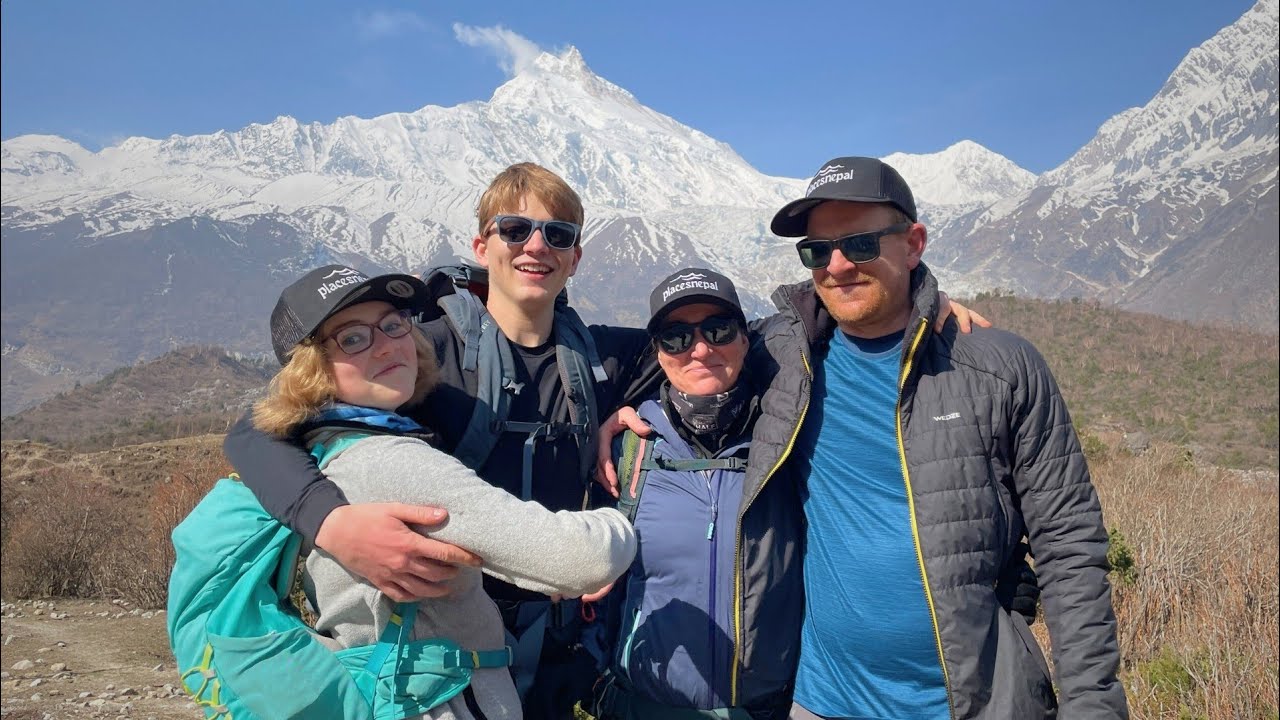
The Mardi Himal Trek requires an Annapurna Conservation Area Permit (ACAP), costing NPR 3,000 for foreign nationals and NPR 1,000 for SAARC nationals. Nepal Tourism Board also lists Mardi Himal among routes requiring an agency-issued TIMS card (NPR 2,000) and a licensed guide. No restricted-area permit applies.
What permits do you need for the Mardi Himal Trek?
The Mardi Himal Trek requires an Annapurna Conservation Area Permit (ACAP) — NPR 3,000 for foreign nationals, NPR 1,000 for SAARC nationals, tax included. The Nepal Tourism Board also lists Mardi Himal among the routes that require an agency-issued TIMS card (NPR 2,000 / NPR 1,000 SAARC) and a licensed guide. No restricted-area permit applies to this trek.
That is the short version. The long version matters, because permit information for the Annapurna region is currently some of the most contradictory material on the internet — and a lot of it is being written by people who have never stood at the Pothana check-post. Here is what the official sources actually say, what happens on the trail, and where the two don't quite line up.
For a full breakdown of the route, inclusions, pricing, and daily itinerary, explore our Mardi Himal Trek
Mardi Himal permit summary table
| Permit / fee | Required for Mardi Himal? | Who needs it | Current cost | Issued by / where |
|---|
| ACAP (Annapurna Conservation Area Permit) | Yes — always | Every trekker aged 10+, all nationalities | NPR 3,000 foreign nationals · NPR 1,000 SAARC (tax incl.) · free under 10 | National Trust for Nature Conservation (NTNC). Online at epermit.ntnc.org.np, at NTNC/NTB counters in Kathmandu and Pokhara, or through your agency |
| TIMS card | Yes, officially — Mardi Himal is named on the Nepal Tourism Board's list. Enforcement at Annapurna check-posts has been inconsistent | Foreign and SAARC trekkers | NPR 2,000 others · NPR 1,000 SAARC | Nepal Tourism Board, applied for by a registered trekking agency only — independent trekkers can no longer buy one |
| Licensed guide (not a permit, but a legal requirement) | Yes, for foreign nationals | All non-Nepali trekkers in the Annapurna Conservation Area | Guide fee, not a government charge | Registered trekking agency. Rule effective 1 April 2023 |
| Machhapuchhre Rural Municipality tourism fee | Yes — a local levy, collected on the trail, not a national permit | Foreign and domestic visitors | NPR 500 foreign / NPR 100 Nepali when introduced (Oct 2023) | Machhapuchhre Rural Municipality, collected at trail points |
| Restricted Area Permit (RAP) | No | — | — | Applies to Upper Mustang, Manaslu, Tsum, Nar Phu and similar. Not Mardi Himal |
| Sagarmatha / Khumbu permits | No | — | — | Everest region only. Frequently confused with Annapurna rules online |
Do you need an ACAP permit for the Mardi Himal Trek?
Yes, and there is no ambiguity about this one.
The entire Mardi Himal trail sits inside the Annapurna Conservation Area, Nepal's largest protected area. You cross the boundary within the first hour of walking, whichever trailhead you use — Phedi, Kande, Lwang Ghalel or Sidhing. There is no version of this trek that stays outside the conservation area.
The permit is issued by the National Trust for Nature Conservation (NTNC), not by the Nepal Tourism Board and not by the government directly. NTNC has managed the Annapurna Conservation Area since 1986, and permit revenue funds trail maintenance, waste management, and community development inside the area.
What the ACAP costs, officially:
- NPR 3,000 for foreign nationals (tax included)
- NPR 1,000 for SAARC nationals — India, Bangladesh, Pakistan, Sri Lanka, Bhutan, Maldives, Afghanistan
- Free for children under 10
- Nepali citizens pay a lower domestic rate
Three rules on the permit itself that most articles skip:
- It is a single-entry permit. It covers your whole trek inside the conservation area, but once you exit the boundary, it's spent.
- You must carry it for the entire trip and show it when conservation area staff ask.
- Permits issued at a check-post are charged at double the fee. That is NTNC's published rule, not an informal fine. Turning up at Pothana without a permit costs a foreign trekker NPR 6,000 instead of NPR 3,000.
There is no nationality-based exemption beyond the SAARC discount, and no seasonal variation. The rate is the same in October as it is in February.
Do you need a TIMS card for the Mardi Himal Trek in 2026?
This is where almost every article online gets it wrong in one direction or the other, so let's separate what is written in the rules from what happens at a check-post.
What the official rule says
The Nepal Tourism Board's Revised TIMS Provision, effective 31 March 2023, lists the specific protected areas and routes where a trekker must be accompanied by a licensed trekking guide and carry an agency-issued TIMS card. Under "Annapurna Region," the list names seven treks:
Annapurna Circuit · Nar Phu Annapurna Circuit · Mesokanto/Tilicho Pass · Poon Hill–ABC · Khopra · Mardi Himal · Sikles Tara Hill
Mardi Himal is on the list by name. So anyone telling you TIMS was "abolished for Annapurna" is describing enforcement practice, not the published rule. The Nepal Tourism Board still publishes the requirement, still runs the system, and still sets the fee: NPR 2,000 for non-SAARC applicants, NPR 1,000 for SAARC applicants, paid online.
What changed, and why this confuses people
The individual "green" TIMS card that independent trekkers used to buy over a counter no longer exists. Since 2023, only registered trekking agencies can apply for TIMS. An agency submits trekker, guide and route details through the Nepal Tourism Board's system, pays online, and an eTIMS card with a QR code is generated for each trekker.
That single administrative change is the root of most of the confusion. Independent trekkers went looking for a TIMS counter, found none, and concluded TIMS was dead.
What actually happens at the check-post
Honestly: on the Annapurna trails, including Mardi Himal, the document check-post staff care about is the ACAP permit, and after that your guide's credentials. TIMS checks have been inconsistent for the last two seasons. Operators report the same pattern across ABC, Poon Hill, the Circuit, and Mardi.
So what should you actually do?
For any foreign trekker, this argument is academic — and this is the part nobody explains clearly:
The same notice that requires TIMS also requires a licensed guide. The guide requirement means you must book through a registered agency. And a registered agency is the only entity that can issue TIMS. So if you are legally trekking Mardi Himal at all, you are already inside the system that produces the TIMS card. There is no scenario where a compliant foreign trekker needs to decide whether to buy one.
Our position: we issue both documents for every Mardi Himal trekker, because the rule is published, TAAN has been lobbying for consistent enforcement, and NPR 2,000 is not worth arguing about at 1,890 metres. If enforcement tightens mid-season, our trekkers are already covered.
The third fee nobody mentions: the Machhapuchhre Rural Municipality levy
Most Mardi Himal permit guides stop at ACAP and TIMS. There is a third charge.
The Mardi Himal trail runs through Machhapuchhre Rural Municipality in Kaski District. In a notice dated 27 October 2023, the municipality introduced a tourism service fee for trekkers on its trails — which include Mardi Himal, the Machhapuchhre Model Trek, and the Khumai–Korchung route. The rates set at introduction were NPR 500 for foreign tourists and NPR 100 for Nepali tourists, with collection points established around Lwang/Lupruk below Low Camp, and at Khumai Danda.
This is a local levy, not a national permit. It is collected on the trail in cash, not at a permit office in Pokhara, and it does not appear on your ACAP.
Two honest caveats:
- Collection has been uneven since introduction — some seasons it is actively collected, some trekkers pass through without being asked.
- Several trekking blogs currently quote NPR 3,500–5,500 for this fee. That figure matches no documented municipal notice we can find, and it is roughly ten times the published rate. Treat it as a red flag for the rest of the article you're reading.
Carry a small amount of Nepali rupees for it and don't be surprised when someone at Lwang asks for a receipt fee.
Mardi Himal Trek permits for foreigners
If you hold any passport other than a SAARC country's, here is what applies.
Permits and fees:
- ACAP: NPR 3,000
- TIMS: NPR 2,000, issued through your agency
- Licensed guide: legally required
- Machhapuchhre Rural Municipality fee on the trail
Documents the permit process needs:
- Your passport. For counter collection, NTNC asks you to bring your passport or another valid identification document. Your permit details must match your passport exactly — name spelling, passport number, nationality, date of birth. A typo here is the single most common cause of a delay at a check-post.
- A passport copy if your agency is arranging the permit before you arrive.
- Passport-size photographs. Bring two. Counter procedures vary and photos are cheap insurance; online applications use a digital photo instead.
- Your Nepal visa details once you've arrived.
Can you get the permit before you reach the trail? Yes, and you should. ACAP can be arranged in Kathmandu, in Pokhara, or online through NTNC's e-permit portal before you fly. The only thing you cannot do is buy TIMS yourself — that goes through the agency.
Can an agency handle all of it? Yes. That is the normal arrangement for foreign trekkers now, and it's the reason the guide rule and the permit rules ended up bundled together.
Mardi Himal Trek permits for Indian citizens
Indian trekkers are one of the fastest-growing groups on this trail, and the rules are different — but not in the way most people assume.
What's the same: you need the same permits as anyone else. ACAP and TIMS both apply. The guide requirement applies to Indian citizens too, because the rule distinguishes between Nepali citizens and everyone else, not between visa-free and visa-holding nationalities.
What's different — the fee:
| Foreign national | Indian citizen (SAARC rate) |
|---|
| ACAP | NPR 3,000 | NPR 1,000 |
| TIMS | NPR 2,000 | NPR 1,000 |
| Permit total | NPR 5,000 | NPR 2,000 |
That's a meaningful saving — roughly US$22 versus US$37 in government permit costs.
On documents, be careful here. Indian citizens don't need a visa for Nepal, but you do need an accepted travel document, and permits are issued against that document.
Nepal's Department of Immigration lists the identity documents accepted for Indian nationals travelling by air: a valid national passport, a photo identity card issued by the Government of India, a State Government or a UT Administration to its employees, or an Election ID card issued by the Election Commission of India. Children aged 15 to 18 may travel on an identity certificate issued by their school principal in the prescribed format.
Aadhaar is not on that list. The Embassy of India in Kathmandu states plainly that Aadhaar, PAN card, driving licence and similar documents are not accepted for travel to Nepal — and neither is a downloaded or printed Voter ID, which must be the original physical card. Aadhaar is sometimes waved through informally at land borders. It will not get you onto a flight to Kathmandu or Pokhara, and it is not the document to build a trekking permit on.
What we ask Indian clients to send: a copy of the passport, or of the original Election Commission Voter ID you'll be travelling on, plus the same details we'd need from anyone — full name as printed, date of birth, nationality, and your trek dates. If you're travelling on a Voter ID rather than a passport, tell us at booking, because the permit paperwork and the document you present at the check-post need to be the same one.
Mardi Himal Trek permit cost
Government permit fees for a foreign trekker, kept separate from everything else in the trip budget:
| Item | Foreign national | SAARC national | What it is |
|---|
| ACAP entry permit | NPR 3,000 | NPR 1,000 | Government conservation fee, tax included |
| TIMS card | NPR 2,000 | NPR 1,000 | Trekker registration, agency-issued |
| Government subtotal | NPR 5,000 | NPR 2,000 | roughly US$37 / US$15 |
| Online payment gateway charge | +2.9% | +2.9% | Only if you pay ACAP online by card |
| Machhapuchhre Rural Municipality fee | NPR 500 | NPR 500 | Local levy, cash, on the trail |
| Agency service fee | Varies | Varies | Included in our package price — see below |
| Penalty: permit bought at a check-post | Double | Double | NPR 6,000 instead of NPR 3,000 |
A few things worth being precise about:
- The 2.9% gateway charge is real but small — about NPR 87 on an ACAP. It applies only to online card payment through NTNC's portal. Counter payment in cash carries no surcharge.
- Guide fees are not permit fees. A licensed guide runs US$25–35 per day in the Annapurna region, which is a legal requirement for foreigners but not a government charge. Don't let anyone fold it into a "permit cost" figure.
- Transport, food and lodging are not permit costs either. If an article tells you Mardi Himal permits cost US$150, it is quietly bundling in a guide.
- Government fees change. The ACAP rate has been stable at NPR 3,000 for several years, but conservation area and national park fees are revised through the national budget process, so check the current rate before you travel if you're budgeting to the rupee.
For the full trip budget rather than just the paperwork, see our Mardi Himal Trek cost guide.
Does the Mardi Himal permit cost change by season?
No. The ACAP fee is a flat, year-round rate. It does not rise in October, it does not fall in the monsoon, and it does not scale with the length of your trek.
What the fee does vary with:
- Nationality — foreign versus SAARC versus Nepali.
- Age — children under 10 are exempt.
- Where you buy it — double at a check-post.
- Payment method — 2.9% extra online.
What it does not vary with: season, trek duration, number of days inside the conservation area, which trailhead you use, or whether you reach Base Camp or stop at High Camp. A 4-day Mardi Himal trek and a 10-day Mardi-plus-Poon Hill loop cost exactly the same in ACAP terms.
Trek the Ghorepani Poon Hill and Mardi Himal Trek
Discover the Best of the Annapurna Region in One Trek.
Where to get Mardi Himal Trek permits
Online, before you arrive
NTNC runs an e-permit portal for conservation area entry permits. You can complete the ACAP application and pay by Visa or Mastercard, and the permit is emailed to you — no counter visit required. There's a 2.9% payment gateway charge on card payments.
This is the most underused option and the best one in October and November, when the Pokhara counter queues get long. Print two copies. QR verification works well at lower check-posts and less well in rain at 3,000 metres.
The portal covers ACAP only. It does not issue TIMS, which still routes through the Nepal Tourism Board via a registered agency.
Kathmandu
The Tourist Service Centre at Bhrikutimandap houses both the conservation area permit counter and the TIMS desk, which is why most trekkers doing their own paperwork handle it in one visit. Counters run Sunday to Friday and are closed Saturdays and public holidays. Payment at the counter is cash in Nepali rupees.
Getting ACAP in Kathmandu is entirely practical even though you'll start walking from Pokhara — the permit is valid from the moment it's issued and there's no requirement to buy it in the district you trek in.
Pokhara
If you're flying straight into Pokhara — which is what most Mardi Himal trekkers do — you can arrange the ACAP there, in the Damside/Pardi area, and most Pokhara-based trekkers complete it the day before they start walking.
For the Mardi Himal Trek specifically, Pokhara is the natural choice. Phedi is a 25–35 minute drive from Lakeside, so there's no reason to carry permit admin all the way from Kathmandu.
Through a trekking agency
The path of least resistance, and for foreign trekkers effectively the only complete one, since TIMS cannot be issued any other way. You send a passport copy and your dates; the agency lodges both applications, pays the fees, and hands you the documents before you leave for the trailhead. No queue, no cash withdrawal, no Saturday closure to work around.
How Places Nepal handles Mardi Himal Trek permits
We're a Kathmandu-registered operator (Registration No. 319351080081) and a TAAN member, which is what allows us to issue TIMS and assign licensed guides. Here's the actual process, not a sales version of it.
What we need from you:
- A copy of your passport — the photo page. For Indian citizens travelling on a Voter ID, a copy of that instead, and tell us which document you'll present.
- Your trek dates and whether you're joining a fixed departure or booking a private trip.
- Your travel insurance details, including that it covers trekking to 4,500 m and helicopter evacuation.
Send us the required documents, and our team handles the permit arrangements before the trek.
One distinction we want to be clear about, because a lot of operators blur it: your insurance is our requirement, not the government's. Nepal does not check your insurance policy at an ACAP check-post. We ask for it because Mardi Himal reaches 4,500 m on a ridge where the only realistic evacuation is a helicopter, and because we won't run a trekker up there uninsured. Emergency evacuation and insurance are not included in the trek price — that's on you to arrange, and it is non-negotiable.
What's included: all required permits, including ACAP and TIMS, plus the government fees and local taxes, and a government-licensed guide. That's stated on the Mardi Himal Trek page and it's what you're paying for.
What we don't do: we don't sell "permit-only" services to trekkers who want to walk without a guide. It isn't legal for foreign nationals in the Annapurna Conservation Area, the paperwork wouldn't stand up at a check-post, and it would leave you with an insurance problem if anything went wrong.
Documents needed for Mardi Himal Trek permits
Separating what the government requires from what we ask for as an operator, because these are not the same list.
Required by the permit authorities:
| Document | Why |
|---|
| Passport (or accepted travel ID) | Permit is issued against it; carried on the trail |
| Passport details — exact name, number, nationality, DOB | Must match the permit exactly |
| Passport-size photographs (bring 2) | Counter applications; digital photo for online |
| Nepal visa details | For non-SAARC nationals, once issued |
| Permit fee in Nepali rupees, cash | Counter payment only — no cards at trail points |
Requested by us as your operator (not government requirements):
| Document | Why |
|---|
| Travel insurance with 4,500 m trekking + heli evacuation cover | Our safety condition for running the trek |
| Emergency contact details | Rescue coordination |
| Any medical conditions or medication | Guide briefing and altitude management |
| Dietary requirements | Teahouse ordering |
If another operator tells you insurance is a "permit requirement," they are either mistaken or using the government's name to make their own condition sound heavier than it is.
Does the permit cover every day of the trek?
Yes. Your ACAP is not a daily pass and there is no per-day charge.
What it covers:
- The whole conservation area, not a specific route. The same permit is valid on the Mardi Himal ridge, the Annapurna Base Camp trail, Poon Hill, and the Annapurna Circuit.
- Any number of days inside the area, on a single continuous trip.
- A single entry. Exit the conservation area boundary and the permit is used up. Re-entering on a later trip means a new permit.
That single-entry rule is the one to remember if you're combining routes. Walking Mardi Himal and continuing to Annapurna Base Camp via Landruk and Chhomrong stays inside the boundary, so one permit covers both — see our Mardi Himal itinerary comparison for how those combinations run. Coming back out to Pokhara for three days between two treks means buying twice.
Is a special permit required for Mardi Himal Base Camp?
No. Mardi Himal Base Camp at 4,500 m is covered by the same ACAP as the rest of the route. There is no summit fee, no separate high-altitude permit, and no additional charge for continuing above High Camp.
The confusion here comes from the word "base camp." On peaks that are actually climbed — Island Peak, Mera Peak, Lobuche — you need a climbing permit from the Nepal Mountaineering Association on top of the trekking permits. Mardi Himal Base Camp is a walking destination at the foot of the peak, not a climbing objective. Trekking to it requires nothing beyond the permits.
If you were to attempt the summit of Mardi Himal (5,587 m), that's a different activity requiring a climbing permit. Almost nobody reading this is doing that. For the altitude profile of the trek itself, see our Mardi Himal altitude guide.
Is Mardi Himal a restricted area trek?
No. This matters, so let's be unambiguous.
Nepal has two separate systems that people constantly merge:
Restricted areas — Upper Mustang, Manaslu, Tsum Valley, Nar Phu, Upper Dolpo, parts of Kanchenjunga. These need a Restricted Area Permit issued by the Department of Immigration, applied for by a registered agency, at fees running from US$50 per person per day upward. Historically they also required a minimum of two trekkers, though that minimum was removed in March 2026 — solo trekkers can now obtain restricted-area permits provided they trek with a licensed guide booked through a registered agency.
Conservation areas and national parks — Annapurna, Langtang, Sagarmatha, and others. These need an entry permit at a flat fee, no immigration involvement, no group-size rule.
Mardi Himal is squarely in the second category. There is no Restricted Area Permit, no special trekking permit, no minimum group size, and no immigration paperwork. The licensed guide requirement that applies to foreigners comes from the 2023 conservation-area rule, not from restricted-area regulations — same practical outcome, entirely different rulebook.
Anyone quoting you Manaslu-style permit fees or a two-person minimum for Mardi Himal is working from the wrong page.
Is a guide required for the Mardi Himal Trek?
Permit requirements and guide requirements are two different things, and mixing them is why so much online advice is unusable.
The permit rule: ACAP is required of everyone — Nepali, SAARC, foreign.
The guide rule: since 1 April 2023, foreign nationals must trek with a licensed guide from a registered agency in Nepal's national parks and conservation areas. Mardi Himal sits inside the Annapurna Conservation Area and appears by name on the Nepal Tourism Board's list. Nepali citizens are not covered by the guide rule — they still register at check-posts, but no guide is required.
So: a foreign trekker with a valid ACAP but no guide is not compliant. Check-post staff verify guide credentials alongside permits.
Beyond the legal position, the practical case on this specific trail is stronger than on most: the ridge above High Camp clouds over on most afternoons, the trek gains altitude fast, and there are no reliable water sources between High Camp and Base Camp. A guide who has walked the ridge hundreds of times makes the turn-around calls that solo trekkers get wrong here.
We've covered the guide question properly — including porter-guide options, costs, and the Nepali-citizen and NRN nuances — in Mardi Himal Trek Without a Guide.
Are Mardi Himal permits checked on the trail?
Yes, and the checks are staffed, not honour-system.
Where checks typically happen:
- Pothana (~1,890 m) is the main entry check-post for the Mardi Himal trail and the one every trekker on the route passes. Whether you start from Phedi via Dhampus or from Kande via Australian Camp, the trail funnels through here.
- Kande has a check-post for trekkers using that trailhead.
- Further up the ridge, spot checks and registration points are reported around the upper camps in busy seasons, largely for safety accounting of trekkers heading to 4,500 m.
- On exit, around Sidhing or Lumre, there's usually a check-out so the conservation area knows you've left.
Check-post positions and staffing change between seasons. Your guide will know the current picture on your departure date.
What to carry:
- A printed copy of your ACAP. Practice on digital copies varies by post and by officer — some accept a QR scan, some want paper, and phone battery at 3,550 m is not something to gamble on. Print it. Print two.
- Your passport, or the travel ID your permit was issued against.
- Your TIMS card if issued.
What happens if you arrive without a permit: you'll be issued one on the spot at double the fee, and check-post staff can refuse entry and send you back to Pokhara. On a five-day trek, losing a day walking back down the hill is the expensive outcome, not the fine.
Can you trek Mardi Himal without a permit?
Not legally, and not practically.
The trail passes through staffed check-posts positioned exactly where the route narrows. The realistic outcomes for a trekker without documents:
- Paying double for a permit issued at the check-post — NTNC's published penalty, applied without negotiation.
- Being turned back, at the discretion of conservation area staff.
- Downstream problems. Teahouses inside the conservation area routinely ask to see permits at check-in.
- An insurance problem. If something goes wrong at altitude and your paperwork shows you were trekking without required permits or a required guide, your insurer has a straightforward reason to decline the helicopter bill.
We're not going to inflate this into stories about arrests. The honest picture is that it's a documented double charge, a real risk of being sent back, and a genuine insurance exposure — enough reasons without exaggerating.
Can you get a Mardi Himal permit at the trailhead?
You can, but it's the worst option available.
ACAP permits are issued at conservation area check-posts, so it's possible in the sense that you won't be permanently stuck. But:
- You'll pay double. NPR 6,000 instead of NPR 3,000 for a foreign trekker.
- It's cash only. No cards, no digital wallets at trail points, and no ATMs past Pokhara.
- It doesn't solve TIMS or the guide requirement. Neither can be obtained at a check-post. If you turn up without an agency booking, buying an ACAP at Pothana still leaves you non-compliant.
Arranging permits in Pokhara the day before costs you thirty minutes and half the money. Arranging them through an agency costs you an email.
Can solo trekkers get Mardi Himal permits?
The answer depends entirely on your nationality, and it's not the answer most people expect.
Foreign nationals: you can absolutely trek Mardi Himal as a party of one — but you must have a licensed guide with you. One trekker plus one private guide is fully legal and is what most people mean by "solo" anyway: your pace, your rest stops, your ridge. What you cannot do is trek unaccompanied. There's no group-size minimum to satisfy, because Mardi Himal is not a restricted area — the constraint is the guide, not the headcount.
Nepali citizens: you can trek independently. You still need the ACAP and you still register at check-posts, but no guide requirement applies.
On permits specifically: a single trekker gets a single ACAP at the rate. There's no solo surcharge and no group discount. The only thing that changes for solo foreign trekkers is that the guide cost isn't split with anyone — which is why joining a fixed group departure is the cheapest legal route for a solo trekker. Our Mardi Himal group departures run through spring and autumn at a fixed per-person rate.
Do children need Mardi Himal Trek permits?
Children under 10 do not require an ACAP. That exemption is published by NTNC on the permit application itself, so it's one of the few child-specific rules with a clear official source.
Children aged 10 and over pay the standard rate for their nationality.
Beyond that, don't guess. There is no exemption for children from the TIMS requirement or the guide rule, so assume both apply to a foreign family trekking together, and expect your agency to issue documents for every family member aged 10 and up.
One note for families: children under 10 travel permit-free but still need identification carried by a parent, and check-post staff will still register the group.
Where permits come into the Places Nepal 5-day itinerary
Mapping the paperwork onto the actual walking days:
| Day | Route | Permit relevance |
|---|
| Day 1 | Pokhara → Phedi → Pittam Deurali | The day it all happens. Permits should already be in hand before the 07:00 departure from Lakeside. You enter the conservation area on the climb from Phedi, pass Dhampus, and reach the Pothana check-post before Pittam Deurali. Have the printed ACAP and your passport accessible in a pocket, not buried in the duffel |
| Day 2 | Pittam Deurali → Forest Camp → Low Camp | Inside the conservation area throughout. The Machhapuchhre Rural Municipality fee, where collected, is levied in this stretch. Carry small rupee notes |
| Day 3 | Low Camp → High Camp (3,550 m) | Registration points on the upper ridge in busy seasons — largely a safety headcount of who's heading toward Base Camp |
| Day 4 | High Camp → Mardi Himal Base Camp (4,500 m) → Low Camp | No additional permit for Base Camp. Nothing to show above High Camp on the summit push. Keep documents in your main bag at High Camp rather than carrying them on the pre-dawn climb |
| Day 5 | Low Camp → Siding → Pokhara | Exit check-out around Siding/Lumre. Once you cross the boundary, the single-entry permit is spent |
Full day-by-day detail, altitudes and timings are on the Mardi Himal Trek itinerary and in our route and map guide.
Common claims that were true once, or were never true. If an article contains these, check everything else in it.
"TIMS was abolished in 2023." Partly true, badly stated. The individual green TIMS card was discontinued; the system moved to agency issuance. TIMS itself was not abolished, and Mardi Himal is still on the Nepal Tourism Board's published list. Much of this confusion is imported from the Everest region, where TIMS was replaced in 2018 by the Khumbu Pasang Lhamu Rural Municipality permit. What applies near Lukla has no bearing on an ACAP check-post.
"You can buy a TIMS card at the Nepal Tourism Board counter as an individual." Not since 2023. Only registered agencies can apply.
"Mardi Himal needs a special permit / restricted area permit." No. Manaslu and Upper Mustang rules being applied to the wrong trek.
"You need a permit for Mardi Himal Base Camp." No separate permit. The ACAP covers the whole route to 4,500 m.
"The ACAP costs US$30" or "SAARC nationals pay NPR 1,500." Outdated or invented. NTNC publishes NPR 3,000 and NPR 1,000, tax included.
"The local municipality fee is NPR 3,500–5,500." Roughly ten times the rate in the municipality's own notice. This figure appears to have propagated between AI-written articles.
"Solo trekking in Annapurna is allowed again." The March 2026 change removed the two-trekker minimum for restricted-area permits. It did not touch the conservation-area guide requirement, and Mardi Himal is not a restricted area.
"Digital copies are fine at all checkpoints." Practice varies. Carry paper.
How Mardi Himal permits compare to other Nepal treks
| Trek | Conservation / park permit | TIMS registration | Restricted Area Permit | Guide required (foreign nationals) |
|---|
| Mardi Himal | ACAP — NPR 3,000 | Listed by NTB; agency-issued | No | Yes |
| Annapurna Base Camp | ACAP — NPR 3,000 | Listed by NTB; agency-issued | No | Yes |
| Annapurna Circuit | ACAP — NPR 3,000 | Listed by NTB; agency-issued | No (unless adding Nar Phu) | Yes |
| Langtang Valley | Langtang National Park entry permit | Listed by NTB; more consistently checked | No | Yes |
| Manaslu Circuit | MCAP, plus ACAP for the Annapurna-side exit | Listed by NTB | Yes — Department of Immigration, per-day fee | Yes, through a registered agency |
The takeaway: Mardi Himal has the simplest permit setup of any high-altitude trek in Nepal. One conservation permit, one registration card, a small local levy, no immigration office, no per-day fees, no group minimum. Compared with Manaslu — where the agency must file restricted-area paperwork with the Department of Immigration and fees are charged per person per day — Mardi Himal's paperwork is a formality.
Are permits included in the Mardi Himal Trek price?
Yes, in our packages. Here's exactly what that means.
Included in the package price:
- ACAP and TIMS permits
- Government fees and local taxes
- Government-licensed, English-speaking guide
- Teahouse accommodation, all meals on the trek
- Private transfer Pokhara → Phedi, shared jeep Siding → Pokhara
Not included, budget separately:
- Travel insurance with 4,500 m trekking and helicopter evacuation cover
- Porter service (US$130 for the trek, one porter shared between two trekkers, 20 kg)
- Nepal visa (US$30 for 15 days)
- Hotels and meals in Kathmandu or Pokhara before and after
- On-trail extras — hot showers, Wi-Fi, charging, drinks, snacks
- Tips
Current rates: US$360 per person to join a fixed group departur and US$470 for a solo private trek, US$360 per person for a party of 2–5, US$340 for 6–10, US$300 for 11–15, and US$360 per person to join a fixed group departure.
Against a package in that range, NPR 5,000 of permits is around 10% of the cost. The reason to book with permits included isn't the money — it's that TIMS cannot be self-issued, so a foreign trekker has to go through an agency for that document anyway.
Planning the Mardi Himal Trek?
We arrange the ACAP, the TIMS card, and a licensed guide before you start walking, so you land in Pokhara, meet your guide, and go up the hill instead of spending a morning finding a permit counter.
Send a passport copy and your dates and we'll handle the rest. See the current 5-day Mardi Himal Trek itinerary, group departures and inclusions, or message us on WhatsApp if you want to check permit specifics for your nationality first.
Trek the Mardi Himal Trek
Five days, one ridge, and the closest you'll legally get to Machhapuchhre.
Mardi Himal Trek permits: FAQs
Do I need a permit for the Mardi Himal Trek? Yes. The entire route runs inside the Annapurna Conservation Area, so an ACAP permit is required for every trekker aged 10 and over, regardless of nationality.
What permits are required for Mardi Himal? An ACAP permit (NPR 3,000 foreign / NPR 1,000 SAARC), a TIMS card issued through a registered agency (NPR 2,000 / NPR 1,000), and a small Machhapuchhre Rural Municipality fee collected on the trail. Foreign nationals must also trek with a licensed guide.
How much does the Mardi Himal permit cost? Government permit fees total NPR 5,000 for a foreign national (about US$37) and NPR 2,000 for a SAARC national (about US$15). Children under 10 are exempt from ACAP.
Is the ACAP permit required for Mardi Himal? Yes, without exception. The permit is issued by the National Trust for Nature Conservation and is checked at trail check-posts.
Do I need a TIMS card for Mardi Himal in 2026? Officially yes — Mardi Himal is named on the Nepal Tourism Board's list of routes requiring an agency-issued TIMS card. Enforcement at Annapurna check-posts has been inconsistent, but since only registered agencies can issue TIMS and foreign trekkers must book through one anyway, it comes as part of a legally arranged trek.
Can I buy a TIMS card myself? No. Individual TIMS cards were discontinued in 2023. Only registered trekking agencies can apply for them.
Is Mardi Himal a restricted area? No. It is a conservation area trek. No Restricted Area Permit, no Department of Immigration paperwork, and no minimum group size apply.
Do I need a guide for Mardi Himal? Foreign nationals do — a licensed guide from a registered agency has been required in Nepal's conservation areas since 1 April 2023. Nepali citizens do not.
Can I trek Mardi Himal independently? Not as a foreign national. You can trek as a party of one with a private guide, which is legal and is what most trekkers mean by solo.
Can solo trekkers get Mardi Himal permits? Yes. A single trekker gets a single permit at the rate — there's no solo surcharge and no group-size requirement. The guide requirement still applies to foreign nationals.
Where can I get Mardi Himal permits? ACAP can be arranged online through the NTNC e-permit portal, at the permit counter in Kathmandu, at the Pokhara counter, or through your trekking agency. TIMS is agency-only.
Can I get the permit in Pokhara? Yes, and for this trek it's the most convenient option — Phedi is a 25–35 minute drive from Lakeside. Counters open Sunday to Friday and take cash in Nepali rupees.
Can I get the permit in Kathmandu? Yes. The Tourist Service Centre at Bhrikutimandap handles both conservation area permits and TIMS. Permits issued in Kathmandu are valid for a trek starting from Pokhara.
What documents are required? Your passport (or accepted travel ID), exact passport details, two passport-size photographs for counter applications, your Nepal visa details, and the fee in Nepali rupees cash. Your agency also needs insurance details, though that is an operator requirement, not a government one.
Do Indian citizens need a permit for Mardi Himal? Yes — the same permits, at the reduced SAARC rate: NPR 1,000 for ACAP and NPR 1,000 for TIMS. The guide requirement applies to Indian citizens too.
Is Aadhaar accepted for Mardi Himal permits? No. Aadhaar is not an accepted travel document for entering Nepal and shouldn't be used for permit paperwork. Travel on a passport or an original Election Commission Voter ID, and have the permit issued against that document.
Do children need a permit? Children under 10 are exempt from the ACAP. Children aged 10 and over pay the rate for their nationality.
Are permit fees included in the trek package? In our packages, yes — ACAP, TIMS, government fees and local taxes are all included. Travel insurance, porter service, the Nepal visa, and personal expenses are not.
Can Places Nepal arrange my permits? Yes. Send a passport copy and your trek dates and we arrange the ACAP, the TIMS card and your licensed guide before you arrive.
Are Mardi Himal permits checked on the trail? Yes. Pothana is the main entry check-post on the standard route, with further registration points on the upper ridge and a check-out near Siding on exit. Carry a printed copy of your permit and your passport.
Can I trek Mardi Himal without a permit? No. Permits issued at a check-post are charged at double the fee, staff can refuse entry, and trekking without required documents can compromise your travel insurance.
Does the permit cost change by season? No. The ACAP is a flat year-round rate. It varies by nationality and age, not by season, trek length, or route.
Does Mardi Himal Base Camp need a separate permit? No. The same ACAP covers the route from the trailhead to Base Camp at 4,500 m. Only an actual summit attempt on Mardi Himal peak would require a climbing permit.