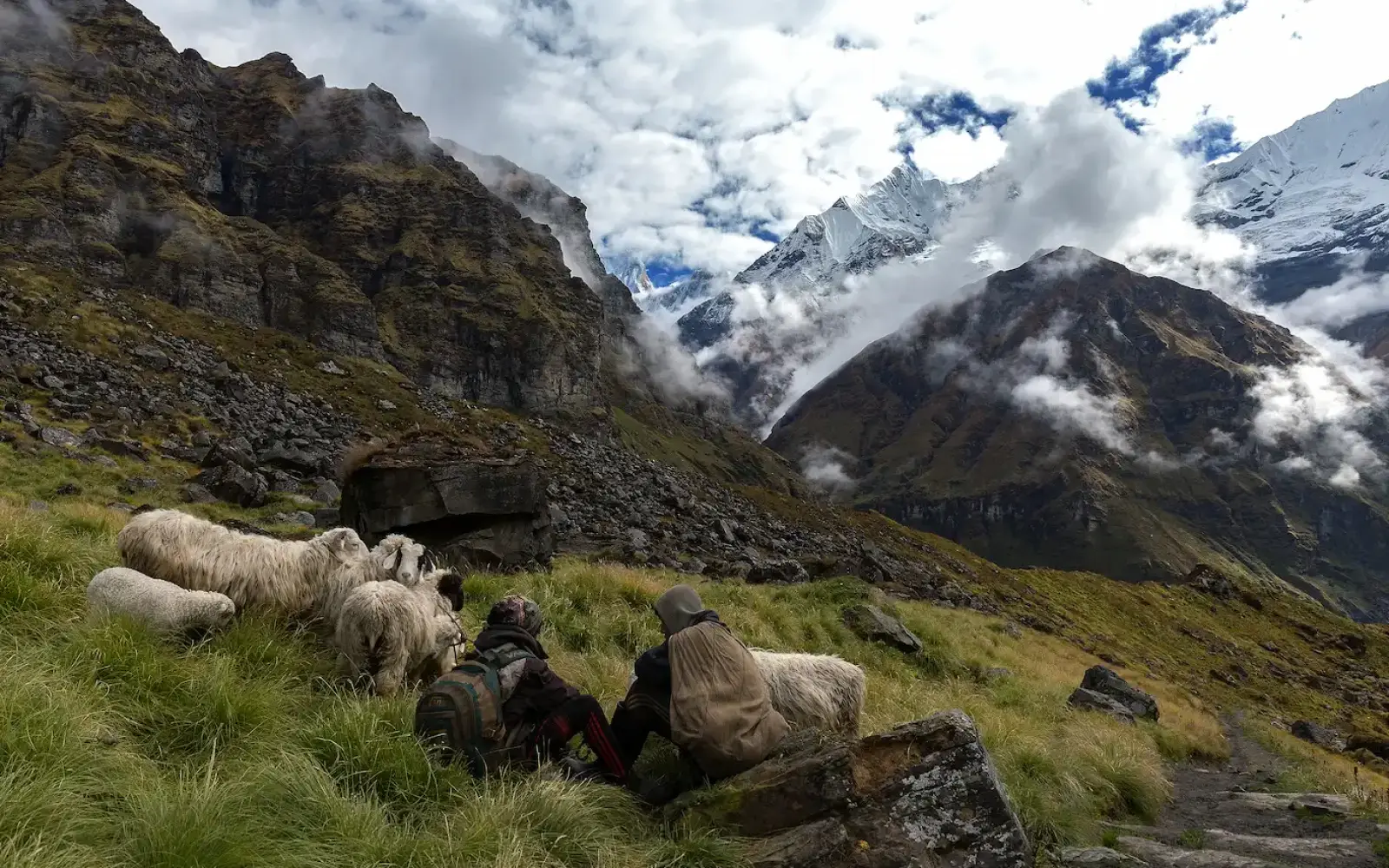
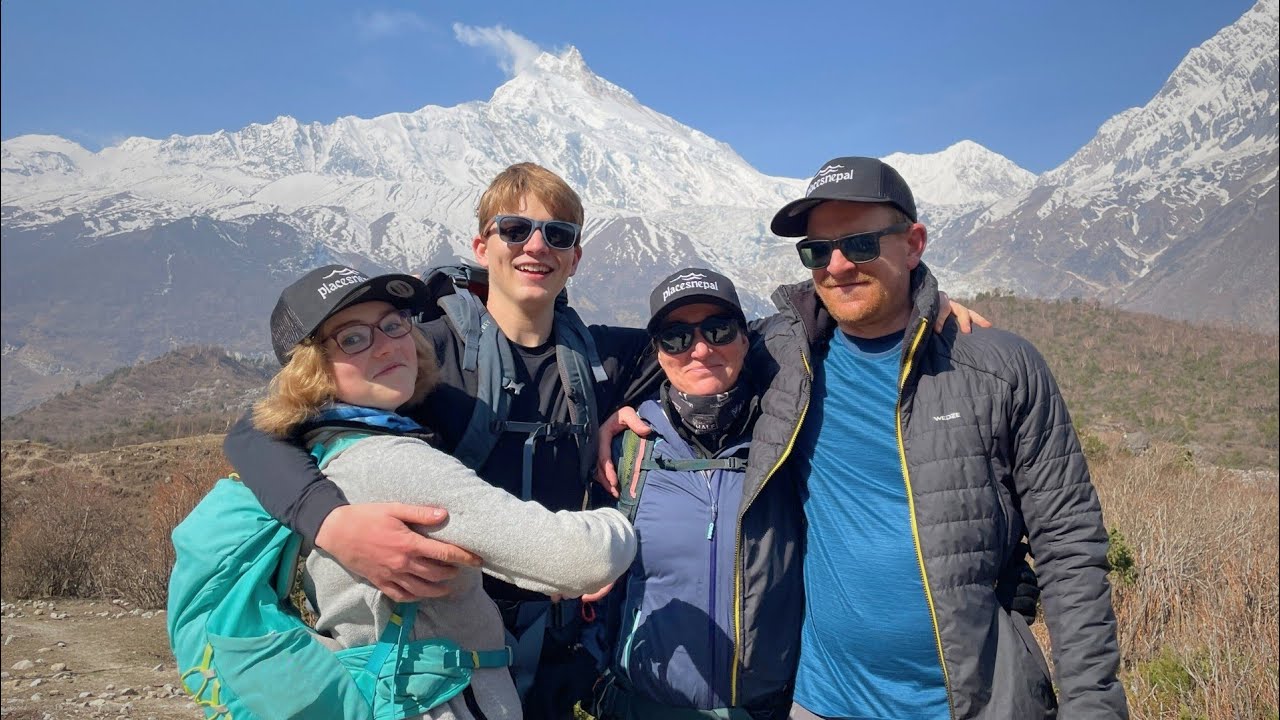
Nar Phu Valley with Annapurna Circuit works because Kang La drops you into Ngawal, where the trail joins the Circuit and carries on toward Thorong La. We compare the 11-day standalone with the 17-day combination on route, cost, effort and time, so you can judge whether the longer trek earns its extra days.
Nar Phu with the Annapurna Circuit: Combining via Kang La and Ngawal, and Whether It's Worth It
Yes, you can combine the two, and the join is a mountain pass. Kang La takes you from Nar Village (4,110 m) down to Ngawal (3,660 m), a village on the upper Annapurna Circuit trail. From Ngawal you have two choices. You can walk out and drive home, which is our 11-day Nar Phu Valley Trek. Or you can keep going through Manang, Thorong La and Muktinath, which is our 17-day Nar Phu Valley Trek with Annapurna Circuit.
Deciding between them is a separate question, and the answer is not always the longer trek. This guide explains how the routes connect, what the Circuit side adds, what it costs in days, money and effort, and who we think should choose each option.
The short answer
- Route: Koto, Nar Phu, Kang La, Ngawal, Manang, Thorong La, Muktinath, Jomsom. It is a modified Circuit, not a full one.
- Time: 17 days against 11. Add an arrival day and a departure day to the standalone and the real gap is about 4 days.
- Cost: US$660 to US$990 more per person at matched group sizes, before allowing for the hotels and porter the 17-day price includes.
- Effort: a second high pass, six unbroken walking days after the Nar rest day, and a night at 4,600 m. Harder than Nar Phu alone, but not twice as hard.
- Our view: combine if you have the days, want Thorong La and Muktinath, and have trekked above 4,000 m before. Stay with Nar Phu alone if its remoteness is the point or time is tight.
Trek the Nar Phu Valley Trek
The Nar Phu Valley Trek explores remote Himalayan landscapes, ancient Tibetan villages, and untouched valleys—perfect for experienced trekkers seeking adventure and culture.
Can You Combine Nar Phu Valley with the Annapurna Circuit?
Yes. The two routes meet at Ngawal, and we run the combination as one 17-day trip.
Nar Phu branches away from the Annapurna route at Koto, where your guide registers the restricted-area permit at the checkpoint. From there the trail follows the Nar Khola through pine forest to Meta, climbs to Phu, comes back down to Nar Phedi and climbs again to Nar Village. Kang La then links Nar to Ngawal. Wikipedia describes the pass as the high-altitude link between the Nar Phu valley and the Annapurna Circuit, and notes that the path starts in Nar village.
The connection makes sense on the ground because the pass delivers you to the Circuit side of the range. At Ngawal, Manang is a day's walk away. Nothing has to be rearranged: no transfer, no drive, and no walk back to Koto or Dharapani. The standalone trek crosses the same pass but turns downhill at Ngawal. It walks toward Pisang and then takes a shared jeep to Besisahar.
This is a modified Circuit, and we say so. Our standard 10-day Annapurna Circuit goes Dharapani, Chame, Pisang, Manang (see the Circuit itinerary). The combination leaves that line at Koto and rejoins it at Ngawal, so Nar Phu replaces the Chame and Pisang stretch. It also begins with a drive to Dharapani and ends with a drive out of Jomsom. There is no single fixed definition of the full circuit. Wikipedia gives its length as 160 to 230 km depending on where motor transport is used and where you finish. What you walk on this trip is Dharapani to Koto, the Nar Phu loop, and then Ngawal, Manang, Thorong La, Muktinath and Jomsom.
How the Nar Phu and Annapurna Circuit Routes Connect
Dharapani → Koto → Meta → Phu → Nar Phedi → Nar Village → Kang La → Ngawal → Manang → Yak Kharka → Thorong Phedi → Thorong La → Muktinath → Kagbeni → Jomsom, then a drive to Pokhara and on to Kathmandu.
The Nar Phu to Annapurna Circuit link is Kang La. The two trips share the first half and split at Ngawal.
| Section | Standalone (11 days) | Combination (17 days) |
|---|
| Dharapani to Koto | Walked | Walked |
| Koto, Meta, Phu, Nar Phedi, Nar | Walked | Walked |
| Kang La to Ngawal | Crossed | Crossed |
| After Ngawal | Walk down toward Pisang, shared jeep to Besisahar, bus to Kathmandu next day | Manang, Yak Kharka, Thorong Phedi, Thorong La, Muktinath, Kagbeni, Jomsom; then drive to Pokhara and Kathmandu |
Each stage plays a different role:
- Nar Phu is the remote, restricted-area section. Everything above Koto reaches the villages by porter or mule, and guest houses are small and family-run. Our difficulty guide covers what that means for help and supplies.
- Kang La is the connection. It is the one high crossing that joins the two routes.
- Ngawal marks the move into the established Annapurna corridor. Our trip page describes the lodges from Ngawal to Muktinath as more developed than those in Nar Phu.
- From Ngawal the route climbs again toward Thorong La, the highest point of the Circuit.
Ngawal is not a transfer point. On the combination you do not return to Koto or Dharapani at any stage. You keep walking up the valley.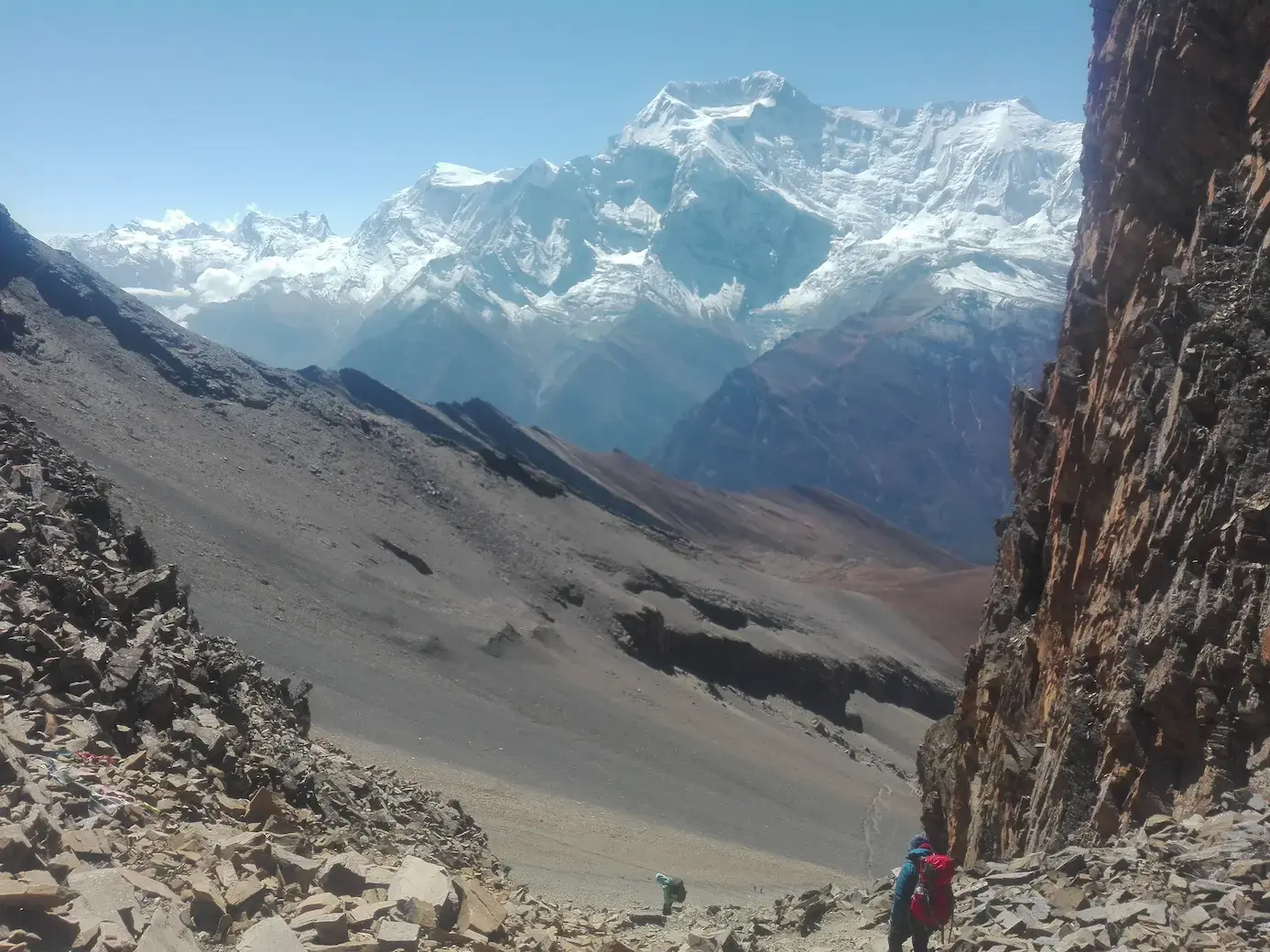 Photo: Kang La Pass
Crossing Kang La Pass from Nar Village to Ngawal
Kang La is the reason Nar Phu and the Circuit can be joined, and it is the day the first half of the trip is built around.
Where the crossing starts
The crossing starts in Nar Village at 4,110 m. Nar is the last place you sleep before the pass, and there is no overnight stop between Nar and Ngawal. Day 8 is a scheduled rest day in Nar for exactly this reason. The day of the crossing starts in the dark.
The ascent
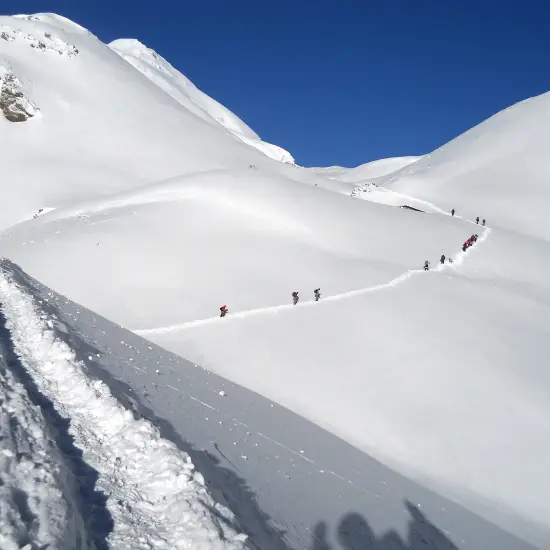
On Places Nepal's elevation for the pass, the climb is about 1,130 m (our arithmetic: 5,240 m minus 4,110 m). The trail rises on rocky switchbacks. Our 11-day trip page describes the climb as non-technical, but cold, thin air and loose ground reward slow, even walking. At the top, views open toward Annapurna II, Gangapurna and Tilicho Peak, and the group has a packed lunch at the pass.
The descent toward Ngawal
The descent from Kang La Pass to Ngawal is the part that surprises people. It is a drop of about 1,580 m to 3,660 m over steep, loose ground. As you lose height, the alpine landscape gives way to juniper shrubs and greener slopes, and the route enters the Manang valley. Ngawal is a village above the Marsyangdi River.
Why the crossing is demanding
- It is the longest day of the Nar Phu section. Our 17-day page gives a planning range of 8 to 10 hours for each pass day. Treat it as a guide, not a timetable.
- Climb and drop are both large. Roughly 1,130 m up and 1,580 m down in one day is hard on lungs and knees.
- There is no way out midway. Once you leave Nar, the choices are to continue or to turn back to Nar.
- Conditions decide. Cold wind, fresh snow or poor visibility can change the plan.
How the guide assesses conditions
Your guide reviews the next day's plan and the weather the evening before. Early starts and fresh snow can change the plan, and the guide's decision on the pass is final. A weather delay can push the crossing back a day. The 17-day itinerary has no spare day built in, and our trip page lists extra nights caused by delays as not included. Keep your dates flexible, especially around your flight home.
Trek the Nar Phu Valley Trek with Annapurna Circuit
Two Trails, One Epic Adventure – Venture Into the Hidden Nar Phu Valley and Conquer the Annapurna Circuit
How high is Kang La?
Kang La is at 5,240 m (17192 ft) above sea level. This is the we use at Places Nepal as we recorded it one of our trips to Nar Phu Valley. It might differ from other altitudes mainly becuase of where the altitude is recorded. Nevertheless, Kang La Pass is a hihg altitude pass. Do not confuse Kang La with Thorong La. Thorong La is a separate pass on the Circuit at 5,416 m (17,769 ft), the highest point of the route.
Reaching Ngawal is the halfway point, not the end. After Day 9 you still have eight days of the 17-day plan ahead of you.
What Happens After Ngawal?
On the standalone trek, Ngawal is where the mountain section ends. On the combination, it is where the Annapurna Circuit section begins. We cover the route logic here and what each stage adds later, so the two sections do not repeat each other.
Ngawal to Manang (Day 10)
You descend gradually to Manang at 3,540 m, which is 120 m below Ngawal. Our trip page calls it a relatively easy trail past fields and stupas, with a visit to the monastery at Braga on the way. Lunch is at Braga or Manang. After Kang La, this is the recovery day. Ngawal sits on the upper trail above the Marsyangdi, and from here you share the valley with Circuit trekkers walking up to Manang. That is why lodges, food and facilities change character.
Manang to Yak Kharka (Day 11)
You gain 570 m of sleeping altitude and finish at Yak Kharka (4,110 m). The route passes Tengi (3,700 m), and lunch is at Gunsang (3,900 m). Our trip page notes that this stop helps the body adjust before the pass. Two things are worth knowing before you book. First, Manang is where many Circuit trekkers stop for a rest day, and our 10-day Circuit itinerary schedules one there. The 17-day itinerary does not. Second, after the rest day in Nar, the 17-day itinerary has six walking days in a row, Days 9 to 14.
Yak Kharka to Thorong Phedi (Day 12)
You gain another 490 m and sleep at Thorong Phedi (4,600 m). This is the highest night of the whole trek, 490 m higher than anything you sleep at in Nar Phu. The trail narrows in places and crosses the Jarsang Khola on a wooden bridge. Lunch is at a lodge in Thorong Phedi. In the afternoon you can take a short acclimatisation walk up to High Camp (4,880 m). Rest well, because the start tomorrow is early.
This stage matters most for preparation. If you feel unwell, tonight is the decision point, not the pass. Our guide to Thorong Phedi vs High Camp compares the two overnight options, and the Annapurna Circuit acclimatisation guide explains how to read symptoms.
Thorong La to Muktinath (Day 13)
This is the second high crossing. You rise before dawn. Our trip page describes the climb as long but gradual, and the descent into the Mustang region as steep but manageable. On Places Nepal's figures, the climb from Thorong Phedi is about 800 to 900 m, depending on which Phedi elevation you use (the 17-day page gives 4,600 m, our Circuit elevation guide gives 4,525 m). The drop to Muktinath (3,710 m on the 17-day page) is about 1,700 m. The 17-day page again gives 8 to 10 hours as a planning range for the day. Our Thorong La guide has the detail.
Muktinath is a pilgrimage site that Wikipedia describes as sacred to both Hindus and Buddhists. On Day 14 the itinerary visits the temple and its 108 water spouts, then descends the arid Kali Gandaki valley through Ekle Bhatti and Kagbeni (2,810 m) to Jomsom (2,760 m).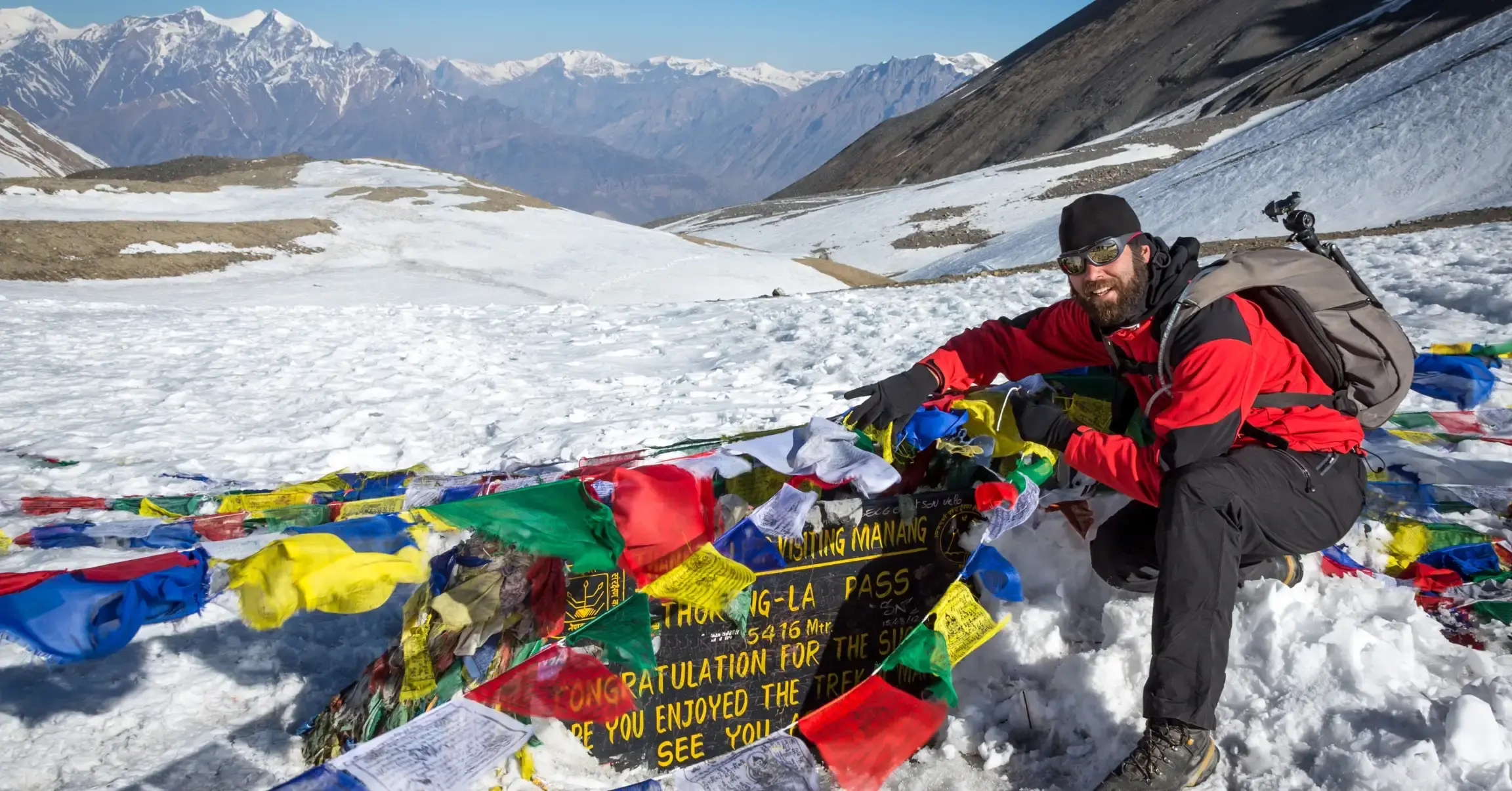 Photo:Trekker at Thorang La
The exit (Days 15–17)
Day 15 is a shared jeep or local bus from Jomsom to Pokhara, with the 17-day page estimating 8 to 9 hours of road. Day 16 is a tourist bus to Kathmandu, which the page puts at 6 to 8 hours, followed by a farewell dinner. Day 17 is departure. Flights are an optional upgrade on both legs (Jomsom to Pokhara and Pokhara to Kathmandu), cost extra and depend on weather. We do not promise them.
Nar Phu Valley with Annapurna Circuit: Day-by-Day Itinerary
This is the Nar Phu combined trek itinerary as it appears on the live trip page for the 17-day package. The 11-day trek has a different pacing in Nar Phu and a different exit after Ngawal. For its detail, see our Nar Phu Valley Trek itinerary.
| Day | Route | Overnight | Approx. altitude |
|---|
| 1 | Arrive in Kathmandu; welcome dinner and pre-trek briefing | Kathmandu (3-star hotel) | 1,350 m |
| 2 | Bus to Besisahar, shared jeep to Dharapani | Dharapani | 1,960 m |
| 3 | Dharapani to Koto | Koto | 2,610 m |
| 4 | Koto to Meta; permits checked at Koto | Meta | 3,560 m |
| 5 | Meta to Phu | Phu | 4,080 m |
| 6 | Phu to Nar Phedi | Nar Phedi (monastery guest house) | 3,490 m |
| 7 | Nar Phedi to Nar Village | Nar | 4,110 m |
| 8 | Rest and exploration day in Nar | Nar | 4,110 m |
| 9 | Cross Kang La (5,240 m), descend to Ngawal | Ngawal | 3,660 m |
| 10 | Ngawal to Manang, via Braga | Manang | 3,540 m |
| 11 | Manang to Yak Kharka | Yak Kharka | 4,110 m |
| 12 | Yak Kharka to Thorong Phedi | Thorong Phedi | 4,600 m |
| 13 | Cross Thorong La (5,416 m), descend to Muktinath | Muktinath | 3,710 m |
| 14 | Muktinath to Jomsom, via Kagbeni | Jomsom | 2,760 m |
| 15 | Drive Jomsom to Pokhara | Pokhara (3-star hotel) | 830 m |
| 16 | Drive Pokhara to Kathmandu; farewell dinner | Kathmandu (3-star hotel) | 1,350 m |
| 17 | Departure | n/a | n/a |
How to read it:
- Mountain nights run from Day 2 to Day 14. That is 13 nights, and the last one is in Jomsom.
- The first nine days are the Nar Phu section. The Circuit section runs from Day 10 to Day 14.
- There is one scheduled rest day, on Day 8 in Nar. The 11-day trek has two (Phu and Nar). There is no scheduled rest day at Manang.
- Altitudes are the figures on the live 17-day page. Other published sources differ by tens of metres.
What You Experience After Leaving Nar Phu Valley
The Circuit side is not more of Nar Phu. It is a different kind of trekking, and that is the main reason to go.
Manang
Manang is a real settlement with infrastructure. Our trip page says it has Wi-Fi cafés, bakeries and trekking shops, and it describes the lodges from Ngawal to Muktinath as more developed than those in Nar Phu, with warmer dining halls, more varied food and sometimes attached bathrooms. After Nar Phu's stone lodges, shared toilets and monastery guest house at Nar Phedi, the change is obvious. The backdrop is Annapurna III, Gangapurna and Tilicho Peak.
There is a trade-off. Our difficulty guide notes that Nar Phu sees far fewer trekkers than the Circuit, so the quiet you had in Phu and Nar will not follow you here.
Yak Kharka and Thorong Phedi
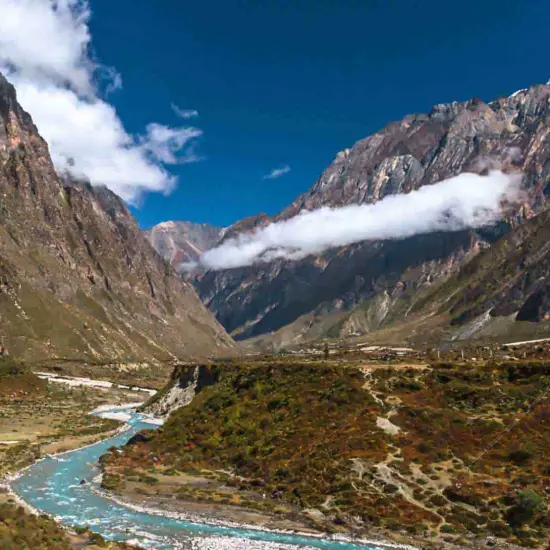
These two nights are about preparation more than sightseeing. The ground becomes higher and barer, and Yak Kharka is a windswept meadow below snow peaks. The pace you set on these two days has a lot to do with how you feel on the pass.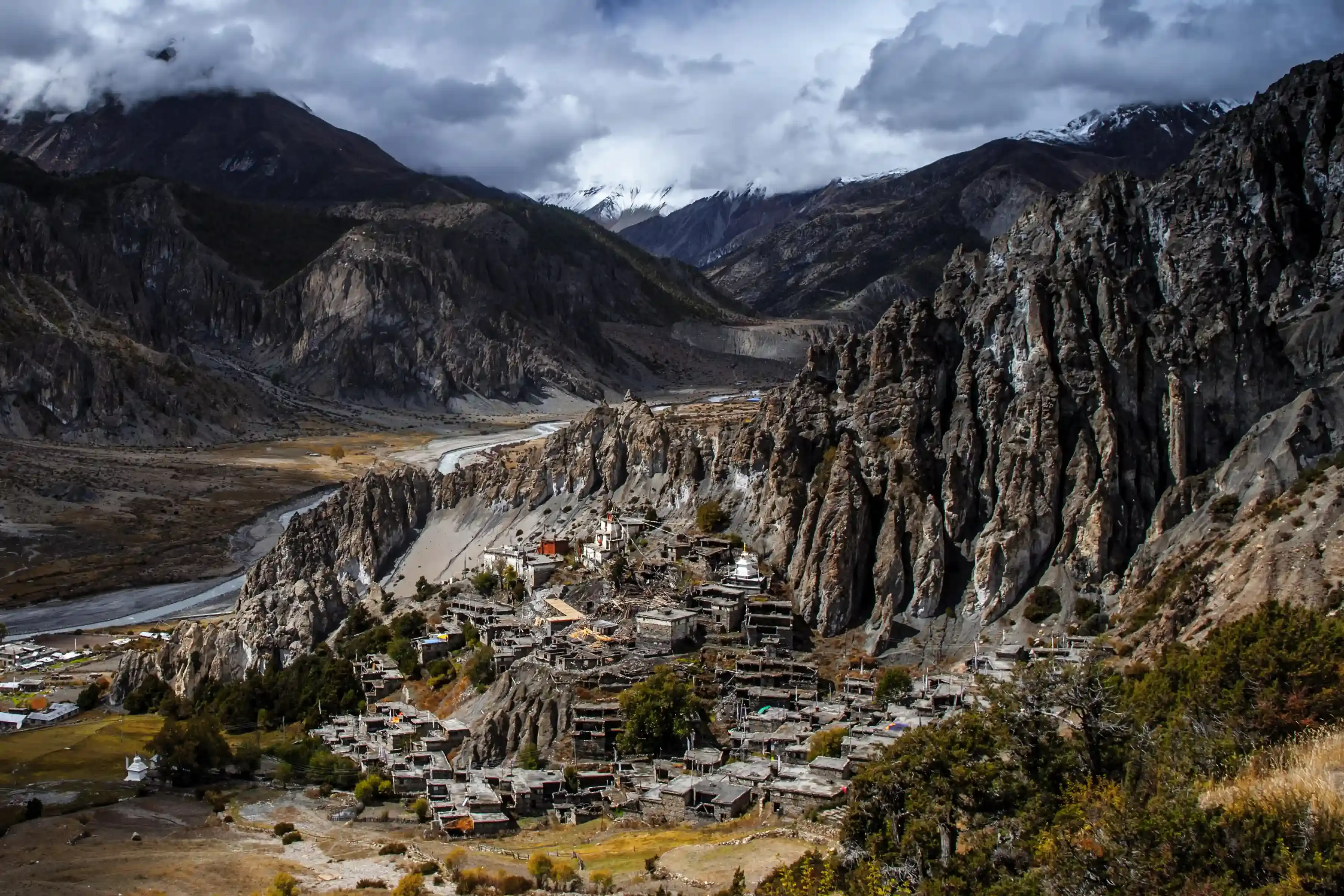 Photo: Panaromic View of Manag Valley
Thorong La
Thorong La (5,416 m) is the highest point of the Annapurna Circuit, and it adds a second pass to the trip. It differs from Kang La in ways that matter, set out in the next section. One point stands out: the climb starts from a higher bed than Kang La's, and there are lodges at Thorong Phedi and High Camp.
Muktinath
Muktinath is the cultural turning point. Our trip page describes the people of Nar and Phu as ethnic Tibetans who practise Tibetan Buddhism. Muktinath is sacred to both Hindus and Buddhists, according to Wikipedia, and it sits at the foot of Thorong La. After it, the walk follows the Kali Gandaki valley, a dry, windswept landscape toward lower Mustang. It is a very different landscape from the pine forest of the lower Marsyangdi.
What the Circuit does not add: solitude, or more of Nar Phu. If the remote valley is what you want most, the extra days will not improve it.
Kang La vs Thorong La: Two Different High Passes
| Factor | Kang La | Thorong La |
|---|
| Elevation | 5,240 m (17,192 ft) on Places Nepal's pages; up to about 5,320 m elsewhere | 5,416 m (17,769 ft) |
| Route connection | Nar Village to Ngawal | Thorong Phedi (or High Camp) to Muktinath |
| Sleeping altitude before the pass | Nar Village, 4,110 m | Thorong Phedi, 4,600 m (High Camp, 4,880 m, is an optional afternoon walk) |
| Climb on the day (our arithmetic) | About 1,130 m | About 800 to 900 m from Phedi; about 540 m from High Camp |
| Descent on the day (our arithmetic) | About 1,580 m to Ngawal | About 1,700 m to Muktinath |
| Environment | Remote restricted-area valley; non-technical; loose ground; no lodge between Nar and Ngawal; very few other groups | Main Circuit crossing; lodges at the base; non-technical in normal conditions |
| Main challenge | The bigger climb in one day, and a steep, loose descent, far from help | The highest night of the trek, cold and wind at 5,416m, Annapurna Circuit | Crosses the Annapurna Circuit |
Neither pass is simply the harder one. Kang La asks for more climbing from a lower bed. Thorong La asks for less climbing from a higher bed, and its cold and wind can be severe. Snow, wind and visibility on the day can reverse the order, so do not treat the two crossings as interchangeable. Doing both makes the combination more demanding than Nar Phu alone.
Trek the Annapurna Circuit Trek
A legendary high-altitude trek in Nepal that encircles the Annapurna Massif, offering dramatic scenery, diverse cultures, and the iconic crossing of Thorong La Pass at 5,416 meters.
Is It Worth Combining Nar Phu with the Annapurna Circuit?
It depends on what you want from the trip, and the combination is not better value just because it covers more ground. We weigh it across five factors. Figures come from the live pages on 4 November 2026.
Time
The headline gap is 6 days: 17 against 11. That overstates it. The 11-day package starts on the morning you leave Kathmandu and ends when the bus returns, so it includes no arrival day and no departure day. Add one of each and the standalone is about 13 days door to door. The real gap is about 4 days.
| Block | Standalone | Combination | Difference |
|---|
| Arrival day in Kathmandu | 0 | 1 | +1 |
| Drive to Dharapani and walk to Ngawal | 9 | 8 | −1 |
| Ngawal to back in Kathmandu | 2 | 7 | +5 |
| Departure day | 0 | 1 | +1 |
| Total | 11 | 17 | +6 |
The −1 is the Phu rest day, which the 17-day plan does not include. Of the seven days after Ngawal, five are on foot and two are on the road, unless you fly. If your trip is fixed at 13 days door to door, the combination does not fit. If you can have 17, the question moves on to cost and effort.
Cost
At matched group sizes, the combination costs US$660 to US$990 more per person. The full table, with the group size behind each price, is in the next section. Allow for what the 17-day price includes (hotels, dinners, a shared porter) before you call that gap "extra trekking".
Physical demand
The combination adds a second high pass and four nights above 3,500 m on the Circuit side (nine in all, against six on the standalone), including the highest night of the trip at 4,600 m. It also removes a rest day. It is more demanding than Nar Phu alone but not twice as demanding. We lay out why in the difficulty section below.
Experience
You gain Manang, the Braga monastery, the Thorong La crossing, Muktinath and the dry Kali Gandaki valley. You do not gain more of Nar Phu, and you give up the quiet. Whether that exchange is worth it is a matter of what you came for.
Travel efficiency
If you are already flying to Nepal for Nar Phu, you have paid the biggest fixed costs: the international flight, the visa and the time away. The marginal cost of the Circuit is the price gap and about 4 extra days. Doing it later would mean paying those fixed costs again.
You could instead book the Circuit as a separate package. Our 10-day Annapurna Circuit trek is listed at US$820 per person for 2 to 5 trekkers. Added to the 11-day trek at US$960 (2 to 5 trekkers), that is US$1,780 for 21 package days. The 17-day trip costs US$1,750 for 3 to 6 trekkers and US$1,950 for 1 to 2. The two sets of inclusions differ, so use this as a marker, not a quote. On a single trip, the combination is the shorter way to see both.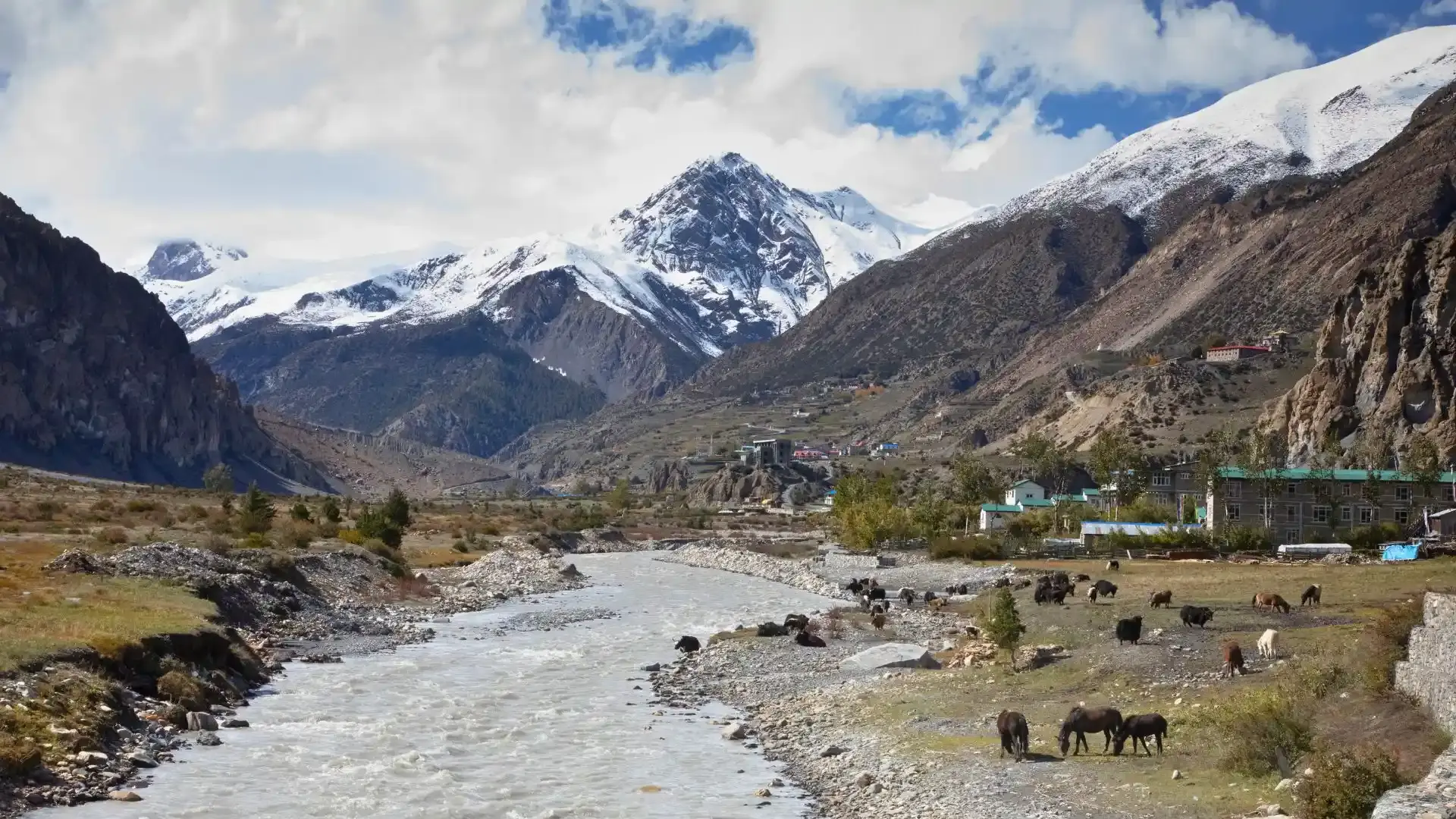
Photo: Mannag Valley During Nar Phu Valley with Annapurna Circuit Trek
Our view
Combine them if you have the days, want Manang, Thorong La and Muktinath, and have trekked at altitude before. Stay with Nar Phu alone if the remoteness is the point, if time or budget is tight, or if you do not want a second pass.
Reasons to Choose the Combined Trek
- Two different environments in one trip. The restricted Nar Phu valley, then the more developed Circuit side.
- Both passes. You cross Kang La on Day 9 and Thorong La on Day 13.
- Nar and Phu, plus the Circuit. You see the remote villages first and then continue, rather than choosing one.
- A cultural shift. The route moves from Tibetan Buddhist valley villages to Manang and then to Muktinath, which is sacred to both Hindus and Buddhists.
- A longer continuous journey. You keep walking up the valley from Ngawal instead of heading down to the road.
- A real acclimatisation advantage, within limits. By the time you reach Thorong Phedi you will have slept four nights at or above 4,000 m (Phu, Nar twice, Yak Kharka). A trekker on our 10-day Circuit will have slept one. That is a genuine argument for putting Nar Phu first. It does not remove the need to report symptoms or to pace yourself.
Reasons to Choose Nar Phu Alone
- Limited holiday time. The 11-day trek is about 13 days door to door, against 17.
- Lower overall cost. US$660 to US$990 less per person at matched group sizes.
- The restricted valley is the goal. The standalone covers Phu, Nar, Kang La and the descent to Ngawal. It is a complete trek, not a shortened one.
- A shorter itinerary with more rest. It has two rest days (Phu and Nar), against one on the 17-day plan.
- No second pass. Thorong La is a serious day on its own.
- A quieter trip to the end. You leave from Ngawal, so you never join the busier Circuit trail.
The standalone trek is not an inferior version. It is a different trip, with a different centre.
Who Should Choose the Combined Route?
It suits trekkers who:
- Have 17 days available.
- Want both the restricted Nar Phu valley and the Circuit.
- Have walked consecutive days above 4,000 m before. Our trip page suggests routes such as Everest Base Camp, the Manaslu Circuit or Langtang as a reference.
- Want to cross two major passes.
- Value one long, continuous mountain journey.
Think carefully if you:
- Have limited time, or need a firm return flight on Day 17.
- Have little preparation for sustained high-altitude walking.
- Prefer a shorter route.
- Dislike basic lodges and shared toilets in the Nar Phu section.
We do not use age on its own to rule anyone in or out. Recent trekking history, preparation, time and the answers below matter more.
| Ask yourself | Combination fits if… | Pause if… |
|---|
| Days | You have 17, or can add 4 to a 13-day plan | Your dates are fixed at 13 or fewer |
| Altitude | You have trekked above 4,000 m on consecutive days | This would be your first high-altitude trek |
| Priorities | You want Nar Phu and Manang, Thorong La and Muktinath | Only Nar Phu interests you |
| Lodges | You are comfortable with basic rooms and shared toilets in Nar Phu | You need private bathrooms throughout |
| Flexibility | You can absorb a weather day | You have a hard flight on Day 17 |
| Budget | The extra US$660–990 per person is comfortable | It would stretch you |
Nar Phu Valley Trek vs Nar Phu with Annapurna Circuit | Factor | Standalone Nar Phu (11 days) | Nar Phu + Annapurna Circuit (17 days) |
|---|
| Published duration | 11 days; about 13 door to door | 17 days, including arrival and departure days | | Starts and ends | Starts the morning you leave Kathmandu; ends when the bus returns | Starts with arrival in Kathmandu; ends with the airport transfer | | Main route | Koto, Nar Phu, Kang La, Ngawal, then a walk toward Pisang and a jeep to Besisahar | Koto, Nar Phu, Kang La, Ngawal, then Manang, Thorong La, Muktinath and Jomsom | | Kang La | Yes | Yes | | Thorong La | No | Yes (Day 13) | | Manang | No; the route turns down toward Pisang | Yes (Day 10) | | Muktinath | No | Yes (Day 13) | | Rest days | 2 (Phu and Nar) | 1 (Nar) | | Highest night | Nar, 4,110 m | Thorong Phedi, 4,600 m | | Highest point | Kang La, 5,240 m | Thorong La, 5,416 m | | Exit | Bus from Besisahar to Kathmandu | Jomsom to Pokhara to Kathmandu; flights optional | | Hotels in the package | None | 2 nights in Kathmandu, 1 in Pokhara | | Porter | Optional extra: US$275 for the trek, shared by two | Included: 1 porter per 2 trekkers | | Permits listed | Nar Phu RAP and ACAP | Nar Phu RAP, ACAP and TIMS | | Physical demand | Challenging: one pass, remote, with 2 rest days | Challenging: two passes, longer, with more services after Ngawal | | Price per person | US$1,200 (1); US$960 (2–5); US$890 (6–10); US$850 (11–15) | US$1,950 (1–2); US$1,750 (3–6); US$1,550 (7–10) | | Best suited to | Trekkers who want the restricted valley and have under about 13 days | Trekkers with 17 days who also want Manang, Thorong La and Muktinath |
Trek the Tsum Valley Trek Discover the Tsum Valley trek, a remote Himalayan journey through a sacred, restricted valley. Explore the full itinerary, trail map, and package pricing before you book your adventure. Price comparison by group size The price tiers on the two pages do not line up, so we compared the price a group of each actual size would pay on each trip. The figures are per person, from the live price tables, and the differences are our arithmetic. | Group size | Standalone | Combination | Difference | Difference if the standalone adds a shared porter (US$137.50 each) |
|---|
| 1 | US$1,200 | US$1,950 | +US$750 | not applicable; a porter is shared by two | | 2 | US$960 | US$1,950 | +US$990 | +US$852.50 | | 3–5 | US$960 | US$1,750 | +US$790 | +US$652.50 | | 6 | US$890 | US$1,750 | +US$860 | +US$722.50 | | 7–10 | US$890 | US$1,550 | +US$660 | +US$522.50 |
Three things to read carefully: - The gap is widest for two people. A pair is in the 2–5 tier on the standalone (US$960) but the 1–2 tier on the combination (US$1,950).
- Do not read the 3–6 price as available to a pair or a solo trekker. US$1,750 applies to groups of 3 to 6.
- The porter changes the comparison. The 17-day price includes a shared porter. On the standalone a porter is optional. If you would hire one, add US$137.50 each to the standalone price when comparing.
Per the live inclusions, the 17-day price pays for: - Five more mountain nights on the Circuit side (Manang, Yak Kharka, Thorong Phedi, Muktinath and Jomsom), with the guide and three meals a day.
- Two Kathmandu hotel nights and one in Pokhara, all 3-star with breakfast. The standalone includes no hotel nights.
- A welcome dinner on Day 1 and a farewell dinner on Day 16.
- A shared porter for every two trekkers.
- Ground transport from Jomsom to Pokhara and from Pokhara to Kathmandu.
It does not pay for international flights, the visa, travel insurance, extra meals in Kathmandu and Pokhara, snacks and drinks, showers and charging, tips, or extra nights caused by delays. Permits are already in the price, so do not add them again. What price per day shows, and what it does notDivide each price by its number of days and the combination costs more per programme day at every group size we can match. For two trekkers it is about US$87 a day on the standalone against US$115 on the combination. For 7 to 10 trekkers it is about US$81 against US$91. That figure is a check, not a verdict on value. The days are not alike: two of the 17 are driving days and one is a departure day. The 17-day price includes hotels, dinners and a porter that the standalone price does not. Neither trek is "cheaper per day" in a way that settles the choice. How Difficult Is the Nar Phu and Annapurna Circuit Combination?The combination is harder than Nar Phu alone, but not twice as hard. Both product pages carry the same label, Challenging, so the label does not tell the two apart. We do not assign a score. These counts, from the live itineraries, show where they differ. | Factor | Standalone (11 days) | Combination (17 days) |
|---|
| High passes | Kang La | Kang La and Thorong La | | Walking days / rest days | 7 / 2 (Day 10 is part walk, part jeep) | 11 / 1 | | Longest run of walking days without a rest day | 3 | 6 (Days 9–14) | | Nights at or above 3,500 m | 6 of 10 | 9 of 13 | | Nights at or above 4,000 m | 4 | 5 | | Highest night | Nar, 4,110 m | Thorong Phedi, 4,600 m | | Services and exits | Few lodges above Koto; plans are slower to change | The same until Ngawal; more lodges and busier villages afterwards |
What makes it harder - Length and unbroken days. After the Nar rest day you walk six days in a row, and both pass days fall inside that run.
- Time at height. Nine nights at or above 3,500 m, against six.
- Two pass days. Our 17-day page gives 8 to 10 hours as a planning range for each, on top of daily walking days of 5 to 9 hours.
- The approach to Thorong La. The last two sleeps climb 570 m and then 490 m.
- Recovery and weather. There is no spare day, and a weather window has to work twice.
What makes it less than twice as hard - Remoteness does not repeat. The Circuit side has more lodges and busier villages, and our difficulty guide notes that on the Circuit you can usually change plans, hire a jeep or turn back through busier villages. In Nar Phu, changing plans is slower.
- Recovery nights in the middle. After Kang La the route sleeps at Ngawal (3,660 m) and Manang (3,540 m), then climbs to 4,110 m and 4,600 m. The sequence is not a continuous climb.
- You arrive at Thorong Phedi having already slept four nights at or above 4,000 m.
Altitude and the sleeping profile. The CDC says travellers who have adjusted are at risk when they move to a higher sleeping altitude, especially if the gain is 600 to 900 m. On the 17-day plan, Day 4 (+950 m, Koto to Meta) and Day 7 (+620 m, Nar Phedi to Nar) are in or above that band. Day 11 (+570 m) is just under it and Day 12 (+490 m) is below it. Our Nar Phu difficulty guide works through the Nar Phu nights in detail, and the Annapurna Circuit difficulty guide covers the Circuit side. Our trip page recommends this route for trekkers who have completed high-altitude routes before and who train regularly, and says it is not recommended for beginners or people with altitude-related health concerns unless they have a personal guide and porter. Fitness helps you walk. It does not decide how you respond to altitude.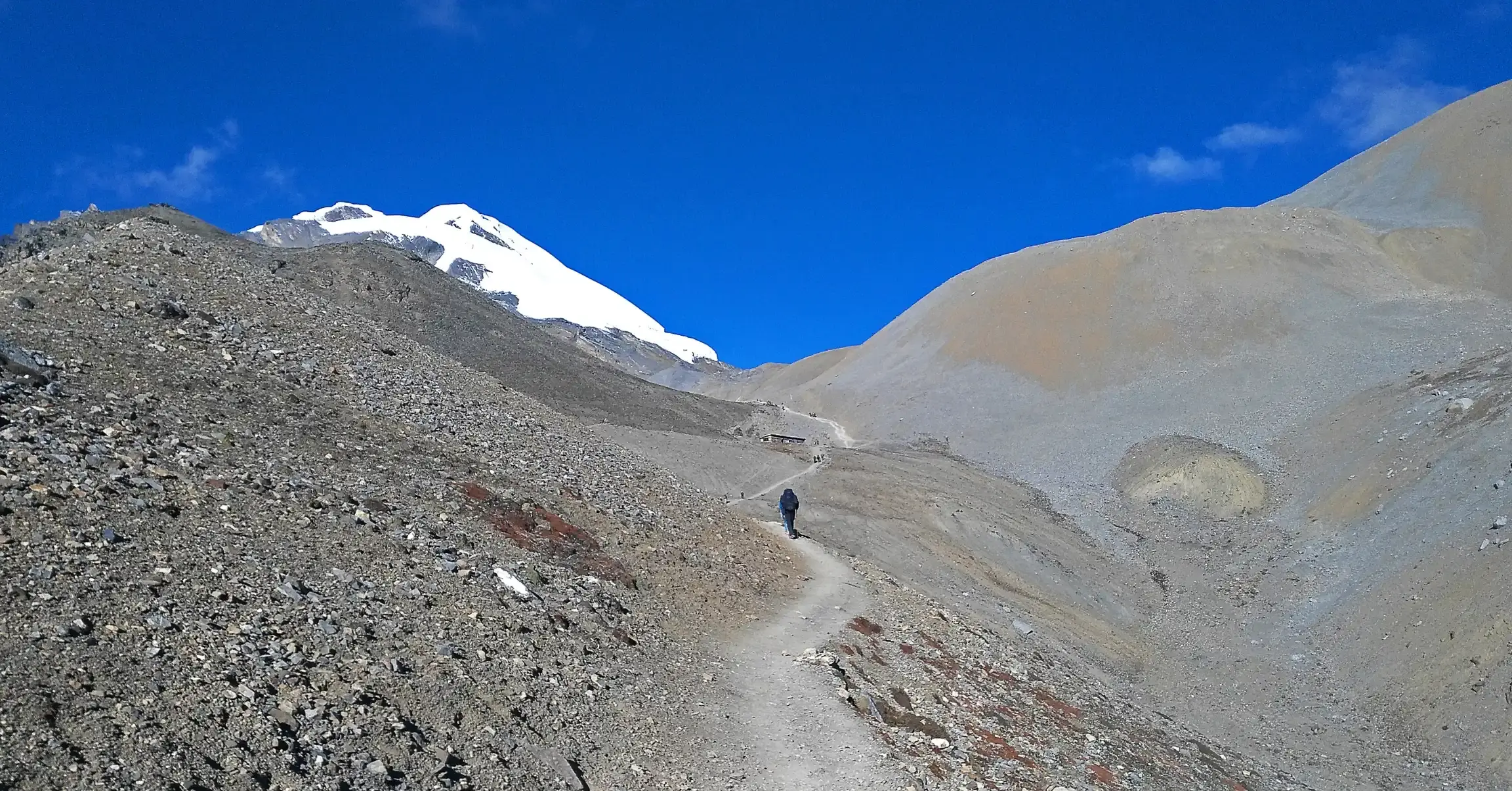 Photo: Thorang La Pass How Much Preparation Do You Need?Start about 10 weeks before departure. Eight weeks is the minimum if you already exercise regularly. The combination has more walking days than the standalone, so do not shorten the plan. - Cardio. Four sessions a week of brisk walking, hiking, jogging, cycling or swimming for 45 to 60 minutes.
- Long walks and hikes. Build up to full-day hikes of 5 to 7 hours with a loaded daypack.
- Uphill and downhill. Include steep climbs and long descents. Kang La drops about 1,580 m in a day and Thorong La about 1,700 m, so the knees need rehearsal. Learn to use trekking poles before you travel.
- Leg strength. Two sessions a week of squats, lunges, step-ups and calf raises.
- Consecutive days. The 17-day plan has a run of six walking days. Practise back-to-back long days, and if you can, a block of four or five.
- Footwear and layers. Break in your boots on long walks and test your layering system in cold, windy weather.
Fitness does not prevent altitude sickness. The CDC states that training and physical fitness do not affect the risk. If you have not been above 3,000 m before, hike at that height first or tell us at booking. For personal medical advice about altitude, speak to your own doctor before you travel. When Is the Best Time to Combine Nar Phu and the Annapurna Circuit?The combination needs two passes to be workable in the same week. Kang La is on Day 9 and Thorong La on Day 13, four days apart, with no spare day in between. A weather delay at the first pass pushes the second back with it. | Season | Months | What it means for two passes |
|---|
| Spring | March to May | Good, with April and May the more settled months. Early March can leave snow and ice on both passes. | | Monsoon | June to August | Not recommended. The road in and the lower trail take the worst of the rain. | | Autumn | September to November | The most stable window, with October strongest. Early September and late November are more variable. | | Winter | December to February | A specialist option. Wikipedia notes that Thorong La is often blocked by snow in the coldest period. |
Autumn (September to November). Post-monsoon air is clear and trails are at their driest. Early September can still carry monsoon influence, especially on the approach. October is generally the strongest month, though not a guarantee: in mid-October 2014 a severe early-winter storm caused deaths among trekkers on the Annapurna routes, and Reuters reported on 16 October 2014 that an avalanche had struck near Phu the day before. November brings clearer skies but colder nights, and winter conditions build as the month goes on. Early and mid-November are usually better than late November. Spring (March to May). Conditions improve as the season goes on. March can still hold snow and ice at the passes, and lodges in the upper areas are worth confirming. April is generally a strong choice, though some snow can lie at height, so microspikes are worth carrying early in the season. May is warmer, with more afternoon cloud and pre-monsoon weather that can change quickly. Monsoon and winter. Landslides on the road to Dharapani and slippery lower trails make the monsoon a poor bet for most trekkers. Our Annapurna Circuit weather guide explains the lower valley. In winter, cold at Phu and Nar, snow on both passes, and closed lodges make the combination a specialist trip that needs local assessment. We cannot guarantee that either pass is open or snow-free in any month, autumn included. Check current conditions before each crossing. For the Kang La detail, see the seasonal sections of our Nar Phu difficulty guide. For Nepal-wide context, see our guide to the best time for trekking in Nepal.
Trek the Everest Base Camp Heli Tour with Breakfast at Hotel Everest View The Everest Helicopter Tour offers stunning aerial views of Mount Everest and the surrounding Himalayan ranges in a single unforgettable flight. Permits and Guide Requirements - Permits you need. Nar Phu is a restricted area, so you need a Restricted Area Permit (RAP) for the valley and an Annapurna Conservation Area Permit (ACAP) for the Annapurna region. The 17-day package also lists a TIMS card.
- Current fees. The Nepal Tourism Board tariff for the Nar Phu RAP is US$100 for the first 7 days from September to November, US$75 from December to August, and US$15 for each extra day. The ACAP is NPR 3,000, or NPR 1,000 for SAARC nationals. Our cost and permits guide sets this out, and our trekking permits guide covers the wider picture.
- What is already in the price. The 17-day package includes the Nar Phu RAP, the ACAP and the TIMS card. Do not add them again. By our count the 17-day itinerary spends 6 days in the restricted area (Days 4 to 9), inside the first-week fee. The standalone spends 7.
- Guide. Restricted-area trekking requires a licensed guide through a registered agency, with a maximum of 7 trekkers per guide. Since 22 March 2026 a solo trekker can obtain their own permit, but independent trekking without a guide is still not allowed.
Rules and fees change. Confirm them against the Nepal Tourism Board and the Department of Immigration at the time you book. Accommodation, Meals and Transport - Kathmandu and Pokhara. Two nights in Kathmandu (Days 1 and 16) and one in Pokhara (Day 15), in 3-star hotels with breakfast. Upgrades to 4 or 5-star hotels are available on request.
- Mountain lodges. Thirteen nights, Days 2 to 14, on a twin-share basis. In Nar Phu these are basic stone lodges and monastery guest houses with shared toilets. From Ngawal to Muktinath the lodges are more developed, and Jomsom has more comfort again. Bedrooms are not heated, so we provide a four-season sleeping bag and a duffel bag, both returned after the trek. Charging may cost extra.
- Meals. All three meals are included while trekking, with buffet breakfast in the hotels, a welcome dinner on Day 1 and a farewell dinner on Day 16. The trip page lists 16 breakfasts, 15 lunches and 15 dinners. Other meals in Kathmandu and Pokhara are yours to arrange, and drinks, snacks and bottled water are extra.
- Transport. A local tourist bus from Kathmandu to Besisahar, a shared 4WD jeep to Dharapani, a shared jeep or local bus from Jomsom to Pokhara, and a tourist bus from Pokhara to Kathmandu. Upgrades are available: a private jeep to Dharapani and flights from Jomsom to Pokhara (about 20 minutes) and Pokhara to Kathmandu (about 25 minutes), at extra cost. Flights depend on weather.
- Porter. One porter for every two trekkers is included. Ask for the current weight allowance when you book.
Package inclusions do not cover every meal, personal expense or optional service. The list of exclusions on the trip page is the one to read before you pay. What to Pack for the Combined TrekPack in categories, and plan for a range from warm valleys to well below freezing on both passes: - Layers: base layers, fleece or mid-layer, and an insulated jacket for pass mornings and evenings.
- Waterproof jacket and trousers.
- Broken-in trekking boots, and camp shoes.
- Gloves and a warm hat; sun hat, sunglasses and sun protection.
- Headlamp with spare batteries.
- Water bottles and a way to treat water.
- Personal medication and a small first-aid kit.
- Power bank or solar charger, and cash for personal expenses.
- Trekking poles.
We provide a four-season sleeping bag and a duffel bag. Our Annapurna Circuit packing list is built around the Thorong La side of this trip, and the general Nepal trekking packing list covers the rest.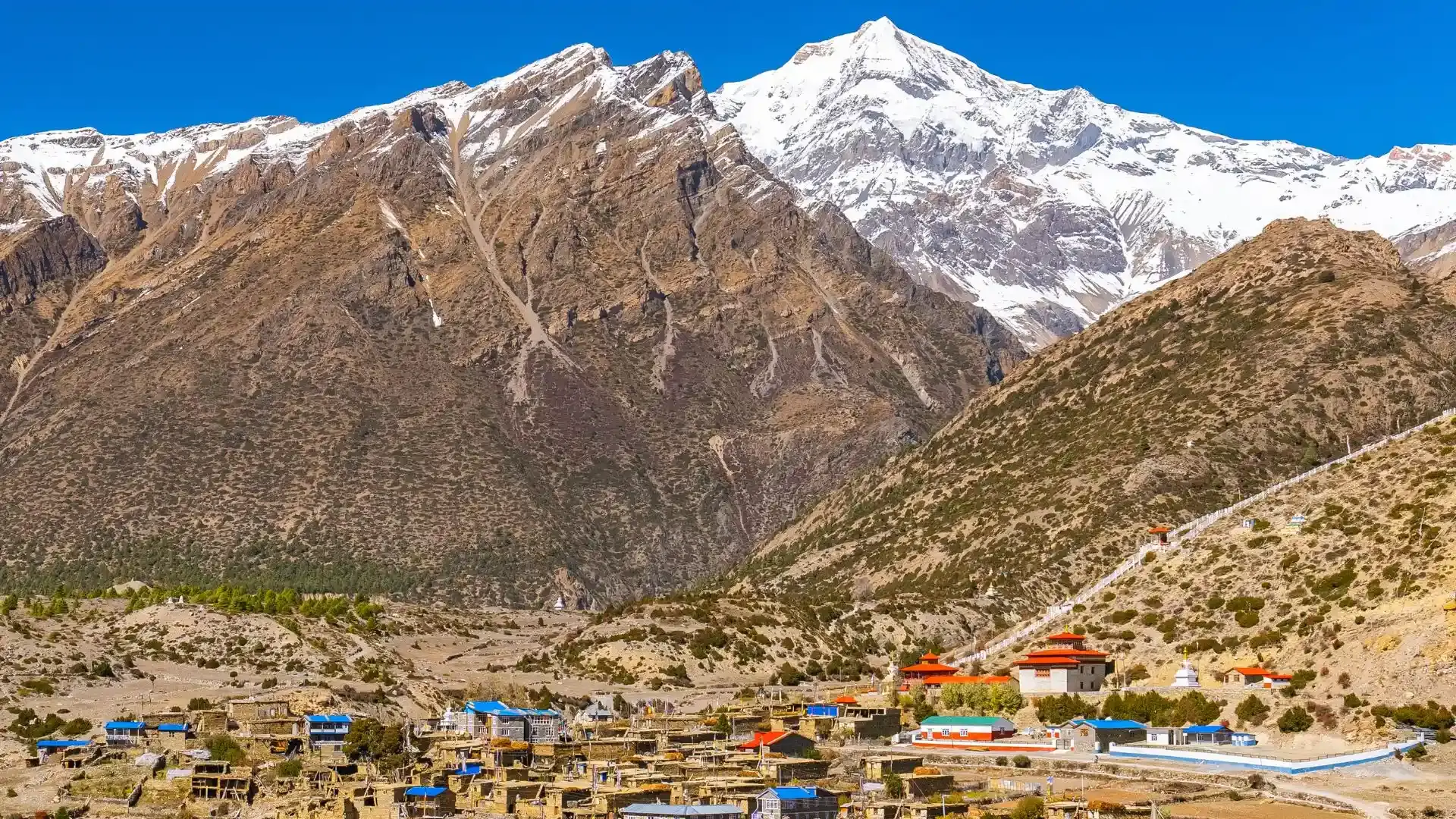 Safety and Flexibility - Acclimatise properly. The itinerary builds in a rest day in Nar and some lower sleeping nights after Kang La. It only works if you keep to the pace your guide sets.
- Report symptoms early. Headache, nausea, dizziness, unusual tiredness or poor sleep should be mentioned to your guide the same day. Do not wait for the morning of a pass. Our altitude sickness guide explains the signs and what to do.
- Weather is assessed before both passes. The guide's decision on the day is final.
- Expect the itinerary to move. Weather, snow or health can change the plan.
- Insurance. Your policy must cover trekking at altitude and emergency helicopter evacuation. Our 11-day page asks for cover to 5,500 m, which also covers both passes on this trip (Thorong La is 5,416 m).
- Helicopter evacuation depends on weather and daylight. No operator can guarantee it. The Nar Phu section has few health facilities, and rescue access is limited there.
We do not diagnose altitude illness, and nothing in this article is medical advice. Frequently Asked QuestionsCan you combine Nar Phu Valley with the Annapurna Circuit?Yes. The two routes meet at Ngawal after the Kang La crossing, and we run them as one 17-day trip. It is a modified Circuit: you walk Dharapani to Koto, the Nar Phu loop, and then Ngawal, Manang, Thorong La, Muktinath and Jomsom. How do you get from Nar Phu Valley to the Annapurna Circuit?You cross Kang La from Nar Village to Ngawal on Day 9, then continue to Manang the next day. You do not return to Koto or Dharapani. Do you cross Kang La Pass to reach Ngawal? Yes. It is about 1,130 m up from Nar (4,110 m) to 5,240 m and about 1,580 m down to Ngawal (3,660 m), using Places Nepal's elevation. Published figures for the pass differ by up to about 80 m. What happens after Ngawal?On the 17-day trek: Manang, Yak Kharka, Thorong Phedi, Thorong La, Muktinath, Kagbeni and Jomsom, then road transport to Pokhara and Kathmandu. On the 11-day trek: a walk down toward Pisang, a shared jeep to Besisahar and a bus to Kathmandu. Does the combined trek include Thorong La Pass?Yes. You cross Thorong La (5,416 m) Is the combined trek harder than Nar Phu alone?Yes. It adds Thorong La, three more nights above 3,500 m (nine against six), a night at 4,600 m and a run of six walking days. It is not twice as hard, because the Circuit side has more services and some lower sleeping nights. Is it worth combining Nar Phu with the Annapurna Circuit? It is worth it if you have the days, want Manang, Thorong La and Muktinath, and have trekked at altitude before. It is not worth it if the remote valley is your main interest, or if time or budget is tight. Can you do Nar Phu without continuing to the Annapurna Circuit?Yes. Our 11-day Nar Phu Valley Trek ends at Ngawal and returns by road, and it is a complete trek in its own right. How much more does the combined trek cost?At matched group sizes it costs US$660 to US$990 more per person: US$750 for one trekker, US$990 for two, US$790 for three to five, US$860 for six and US$660 for seven to ten. The 17-day price includes hotels, dinners and a shared porter that the standalone does not. What is the best time for the combined trek?Autumn, from late September to early November with October strongest, and spring, with April and May the more settled months. Both passes need workable conditions, and neither season guarantees them. Do you need a guide for the Nar Phu and Annapurna Circuit Trek?Yes. Nar Phu is a restricted area, so a licensed guide through a registered agency is mandatory, with a maximum of 7 trekkers per guide. Our package includes a guide throughout. Can the combined itinerary be customised?Within limits. The trip page offers a private jeep to Dharapani, flights from Jomsom to Pokhara and Pokhara to Kathmandu, hotel upgrades, and detours to Kagbeni, Tatopani or an extra stay in Pokhara. For other changes, such as extra acclimatisation time, talk to us. We cannot promise every change on every departure. Choosing Between the Two TreksIf you are still deciding, the question to settle is how many days you have. If you have about 13, the Nar Phu Valley Trek is a complete trip. If you have 17 and want the Circuit as well, the Nar Phu Valley Trek with Annapurna Circuit is the one to look at. Tell us your dates and group size through our trip planning form and we will talk you through available departures, group-size pricing, the differences between the two itineraries, and whether your schedule leaves room for the longer one. Prices and availability for your dates are confirmed with our team directly. Sources |
|