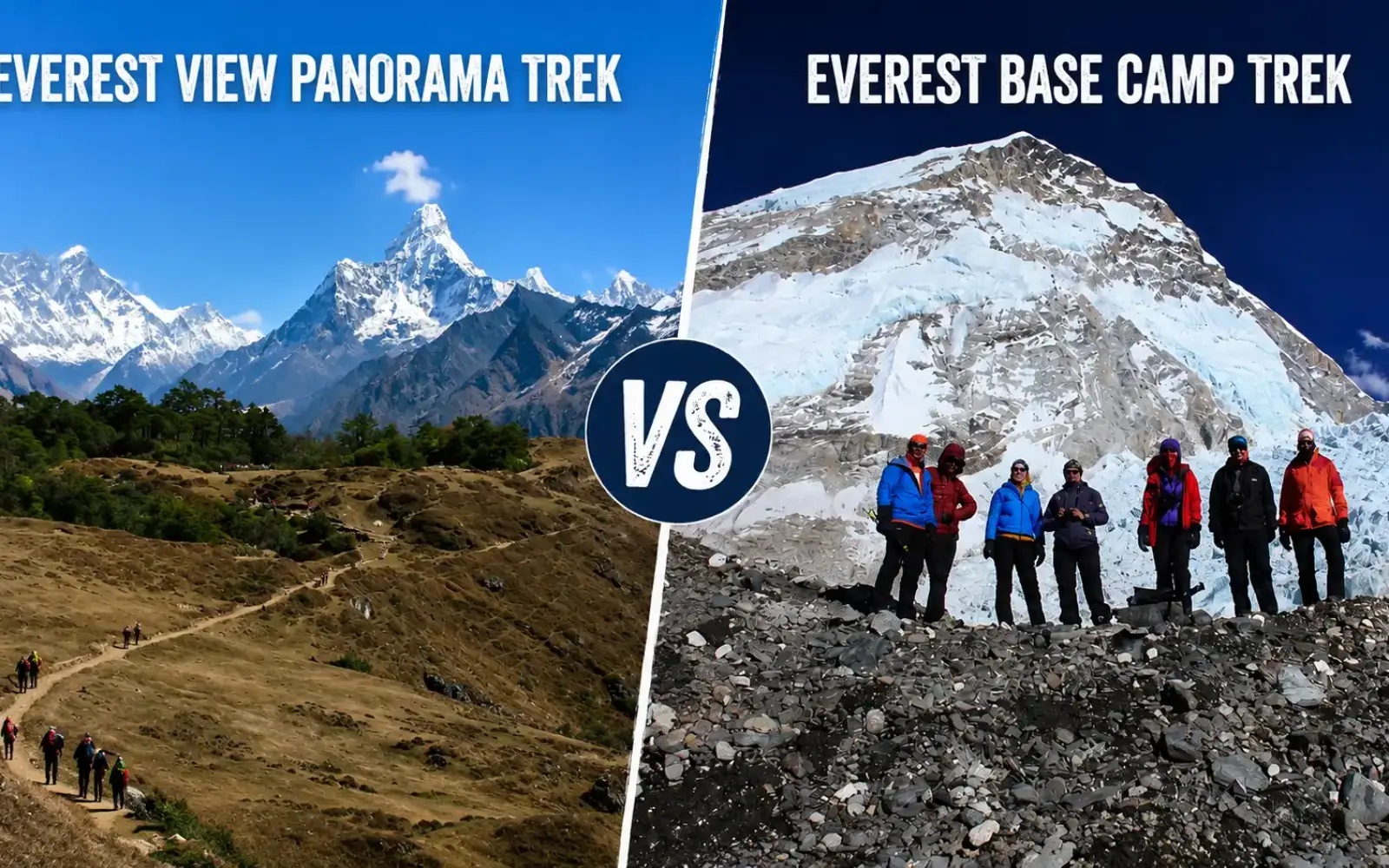
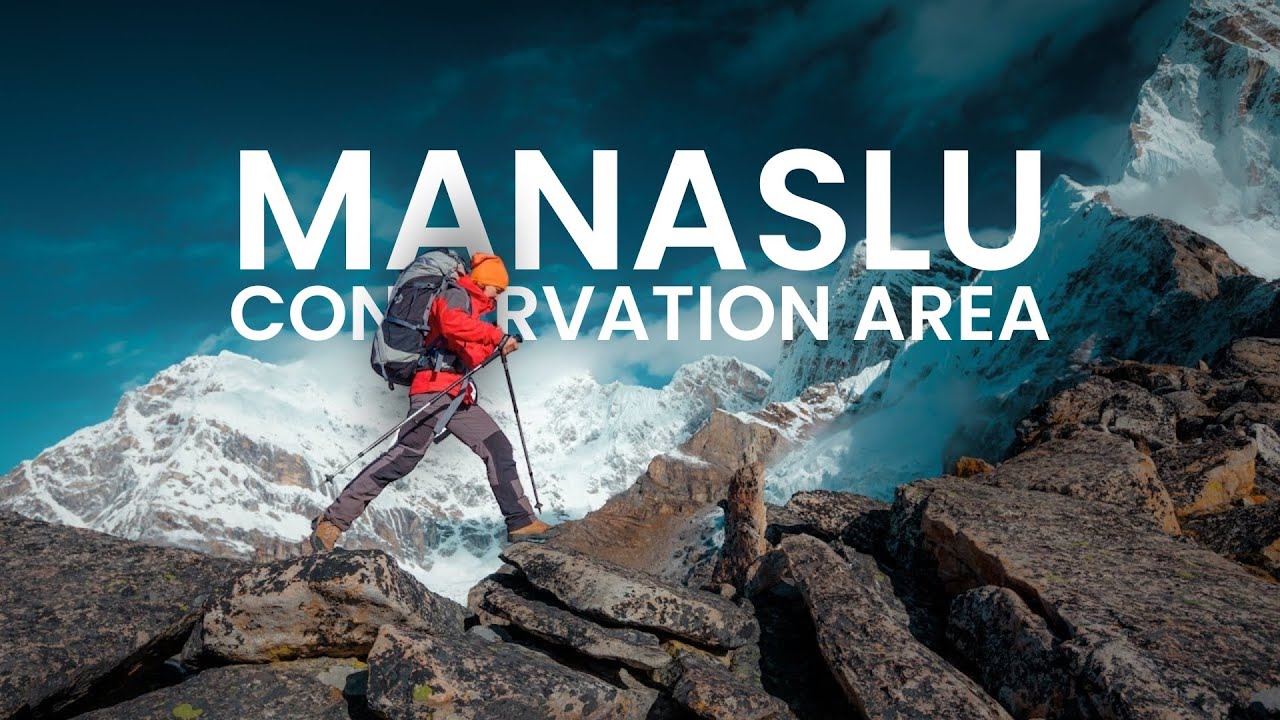
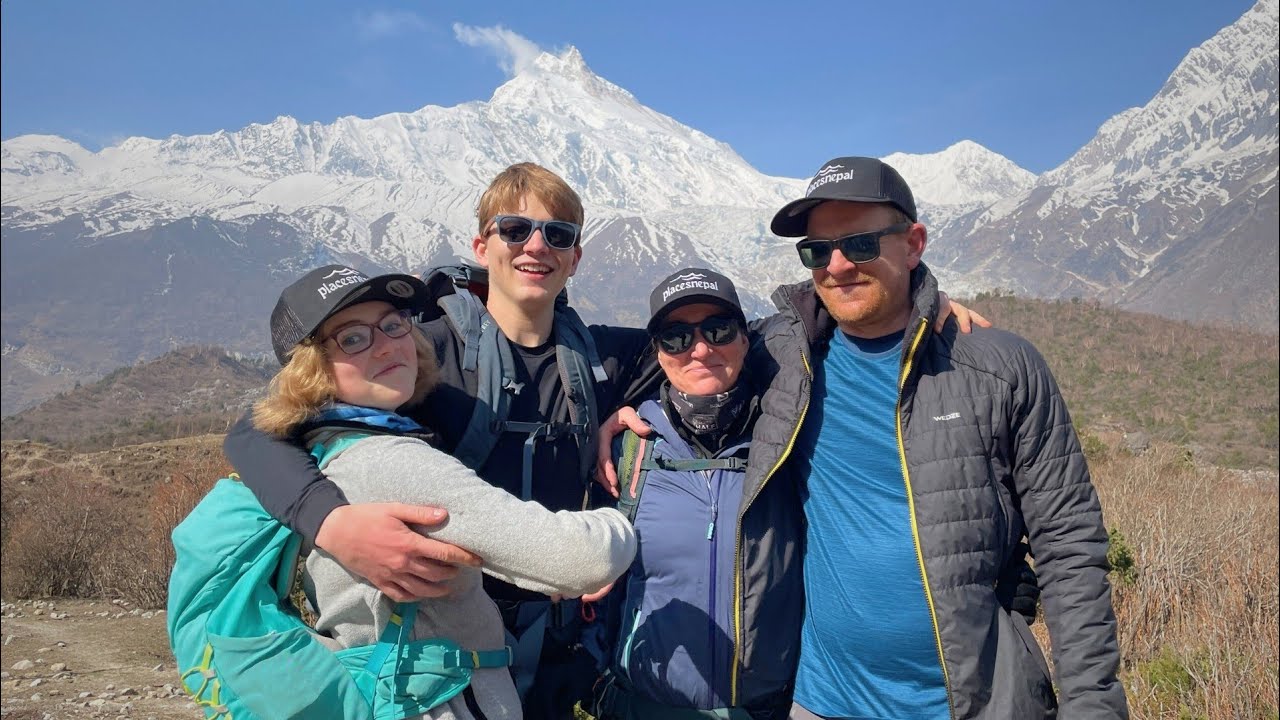
Not sure whether to choose the Everest View Panorama Trek or the Everest Base Camp Trek? This complete comparison guide breaks down the key differences between these two iconic Everest adventures
Two questions land in our inbox from the same kind of traveler almost every week: "How do I actually see Mount Everest without spending two weeks and risking altitude sickness?" and "Is Everest Base Camp actually worth what it takes to get there?" Both questions point to the same decision — the Everest View Panorama Trek or the Everest Base Camp Trek — and most articles online answer it badly, because they treat the two treks as unrelated products instead of what they actually are: two different endpoints on the exact same trail.
We've run both routes out of our Kathmandu office for years, and the itineraries for both are published in full detail on our own site — so this comparison is built from the real day-by-day route data, not marketing copy. Here's the direct comparison, backed by the actual walking distances, altitudes, and costs from both trips.
Quick Answer: Everest View Panorama Trek vs Everest Base Camp Trek
The Everest View Panorama Trek is a 9-day, moderate trek that reaches 3,880 m and delivers close-up views of Everest, Lhotse, and Ama Dablam from Hotel Everest View and Tengboche — without the physical demands or altitude risk of going further.
The Everest Base Camp Trek is a 14-day, challenging trek that continues past Tengboche to Everest Base Camp itself (5,364 m) and Kala Patthar (5,545 m), the actual summit viewpoint.
The short version: if your priority is seeing Everest clearly, on a manageable schedule, with low altitude risk — the Everest View Panorama Trek delivers that. If your priority is standing at the foot of the world's highest mountain and you have two weeks and solid fitness to invest, the Everest Base Camp Trek delivers that instead. They are not really "budget" versus "premium" versions of each other — they answer different questions.
What Is the Everest View Panorama Trek?
The Everest View Panorama Trek is a 9-day trek in Nepal's Khumbu region that reaches a maximum altitude of 3,880 m at Hotel Everest View — the highest-altitude hotel in the world — without continuing on to Everest Base Camp itself. It follows the same Lukla-to-Namche route as the classic EBC trail, then branches through Khumjung and Tengboche before returning.
It's officially rated Easy on our difficulty scale, though a couple of the days — the 830 m climb into Namche Bazaar in particular — are genuinely moderate efforts, not a stroll. Also known as the Everest Panorama Trek or Everest View Trek, it was designed around one specific goal: get trekkers face-to-face with Everest, Lhotse, Nuptse, and Ama Dablam without the two weeks, the extreme altitude, or the physical toll of the full Base Camp route.
Trek snapshot:
- Duration: 9 days (6 days on the trail, 2 nights in Kathmandu, 1 departure day)
- Maximum altitude: 3,880 m / 12,730 ft (Hotel Everest View)
- Highest overnight: 3,860 m (Tengboche)
- Difficulty: Easy to moderate
- Starting price: from US$900–1,250 depending on group size (current rates and dates)
Trek the Everest View Panorama Trek
An easy to moderate yet rewarding journey to Nepal’s most spectacular mountain vistas. Ideal for first-time trekkers, senior citizens, children and family.
What Is the Everest Base Camp Trek?
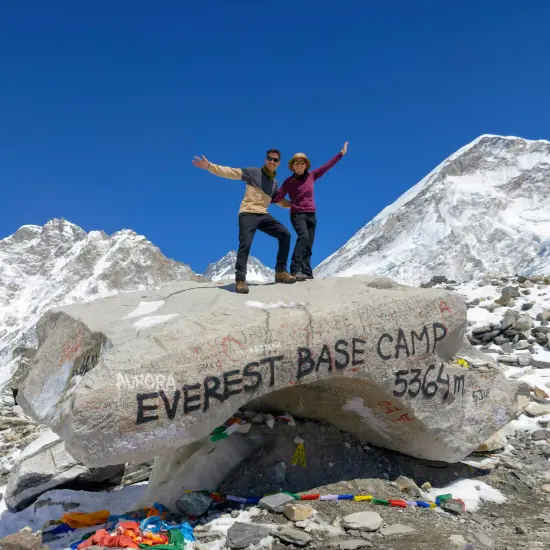
The Everest Base Camp Trek is a 14-day trek that follows the same trail out of Lukla through Namche Bazaar and Tengboche, then continues through Dingboche, Lobuche, and Gorakshep to reach Everest Base Camp (5,364 m) and Kala Patthar (5,545 m) — the highest point on the route and the classic sunrise viewpoint of Everest's summit.
It's rated Challenging. This is the trek most people mean when they say "trekking to Everest" — a genuine high-altitude expedition on foot, with two built-in acclimatization days, sustained daily walking of 5–7 hours, and a final push above 5,000 m for three consecutive days.
Trek snapshot:
- Duration: 14 days (11 days on the trail, 2 nights in Kathmandu, 1 departure day)
- Maximum altitude: 5,545 m / 18,192 ft (Kala Patthar)
- Highest overnight: 5,164 m (Gorakshep)
- Difficulty: Moderate to challenging
- Starting price: from US$1,100–1,499 depending on group size (current rates and dates)
Trek the Everest Base Camp Trek
This classic trek takes you through the heart of the Khumbu region, past vibrant Sherpa villages, ancient monasteries, and towering Himalayan peaks.
The One Fact That Changes How You Should Read This Comparison
Here's something almost no comparison article mentions, because it requires actually laying both itineraries side by side: the Everest View Panorama Trek and the Everest Base Camp Trek follow an identical route for their first five days.
Lukla → Phakding → Namche Bazaar → Hotel Everest View → Tengboche. Both treks walk exactly this path. EBC trekkers even make the same side-trip up to Hotel Everest View that Everest View Panorama trekkers do — it's built into EBC's Day 4 as the acclimatization hike. The two trips only diverge after Tengboche: the Panorama trek turns back toward Lukla, while the Base Camp trek pushes on for another six days to Dingboche, Lobuche, Gorakshep, Everest Base Camp, and Kala Patthar.
What this means practically: the Everest View Panorama Trek isn't a "lesser" or "budget" version of EBC — it's the first half of the EBC trail, packaged as a complete trip in its own right. Every classic photo stop most people associate with "trekking to Everest" — the Namche amphitheatre, the Hotel Everest View terrace, Tengboche Monastery with Ama Dablam behind it — is on both itineraries. What EBC adds on top is six additional days above 4,000 m, culminating in the base camp itself and the Kala Patthar summit view.
Understanding this is the key to making the right choice below.
Side-by-Side Comparison Table
| Everest View Panorama Trek | Everest Base Camp Trek |
|---|
| Duration | 9 days (6 trekking days) | 14 days (11 trekking days) |
| Max altitude | 3,880 m / 12,730 ft | 5,545 m / 18,192 ft (Kala Patthar) |
| Highest overnight | 3,860 m (Tengboche) | 5,164 m (Gorakshep) |
| Difficulty | Easy to moderate | Moderate to challenging |
| Acclimatization days | Not required — profile stays under 3,900 m | 2 built in (Namche, Dingboche) |
| Daily walking | 2–6 hrs | 4–9 hrs |
| Farthest point | Tengboche, via Hotel Everest View & Khumjung | Everest Base Camp & Kala Patthar |
| See Everest's summit? | Yes — from Hotel Everest View | Not at EBC itself — yes, from Kala Patthar the next morning |
| Starting price | From US$900–1,250 | From US$1,100–1,499 |
| Optional porter | US$200 (shared between 2, 20 kg total) | US$300 (shared between 2, 20 kg total) |
| Permits required | Sagarmatha NP + Khumbu Pasang Lhamu Municipality | Same two permits |
| TIMS card needed | No | No |
| Best suited for | First-timers, families, seniors, tight schedules | Fit, motivated trekkers with 2+ weeks |
| Insurance needed | Cover to 4,000 m + heli evacuation | Cover to 6,000 m + heli evacuation |
Full itineraries: Everest View Panorama Trek day-by-day · Everest Base Camp Trek day-by-day
Duration Compared
The Everest View Panorama Trek takes 9 days start to finish; the Everest Base Camp Trek takes 14 days — a 5-day difference that comes entirely from the section of trail past Tengboche.
Both itineraries include the same 2 buffer days in Kathmandu (arrival day and departure day) and the same Lukla flight structure. The real difference is trekking days: 6 for the Panorama trek versus 11 for EBC, of which EBC dedicates 2 specifically to acclimatization (Namche and Dingboche) that the shorter route doesn't need, since it never climbs high enough to require them.
If your total Nepal holiday is under two weeks including international flights, the Everest View Panorama Trek fits comfortably with days to spare for Kathmandu sightseeing or a Chitwan add-on. EBC's 14 days leaves little slack — we generally recommend a minimum 16–17 day window for EBC once you account for international arrival/departure and one buffer day for Lukla flight delays, which are common in both directions.
Route Compared
Both treks start identically: fly into Lukla (via Manthali during peak season), walk to Phakding, then climb to Namche Bazaar on Day 3 — at 830 m of elevation gain, this is the hardest single day on either itinerary and it's shared by both.
From Namche, the routes run in parallel one more day: both hike up to Hotel Everest View (3,880 m) as an acclimatization/viewpoint stop. Here they genuinely diverge for the first time. The Everest View Panorama Trek continues to Khumjung — a quieter, more traditional Sherpa farming village that EBC's standard itinerary doesn't visit — then to Tengboche, before turning back through Monjo to Lukla.
The Everest Base Camp Trek returns to Namche after its Hotel Everest View acclimatization hike, then continues onward the next day to Tengboche (arriving via the direct trail rather than through Khumjung), and from there pushes into terrain the shorter trek never sees: Pangboche's ancient monastery, the high pastures around Dingboche, the stark moraine landscape past Lobuche, and finally Gorakshep, Everest Base Camp, and Kala Patthar.
Route insight: if wandering through a genuinely quiet, working Sherpa village matters to you, the Everest View Panorama Trek's detour through Khumjung is something most EBC trekkers on the standard itinerary never experience.
Maximum Altitude Compared
The Everest View Panorama Trek tops out at 3,880 m; the Everest Base Camp Trek reaches 5,545 m at Kala Patthar — a difference of 1,665 m, which is the single biggest factor separating these two trips.
To put that gap in context: 3,880 m sits comfortably below the altitude range where serious Acute Mountain Sickness typically becomes a major concern for most healthy trekkers. Above 4,000 m — where the Everest Base Camp Trek spends its final six days — the physiological demands change substantially. Gorakshep, where EBC trekkers sleep the night before reaching Kala Patthar, sits at 5,164 m — roughly 47% of sea-level oxygen availability. That's not a linear difference in difficulty; it's a different category of trekking altogether.
Difficulty Level Compared
The Everest View Panorama Trek is rated Easy to moderate; the Everest Base Camp Trek is rated moderate to challenging. Neither requires technical climbing skills, ropes, or mountaineering experience — both are teahouse treks on established trails. The difference is altitude, distance, and sustained daily effort.
The Everest View Panorama Trek's hardest days are the Namche climb (830 m gain, 5–6 hours) and the Khumjung-to-Tengboche stretch (5–6 hours). Outside of those two days, the walking is genuinely gentle — 2–5 hours on mostly well-graded trail.
The Everest Base Camp Trek shares those same demanding early days, then adds Dingboche (543 m gain), the Nangkartsang Hill acclimatization hike (681 m gain to over 5,000 m), Lobuche, and the 7–9 hour Base Camp day itself. The final descent day covers roughly 19 km. Across the full trek, total trekking distance runs to around 130 km with 200–400 m of elevation gain on most days above Namche.
Honest read: if you've never done a multi-day trek before, the Everest View Panorama Trek is a genuinely appropriate first Himalayan trek. The Everest Base Camp Trek is doable for a fit beginner with proper training, but it is not the trek to attempt as your very first hiking experience of any kind.
Required Fitness Level
The Everest View Panorama Trek needs a moderate fitness base — the ability to walk 4–6 hours on hilly terrain with a light daypack. Regular walkers, joggers, and casual hikers typically handle it without dedicated training, though a few weeks of stair-climbing or hill walks beforehand makes it more enjoyable.
The Everest Base Camp Trek needs a solid fitness foundation. We'd want to see you comfortably running or hiking 10–15 km on varied terrain, capable of 6-hour hikes on hillside routes, before you fly to Lukla. That doesn't mean marathon-runner fitness — it means your cardiovascular system and leg strength need to handle 5–7 hours of daily walking, at altitude, for 11 consecutive days. Training blocks of 8–12 weeks focused on cardio, leg strength, and weighted hikes are standard advice for good reason.
If you currently can't comfortably manage a 90-minute hike with some elevation gain, start there before deciding between these two — and lean toward the Everest View Panorama Trek as the more forgiving entry point into Himalayan trekking.
Acclimatization Requirements
The Everest View Panorama Trek requires no dedicated acclimatization days because its route never climbs high enough to need them — the entire itinerary stays under 3,900 m. Mild altitude effects (headache, reduced appetite, disrupted sleep) can still occur on the first night in Namche, but the trek's own gradual profile does the acclimatizing for you.
The Everest Base Camp Trek builds in two mandatory acclimatization days — one at Namche Bazaar (Day 4, hiking up to Hotel Everest View and back) and one at Dingboche (Day 7, hiking to Nangkartsang Hill at 5,091 m and back). Both follow the "climb high, sleep low" principle that's foundational to safe high-altitude trekking: pushing your body to a higher elevation during the day, then returning to sleep at a lower one, triggers physiological adaptation without the risk of sleeping at an elevation your body isn't ready for yet.
Skipping or shortening these acclimatization days on the EBC route is, in our experience, the single most common reason trekkers have to turn back before reaching Base Camp. They are not optional extras — they're the mechanism that makes the final push to 5,364 m and 5,545 m survivable for most healthy adults.
Risk of Altitude Sickness
Altitude sickness risk on the Everest View Panorama Trek is low, because the route stays below 3,900 m throughout. Some trekkers feel mild effects — headache, poor sleep — around Namche and Tengboche, but genuine Acute Mountain Sickness (AMS) at this altitude range is uncommon in otherwise healthy trekkers who ascend at the itinerary's built-in pace.
Altitude sickness risk on the Everest Base Camp Trek is real and should be taken seriously. Research on Khumbu trekkers has consistently found that roughly a third to half of trekkers experience at least mild AMS symptoms somewhere along the route, with risk concentrated in the days above 4,000 m. A well-paced 14-day itinerary with two proper acclimatization days — like the standard EBC schedule — sits toward the lower end of that range; a rushed 12-day itinerary with minimal buffer sits toward the higher end.
Know the warning signs regardless of which trek you choose: persistent headache not relieved by basic pain medication, nausea, loss of appetite, and disrupted sleep are common at altitude and usually manageable. Symptoms that worsen rather than stabilize, or that include confusion, loss of coordination, or difficulty breathing at rest, require immediate descent — these can indicate HAPE (High Altitude Pulmonary Edema) or HACE (High Altitude Cerebral Edema), both medical emergencies. On both our treks, guides carry an oximeter and a first-aid kit and are trained to make the descent call if needed. This isn't a topic to gamble on: if you're prone to altitude issues on past trips, or have relevant cardiac or respiratory conditions, talk to a travel medicine doctor before booking either trek, and consider the Everest View Panorama Trek as the substantially lower-risk option.
If you're researching altitude sickness because of symptoms you're currently experiencing on a trek, descend and seek help immediately rather than continuing to read.
Scenery and Mountain Views
Both treks deliver genuinely spectacular Himalayan scenery — pine and rhododendron forest along the Dudh Koshi, the Namche amphitheatre, and views of Everest, Lhotse, Nuptse, Ama Dablam, and Thamserku that most people spend their whole lives only seeing in photographs.
The difference is in landscape variety, not view quality. The Everest View Panorama Trek stays in the greener, more vegetated mid-hills — forest, terraced fields, Sherpa farmland around Khumjung. The Everest Base Camp Trek adds a second, completely different landscape once you pass Dingboche: the tree line disappears, the valley opens into stark glacial moraine, and by Lobuche and Gorakshep you're walking through a rock-and-ice environment that feels closer to the polar regions than anything at lower altitude. Standing beside the Khumbu Glacier at Base Camp, with the Khumbu Icefall groaning above you, is a genuinely different sensory experience from anything on the shorter trek.
Chances of Actually Seeing Mount Everest's Summit
Here's the detail that surprises almost everyone: Everest Base Camp itself does not offer a view of Everest's summit. The mountain's own bulk, along with the Nuptse-Lhotse wall, blocks the sightline from the glacier floor. You're standing at the foot of the mountain — genuinely close, surrounded by the Khumbu Icefall and expedition tents — but you cannot see the summit pyramid from Base Camp. That view comes the next morning from Kala Patthar (5,545 m), a separate viewpoint above Gorakshep.
Meanwhile, Hotel Everest View at 3,880 m — visited by both treks — offers one of the clearest, most complete panoramas of Everest's summit pyramid in the entire region, alongside Lhotse, Nuptse, and Ama Dablam, from a comfortable terrace with tea service. Tengboche, also on both itineraries, delivers a similarly excellent panorama.
So the honest ranking, if seeing Everest's actual summit is your goal: Kala Patthar (EBC only, the single best view) > Hotel Everest View (both treks) ≈ Tengboche (both treks) > Everest Base Camp itself (no summit view at all). This is exactly why we don't recommend EBC to people whose only goal is "a great photo of Everest's peak" — the Everest View Panorama Trek delivers that more efficiently, and EBC's added value lies elsewhere.
Sherpa Culture, Villages, and Monasteries
Both treks pass through the cultural heart of the Khumbu — Namche Bazaar, the Sherpa trading capital, and Tengboche Monastery, the most important Buddhist monastery in the region, where evening puja ceremonies are open to respectful visitors most days around 5 PM.
The Everest View Panorama Trek adds a genuine advantage here: its route through Khumjung — a working Sherpa farming village with the Hillary-founded Khumjung Secondary School and its own monastery — isn't on the standard EBC itinerary at all. Khumjung sees a fraction of Namche's foot traffic, making it one of the more authentic, unhurried cultural stops available on any Everest region trek.
The Everest Base Camp Trek adds its own cultural layer further up the valley: Pangboche, one of the oldest Sherpa settlements in the Khumbu, with a monastery that predates Tengboche and holds some of the region's most revered relics. The stone-walled fields of Dingboche and the sobering climbers' memorials at Thukla Pass — dedicated to those who died attempting Everest and the surrounding peaks — add a different kind of cultural and historical weight that isn't present on the shorter trek.
Teahouse and Accommodation Experience
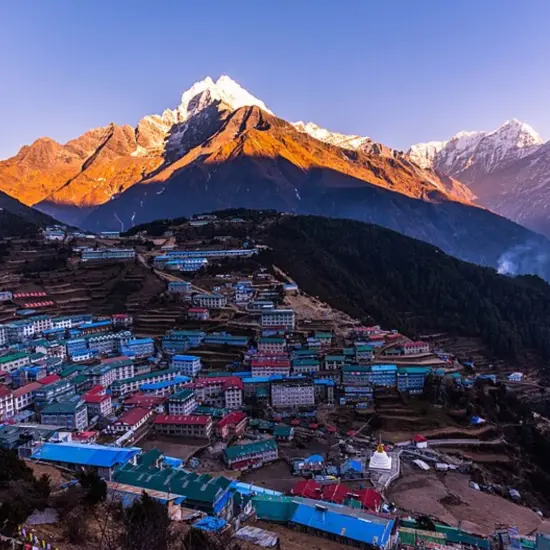
Both treks use the same teahouse network for the shared portion of the route — Phakding, Namche, and Tengboche all have well-established lodges with twin rooms, shared bathrooms, and (below Tengboche) hot showers and Wi-Fi for a fee.
Where they diverge, so does the comfort level. The Everest View Panorama Trek never sleeps above 3,880 m, so accommodation stays in the more developed, lower-altitude villages throughout — reasonably comfortable by teahouse standards the entire trip.
The Everest Base Camp Trek's later stops — Dingboche, Lobuche, and especially Gorakshep — are progressively more basic: unheated bedrooms (only dining rooms have stoves), limited or no hot showers, patchy charging, and genuinely cold nights that can drop below −15°C at Lobuche. This is a normal, expected part of high-altitude trekking in the Khumbu, but it's worth setting expectations accurately — the trail gets more rustic exactly as it gets more physically demanding.
Crowds and Popularity
The Everest Base Camp Trek is one of the most popular trekking routes in the world, and its popularity is concentrated on the exact trail segment both treks share: Lukla to Namche to Tengboche is busy in peak season on both itineraries, with crowded teahouses and queues at bottleneck bridges during October and April especially.
Past Tengboche, EBC trekker density thins out somewhat as the trail becomes more demanding, though Gorakshep and the final approach to Base Camp still see heavy peak-season traffic.
The Everest View Panorama Trek shares the crowded early section but adds its own quieter branch — Khumjung sees noticeably less foot traffic than the main EBC corridor, since most Base Camp-bound trekkers skip it entirely. If avoiding crowds matters to you, the shoulder months (early March, late November) work well for either trek, and the Everest View Panorama Trek's Khumjung detour offers a genuine escape from the busiest section of trail even in peak season.
Best Season and Weather Compared
Both treks share the same two prime windows: spring (March–May) and autumn (late September–November). These deliver the clearest skies, most stable weather, and best mountain visibility for both routes. Winter (December–February) is quieter and often strikingly clear but cold — genuinely cold on the Everest Base Camp Trek, where Kala Patthar mornings can hit −15°C to −20°C, and moderately cold on the Everest View Panorama Trek's lower-altitude route. Monsoon season (June–August) brings heavy rain, poor visibility, and leech-prone lower trails on both routes — we don't recommend either trek during these months.
| Month | Everest View Panorama Trek | Everest Base Camp Trek |
|---|
| Mar–May | Peak season, mild, blooming rhododendrons | Peak season, clear skies, busy trails |
| Jun–Aug | Not recommended — monsoon rain | Not recommended — monsoon rain, poor visibility |
| Sep–Nov | Peak season, crisp, best visibility | Peak season, crispest air, busiest month is October |
| Dec–Feb | Cold but dry, quiet trails | Extreme cold above 4,000 m; experienced trekkers only |
For a deeper seasonal breakdown specific to the Base Camp route, see our best time to trek Everest Base Camp guide.
Cost Comparison
The Everest View Panorama Trek starts from roughly US$900–1,250 per person depending on group size; the Everest Base Camp Trek starts from roughly US$1,100–1,499. Both operate on the same tiered pricing structure — larger groups pay less per person — and both are available as fixed group departures (join solo, travel with others) or private trips at the same rate.
| No. of people | Everest View Panorama Trek | Everest Base Camp Trek |
|---|
| Solo (1 pax) | $1,250 | $1,499 |
| Small group | $1,070 (2–4) | $1,260 (2–5) |
| Mid group | $950 (5–8) | $1,180 (6–10) |
| Large group | $900 (9–14) | $1,100 (11–15) |
(Current live pricing — check Everest View Panorama Trek rates and Everest Base Camp Trek rates for the latest departures and any seasonal adjustments.)
What's Included vs Not Included
Both packages include broadly the same core: licensed English-speaking guide, all trek meals, teahouse or hotel accommodation, round-trip Lukla flights, the two required permits, airport transfers, and a Kathmandu hotel with breakfast on both ends.
Neither includes: international flights, travel insurance, Nepal visa fees, personal gear, lunch/dinner in Kathmandu, alcoholic drinks, or tips.
Hidden and Optional Costs
The gap that catches people off guard isn't the trek price — it's the personal spending on the trail. Hot showers, Wi-Fi, bottled or boiled water, and snacks all cost more the higher you climb, on both routes. Because the Everest Base Camp Trek runs 5 days longer and reaches altitudes where prices rise further, budget meaningfully more for incidentals: a comfortable daily allowance is roughly NPR 1,000–1,500 on the Everest View Panorama Trek versus USD 300–400 for the entire trek's incidentals on the longer Everest Base Camp route (including guide/porter tips, which run USD 5–10/day for guides and USD 3–5/day for porters on both trips — a meaningfully bigger total tip on a 14-day trek than a 9-day one simply due to length).
Porters are optional on both: US$200 for the whole Everest View Panorama Trek (shared between two trekkers, 20 kg total) versus US$300 for the whole Everest Base Camp Trek (also shared between two, 20 kg total) — worth it on either trek if you'd rather trek with just a daypack, and genuinely worth considering on EBC specifically, since a lighter load meaningfully reduces fatigue at altitude.
Travel insurance costs less for the Everest View Panorama Trek too: because the route stays below 4,000 m, standard adventure travel policies typically cover it without the pricier high-altitude evacuation add-ons that Everest Base Camp's 5,000m+ altitudes require.
Permits and Regulations
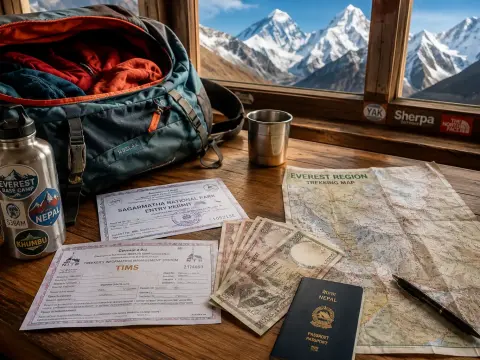
Both treks require exactly the same two permits: the Sagarmatha National Park Entry Permit and the Khumbu Pasang Lhamu Rural Municipality Permit. Neither trek requires a TIMS card — TIMS was replaced by the local municipality permit in the Everest region back in 2018, a detail a surprising number of outdated websites still get wrong.
Both permits are arranged for you as part of either package — you won't queue at a permit counter on either trek.
Nepal's tourist visa on arrival applies equally to both trips — most nationalities pay USD $30 (15 days), $50 (30 days), or $125 (90 days) in cash at Tribhuvan International Airport. The 15-day visa comfortably covers the Everest View Panorama Trek's 9 days; you'll want the 30-day option for the Everest Base Camp Trek's 14 days plus any buffer.
Flights and Transportation
Both treks use an identical flight structure, because both start and end at the same trailhead: Lukla's Tenzing-Hillary Airport. During peak trekking months (March–May and September–November), flights are frequently redirected from Kathmandu to Manthali Airport in Ramechhap to ease congestion — meaning a very early wake-up (typically 1:00–3:00 AM) and a 5–6 hour road transfer before a short 20-minute flight into Lukla. Off-peak, flights run direct from Kathmandu, a far more relaxed 35-minute hop with a 5:00–6:00 AM start.
Both trips offer an optional helicopter upgrade direct from Kathmandu to Lukla (around US$590 per person, based on five people sharing) that skips the Manthali drive entirely in any season.
Lukla flights are weather-dependent on both treks — delays of a few hours, occasionally a full day, are a normal part of Khumbu travel regardless of which trek you book. Build in a buffer day and avoid tight international connections on your return, especially for the Everest Base Camp Trek where a missed connection has more knock-on schedule impact.
For the full logistics picture, see our Lukla to Everest Base Camp route guide.
Food and Facilities
Meals are full board (breakfast, lunch, dinner) on both treks — dal bhat, noodle soups, momos, porridge, and eggs form the backbone of the menu, with the widest selection available in Namche Bazaar on both routes. Bakery stops in Namche are a highlight either way.
The difference shows up higher on the Everest Base Camp Trek: menus simplify considerably above Dingboche, where transport becomes harder and options narrow. On the Everest View Panorama Trek, you're never far enough from Namche's supply lines for this to be an issue — food quality and variety stay reasonably consistent throughout.
Guide and Porter Considerations
Both treks include a licensed, English-speaking guide as standard. Porters are optional on both and carry up to 20 kg, shared between two trekkers (10 kg each) — US$200 for the shorter trek, US$300 for the longer one, reflecting the extra days on the trail.
Our honest recommendation: a porter is a genuine comfort upgrade on the Everest View Panorama Trek but becomes closer to a fitness and safety consideration on the Everest Base Camp Trek. Carrying a full pack for 11 days at altitude adds real fatigue that compounds day over day — if your budget allows it, hiring a porter for EBC specifically is one of the highest-value optional add-ons on the trip.
Who Should Choose Which Trek?
Families
Families with younger or older children are generally better served by the Everest View Panorama Trek — the altitude profile stays well within safer margins for children, the daily walking hours are shorter, and the whole trip fits into a single week of school holidays with room to spare. The Everest Base Camp Trek is achievable for families with teenagers who are already fit and experienced hikers, but it's a serious undertaking for a family group given the altitude and duration — we'd want a real conversation about everyone's fitness and prior trekking experience before booking it with kids.
First-Time Trekkers
If this is your first multi-day trek of any kind, anywhere, the Everest View Panorama Trek is the more sensible starting point — moderate daily distances, low altitude risk, and a schedule that leaves room for things to go slightly wrong without derailing your trip. If you have some hiking background (regular day hikes, one or two prior multi-day treks) and time to train properly, the Everest Base Camp Trek is a very achievable "first big trek" — it's simply a bigger commitment in every dimension.
Older Trekkers and Seniors
The Everest View Panorama Trek is explicitly designed to be accessible for senior trekkers — we regularly guide travelers in their 60s and 70s on this route with no altitude-related issues, provided they arrive with reasonable baseline fitness (comfortable walking for several hours, no major joint or cardiac limitations). The Everest Base Camp Trek is absolutely possible for fit, experienced older trekkers — we see this regularly too — but the altitude and sustained effort mean a frank fitness assessment and, ideally, a chat with your doctor beforehand matters more here than on the shorter route.
Solo Travelers
Both treks work well for solo travelers, and both run as fixed group departures specifically so solo trekkers can join a group at the lower per-person group rate rather than paying the solo private-trip premium. The social dynamic differs slightly: the Everest View Panorama Trek's shorter timeframe means less time to bond with a trekking group, while the Everest Base Camp Trek's two-week shared experience — including the emotionally significant Thukla Pass memorial crossing and the shared achievement of reaching Base Camp — tends to forge closer connections among group members by the end.
Photographers
Both treks deliver excellent photography, but for different subjects. The Everest View Panorama Trek is stronger for classic "Everest with foreground" compositions — Hotel Everest View's terrace and Tengboche's monastery-with-mountain-backdrop are genuinely world-class, accessible shots. The Everest Base Camp Trek adds an entirely different portfolio: the stark glacial landscape of the Khumbu, the Khumbu Icefall, the colorful chaos of the Base Camp expedition tents in climbing season, and the sunrise alpenglow sequence from Kala Patthar — widely considered the single best mountain sunrise shot achievable on foot in Nepal.
Comfort vs Adventure: The Real Trade-Off
Strip away the marketing language and this comparison comes down to one honest trade-off: the Everest View Panorama Trek optimizes for a comfortable, low-risk, high-reward week that delivers genuine Everest views efficiently. The Everest Base Camp Trek optimizes for the complete high-altitude expedition experience — the physical challenge, the changing landscape, the glacier itself — at the cost of more time, more discomfort in the final days, and meaningfully more altitude risk.
Neither is the "better" trek in absolute terms. The better trek is the one that matches what you're actually looking for — a scenic, achievable Himalayan week, or a genuine mountaineering-adjacent physical and personal challenge.
Time and Budget Planning
Minimum recommended Nepal window: 10–11 days for the Everest View Panorama Trek (9-day trek plus a buffer day for Lukla flight delays), 16–17 days for the Everest Base Camp Trek (14-day trek plus buffer, given the higher stakes of a missed connection on a longer, more expensive trip).
Rough total budget including the trek package, international flights, visa, insurance, and incidentals: the Everest View Panorama Trek typically lands in the US$1,800–2,800 range all-in for most international travelers, depending on home departure city and travel dates. The Everest Base Camp Trek typically lands in the US$2,500–4,000 range all-in, reflecting the longer package price, more travel days, and higher-altitude insurance requirements. Both figures assume mid-range international flights and standard travel insurance — get quotes for your specific dates and origin, since international airfare is usually the single biggest swing factor in either budget.
Helicopter Alternatives
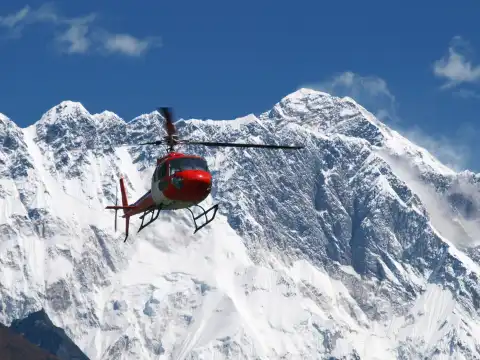
If time is the binding constraint rather than budget, helicopter options exist for both treks. Our Everest Base Camp Trek Helicopter Return compresses the descent into a scenic flight, cutting the standard itinerary down to 9 days while still trekking up and reaching Base Camp on foot. For those who want the summit view with essentially none of the trekking, an Everest Base Camp Heli Tour with Breakfast at Hotel Everest View does the entire route as a single-day flight. At the top end, our Luxury Everest Base Camp Trek with Helicopter Tour combines premium trekking with a helicopter finale.
Worth noting honestly: helicopter tours solve the time and altitude-exposure problem, but they remove the acclimatization, the walk-in achievement, and — for many trekkers — the actual point of the trip. If your goal is the physical accomplishment of trekking to Base Camp, a helicopter shortcut defeats the purpose. If your goal is genuinely just the view and the experience of being there, it's a legitimate option worth considering alongside the two treks in this comparison.
Trek the Everest Base Camp Trek Helicopter Return
Everest Base Camp, Without the Long Walk Back. Reach 5,364m on Foot. Return by Air.
Common Misconceptions About These Two Treks
"Everest Base Camp gives you a great photo of Everest's summit." False — the summit isn't visible from Base Camp itself, as covered above. Kala Patthar, the next morning, is where that photo happens.
"The Everest View Panorama Trek is just a watered-down, lesser version of EBC." Not accurate — it covers the same core scenic and cultural highlights as EBC's first five days (Namche, Hotel Everest View, Tengboche), plus its own exclusive stop at Khumjung. It's a complete trip designed around a different goal, not an incomplete attempt at EBC.
"You need elite athletic fitness for Everest Base Camp." Overstated. You need solid, trained cardiovascular fitness and leg strength, built up over 2–3 months — not marathon-level conditioning and not technical climbing ability. It's demanding, not extreme.
"A TIMS card is required for these treks." Outdated. TIMS was replaced by the Khumbu Pasang Lhamu Rural Municipality Permit in the Everest region back in 2018. Neither trek requires it, regardless of what older blog posts say.
"Higher altitude automatically means a better view of Everest." Not necessarily true on this route — Everest Base Camp itself, despite being higher and further than Hotel Everest View, offers no summit view at all due to the mountain's own geometry blocking the sightline.
"You spend several nights at Everest Base Camp." In practice, no — there's no accommodation at Base Camp itself. EBC trekkers visit for a few hours on Day 9 and sleep at nearby Gorakshep (5,164 m), the closest village with teahouses.
Which Trek Should You Choose?
Run through this quickly before reading the detailed sections below:
- Do you have 9 days or fewer available in Nepal? → Everest View Panorama Trek.
- Do you have altitude sickness history, cardiac, or respiratory concerns? → Everest View Panorama Trek, and talk to a doctor regardless.
- Is your main goal "see Mount Everest clearly and come home happy"? → Everest View Panorama Trek.
- Do you have 14+ days, solid fitness, and 2–3 months to train? → Everest Base Camp Trek is genuinely achievable.
- Is your main goal "stand at the foot of Everest and complete the classic trek"? → Everest Base Camp Trek.
- Are you trekking with young children or want a low-stress family trip? → Everest View Panorama Trek.
- Do you want the Kala Patthar sunrise — the single best Everest summit photo in the region? → Everest Base Camp Trek is the only way to reach it.
Choose the Everest View Panorama Trek If...
- You have a week or less to spend in the mountains
- You want to minimize altitude sickness risk while still seeing Everest up close
- You're trekking with children, older parents, or a mixed-fitness group
- This is your first multi-day trek and you want to build confidence before something bigger
- Budget matters and you want a genuinely complete Everest experience at a lower total cost
- You've already done EBC before and want a shorter return trip to the region
Choose the Everest Base Camp Trek If...
- You have 14+ days and can commit to a proper training block beforehand
- Standing at the actual foot of Everest — not just seeing it from a distance — matters to you
- You want the Kala Patthar sunrise, the definitive Everest summit photograph
- You're comfortable with, or specifically want, a genuine high-altitude physical challenge
- The full glacier landscape and mountaineering history of Base Camp itself is part of the appeal
- You have no significant cardiac, respiratory, or altitude-sensitivity concerns (confirmed with a doctor if you're unsure)
Can the Everest View Trek Be an Alternative to EBC?
Yes, for a specific and common type of trekker: someone whose primary goal is seeing Mount Everest clearly, not specifically reaching the base camp location itself. As covered above, the Everest View Panorama Trek shares its route with EBC's first five days and actually delivers a clearer, closer view of the summit (from Hotel Everest View) than Base Camp offers on its own.
It is not a substitute if your goal specifically includes the achievement of reaching Base Camp itself, walking on the Khumbu Glacier, or experiencing the expedition-camp atmosphere at 5,364 m — those are things only the longer trek provides, and no amount of reframing changes that. But for the "I want to see Everest properly without two weeks of high-altitude trekking" traveler — which describes a large share of people searching this comparison — yes, it's a legitimate, well-designed alternative, not a compromise.
Is Everest Base Camp Worth the Extra Time and Difficulty?
For the right trekker, yes. The extra six days past Tengboche buy you a landscape and an experience genuinely unavailable on the shorter route: the glacial moraine environment above Dingboche, the emotional weight of the Thukla Pass memorials, three consecutive nights above 4,900 m, the actual foot of the world's highest mountain with the Khumbu Icefall overhead, and the Kala Patthar sunrise — the best Everest summit view achievable on foot anywhere in the region.
Whether that's "worth it" is genuinely a personal calculation, not a universal yes. It's worth it if you have the time, the fitness, and the specific desire for that expedition-style experience. It's not worth the added altitude risk and physical toll if your actual goal — seeing Everest clearly — is already satisfied by the shorter trek. We'd rather tell you that honestly than sell you six extra days you don't actually need.
Is the Everest View Panorama Trek Enough to Experience Everest?
For most people whose goal is seeing Mount Everest and experiencing the Khumbu's culture and scenery, yes — it's genuinely enough. You'll see Everest's summit clearly from Hotel Everest View, walk through Sagarmatha National Park, experience Sherpa culture in Namche, Khumjung, and Tengboche, and attend an evening puja at one of the most important monasteries in the Himalayas. That's a complete, satisfying trip by any reasonable measure — not a lesser version of something else.
It is not "enough" only in the narrow sense that it doesn't include the specific achievement of reaching Everest Base Camp itself or the Kala Patthar summit view — if those specific milestones matter to you personally, no amount of Hotel Everest View tea-terrace views substitutes for them. But conflating "seeing Everest" with "reaching Base Camp" is exactly the misconception this whole comparison exists to clear up. They're related but genuinely separate goals.
Our Recommendation
If you're still undecided after all of the above, here's our honest, no-pressure read after years of running both routes: most first-time visitors to Nepal who are simply excited to see Mount Everest are better served by the Everest View Panorama Trek than they expect. The Everest Base Camp Trek carries a certain mystique — it's the trek everyone's heard of — but that reputation sometimes pulls people into a harder, longer, riskier trip than what they're actually looking for.
If, on the other hand, you've thought about this and the goal genuinely is "I want to stand at Everest Base Camp and reach Kala Patthar for that sunrise" — go all in on the full trek. It's a serious undertaking, but it's one we can help you train for and complete safely with the right preparation.
Either way, talk to us before you book. A short conversation about your fitness, timeline, and what you actually want out of the trip will get you to the right answer faster than any article — including this one.
Book the Everest View Panorama Trek · Book the Everest Base Camp Trek · Talk to our trekking experts first
Frequently Asked Questions
What is the main difference between the Everest View Panorama Trek and the Everest Base Camp Trek? Duration and altitude. The Everest View Panorama Trek is 9 days and reaches 3,880 m; the Everest Base Camp Trek is 14 days and reaches 5,545 m at Kala Patthar. Both share the same first five days of trail.
Can I see Mount Everest on the shorter Everest View Panorama Trek? Yes. Hotel Everest View (3,880 m), visited on Day 4, offers a clear, close-up panorama of Everest's summit alongside Lhotse, Nuptse, and Ama Dablam.
Does Everest Base Camp itself have a view of the summit? No. The mountain's own bulk and the surrounding ridgelines block the sightline from the glacier floor at Base Camp. The classic summit view comes from Kala Patthar the next morning.
Which trek is easier — Everest View Panorama or Everest Base Camp? The Everest View Panorama Trek is easier. It's rated Easy to moderate, stays under 3,900 m, and involves shorter daily walking hours than the Everest Base Camp Trek, which is rated moderate to challenging.
Do I need travel insurance for either trek? Yes, for both. The Everest View Panorama Trek needs coverage to at least 4,000 m with helicopter evacuation; the Everest Base Camp Trek needs coverage to at least 6,000 m with helicopter evacuation, since it reaches 5,545 m.
Is the Everest Base Camp Trek suitable for beginners? It's achievable for a fit beginner with 2–3 months of proper cardio and strength training, but it's a serious undertaking — not the ideal choice for your very first multi-day hike of any kind. The Everest View Panorama Trek is the more appropriate first Himalayan trek.
How much does the Everest Base Camp Trek cost compared to the Everest View Panorama Trek? The Everest Base Camp Trek starts from roughly US$1,100–1,499 per person depending on group size; the Everest View Panorama Trek starts from roughly US$900–1,250. Both use the same tiered group-size pricing structure.
Do I need a TIMS card for either trek? No. TIMS was replaced by the Khumbu Pasang Lhamu Rural Municipality Permit in the Everest region in 2018. Both treks require only two permits: the Sagarmatha National Park Entry Permit and the Khumbu Pasang Lhamu Rural Municipality Permit.
Which trek is better for families with children? The Everest View Panorama Trek is generally the better fit for families — shorter duration, lower altitude, and shorter daily walking hours make it more manageable for children and mixed-fitness groups.
Can seniors do the Everest Base Camp Trek? Yes, fit and experienced senior trekkers regularly complete the Everest Base Camp Trek, but the altitude and sustained daily effort mean fitness and any relevant medical conditions should be honestly assessed beforehand, ideally with a doctor. The Everest View Panorama Trek carries meaningfully less altitude risk for senior trekkers.
What is the risk of altitude sickness on the Everest Base Camp Trek? Research on Khumbu trekkers has found roughly a third to half develop at least mild AMS symptoms, with risk concentrated above 4,000 m. A well-paced 14-day itinerary with two acclimatization days, like the standard route, sits toward the lower end of that range.
Is a porter necessary on either trek? Not necessary, but recommended, especially for the Everest Base Camp Trek — carrying your own full pack for 11 days at altitude adds meaningful fatigue. Porters cost US$200 for the Everest View Panorama Trek and US$300 for the Everest Base Camp Trek, both shared between two trekkers.
Can I do the Everest Base Camp Trek if I've never trekked before? It's possible with serious preparation — 2–3 months of dedicated cardio and strength training — but we'd generally point a complete beginner toward the Everest View Panorama Trek first, or a shorter EBC variant, rather than the full 14-day route as a first-ever trek.
Which trek has better mountain views — Everest View Panorama or Everest Base Camp? Both offer excellent views, but of different things. The Everest View Panorama Trek offers a superior close-up view of Everest's summit from Hotel Everest View. The Everest Base Camp Trek adds the glacier landscape, the Khumbu Icefall, and — from Kala Patthar — the single best Everest summit sunrise view in the region.
Is there a shorter version of the Everest Base Camp Trek? Yes, we also run a 12-day Short Everest Base Camp Trek for experienced trekkers comfortable with a tighter acclimatization schedule, and a Helicopter Return option that flies out from Base Camp instead of walking back.