[{"name":"Everest Base Camp Trek","duration":14,"image_url":"https:\/\/www.placesnepal.com\/storage\/trip-galleries\/1\/thumb_07fa6c7288d2e823c070e64af8635cd3.webp","offer_price":1260,"url":"https:\/\/www.placesnepal.com\/trip\/everest-base-camp-trek"},{"name":"Manaslu Circuit Trek","duration":12,"image_url":"https:\/\/www.placesnepal.com\/storage\/trip-galleries\/3\/thumb_af31aa9dc6756ba9a9cee02d114eda17.webp","offer_price":980,"url":"https:\/\/www.placesnepal.com\/trip\/manaslu-circuit-trek"},{"name":"Annapurna Circuit Trek","duration":10,"image_url":"https:\/\/www.placesnepal.com\/storage\/trip-galleries\/4\/thumb_a5f24d1188e8d45fed7e7fcbe32b854f.webp","offer_price":820,"url":"https:\/\/www.placesnepal.com\/trip\/annapurna-circuit-trek"},{"name":"Gokyo Lake Trek","duration":10,"image_url":"https:\/\/www.placesnepal.com\/storage\/trip-galleries\/5\/thumb_c0517ff96a95dc1183e5facfcbd7705c.webp","offer_price":1150,"url":"https:\/\/www.placesnepal.com\/trip\/gokyo-lake-trek"},{"name":"Annapurna Base Camp Trek","duration":10,"image_url":"https:\/\/www.placesnepal.com\/storage\/trip-galleries\/6\/thumb_4a1a9da373c04d849c7afd07d675e62d.webp","offer_price":null,"url":"https:\/\/www.placesnepal.com\/trip\/annapurna-base-camp-trek"},{"name":"Short Manaslu Circuit Trek","duration":10,"image_url":"https:\/\/www.placesnepal.com\/storage\/trip-galleries\/7\/thumb_2a266d03099c6e71e4787f28e3a8d06e.webp","offer_price":750,"url":"https:\/\/www.placesnepal.com\/trip\/short-manaslu-circuit-trek"},{"name":"Langtang Valley Trek","duration":8,"image_url":"https:\/\/www.placesnepal.com\/storage\/trip-galleries\/8\/thumb_fa6aa089bd6b5f45934971d44a5ff385.webp","offer_price":590,"url":"https:\/\/www.placesnepal.com\/trip\/langtang-valley-trek"},{"name":"Upper Mustang Trek","duration":14,"image_url":"https:\/\/www.placesnepal.com\/storage\/trip-galleries\/9\/thumb_d9cf7722e6cd6c4f55993cadc16b00b1.webp","offer_price":1800,"url":"https:\/\/www.placesnepal.com\/trip\/upper-mustang-trek"},{"name":"Explore Kathmandu, Experience Nepal: 4N-5D Tour","duration":5,"image_url":"https:\/\/www.placesnepal.com\/storage\/trip-galleries\/10\/thumb_e8d6b9780f61c5603205a886a172929d.webp","offer_price":380,"url":"https:\/\/www.placesnepal.com\/trip\/explore-kathmandu-experience-nepal-4n-5d-tour"},{"name":"Luxury Everest Base Camp Trek with Helicopter Tour","duration":8,"image_url":"https:\/\/www.placesnepal.com\/storage\/trip-galleries\/11\/thumb_ad1a67e45ba80f59e57939d1d1c476c9.webp","offer_price":8500,"url":"https:\/\/www.placesnepal.com\/trip\/luxury-everest-base-camp-trek-with-helicopter-tour"},{"name":"Everest Base Camp Heli Tour with Breakfast at Hotel Everest View","duration":1,"image_url":"https:\/\/www.placesnepal.com\/storage\/trip-galleries\/18\/thumb_e47db26f4b8529a68d3889928f004a84.webp","offer_price":null,"url":"https:\/\/www.placesnepal.com\/trip\/everest-base-camp-heli-tour-with-breakfast-at-hotel-everest-view"},{"name":"Everest Base Camp and Gokyo Lakes Photography Expedition","duration":18,"image_url":"https:\/\/www.placesnepal.com\/storage\/trip-galleries\/19\/thumb_6ad52efeb27cd4989124b54209259416.webp","offer_price":2700,"url":"https:\/\/www.placesnepal.com\/trip\/everest-base-camp-and-gokyo-lakes-photography-expedition"},{"name":"Gokyo Lakes with Everest Base Camp Trek","duration":15,"image_url":"https:\/\/www.placesnepal.com\/storage\/trip-galleries\/20\/thumb_d7adbaaedcd860ce55f79c912dd368f4.webp","offer_price":1350,"url":"https:\/\/www.placesnepal.com\/trip\/gokyo-lakes-with-everest-base-camp-trek"},{"name":"Everest View Panorama Trek","duration":9,"image_url":"https:\/\/www.placesnepal.com\/storage\/trip-galleries\/21\/thumb_a84149f9c550b9f473c90d510995a0d3.webp","offer_price":1070,"url":"https:\/\/www.placesnepal.com\/trip\/everest-view-panorama-trek"},{"name":"Everest Base Camp Trek Helicopter Return","duration":9,"image_url":"https:\/\/www.placesnepal.com\/storage\/trip-galleries\/22\/thumb_1604f403067e1d4210c326e3248367ae.webp","offer_price":1990,"url":"https:\/\/www.placesnepal.com\/trip\/everest-base-camp-trek-helicopter-return"},{"name":"Mardi Himal Trek","duration":5,"image_url":"https:\/\/www.placesnepal.com\/storage\/trip-galleries\/23\/thumb_e1cc1ce59643e2b66f0cc5ea2ece8543.webp","offer_price":360,"url":"https:\/\/www.placesnepal.com\/trip\/mardi-himal-trek"},{"name":"Ghorepani Poon Hill Yoga Trek","duration":9,"image_url":"https:\/\/www.placesnepal.com\/storage\/trip-galleries\/25\/thumb_a21e5b150948017bd996a57f4e586be9.webp","offer_price":1750,"url":"https:\/\/www.placesnepal.com\/trip\/ghorepani-poon-hill-yoga-trek"},{"name":"Ghorepani Poon Hill Trek 6 days","duration":6,"image_url":"https:\/\/www.placesnepal.com\/storage\/trip-galleries\/26\/thumb_29a7702ad9f63eca8846c19c07ca35e2.webp","offer_price":520,"url":"https:\/\/www.placesnepal.com\/trip\/ghorepani-poon-hill-trek-6-days"},{"name":"Luxury Pokhara Poon Hill Wellness Trek","duration":13,"image_url":"https:\/\/www.placesnepal.com\/storage\/trip-galleries\/27\/thumb_87e5c2077530a1cce3e635548cb2f069.webp","offer_price":2200,"url":"https:\/\/www.placesnepal.com\/trip\/luxury-pokhara-poon-hill-wellness-trek"},{"name":"Ponker Lake Trek","duration":6,"image_url":"https:\/\/www.placesnepal.com\/storage\/trip-galleries\/28\/thumb_fd7ca4cd48a8c768706c66f0a797159a.webp","offer_price":650,"url":"https:\/\/www.placesnepal.com\/trip\/ponker-lake-trek"},{"name":"Kathmandu City Tour","duration":1,"image_url":"https:\/\/www.placesnepal.com\/storage\/trip-galleries\/32\/thumb_72e42fabe459489d9f4cfae283240b8e.webp","offer_price":80,"url":"https:\/\/www.placesnepal.com\/trip\/kathmandu-city-tour"},{"name":"Seven UNESCO World Heritage of Kathmandu Valley","duration":1,"image_url":"https:\/\/www.placesnepal.com\/storage\/trip-galleries\/33\/thumb_128ebc2340ec859f39bebc75d091f76a.webp","offer_price":100,"url":"https:\/\/www.placesnepal.com\/trip\/seven-unesco-world-heritage-of-kathmandu-valley"},{"name":"Kanchenjunga Circuit Trek","duration":17,"image_url":"https:\/\/www.placesnepal.com\/storage\/trip-galleries\/34\/thumb_b4eb3ef76af97af27db134d6f37cdf76.webp","offer_price":null,"url":"https:\/\/www.placesnepal.com\/trip\/kanchenjunga-circuit-trek"},{"name":"Shey Phoksundo Lake Trek","duration":11,"image_url":"https:\/\/www.placesnepal.com\/storage\/trip-galleries\/35\/thumb_10ed49f64ee4c8eab489dd0ce9db1d5a.webp","offer_price":null,"url":"https:\/\/www.placesnepal.com\/trip\/shey-phoksundo-lake-trek"},{"name":"Upper Mustang Jeep Tour","duration":10,"image_url":"https:\/\/www.placesnepal.com\/storage\/trip-galleries\/36\/thumb_9786c41ce11e9a2de34ae98b4060376a.webp","offer_price":2800,"url":"https:\/\/www.placesnepal.com\/trip\/upper-mustang-jeep-tour"},{"name":"Tsum Valley with Ganesh Himal Base Camp Trek","duration":15,"image_url":"https:\/\/www.placesnepal.com\/storage\/trip-galleries\/37\/thumb_5e62af344847e16dea9a3846f21cba3c.webp","offer_price":1250,"url":"https:\/\/www.placesnepal.com\/trip\/tsum-valley-with-ganesh-himal-base-camp-trek"},{"name":"Nar Phu Valley Trek","duration":13,"image_url":"https:\/\/www.placesnepal.com\/storage\/trip-galleries\/40\/thumb_690b852b598dc6d8abbad7b578a948c1.webp","offer_price":995,"url":"https:\/\/www.placesnepal.com\/trip\/nar-phu-valley-trek"},{"name":"Island Peak Climbing","duration":16,"image_url":"https:\/\/www.placesnepal.com\/storage\/trip-galleries\/41\/thumb_0e2be3132cd077c5810cc3772117a6a1.webp","offer_price":3000,"url":"https:\/\/www.placesnepal.com\/trip\/island-peak-climbing"},{"name":"Mera Peak Climbing","duration":17,"image_url":"https:\/\/www.placesnepal.com\/storage\/trip-galleries\/42\/thumb_ffbdf4cb7553618e0c299347bb94a1a3.webp","offer_price":3000,"url":"https:\/\/www.placesnepal.com\/trip\/mera-peak-climbing"},{"name":"Tilicho Lake Trek","duration":7,"image_url":"https:\/\/www.placesnepal.com\/storage\/trip-galleries\/44\/thumb_00829c52fc1a0ac8235e9d6480422529.webp","offer_price":750,"url":"https:\/\/www.placesnepal.com\/trip\/tilicho-lake-trek"},{"name":"Khopra Danda Trek","duration":11,"image_url":"https:\/\/www.placesnepal.com\/storage\/trip-galleries\/45\/thumb_f78644c6e0d26160ab8f442fa8142ee2.webp","offer_price":850,"url":"https:\/\/www.placesnepal.com\/trip\/khopra-danda-trek"},{"name":"Short Annapurna Base Camp Trek","duration":6,"image_url":"https:\/\/www.placesnepal.com\/storage\/trip-galleries\/46\/thumb_918e01ea6dd5f42cef723d1eff863533.webp","offer_price":350,"url":"https:\/\/www.placesnepal.com\/trip\/short-annapurna-base-camp-trek"},{"name":"Tsum Valley with Manaslu Circuit Trek","duration":17,"image_url":"https:\/\/www.placesnepal.com\/storage\/trip-galleries\/47\/thumb_0346f90b1beb24c9da3d3da427dc1036.webp","offer_price":null,"url":"https:\/\/www.placesnepal.com\/trip\/tsum-valley-with-manaslu-circuit-trek"},{"name":"Tsum Valley Trek","duration":13,"image_url":"https:\/\/www.placesnepal.com\/storage\/trip-galleries\/48\/thumb_4ca9032472c317e78d94821b9c406b1b.webp","offer_price":1150,"url":"https:\/\/www.placesnepal.com\/trip\/tsum-valley-trek"},{"name":"Renjo La Pass Trek with Gokyo Lake","duration":15,"image_url":"https:\/\/www.placesnepal.com\/storage\/trip-galleries\/49\/thumb_d710a9d6bac1ec8f1066abe564dddf4f.webp","offer_price":1550,"url":"https:\/\/www.placesnepal.com\/trip\/renjo-la-pass-trek-with-gokyo-lake"},{"name":"Pikey Peak Trek","duration":6,"image_url":"https:\/\/www.placesnepal.com\/storage\/trip-galleries\/50\/thumb_f5b672d5e0590443a95dee71b86f88a0.webp","offer_price":490,"url":"https:\/\/www.placesnepal.com\/trip\/pikey-peak-trek"},{"name":"Everest Base Camp Trek by Road","duration":15,"image_url":"https:\/\/www.placesnepal.com\/storage\/trip-galleries\/51\/thumb_7fb1c8c615fd6386948e7be8af2950b0.webp","offer_price":1350,"url":"https:\/\/www.placesnepal.com\/trip\/everest-base-camp-trek-by-road"},{"name":"Short Everest Base Camp Trek","duration":12,"image_url":"https:\/\/www.placesnepal.com\/storage\/trip-galleries\/53\/thumb_f670cd96e9bad10d1e08d287becaefa6.webp","offer_price":950,"url":"https:\/\/www.placesnepal.com\/trip\/short-everest-base-camp-trek"},{"name":"Everest Three Passes Trek","duration":17,"image_url":"https:\/\/www.placesnepal.com\/storage\/trip-galleries\/54\/thumb_6966bb3e99cdfc8a3e8454103aa92bdf.webp","offer_price":1650,"url":"https:\/\/www.placesnepal.com\/trip\/everest-three-passes-trek"},{"name":"Makalu Base Camp Trek","duration":18,"image_url":"https:\/\/www.placesnepal.com\/storage\/trip-galleries\/55\/thumb_aee15fe18511ff233e2dec5413358299.webp","offer_price":null,"url":"https:\/\/www.placesnepal.com\/trip\/makalu-base-camp-trek"},{"name":"Short Annapurna Base Camp Trek: 5 Days","duration":5,"image_url":"https:\/\/www.placesnepal.com\/storage\/trip-galleries\/56\/thumb_7c99271c327b5e3cb21fb6cbcb0c01aa.webp","offer_price":250,"url":"https:\/\/www.placesnepal.com\/trip\/short-annapurna-base-camp-trek-5-days"},{"name":"Pikey Peak Trek : 4 Days","duration":4,"image_url":"https:\/\/www.placesnepal.com\/storage\/trip-galleries\/57\/thumb_44b9a91d2508cf9049f79f126f23206c.webp","offer_price":null,"url":"https:\/\/www.placesnepal.com\/trip\/pikey-peak-trek-4-days"},{"name":"Kanchenjunga South Base Camp Trek","duration":9,"image_url":"https:\/\/www.placesnepal.com\/storage\/trip-galleries\/58\/thumb_39cc387cf5b432e44c57016d2cc71941.webp","offer_price":1350,"url":"https:\/\/www.placesnepal.com\/trip\/kanchenjunga-south-base-camp-trek"},{"name":"Api Himal Base Camp Trek","duration":11,"image_url":"https:\/\/www.placesnepal.com\/storage\/trip-galleries\/59\/thumb_d35ecbc8c01fcd60cf5b40244ef86aeb.webp","offer_price":1800,"url":"https:\/\/www.placesnepal.com\/trip\/api-himal-base-camp-trek"},{"name":"Upper Dolpo Circuit Trek","duration":24,"image_url":"https:\/\/www.placesnepal.com\/storage\/trip-galleries\/60\/thumb_decd04554bbcec568ae040a1e29ef1e7.webp","offer_price":4400,"url":"https:\/\/www.placesnepal.com\/trip\/upper-dolpo-circuit-trek"},{"name":"Annapurna North Base Camp Trek","duration":12,"image_url":"https:\/\/www.placesnepal.com\/storage\/trip-galleries\/61\/thumb_3bcbcbcf5616c13ecc828a294b6b0332.webp","offer_price":1550,"url":"https:\/\/www.placesnepal.com\/trip\/annapurna-north-base-camp-trek"},{"name":"Annapurna Circuit Mountain Biking From Kathmandu","duration":17,"image_url":"https:\/\/www.placesnepal.com\/storage\/trip-galleries\/62\/thumb_4e5f2645c902e2f034560bb59322ccdb.webp","offer_price":3200,"url":"https:\/\/www.placesnepal.com\/trip\/annapurna-circuit-mountain-biking-from-kathmandu"},{"name":"Annapurna Circuit Mountain Biking","duration":12,"image_url":"https:\/\/www.placesnepal.com\/storage\/trip-galleries\/63\/thumb_5522c93b60e3a36dd177cec8c19af6ed.webp","offer_price":1850,"url":"https:\/\/www.placesnepal.com\/trip\/annapurna-circuit-mountain-biking"},{"name":"Nar Phu Valley Trek with Annapurna Circuit","duration":17,"image_url":"https:\/\/www.placesnepal.com\/storage\/trip-galleries\/64\/thumb_e60cfd7f7f8066aa9e130f09898564d2.webp","offer_price":1950,"url":"https:\/\/www.placesnepal.com\/trip\/nar-phu-valley-trek-with-annapurna-circuit"},{"name":"Short Mera Peak Climbing","duration":11,"image_url":"https:\/\/www.placesnepal.com\/storage\/trip-galleries\/65\/thumb_ee26da88b6e063a9db55f624e2be288c.webp","offer_price":2200,"url":"https:\/\/www.placesnepal.com\/trip\/short-mera-peak-climbing"},{"name":"Lobuche Peak Climbing","duration":18,"image_url":"https:\/\/www.placesnepal.com\/storage\/trip-galleries\/66\/thumb_3bc3f158ca4822c133d32c4fe834f574.webp","offer_price":3000,"url":"https:\/\/www.placesnepal.com\/trip\/lobuche-peak-climbing"},{"name":"Yala Peak Climbing","duration":12,"image_url":"https:\/\/www.placesnepal.com\/storage\/trip-galleries\/67\/thumb_bbc83a5924bc611872b39e8c50b6524c.webp","offer_price":1500,"url":"https:\/\/www.placesnepal.com\/trip\/yala-peak-climbing"},{"name":"Pikey Peak and Dudhkunda Lake Trek","duration":10,"image_url":"https:\/\/www.placesnepal.com\/storage\/trip-galleries\/68\/thumb_7a9a19f81c11889b1aea59852cfb8c7e.webp","offer_price":1250,"url":"https:\/\/www.placesnepal.com\/trip\/pikey-peak-and-dudhkunda-lake-trek"},{"name":"Langtang Gosaikunda Trek","duration":12,"image_url":"https:\/\/www.placesnepal.com\/storage\/trip-galleries\/74\/thumb_89851fac2da7b361736dce406950ef96.webp","offer_price":1250,"url":"https:\/\/www.placesnepal.com\/trip\/langtang-gosaikunda-trek"},{"name":"Island Peak & Lobuche Peak Expedition","duration":25,"image_url":"https:\/\/www.placesnepal.com\/storage\/trip-galleries\/75\/thumb_01594e82d54a3784b1edd6c7b480c578.webp","offer_price":4500,"url":"https:\/\/www.placesnepal.com\/trip\/island-peak-lobuche-peak-expedition"},{"name":"Tibet Border Manaslu Circuit Trek","duration":13,"image_url":"https:\/\/www.placesnepal.com\/storage\/trip-galleries\/77\/thumb_435c761b86cf9f322e6f0c1707e5ccff.webp","offer_price":1050,"url":"https:\/\/www.placesnepal.com\/trip\/tibet-border-manaslu-circuit-trek"},{"name":"Manaslu and Annapurna Circuit Trek","duration":20,"image_url":"https:\/\/www.placesnepal.com\/storage\/trip-galleries\/78\/thumb_0fa4d0cc5cba277dbc29980fcca2e448.webp","offer_price":1450,"url":"https:\/\/www.placesnepal.com\/trip\/manaslu-and-annapurna-circuit-trek"},{"name":"Kathmandu Pokhara Chitwan Lumbini Nepal Tour","duration":10,"image_url":"https:\/\/www.placesnepal.com\/storage\/trip-galleries\/79\/thumb_e437c4271d572bab48f6f08799abd225.webp","offer_price":1150,"url":"https:\/\/www.placesnepal.com\/trip\/kathmandu-pokhara-chitwan-lumbini-nepal-tour"},{"name":"Kori Danda Trek","duration":6,"image_url":"https:\/\/www.placesnepal.com\/storage\/trip-galleries\/80\/thumb_701798cb32801d80d9b81489345b73cc.webp","offer_price":790,"url":"https:\/\/www.placesnepal.com\/trip\/kori-danda-trek"},{"name":"Khumai Danda Trek","duration":6,"image_url":"https:\/\/www.placesnepal.com\/storage\/trip-galleries\/81\/thumb_f5b20306cc0bc74fa280bac5996645fe.webp","offer_price":null,"url":"https:\/\/www.placesnepal.com\/trip\/khumai-danda-trek"},{"name":"Chitwan Jungle Safari","duration":3,"image_url":"https:\/\/www.placesnepal.com\/storage\/trip-galleries\/82\/thumb_8023d2832e8f85e35a013d0b891169db.webp","offer_price":220,"url":"https:\/\/www.placesnepal.com\/trip\/chitwan-jungle-safari"},{"name":"Helambu Circuit Trek","duration":7,"image_url":"https:\/\/www.placesnepal.com\/storage\/trip-galleries\/83\/thumb_bdd9443ad2ce81e226c7887ef2a60921.webp","offer_price":550,"url":"https:\/\/www.placesnepal.com\/trip\/helambu-circuit-trek"},{"name":"Ruby Valley Trek","duration":6,"image_url":"https:\/\/www.placesnepal.com\/storage\/trip-galleries\/84\/thumb_6ca98f10d4af75ad70128473d8712da0.webp","offer_price":650,"url":"https:\/\/www.placesnepal.com\/trip\/ruby-valley-trek"},{"name":"Bardia Wildlife Tour","duration":4,"image_url":"https:\/\/www.placesnepal.com\/storage\/trip-galleries\/85\/thumb_b02b0573ae3dc63b9a5b5603db633f7b.webp","offer_price":1150,"url":"https:\/\/www.placesnepal.com\/trip\/bardia-wildlife-tour"},{"name":"ANNAPURNA HERITAGE YOGA TREK","duration":9,"image_url":"https:\/\/www.placesnepal.com\/storage\/trip-galleries\/86\/thumb_2209585febfe6f9df21cd21cc70f5362.webp","offer_price":1550,"url":"https:\/\/www.placesnepal.com\/trip\/annapurna-heritage-yoga-trek"},{"name":"Lapchi Valley Trek","duration":4,"image_url":"https:\/\/www.placesnepal.com\/storage\/trip-galleries\/87\/thumb_37613ff67d9725b495729908e4430b4e.webp","offer_price":350,"url":"https:\/\/www.placesnepal.com\/trip\/lapchi-valley-trek"},{"name":"Ghorepani Poon Hill and Mardi Himal Trek","duration":10,"image_url":"https:\/\/www.placesnepal.com\/storage\/trip-galleries\/88\/thumb_8ee7c370318209f371c08e0b69256c9b.webp","offer_price":750,"url":"https:\/\/www.placesnepal.com\/trip\/ghorepani-poon-hill-and-mardi-himal-trek"},{"name":"Ghorepani Poon Hill Trek","duration":4,"image_url":"https:\/\/www.placesnepal.com\/storage\/trip-galleries\/89\/thumb_44ec1c2cfd95eabe470edab2fc390327.webp","offer_price":390,"url":"https:\/\/www.placesnepal.com\/trip\/ghorepani-poon-hill-trek"}]
All foods during the trek (Breakfast, Lunch & Dinner)
All Permits
All necessary trek permits
Transportations
All needed ground transfers as per the itinerary.
What is it really like?
Photos from the Tsum Valley with Manaslu Circuit Trek
Discover ancient Tibetan monasteries, chortens, and remote villages rich in Buddhist culture.
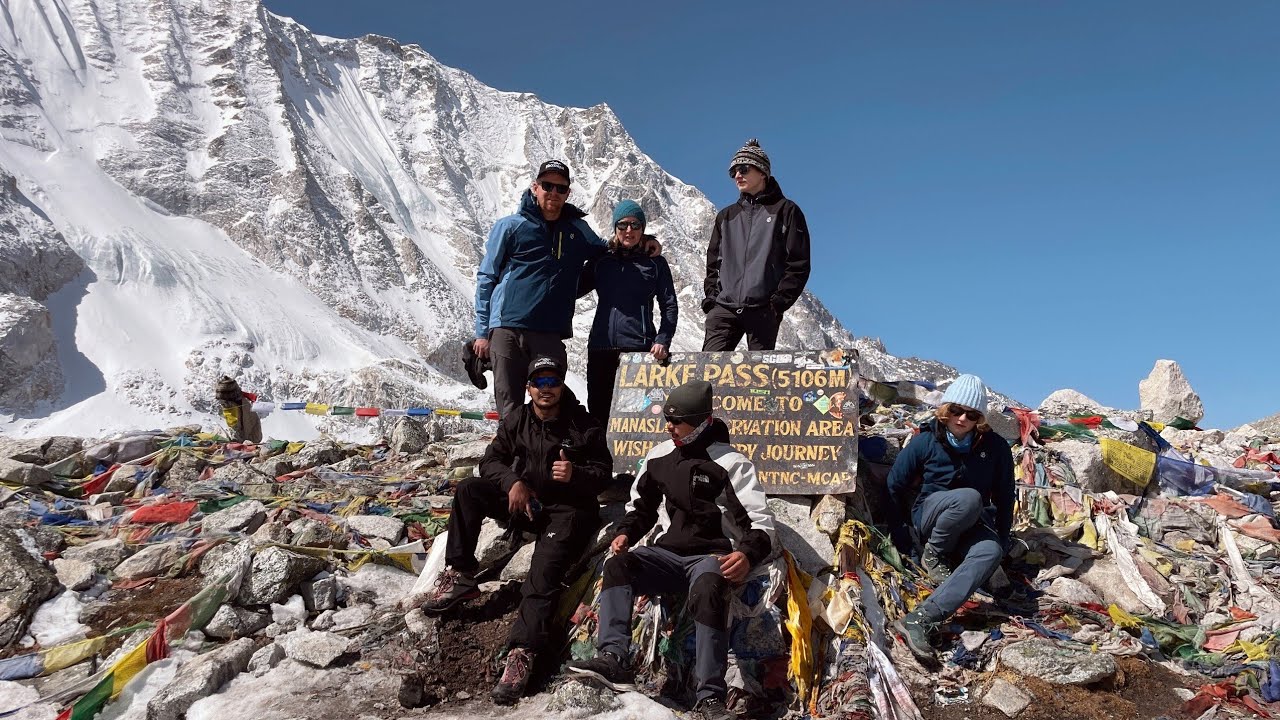
Conquer the dramatic 5,106m (16,752ft) pass with panoramic views of the Manaslu and Annapurna ranges.
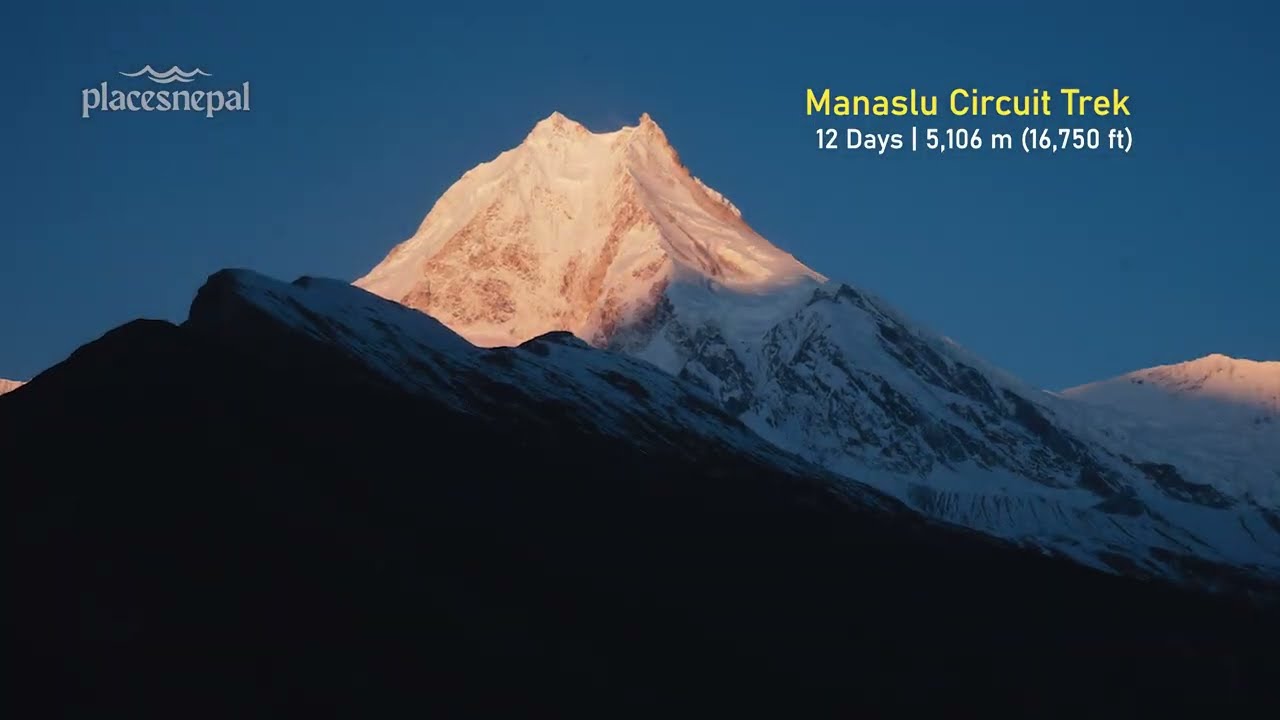
Hike to the base of the world’s 8th-highest mountain and admire its pristine alpine beauty.
Walk through lush forests, alpine meadows, and spot rare wildlife like blue sheep and Himalayan monals.
Key Information
Max. altitude
890 m / 2,920 ft
Accommodation
Mountain Guest House
Meals
Lunch & Dinner Included
Start
Kathmandu 1,400 m
Overnight
Machha Khola 890 m
Road distance
160 km
Travel time
8–9 hrs
Day 1 is a full road day — no trekking yet. You leave Kathmandu before most people are awake, follow the highway west through the Trishuli lowlands, then turn north into the Budhi Gandaki valley as the landscape transforms from flat farmland to steep river gorges. By the time you pull into Machha Khola, the mountains feel close enough to touch. Settle in, eat a proper dinner, and get to bed early — the actual walking starts tomorrow.
Public Bus — Included
Tourist bus from Gongabu Bus Park
Your guide meets you at your hotel, arranges a taxi to Gongabu (New Bus Park), and handles all boarding. Grab a window seat and enjoy the scenery.
Departure6:00–8:00 AM
Duration8–9 hours
StopsLunch + toilet breaks
CostIncluded in package
Private Jeep / HiAce — Optional
Door-to-door from your hotel
More comfort, more flexibility — stop for photos when you like and depart as late as 8:30 AM. Ideal for groups or anyone who values comfort over cost.
DepartureFlexible
Duration7–8 hours
CapacityUp to 6–7 people
CostUSD $250 / vehicle
5:30–6:00 AM
Hotel pickup — taxi to Gongabu Bus Park
Early start, light traffic, Kathmandu still sleeping
Have breakfast early or ask your hotel the night before to pack something for the road. Your guide meets you at the lobby.
6:00–8:00 AM
Bus departs Gongabu
Kathmandu gives way to open countryside
Your guide handles boarding. Get a window seat on the left side for the best views through the gorge after Arughat.
Midday
Lunch stop en route
Stretch your legs, eat warm food, refill water
The bus makes a scheduled stop at a roadside dhaba before Arughat. Use the time well — there are toilet breaks too.
Post-Arughat
Tarmac ends — the valley begins
Bumpy, dusty, and absolutely worth it
After Arughat the road turns unpaved. Terraced hillsides, river crossings, and canyon walls all the way to Machha Khola. A buff over your face helps if you're near the back.
Late afternoon
Arrive Machha Khola — check in, rest
Dinner, charge everything, lights out early
Check in to your teahouse, clean up, and eat. Day 2 is your first real trekking day — aim to be in bed by 9:00 PM.
Machha Khola — Your First Night on Trail
890 m / 2,920 ft
A small riverside village in Gorkha district, sitting on the banks of the Budhi Gandaki River. Machha Khola is the official Day 1 stop for Manaslu Circuit trekkers — a place to decompress after the long drive and prepare for the weeks of walking ahead. Despite its size, it's well equipped: most teahouses have attached bathrooms, hot showers, Wi-Fi, and device charging. The sound of the Budhi Gandaki at night is one of the better sleeping aids on the entire circuit. Stock up on any last-minute snacks here — reliable shops thin out quickly above Arughat.
Community
Gurung & Ghale
Facilities
Wi-Fi · Hot shower
Charging
Reliable — use it
Breakfast before you leave.Most buses depart before hotel kitchens open — ask the night before to prepare something early or pack snacks.
Charge everything tonight. Machha Khola has the most reliable electricity on the circuit. Devices become harder to charge from Day 4 onward.
Cash check. There are no ATMs beyond Arughat. Make sure you have enough Nepali rupees ($250-$350) for the full 17 days before leaving Kathmandu.
No trekking today.It's a full travel day — hydrate, rest, and mentally transition from city mode. Your legs start tomorrow.
Max. altitude
1,400 m / 4,593 ft
Altitude Gain
510 m / 1,673 ft
Accommodation
Mountain Guest House
Meals
Breakfast, Lunch & Dinner Included
Start
890 m
Overnight
1,340 m
Trek time
6 hrs
Machha Khola
890 m
→
Kholabesi
990 m
→
Dobhan
1,070 m
→
Jagat
1,340 m
Your first real day on the trail and an immediate introduction to what makes the Manaslu Circuit so distinct. The route follows the Budhi Gandaki gorge northward — a dramatic river canyon where the trail hugs the riverbank, crosses on long swinging suspension bridges, and traverses narrow rock ledges above the water. It's raw, beautiful, and occasionally vertiginous from the first hour.
Subtropical vegetation dominates at this elevation — banana palms, bamboo, and dense forest lining the trail. Watch out for mule trains carrying supplies upvalley; they always have right of way on the narrow ledge sections. You'll pass through the checkpoint village of Dobhan before arriving at Jagat, which marks the official entry into the Manaslu restricted zone.
Jagat
1,340 m / 4,396 ft
The gateway village of the Manaslu Restricted Area with a checkpoint where all trekking permits are verified. Jagat has a relaxed atmosphere, well-established teahouses, and a pleasant position above the river. From here the trail quietens — day-trippers are filtered out at the checkpoint and the circuit begins to feel genuinely remote.
Checkpoint
Permits checked
Teahouses
Good selection
Hot shower
Available
First day fatigue is normal.Your body isn't fully adjusted to trail life yet. Walk at a steady pace, drink water consistently, and don't race to the teahouse. You have 16 more days ahead.
Max. altitude
2,240 m / 7,349 ft
Altitude Gain
900 m / 2,953 ft
Accommodation
Mountain Guest House
Meals
Breakfast, Lunch & Dinner Included
Start
1,340 m
Overnight
2,240 m
Trek time
7 hrs
Jagat
1,340 m
→
Sirdibas
~1,490 m
→
Deng junction
~1,800 m
→
Lokpa
2,240 m
At the village of Deng, the Manaslu Circuit continues straight ahead while your route turns right into the Tsum Valley. This fork is one of the most significant moments of the entire trek. You're leaving a relatively well-known trekking route and stepping into one of the most isolated and culturally preserved valleys in the entire Himalaya — a valley opened to foreign trekkers only in 2008.
Cross the river and begin the climb toward Lokpa. The landscape shifts almost immediately — wider, quieter, unmistakably Tibetan in character. Mani walls appear. Prayer flags string between rocks. The pace of the valley slows everything down. Today is a longer, harder day with 900 m of gain — pace yourself from the start.
Lokpa
2,240 m / 7,349 ft
The gateway village of the Tsum Valley — a small, tightly-knit settlement where the valley culture announces itself immediately. Flat-roofed stone houses, prayer wheels at every corner, and chortens lining the entrance path signal that you have crossed into a different world. Basic teahouses, warm hosts, and the first real quiet of the trek.
Culture
Tibetan Buddhist
Accommodation
Basic teahouses
Signal
Usable Weak (NTC)
Cultural etiquette from here on: Always walk clockwise around mani walls, chortens, and prayer wheels. Remove shoes before entering monastery buildings. Ask before photographing people. The Tsum people are warm and welcoming — their traditions deserve the same respect in return.
Max. altitude
2,386 m / 7,828 ft
Altitude Gain
146 m / 479 ft
Accommodation
Mountain Guest House
Meals
Breakfast, Lunch & Dinner Included
Start
2,240 m
Overnight
2,386 m
Trek time
4 hrs
A gentler day after the long climb yesterday. The trail winds through terraced barley and buckwheat fields as the valley floor widens and reveals itself in full. Ancient mani stone walls carved with Tibetan scripture line the path. The whole place has a quiet, steady rhythm that begins to feel like the natural pace of things up here.
Arrive at Chumling early enough to explore. Walk up to the monastery above the village before dinner — the views over the entire Tsum Valley from up there are worth every extra step, and it sets the context for everything you'll see over the next three days.
Chumling
2,386 m / 7,828 ft
One of the main villages of the lower Tsum Valley, sitting on a wide sunlit terrace with views of the surrounding peaks. The Tsum people here are of Tibetan origin and speak their own dialect distinct from both standard Tibetan and Nepali. Flat-roofed architecture, yak butter tea from open doorways, and monks in burgundy robes moving between houses and the monastery above — Chumling is your first real window into Tsum Valley life.
Ethnicity
Tsumba (Tibetan)
Monastery
Above village
Teahouses
Several
Try yak butter tea tonight. It's thick, salty, and warming in a way that takes adjustment — but it's the drink of this culture and the experience of drinking it with a local family is one of those small things you don't forget.
Max. altitude
3,240 m / 10,630 ft
Altitude Gain
854 m / 2,802 ft
Accommodation
Mountain Guest House
Meals
Breakfast, Lunch & Dinner Included
Start
2,386 m
Overnight
3,240 m
Trek time
6 hrs
A significant climb into the upper Tsum Valley, crossing into a higher, drier landscape where the valley broadens and the snow peaks of Ganesh Himal and Himalchuli begin to fill the horizon. The trail climbs through juniper forest and across open hillside. This is one of the bigger elevation days in the Tsum section, so an early start and a steady pace are the right approach.
Your overnight is at Rachen Gompa — one of the two great monasteries of the Tsum Valley and a community of monks whose daily rhythms between meditation, prayer, and subsistence farming give the place a genuinely living quality. The main assembly hall contains a large statue of Guru Rinpoche and remarkable hand-painted murals covering every wall. As evening falls and the monks gather for prayer, the sound of chanting drifts across the hillside in the fading light.
Rachen Gompa
3,240 m / 10,630 ft
An active monastery on the western side of the upper Tsum Valley, considered alongside Mu Gompa as one of the twin spiritual poles of this hidden Buddhist enclave. The monastery guesthouse offers very basic accommodation — mattresses, blankets, a shared kitchen — but the atmosphere of genuine monastic peace is unlike any teahouse on the circuit. Staying here is a privilege available to very few visitors in the world.
Type
Monastery guesthouse
Monks resident
Yes, year-round
Facilities
Very basic
Altitude notice:You've climbed over 850 m today and crossed 3,000 m for the first time. Drink water, eat a full dinner, and sleep early. If you feel a headache coming on, rest — don't push through it. Tomorrow is a shorter day designed to help you acclimatise.
Max. altitude
3,361 m / 11,027 ft
Altitude Gain
330 m / 1,083 ft
Accommodation
Mountain Guest House
Meals
Breakfast, Lunch & Dinner Included
Start
3,240 m
Nile
3,361 m
Mu Gompa
3,700 m
Overnight
Nile / Mu Gompa
Trek up to Nile — the highest permanently inhabited village in the Tsum Valley — and then continue to Mu Gompa, the spiritual heart of the entire valley. For many people who complete this route, today ends up being the day they talk about for years.
Highest village
Nile
3,361 m / 11,027 ft
The highest permanent settlement in the Tsum Valley — a tiny village at the threshold between the inhabited valley below and the high gompa wilderness above.
Very few trekkers make it this far and the silence here in the evenings is absolute. Basic teahouses run by local families who are among the most welcoming hosts on the entire route.
Monastery
Mu Gompa
3,700 m / 12,139 ft
The spiritual heart of the Tsum Valley — a large, active monastery perched on a rocky promontory with sweeping views. Inside: ancient thangka paintings, rows of prayer wheels, butter lamps burning day and night, and monks who live here year-round.
This is not a museum piece but a working religious community. Take your time here — this is why you came.
The highlight of the Tsum Valley: Mu Gompa is accessible to very few trekkers in the world. The combination of active Buddhist practice, extraordinary mountain scenery, and near-complete isolation makes this one of the most powerful experiences Nepal's trekking routes have to offer — and it's exclusive to this itinerary.
Max. altitude
2,386 m / 7,828 ft
Accommodation
Mountain Guest House
Meals
Breakfast, Lunch & Dinner Included
Start
3,361 m
Overnight
2,386 m
Trek Distance
12 km / 7.5 mi
Trek time
6 hrs
A long descent retracing the valley trail south to Chumling. The return through familiar villages carries a different quality — faces recognise you, children wave, the landscape seen in reverse reveals details invisible on the way up. The Tsum Valley has a way of growing on you quietly, and the descent gives you time to let everything from the past four days settle.
Back at Chumling, the relative warmth of the lower valley feels earned. Tonight is your last night in the Tsum Valley before the itinerary rejoins the Manaslu Circuit tomorrow. Use the evening to reflect — you've spent five days in one of Nepal's most inaccessible and culturally intact valleys. Very few trekkers in the world can say the same.
Look after your knees today.Nearly 1,000 m of descent on uneven trail is the scenario trekking poles were designed for. Use them, take your time, and don't race to the bottom just because it's downhill.
Max. altitude
1,860 m / 6,102 ft
Accommodation
Mountain Guest House
Meals
Breakfast, Lunch & Dinner
Start
2,386 m
Overnight
1,860 m
Change
−526 m
Trek time
5 hrs
Descend from the Tsum Valley and rejoin the main Manaslu Circuit trail at Deng — the same junction you passed on Day 3. The transition back to the main circuit is noticeable: more trekkers on the trail, busier teahouses, and the Budhi Gandaki gorge narrowing again above the village as the route pushes north toward Manaslu country.
Deng has a good range of teahouses with relatively reliable electricity and charging. After several days of very basic accommodation in the upper Tsum Valley, a warm dining room with a full menu feels like a genuine treat. From here to Samagaun the trail follows the classic Manaslu trekking route through progressively higher and more dramatic scenery.
Deng
1,860 m / 6,102 ft
The junction village where the Tsum Valley trail rejoins the main Manaslu Circuit. Well-supplied teahouses, charging facilities, and a checkpoint. The gorge above Deng is one of the most visually dramatic sections of the entire circuit — sheer rock walls rise thousands of metres on both sides while the river thunders below. Waterfalls drop from hidden hanging valleys above the trail.
Teahouses
Good selection
Charging
Available
Checkpoint
Permits verified
Max. altitude
2,630 m / 8,629 ft
Altitude Gain
770 m / 2,526 ft
Accommodation
Mountain Guest House
Meals
Breakfast, Lunch & Dinner
Start
1,860 m
Overnight
2,630 m
Trek Distance
19.5 km / 12.1 mi
Trek time
6 hrs
A significant elevation day as the trail climbs through the deepening Budhi Gandaki gorge. Sheer granite walls rise thousands of metres on both sides, waterfalls drop from invisible hanging valleys above, and the river's voice fills every quiet moment. Pass through the small villages of Rana and Bhi before arriving at Namrung.
At Namrung, on a clear day, you get your first real glimpse of Manaslu (8,163 m) on the northern horizon. The world's eighth-highest mountain has been hidden behind ridgelines for days — its first appearance here tends to stop people mid-stride. This is what the next week is building toward.
Namrung
2,630 m / 8,628 ft
A well-positioned village at the entrance to the upper Manaslu valley with reliable teahouses and the first clear views of Manaslu on a clear day. Namrung is home to Nubri people — a Tibetan-origin community with their own dialect, cultural traditions, and a small active monastery worth a short visit. The village marks the transition between the subtropical gorge and the high alpine world above.
Culture
Nubri (Tibetan)
Manaslu view
First glimpse
Teahouses
Good
Max. altitude
3,500 m / 11,483 ft
Altitude Gain
870 m / 2,854 ft
Accommodation
Mountain Guest House
Meals
Breakfast, Lunch & Dinner
Start
2,630 m
Overnight
3,500 m
Trek Distance
10 km / 6 miles
Trek time
6 hrs
The trail passes through the traditional high-altitude villages of Lihi and Sho — both home to Nubri communities with Tibetan-influenced architecture, ancient monasteries, and yak herds grazing the surrounding grassland. The Manaslu massif grows progressively larger with every hour of walking.
Shyala at 3,500 m delivers something extraordinary: the full north face of Manaslu presented from an intimately close angle. At 8,163 m, the mountain fills the sky above the village in a way that photographs never fully capture. This is one of the finest unobstructed views of an 8,000-metre peak available from any trekking route in Nepal.
Shyala
3,500 m / 11,483 ft
A high, wind-exposed village in the upper Manaslu valley with one of the most dramatic mountain views on the entire circuit. The north face of Manaslu dominates the northern sky in a way that photographs never fully replicate. Nubri families maintain a centuries-old way of life centred on yak herding, barley farming, and Buddhist practice.
Manaslu view
Outstanding
Teahouses
Basic, warm
Overnight temp
Below −5 °C
Max. altitude
4,040 m / 13,255 ft
Altitude Loss
814 m / 2,671 ft
Accommodation
Mountain Guest House
Meals
Breakfast, Lunch & Dinner
Start
3,500 m
Pungen Monastery
4,040 m
Samagaun
3,530 m
Trek time
6 hrs
Rather than taking the direct trail to Samagaun, today's route detours up to Pungen Monastery — an ancient gompa sitting on a glacial moraine above a stunning glacial lake, with the full north face of Manaslu filling the entire sky above. The altitude detour is significant but the view from up there is one you'll remember for the rest of your life.
Descend to Samagaun — the largest and most comfortable village on the upper Manaslu Circuit. Good teahouses, a health post, and solar power make it feel relatively well-served after the sparse upper villages. During climbing seasons you may share the village with expedition teams preparing for Manaslu's summit. You sleep here for two nights.
Samagaun
3,530 m / 11,581 ft
The main village and expedition base on the upper Manaslu Circuit — and your most comfortable overnight stop since Deng. Multiple teahouses, a health post, and solar charging. The Manaslu Glacier is visible directly from the village and the mountain dominates the northern skyline. You stay here two nights, which gives your body genuine acclimatisation time before the long climb to Larkya Phedi.
Teahouses
Best on upper circuit
Health post
Yes
Nights here
2 nights
Max. altitude
3,530 m / 11,581 ft
Accommodation
Mountain Guest House
Meals
Breakfast, Lunch & Dinner
Base
3,530 m
Option A
Birendra Lake 3,900 m
Option B
Base Camp 4,800 m
Overnight
Samagaun
This rest day is not optional — it's essential. You've climbed steadily for days and the Larkya La crossing (5,106 m) is three days away. A proper acclimatisation day now makes the pass crossing dramatically safer and more manageable. The principle is simple: climb high, sleep low. Go up, then come back down to Samagaun for the night.
There are two options depending on your fitness, ambition, and how well your body has been responding to altitude so far. Discuss with your guide the evening before — they'll read the situation honestly.
Option A — Birendra Lake
3,900 m · 3–4 hrs round trip · Easy
A short, rewarding hike to a glacial lake reflecting the peaks above. Perfect for trekkers who want gentle acclimatisation without overexertion. Good views of the Manaslu Glacier and a peaceful spot to sit and absorb the scale of the landscape. Recommended if you've been feeling any altitude effects.
Option B — Manaslu Base Camp
4,800 m · 7–8 hrs round trip · Strenuous
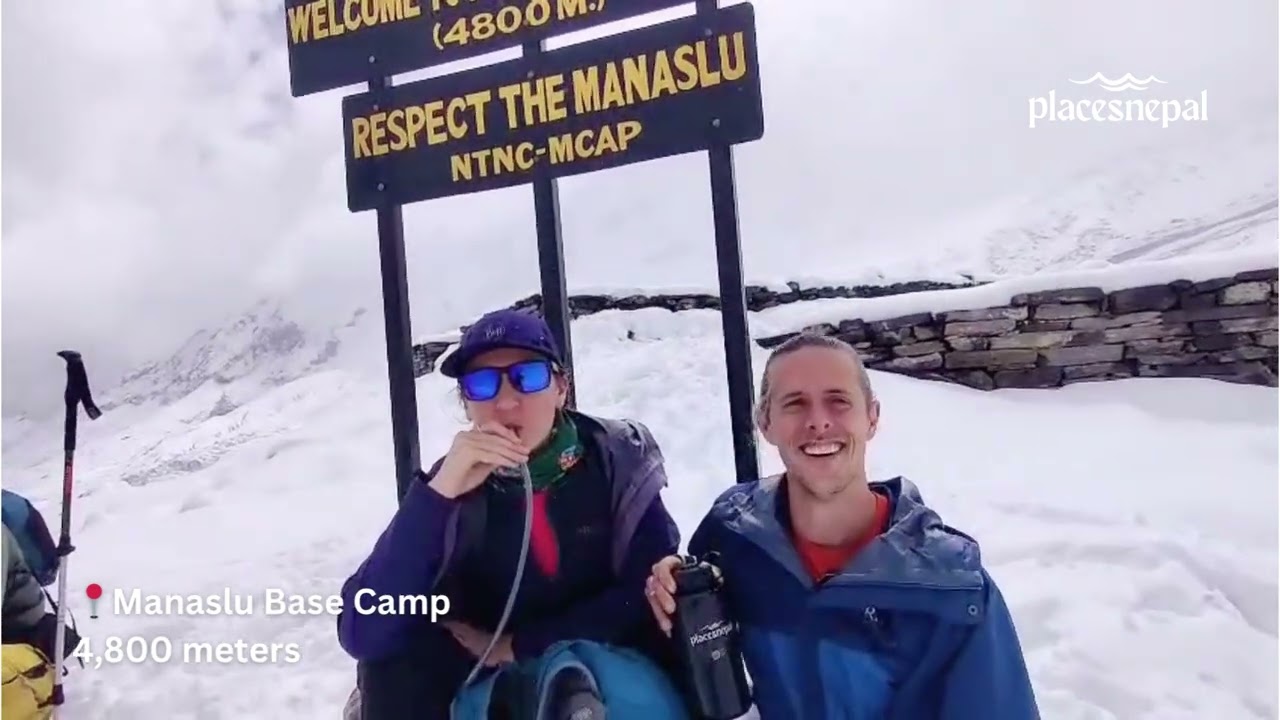
A demanding but extraordinary hike across glacial moraines to the foot of Manaslu's north face. At base camp, expedition tents, fixed lines, and the sheer scale of an 8,000-metre peak from ground level are genuinely humbling. Only attempt this if you feel strong — the Larkya La matters more. Turn back if any AMS symptoms develop.
Larkya La priority rule: If you're torn between pushing to Manaslu Base Camp or playing it safe with Birendra Lake, choose the lake. The Larkya La crossing is the defining physical challenge of this trek. Arriving at Larkya Phedi tired is a mistake; arriving rested ais the goal.
Max. altitude
3,860 m / 12,664 ft
Altitude Gain
330 m / 1,083 ft
Accommodation
Mountain Guest House
Meals
Breakfast, Lunch & Dinner
Start
3,530 m
Overnight
3,860 m
Trek Distance
8 km / 5 mi
Trek time
4 hrs
A deliberately short day pushing north toward the Tibetan frontier. Samdo is the last proper village before the Larkya La and sits in a wide, open valley with an almost austere beauty to it — sparse vegetation, yak tracks in the dust, and the high pass visible for the first time on the horizon above.
Arrive early, rest through the afternoon, and eat a complete dinner. Tonight is your second-to-last night before the pass. Your body needs fuel and sleep more than it needs another kilometre of hiking.
Samdo
3,860 m / 12,664 ft
The last permanent village before the Larkya La pass, sitting close to the Tibetan border in an open high-altitude valley. Samdo has a small but reliable teahouse and is a crucial acclimatisation stop — sleeping here at 3,860 m before pushing to Larkya Phedi (4,480 m) tomorrow keeps the altitude gain manageable. The village has a monastery and yak herders who use the surrounding pastures in summer.
Tibet border
Very close
Teahouses
Limited
Last permanent village
Before the pass
Max. altitude
4,480 m / 14,698 ft
Altitude Gain
620 m / 2,034 ft
Accommodation
Mountain Guest House
Meals
Breakfast, Lunch & Dinner
Start
3,860 m
Overnight
4,480 m
Trek distance
6.5 km / 4 mi
Trek time
4 hrs
A short, purposeful day climbing to Larkya Phedi — also called Dharamshala or High Camp — at 4,480 m. This is the staging post for tomorrow's pass crossing: a single guesthouse compound in a completely exposed high-altitude bowl with nothing around it except the mountain and the wind.
Arrive by early afternoon, rest, and eat a full dinner even if your appetite is suppressed by the altitude. Pack your pass-crossing kit before sleeping — headlamp, warm layers, snacks, water, and crampons if snow conditions require. Your guide will brief you on the exact departure time based on conditions observed during the afternoon. It's typically between 04:00 and 05:00.
Larkya Phedi (Dharamshala)
4,480 m / 14,698 ft
The pre-pass camp for the Larkya La — one of the most exposed overnight stops on any trekking route in Nepal. A single guesthouse with basic dorm accommodation and a small kitchen. This is not a comfort stop; it is a staging post for one of the great Himalayan passes. Temperatures overnight can drop to −15 °C or below. Your sleeping bag is the most important piece of gear you own tonight.
Accommodation
Dorm only
Night temp
−10 to −15 °C
Departure
03:00–05:00
Pack before you sleep, not in the morning. The 04:00 departure in the dark and cold is not the moment to be digging through your bag. Everything you need for the pass should be organised and accessible before lights out.
Max. altitude
5,106 m / 16,752 ft
Accommodation
Mountain Guest House
Meals
Breakfast, Lunch & Dinner
Larkya La — 5,106 m / 16,929 ft
The highest point of the trek · The physical and emotional summit of 15 days of walking
Start
4,480 m
Pass
5,106 m
Bimthang
3,720 m
Total descent
1,440 m
Larkya Phedi
4,480 m
→
Larkya La
5,100 m
→
Bimthang
3,720 m
04–05:00
Depart Larkya Phedi
Headlamps on, stars overhead, cold air biting
The pre-dawn start is non-negotiable — the pass must be crossed before afternoon wind and cloud builds. Follow your guide's pace exactly. This is not the moment for a fast start.
Sunrise
Larkya La — 5,106 m
The roof of the trek. Stand here and let it sink in.
A wide saddle draped in prayer flags, battered by wind, ringed by peaks. From the top: Manaslu, Himalchuli, Ngadi Chuli, Annapurna II, and the Marsyangdi valley opening to the south. This is why you came.
Mid-morning
Western descent begins
1,440 m down — moraine, meadow, forest
The descent is long and knee-intensive. Glacial moraine gives way to alpine meadow, then progressively the vegetation returns. Each band of green is a marker of altitude surrendered and warmth regained. Trekking poles are essential.
Afternoon
Bimthang — 3,720 m
The hardest day is done. Eat everything. Sleep deeply.
Bimthang is a high meadow settlement surrounded by mountains and filled with late-afternoon light. You'll arrive tired, hungry, and deeply satisfied. Dal bhat, a sleeping bag, and a quiet mind.
Bimthang
3,720 m / 12,205 ft
A high alpine meadow settlement on the western side of the Larkya La — the first overnight after the pass and one of the most beautiful locations on the entire circuit. Surrounded by rhododendron forest with views of Manaslu, Himalchuli, and Ngadi Chuli, Bimthang feels like paradise after Larkya Phedi. Good teahouses, warm food, and the particular satisfaction of a big day done.
Setting
Alpine meadow
Views
Outstanding
Teahouses
Good quality
Safety first on the pass:The Larkya La in poor conditions — snow, ice, cloud — is genuinely dangerous. Your guide makes the call on timing and conditions. If they recommend waiting a day at Larkya Phedi, trust that completely. The pass has claimed lives and deserves full respect.
Max. altitude
3,720 m / 12,205 ft
Accommodation
Mountain Guest House
Meals
Breakfast, Lunch & Dinner
Start
3,590 m
Tilije
2,300 m
Besisahar
760 m
Mode
Trek + jeep
A rapid descent through rhododendron and pine forest to Tilije — a traditional lower-valley village with a well-preserved monastery worth a brief stop. The vegetation thickens with every 100 m of altitude surrendered and the air grows noticeably warmer and richer. After 18 days at altitude, the return to treeline feels almost physical — like a change of pressure in the chest.
From the road junction below Tilije, a jeep carries you down the Marsyangdi valley to Besisahar — the starting point of the Annapurna Circuit and a town of relative comfort. Hot shower. A proper sit-down dinner. The first reliable mobile signal in days. The mountain chapter of the journey is over.
The altitude reversal today is extraordinary: from 3,590 m at dawn to 760 m by evening. Your body will feel the pressure change. Drink water, eat well, and allow a little time to just sit and be back in the world of traffic and electricity and other humans.
Max. altitude
1,350 m / 4,429 ft
Accommodation
3-Star Hotel
Meals
Breakfast & Lunch
From
Besisahar
To
Kathmandu
Duration
6–7 hrs
Mode
Tourist bus
The final day is a long bus ride home along the Prithvi Highway — a scenic drive through the Marsyangdi and Trishuli river valleys that serves as a gentle, rolling debrief of everything the past 17 days have been. Outside the window: terraced fields, roadside tea shops, children in school uniforms. The ordinary world, reassembled.
Arrive back in Kathmandu by early evening. Twenty days. Two valleys, one of which almost nobody ever visits. Two base camps. Two high gompa excursions. One 5,106 m pass. The Manaslu Circuit with Tsum Valley is one of the longest, most varied, and most culturally rich trekking routes in Nepal — and the proof of that is the particular feeling of returning from it. Not just tired. Genuinely changed.
Rest day in Kathmandu recommended: 17days at high altitude takes a physiological toll that one night's sleep doesn't resolve. Build at least one buffer day in Kathmandu before any international flight. Your body has earned the rest and your stories deserve a proper telling.
The Tsum Valley with Manaslu Circuit Trek reaches two of Nepal's most protected places in a single journey — the hidden Buddhist valley of Tsum, opened to outsiders only in 2008, and the restricted Manaslu Circuit with its crossing of Larke Pass. Like the classic circuit, it runs point-to-point: one road in along the Budhi Gandaki, seventeen days later a different road home from Besisahar. The paperwork is the most involved of any Places Nepal trek — four permits, two restricted zones — and we handle every piece of it. Here's how it all works.
⇀ Starts
Kathmandu — Day 1 morning drive to Machha Khola
Arrive in Kathmandu at least one full working day before Day 1 — two restricted-area permits need processing
↼ Ends
Kathmandu — Day 17 arrival by tourist bus from Besisahar
Via Tilije → Besisahar shared jeep (Day 16) · book international departures for Day 18 or later
International entry
Kathmandu (TIA)
Trailhead
Machha Khola (890 m) — 8–9 hr drive
Trek exit
Tilije → Besisahar → Kathmandu
Permits required
4 — the most of any Nepal trek
1
International arrival
Fly into Kathmandu — Tribhuvan International Airport (TIA)
All international trekkers arrive at Tribhuvan International Airport (IATA: KTM). This route enters two separate restricted areas — Tsum Valley and Manaslu — and both permits are processed at the Department of Immigration in Kathmandu, requiring your original passport on a working day. Plan to arrive at least one full working day before Day 1.
Free arrival pickup — TIA to hotel
Complimentary
Any arrival time · Arrivals Hall · Places Nepal signboard
A Places Nepal representative meets you at arrivals holding a Places Nepal signboard and transfers you directly to your hotel — whatever time you land. The same free transfer applies on your departure day.
Nepal Visa on Arrival
Most nationalities receive a Tourist Visa on arrival at TIA: USD $30 (15 days), USD $50 (30 days), or USD $125 (90 days), payable in cash. For this 17-day itinerary plus arrival and departure days, take the 30-day visa. Bring 4–6 passport photos — two restricted-area applications use several.
2
Day 1 · To the trailhead
Drive from Kathmandu to Machha Khola — 8–9 hours to the foothills
Day 1 rolls west along the Prithvi Highway before turning north up the Budhi Gandaki valley — tarmac giving way to a rough, spectacular river track through Arughat and Soti Khola to Machha Khola (890 m). It's a long day, but it delivers you directly to the trailhead teahouse with the walking starting fresh next morning.
Private transport — all arrangedIncluded
Hotel pickup ~6:00–7:00 AM · ~160 km · 8–9 hrs
Your guide travels with you from Kathmandu, and the vehicle, driver, and road logistics are all included. Duffels ride with you — no bus stations, no transfers to organise.
The last hours are rough — by design
Beyond Arughat the road is unpaved, slow, and jolting, especially after rain. It's also why the Budhi Gandaki and Tsum remain so quiet. Keep water, snacks, and a warm layer in your daypack and enjoy the gorge doing its slow reveal.
3
Required permits
Four permits — two restricted zones, two conservation areas
This is the most permit-intensive trek in our range, and it's worth understanding why: the route enters the Tsum Valley restricted area (Days 3–7, branching at Lokpa), the Manaslu restricted area (the upper circuit through Sama Gaon and Larke Pass), and both the Manaslu and Annapurna conservation areas. All four permits are arranged by Places Nepal and included in your package — your guide carries everything through the checkpoints at Jagat, Lokpa, and Dharapani. No TIMS card is required — the restricted-area permits replace it.
Manaslu Restricted Area Permit (MRAP)
USD $100 / person / week (Sep–Nov)
USD $15/day thereafter · Dec–Aug: USD $75/week + $10/day · Covers the restricted circuit from Jagat over Larke Pass. Issued by the Department of Immigration, Kathmandu. Included in your package.
Tsum Valley Restricted Area Permit
USD $40 / person, first 8 days (Sep–Nov)
Dec–Aug: USD $30 for the first 8 days · A separate permit for the hidden valley itself, covering your Days 3–7 inside Tsum. Issued alongside the MRAP. Included in your package.
Manaslu Conservation Area Permit (MCAP)
NPR 3,000
~USD $23 per person, flat fee · Covers the entire Budhi Gandaki and Tsum region. Included in your package.
Annapurna Conservation Area Permit (ACAP)
NPR 3,000
~USD $23 per person, flat fee · Required for the exit through Tilije, Dharapani, and the drive to Besisahar. Included in your package.
Solo trekkers: the rules changed on 22 March 2026
Both Tsum Valley and Manaslu previously required a minimum group of two trekkers for restricted-area permits. As of 22 March 2026, Nepal's Department of Immigration removed that minimum across all restricted areas — solo trekkers can now be issued their own permits for both zones. What remains mandatory: a licensed guide through a registered agency (maximum 7 trekkers per guide), and insurance verification during permit processing. Anything you've read saying this route can't be done solo predates the change.
All permits arranged by Places Nepal
Send us a passport copy and insurance details at booking, then bring your original passport and 4–6 passport photos to Kathmandu. We process all four permits before departure — you'll never queue at a counter.
4
Days 16–17 · The way home
Out the far side — Tilije, Besisahar, and the bus to Kathmandu
After crossing Larke Pass, the route exits through the Marsyangdi valley. Day 16 descends on foot from Bimthang to Tilije, where a shared jeep takes over for the rough ride down the Annapurna Circuit road to Besisahar (760 m) — overnight in the roadhead town. Day 17 is a comfortable tourist bus along the Prithvi Highway back to Kathmandu, arriving by late afternoon with hotel drop-off included.
The Tilije–Besisahar jeep is part of the adventure
The road down the Marsyangdi is famously rough — 4–5 hours of genuine 4WD track shared with local traffic. It's bumpy, slow, and scenically spectacular. Motion-sickness tablets help; so does knowing a hot shower in Besisahar is at the end of it.
5
Highly recommended
Pre-Trek Briefing — the day before departure
Attend a briefing at our Thamel office the day before Day 1 — it doubles as the permit handover for both restricted zones, and for a 17-day journey into two of Nepal's most remote valleys, it's the most useful hour of your Kathmandu stay.
What the briefing covers
Meet your guide and trek crew
Full route overview — the Tsum detour, the circuit, and Larke Pass day
Tsum Valley cultural etiquette — monastery conduct and the valley's no-slaughter tradition
Insurance verification — coverage to 5,500 m with helicopter evacuation
Gear check for a 5,106 m pass — sleeping bag, layers, microspikes if seasonal
Cash planning — 16 days without a reliable ATM
Places Nepal Treks — Thamel Office
Thamel, Kathmandu, Bagmati Province, Nepal Open daily · walk-ins welcome
Insurance to 5,500 m with helicopter evacuation — required
This route crosses Larke Pass at 5,106 m, and both Tsum and the upper Manaslu valley are helicopter-evacuation-only territory — no roads, no hospitals. Your policy must cover trekking above 5,500 m including helicopter evacuation, and note that proof of insurance is verified during restricted-area permit processing. We check every policy at the briefing.
Carry all your cash from Kathmandu
There are no ATMs anywhere on this route until Besisahar on Day 16 — and Tsum's remote teahouses are cash-only for everything. Personal extras — hot showers, charging, drinks, snacks, monastery donations, tips — need roughly NPR 1,500–2,000 per day in Nepali rupees, withdrawn before leaving Kathmandu.
Build a buffer at the end
Seventeen days leaves room for weather to interfere — fresh snow can delay the Larke Pass crossing, and the Budhi Gandaki road is monsoon-sensitive. Book your international departure for Day 18 or later, and treat a spare Kathmandu night as part of the plan.
Elevation Chart
Day 1
Teahouse
Breakfast
Lunch
Dinner
Day 2-16
Teahouses
Breakfast
Lunch
Dinner
Day 17
Breakfast
Lunch
Dinner
Seventeen days through two restricted valleys means the simplest, most authentic teahouse experience Nepal still offers. Tsum Valley's lodges are barely a generation removed from pure homestays — some nights you'll sleep beside working monasteries — while the Manaslu side runs the classic circuit progression from riverside teahouses to the bare-bones shelter below Larke Pass. Nobody comes to this route for the thread count; everybody remembers the hospitality.
Everything essential is included
All teahouse and lodge accommodation for the full trek, plus every meal on trekking days — breakfast, lunch, and dinner — is included in your package, chosen freely from each kitchen's menu. The only food costs you carry are personal extras: hot drinks beyond meals, snacks, monastery donations, and your celebration dinner in Besisahar.
Meals — what's covered, day by day
Days
Coverage
Day 1
LunchDinner — en route & at Machha Khola
Days 2–16
BreakfastLunchDinner — every trekking day, with Day 16 dinner in Besisahar your own choice
Riverside teahouses in the subtropical gorge: twin rooms, foam mattresses, shared bathrooms, and dining rooms that double as the family kitchen. Warm nights at low altitude make these easy, sociable stays.
Tsum Valley — Chumling to Mu Gompa (Days 4–7)Most authentic of any route
The hidden valley's lodges are the real thing: family-run, wood-fired, and unhurried, with some of the warmest hosting in the Himalaya. Around Rachen Gompa and Mu Gompa you sleep beside living monasteries — simple rooms, monastery bells for an alarm clock, and an atmosphere no established trekking route can offer. Expect shared squat toilets and washing from a basin; expect also to remember these nights longest.
Upper Manaslu — Deng to Samdo (Days 8–13)Improving with altitude
Back on the main circuit, stone-built lodges improve steadily — best of all at Sama Gaon, your two-night acclimatisation base, with the upper valley's most comfortable rooms, solar charging, and some Wi-Fi. The dining-room stove is the evening's social centre from Namrung up.
Larkya Phedi (Day 14)Very basic — one night
The roughest night, honestly stated: simple rooms and dormitory beds at 4,480 m, cold air, shared everything. It exists to position you for the pass — and no one remembers the room once they're standing on Larke Pass at sunrise.
Bimthang & Tilije (Days 15–16)Comfort returns
Bimthang's meadow lodges feel luxurious after the pass — proper menus, warm dining rooms, and the deep sleep of a big day done.
Besisahar (Day 16 night)Roadhead hotel
A simple hotel in the roadhead town — hot shower, real mattress, phone signal, and a celebration dinner of your choosing before the bus home tomorrow.
The food — two valleys, one honest kitchen
Dal bhat — the engine of the journey
Rice, lentil soup, seasonal vegetables, and pickles, with free refills always — fresh, hot, and exactly what seventeen trekking days ask for. "Dal bhat power, 24 hour" holds from Machha Khola to Besisahar.
Tsum Valley — Tibetan food in a sacred vegetarian valley
Tsum eats the way it has for centuries: thukpa noodle soup, tsampa (roasted barley flour), Tibetan bread, potatoes from the valley's own fields, and endless butter tea. Under the valley's ancient Shyagya non-violence tradition, animal slaughter is forbidden throughout Tsum — menus are naturally vegetarian, and it's part of what makes the valley feel genuinely apart from the world.
On the Manaslu circuit — simple and satisfying
Menus on the restricted circuit are shorter than Everest or Annapurna standards — dal bhat, fried rice, momos, noodle soups, Tibetan bread with honey, pancakes — with everything above the roadhead arriving by mule. Bimthang and the Marsyangdi side widen the choice again on the final days.
Breakfast & drinks
Porridge, muesli, eggs, Tibetan bread, and pancakes fuel the mornings; milk tea, butter tea, and ginger-lemon-honey run all day. Ginger-lemon-honey is the guides' altitude favourite — warming, hydrating, and gentle on a thin-air appetite.
Good to know
Eat vegetarian above Deng — Tsum makes it easy
There's no refrigeration in either restricted valley — meat higher up has travelled unchilled for days. Our guides' firm advice: vegetarian from the upper valleys until you're over Larke Pass. In Tsum the choice is made for you by sacred tradition; on the circuit, make it yourself. A stomach upset at 4,400 m is the most avoidable way to lose a pass crossing.
Bring a −15°C sleeping bag
Teahouses provide blankets, but the night at Larkya Phedi (4,480 m) — and cold-season nights in upper Tsum and Samdo — demand a proper four-season bag rated to around −15°C comfort. Quality bags rent cheaply in Kathmandu; we'll point you to trusted shops at the briefing.
Water — refill, treat, repeat
Skip single-use plastic: carry two 1-litre bottles and refill with boiled water at teahouses (small charge) or treat with tablets or a filter. Aim for 3–4 litres daily — hydration is the cheapest altitude medicine on the route, and doubly so on pass day.
Dietary requirements — tell us once, eat well everywhere
Vegetarian and vegan trekkers may eat better on this route than any other in Nepal — half the journey is vegetarian by sacred law. Gluten-free and allergy needs are manageable with notice: tell us at booking and your guide briefs every kitchen ahead.
The Tsum Valley with Manaslu Circuit Trek is a challenging journey — fifteen consecutive trekking days through two restricted valleys, finishing over Larke Pass at 5,106 m. Nothing on the route is technical, but the duration, the remoteness, and the big pass day place it firmly among Nepal's harder teahouse treks.
Overall difficulty
Challenging
4 out of 5 on the standard Nepal trekking scale. Best suited to trekkers with good fitness and ideally some previous multi-day altitude experience — you should be comfortable walking 5–7 hours a day for over two weeks, with one 8–9 hour pass day above 5,000 m.
Highest point
Larke Pass — 5,106 m (Day 15)
Highest sleep
Larkya Phedi — 4,480 m (Day 14)
Trekking days
15 consecutive (Days 2–16)
Hardest day
Pass day — 8–9 hrs, pre-dawn start
Larke Pass dayMain challenge
Day 15 is the crux: a 3–4 AM start from Larkya Phedi, a 626 m climb to the prayer flags at 5,106 m, and a long, initially steep descent to Bimthang — 8–9 hours in cold, thin air. Never technical, but a genuinely hard day that everything before it prepares you for.
Duration & accumulated fatigueThe quiet test
Fifteen consecutive walking days with a single rest day is what separates this from the standard 12-day circuit. Individual days are moderate; it's the accumulation that tests you — and Tsum's repeated ups and downs (the gorge trail to Lokpa, the climb to Mu Gompa and back) add real metres that a glance at the map won't show.
Altitude — Tsum is a secret weaponWell-managed by design
Here's the route's hidden advantage: the Tsum detour takes you to 3,700 m at Mu Gompa on Day 6, then back down to 1,860 m before the circuit climbs again — a giant climb-high-sleep-low cycle that pre-acclimatises you a week before most trekkers even reach altitude. Combined with the Samagaun rest day, it's why this itinerary crosses Larke Pass on stronger legs than the standard circuit schedule.
Terrain & remotenessSure feet required
No climbing, no ropes, no glacier travel — but the Tsum gorge trail is narrow and airy in places, the landslide section above Ghap asks for care, and both valleys are helicopter-evacuation-only territory. The trails are honest; the remoteness is what demands respect.
Not ideal as a first Himalayan trek
The duration and remoteness make this a route that rewards experience. If you haven't trekked at altitude before, build up with Langtang Valley or Everest Base Camp first — then come back for the hidden valley with legs that know what two weeks in the mountains feels like.
The honest summary
If you can walk 5–7 hours a day for two-plus weeks and you've handled altitude before, this trek is demanding but entirely achievable — no technical skills required, and an acclimatisation profile that quietly works in your favour. What you get for the effort: Nepal's hidden valley, its quietest great circuit, and Larke Pass at dawn — a combination very few trekkers ever complete.
This trek runs from the subtropical Budhi Gandaki gorge at 890 m, up into the dry Tibetan-facing amphitheatre of Tsum, and over Larke Pass at 5,106 m — three distinct climate zones in seventeen days. As with every route that depends on a 5,000 m crossing, the pass sets the calendar: the season has to work for Larke, and everything else follows.
Best time: the two classic windows
Autumn (late September – November) is the prime season — post-monsoon clarity, stable weather, and Larke Pass in its most reliable condition, with October the sweet spot. Spring (March – May) is the strong second choice: rhododendron forests in bloom along the Budhi Gandaki, warming days, and Tsum's barley fields turning green.
Late Sep – Nov (prime)March – May
Autumn
Late September – November
Prime season
Lower gorge (day)15°C – 22°C / 59°F – 72°F
Tsum Valley 3,000–3,700 m (day)8°C – 14°C / 46°F – 57°F
Samagaun / Samdo (night)−5°C – 0°C / 23°F – 32°F
Larke Pass (pre-dawn)−10°C – −15°C / 14°F – 5°F
Post-monsoon skies — Ganesh Himal, Baudha, and Manaslu at their sharpest
Larke Pass in its most stable, reliable condition of the year
Harvest season in Tsum — barley threshing and festival life in the villages
Late November turns sharply colder above Samdo with early snow risk on the pass
Spring
March – May
Recommended
Lower gorge (day)18°C – 25°C / 64°F – 77°F
Tsum Valley 3,000–3,700 m (day)6°C – 13°C / 43°F – 55°F
Samagaun / Samdo (night)−6°C – 0°C / 21°F – 32°F
Larke Pass (pre-dawn)−12°C – −18°C / 10°F – 0°F
Rhododendron bloom through the Budhi Gandaki forests below Namrung
Long daylight and warming days — generous walking windows
Early March can hold deep winter snow on Larke Pass — April onward is safer
Pre-monsoon haze can soften lower-valley views by May
Larke Pass is frequently snowbound — a single storm can close it for weeks, and there is no alternative exit
Larkya Phedi and many upper-Tsum lodges close mid-winter as families move to lower villages
Monsoon
June – mid September
Not recommended
Lower gorge (day)20°C – 28°C / 68°F – 82°F, humid
Upper valleys (day)10°C – 16°C / 50°F – 61°F
The Budhi Gandaki gorge is the problem — landslides regularly cut both the access road and the trail
Leeches in the lower forests, slick trails, and clouded views through the approach days
Tsum itself sits in partial rain shadow and stays drier — but there's no way in without the wet gorge, so the route as a whole doesn't work in monsoon
The pass rules the calendar
Whatever the weather lower down, this itinerary lives or dies on conditions at Larke Pass — fresh snow can delay the crossing by a day or force an earlier start even in prime season. Your guide's read on the pass is final, and that judgement is what gets every group across safely.
Three climates in one trek
Banana trees and rice terraces on Day 1; dry Tibetan plateau light in Tsum by Day 5; glacier moraine at the pass on Day 15. A pass-day dawn can run −15°C while the same week's gorge afternoons touch +25°C — full layering, base to down jacket, earns its place in every season.
Airport pickup service upon arrival in Kathmandu
Local bus from Kathmandu to Machha Khola
Shared jeep transportation from Tilche to Besisahar
Tourist bus from Besisahar to Kathmandu or Pokhara
All required trekking permits and restricted area permits
Licensed English-speaking trekking guide
Guide’s salary, meals, accommodation, transportation, and insurance
Teahouse/lodge accommodation throughout the trek
Three meals a day during the trek (Breakfast, Lunch, and Dinner)
Basic first aid kit carried by the guide
Arrangement of all trekking logistics and paperwork
Trek completion certificate
Government taxes and official service charges
Free luggage storage in Kathmandu during the trek
International airfare and Nepal visa fees
Travel insurance (mandatory for high-altitude trekking)
Personal trekking equipment and gear
Porter service (Optional $400 USD for entire trek, 20kg max)
Hot showers, Wi‑Fi, charging, and personal teahouse expenses
Bottled drinks, alcohol, snacks, and desserts
Lunch and dinner in Kathmandu or Pokhara
Tips for guide and porter
Accommodation in Kathmandu
Any services not specifically mentioned in the Cost Includes section
Fifteen consecutive trekking days, a 5,106 m pass, and Tsum's sneaky up-and-down metres — this route asks for durability more than athleticism. Twelve weeks of structured preparation gets a reasonably active trekker fully ready.
Prior altitude experience strongly recommended
This shouldn't be your first Himalayan trek. Ideally you've completed at least one multi-day trek above 4,000 m and know how your body behaves at altitude — fitness can be trained, but your altitude response can only be discovered, and deep in two restricted valleys is the wrong place to discover it.
Cardio base
4x / week
Hiking, running, cycling, or swimming for 45–60 minutes. The goal is holding a steady effort for 5–7 hours, day after day — brisk uphill walking is the most transferable single exercise.
Hill or stair repeats with a pack
1–2x / week
Pass day climbs 626 m before dawn; Tsum's gorge days stack repeated 300–400 m pulls. Weekly hill or stairwell sessions with a 6–8 kg daypack build exactly that engine.
One long hike per week
Build to 6–7 hrs
Progressively extend a weekend hike toward a full trek-length day — in the boots you'll wear in Nepal, conditioning legs, feet, and footwear together.
Back-to-back weekends
2–3 times before departure
Fifteen consecutive days is the real test, so rehearse it: two long hikes on consecutive days, at least twice in your build-up. How your legs feel on the second morning is the most honest fitness check available.
Strength, core & descents
2x / week
Squats, lunges, step-ups, and planks, 25 minutes twice weekly — plus deliberate steep downhill walking. The 1,386 m drop off Larke Pass to Bimthang is the hardest thing this route does to your knees; poles and trained quads are the answer.
On the trail, the trek trains you
Arrive with a solid base and the route does the rest: a gentle low-altitude first week, Tsum's climb-high-sleep-low profile quietly pre-acclimatising you, and a rest day at Samagaun before the pass push. Walk at conversation pace, eat more than you think you need, and let the itinerary's design work.
Backpack/Duffle Note:
Carrying your own gear: 55–75L backpack
Hiring a porter: 30–40L daypack (Places Nepal provides the duffle bag for the porter)
Porter service: optional, $400 shared between two trekkers ($200 USD each), max 20kg total (10kg per trekker)
General Gear
55–75L backpack (self-carry) or 30–40L daypack (with porter)
Duffle bag (provided by Places Nepal if using a porter)
Sleeping bag (rated to -15°C to -20°C for high passes)
Sleeping bag liner (optional, extra warmth/hygiene)
Trekking poles (highly recommended for Larkya La descent)
Headlamp + spare batteries
Water bottles (2x 1L) or hydration bladder
Water purification tablets/drops or filter (e.g., SteriPEN)
Dry bags or packing cubes (waterproofing gear inside pack)
Rain cover for backpack
Power bank (charging is limited/paid in teahouses)
Universal charging adapter
Trekking map/permit documents holder
Small padlock (for duffle/backpack)
Down jacket (heavyweight, for high altitude)
Insulated mid-layer fleece or softshell jacket
Waterproof/windproof outer shell jacket
Waterproof/windproof shell pants
3–4 moisture-wicking base layer t-shirts
2 long-sleeve thermal base layer tops
1 thermal base layer bottom
2–3 trekking pants (quick-dry)
Fleece or wool sweater
Warm beanie/hat
Sun hat or cap (wide-brim, for lower elevations)
Buff/neck gaiter
Warm gloves (insulated, waterproof)
Liner gloves (thin, for dexterity at camp)
Undergarments (enough for 17 days, quick-dry recommended)
Warm sleepwear (thermal set for teahouse nights)
Broken-in waterproof trekking boots (ankle support essential)
Camp shoes/sandals (for evenings, teahouses)
Wool trekking socks (4–5 pairs)
Liner socks (thin, to reduce blisters)
Gaiters (optional, useful for snow near Larkya La)
Insulated waterproof gloves (see above)
Hand warmers (optional, for summit push)
Biodegradable soap/shampoo (small bottle)
Toothbrush and toothpaste
Quick-dry travel towel
Hand sanitizer
Wet wipes (useful where showers aren't available)
Toilet paper (bring extra — not always provided)
Sunscreen (SPF 50+, high altitude UV is strong)
Lip balm with SPF
Nail clippers
Feminine hygiene products (as needed)
Small mirror (optional)
Diamox (acetazolamide) — consult doctor for AMS prevention
Personal prescription medications
Paracetamol/ibuprofen (pain/fever)
Diarrhea/rehydration salts (ORS)
Antihistamine (allergies)
Blister plasters/moleskin
Antiseptic cream/wipes
Bandages and gauze
Cough/throat lozenges (dust and dry air are common irritants)
Motion sickness tablets (for the drive to/from trailhead)
Personal first-aid kit basics (tweezers, safety pins)
Passport + extra passport photos (for permits — Manaslu is a restricted area requiring special permits)
Cash in Nepali Rupees (no ATMs on trail)
Trekking permits (arranged by Places Nepal, nothing to do)
Nepal's hidden valley and its finest restricted circuit, joined into one seventeen-day journey that very few trekkers ever complete.
Duration
17 days · Kathmandu to Kathmandu
Highest point
Larke Pass — 5,106 m / 16,752 ft
Difficulty
Challenging — 4/5
Style
Teahouse trek · licensed guide required
Restricted zones
2 — Tsum Valley & Manaslu (4 permits)
Best seasons
Late Sep–Nov · Mar–May
There are treks that show you mountains, and there are treks that show you another way of living beneath them. The Tsum Valley with Manaslu Circuit Trek does both — and it does them in the order that makes each more powerful. First, a week inside Tsum, the "hidden valley of happiness," a Tibetan Buddhist world sealed from outsiders until 2008 and still visited by only a few hundred trekkers a year. Then, the full Manaslu Circuit — the gorge, the Nubri villages, the glacial amphitheatre of Samagaun, and the dawn crossing of Larke Pass at 5,106 m — the route trekkers consistently call what the Annapurna Circuit was thirty years ago.
Most people will only ever do one of these. This itinerary refuses to choose — and the combination is better than the sum of its parts, for reasons that become clear on pass day.
Beyul Kyimolung — the valley that stayed hidden
Tibetan tradition holds that Guru Rinpoche, the eighth-century master who carried Buddhism across the Himalaya, concealed a number of sacred refuge valleys — beyul — to shelter the faithful in troubled times. Tsum is one of them: Beyul Kyimolung, the hidden valley of happiness. The great yogi Milarepa is said to have meditated in its caves; the cliffside shrine of Piren Phu preserves the tradition. Geography did the rest — a narrow, easily missed gorge entrance at Lokpa kept Tsum apart from the trade and trekking that transformed the valleys around it. Nepal only opened it to foreigners in 2008.
What survived that isolation is the point of going. The people of Tsum — the Tsumba — speak their own dialect, farm barley and potatoes at 3,000 m, and practice a form of Tibetan Buddhism woven into daily life rather than performed for visitors. Under the valley's century-old Shyagya tradition, the slaughter of animals is forbidden throughout Tsum — hunting, trapping, even honey collection are renounced, and the whole valley lives as a sanctuary. You will walk for days through a place where non-violence is not a philosophy but a working agricultural system.
The trail explores it properly: Rachen Gompa, the great nunnery on the valley floor at 3,240 m; Nile, the last village; and Mu Gompa at 3,700 m, the valley's highest monastery, sitting at the edge of the trans-Himalayan plateau with trade trails running on toward Tibet. These aren't monuments — both gompas are working monastic communities, and you sleep beside them.
Then the circuit — Nepal's best-kept classic
Returning down the gorge, the route rejoins the Budhi Gandaki at Deng and turns up the main Manaslu Circuit — and the second act begins. The trail climbs through Namrung into increasingly Tibetan country: mani walls, chortens, and at Shyala, a village ringed by a complete circle of peaks. Day 11 takes the quiet high route to Samagaun via Pungyen Gompa, the monastery beneath Manaslu's east face that gives the mountain its local name — Pungyen, "the bracelet." A rest day at Samagaun (3,530 m) offers the hike to Birendra Lake's glacial turquoise or the big day up toward Manaslu Base Camp.
Then the push: Samdo, the last village, with its yak caravans and Tibet border trails; the stone shelter at Larkya Phedi; and the 3 AM start for Larke Pass — 5,106 m, prayer flags against a ring of six-thousanders, and the long wild descent to Bimthang's meadows beneath Manaslu's western glaciers. A final forest day, a shared jeep down the Marsyangdi, and the tourist bus home: seventeen days, two hidden worlds, one pass.
Why the combination works
Tsum is a natural acclimatisation engine.The detour reaches 3,700 m at Mu Gompa on Day 6, then descends to 1,860 m before the circuit climbs again — a giant climb-high-sleep-low cycle that puts you on Larke Pass with a full week of altitude adaptation most circuit trekkers never get.
Two restricted zones, one road trip.The same long drive in serves both valleys — combining them costs five extra days but saves an entire second expedition.
Culture first, then landscape.Tsum's monasteries and villages set a depth of context that makes the circuit's Nubri country — Pungyen, Samagaun, Samdo — read as living culture rather than scenery.
Solitude, genuinely.Tsum sees a few hundred trekkers a year; even the main circuit carries a fraction of Annapurna or Everest traffic. Entire mornings pass without meeting another group.
Who this trek is for
Perfect for you if…
You've done a classic trek (EBC, Annapurna, Langtang) and want somewhere genuinely remote next
Living Buddhist culture matters as much to you as mountain views
You have 15+ consecutive trekking days of fitness and the patience for simple lodges
You want the Manaslu Circuit anyway — and would rather add the hidden valley than come back twice
Look elsewhere if…
This is your first Himalayan trek — build up on Langtang Valley or EBC first
You need hot showers and varied menus daily — Tsum's charm is its simplicity
You have under three weeks total — the 12-day Manaslu Circuit fits tighter schedules
Good to know before booking
Solo trekkers welcome — the rules changed in March 2026
Since 22 March 2026, Nepal's Department of Immigration issues restricted-area permits to solo trekkers — the old two-trekker minimum is gone for both Tsum and Manaslu. A licensed guide through a registered agency remains mandatory, and insurance is verified during permit processing. We handle all four permits.
Respect the valley's traditions
Tsum asks a little of its visitors: no killing of animals applies to everyone inside the valley, monasteries welcome respectful visitors (ask before photographing interiors or people), and walking clockwise around mani walls and chortens honours local custom. Your guide briefs you fully — travelling well here is easy, and it's noticed.
Insurance & buffer
Coverage to 5,500 m with helicopter evacuation is required and verified at permit processing — both valleys are helicopter-rescue-only territory. Book international departures for Day 18 or later; fresh snow on Larke Pass or a monsoon-damaged road can shift the schedule by a day.
Frequently asked questions
It rates 4 out of 5 — challenging. The trails are non-technical throughout, but the route runs 15 consecutive trekking days with one rest day, includes Tsum's repeated climbs and descents, and finishes with an 8–9 hour crossing of Larke Pass at 5,106 m. Good fitness and ideally previous multi-day altitude experience are strongly recommended.
Yes — since 22 March 2026, solo trekkers can obtain restricted-area permits for both Tsum Valley and Manaslu, after Nepal's Department of Immigration removed the old two-trekker minimum. A licensed guide arranged through a registered trekking agency remains mandatory, and proof of insurance is verified during permit processing.
Four — the most of any Nepal teahouse trek: the Manaslu Restricted Area Permit (seasonal, from USD $75–100/week), the separate Tsum Valley Restricted Area Permit (USD $30–40 for the first 8 days), the Manaslu Conservation Area Permit (NPR 3,000), and the Annapurna Conservation Area Permit (NPR 3,000) for the exit. No TIMS card is needed. Places Nepal arranges all four.
Shyagya is Tsum's century-old collective vow of non-violence: the slaughter of animals, hunting, trapping, and even honey collection are renounced throughout the valley, making all of Tsum a living sanctuary. For trekkers it means naturally vegetarian menus inside the valley and a visible gentleness in daily life — one of the traditions that makes Tsum feel genuinely apart from the modern world.
Late September to November is the prime window — stable weather, the clearest views, and Larke Pass in its most reliable condition, with October the sweet spot. March to May is the strong second choice, with rhododendron bloom in the lower forests. Winter and monsoon are not recommended: the pass is frequently snowbound in winter, and monsoon landslides regularly cut the Budhi Gandaki approach.
It adds a five-day exploration of the restricted Tsum Valley — Chumling, Rachen Gompa, Nile, and Mu Gompa at 3,700 m — before rejoining the circuit at Deng. Beyond the cultural depth, the detour works as a huge acclimatisation advantage: you reach 3,700 m in the first week, descend, and re-ascend, crossing Larke Pass noticeably stronger than the standard 12-day schedule allows.

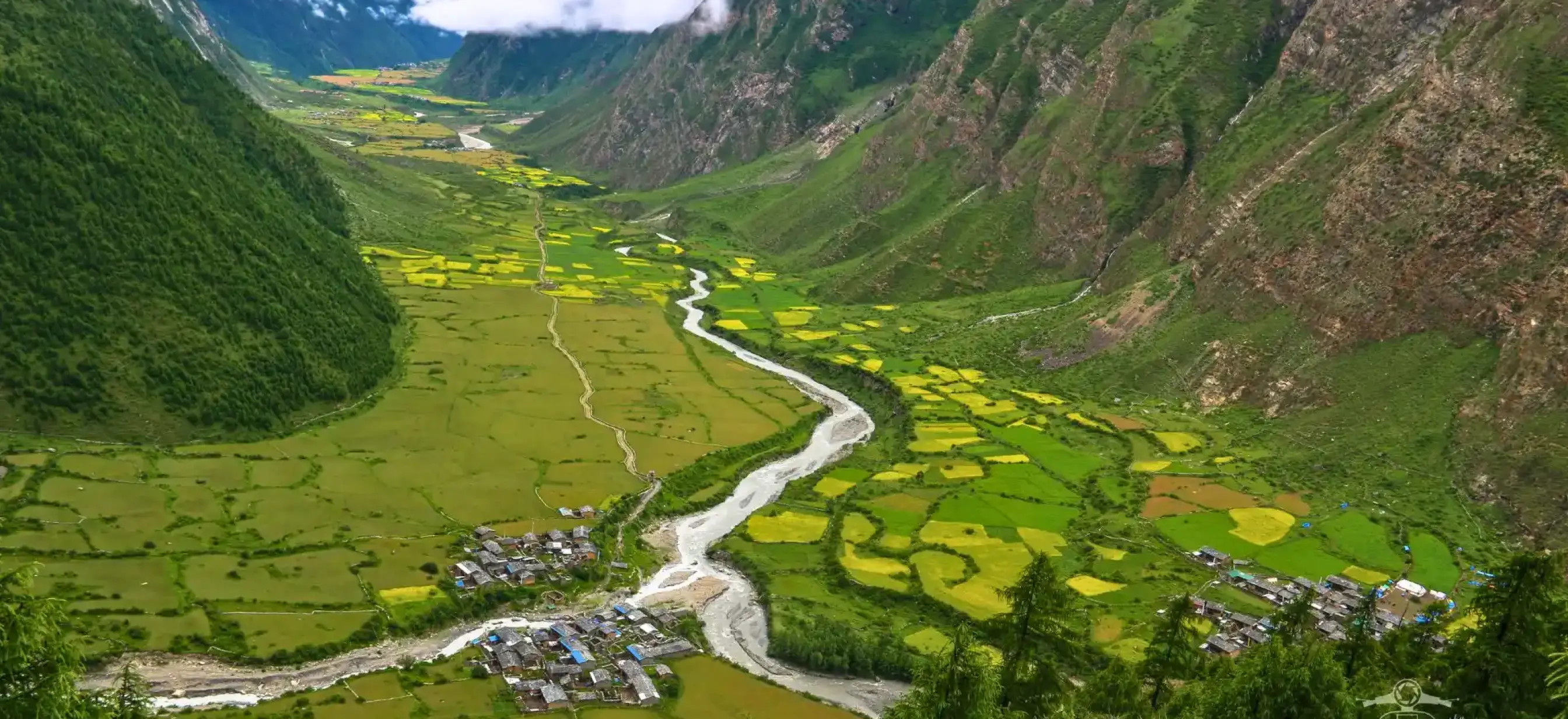
 Nepal
Nepal  Challenging


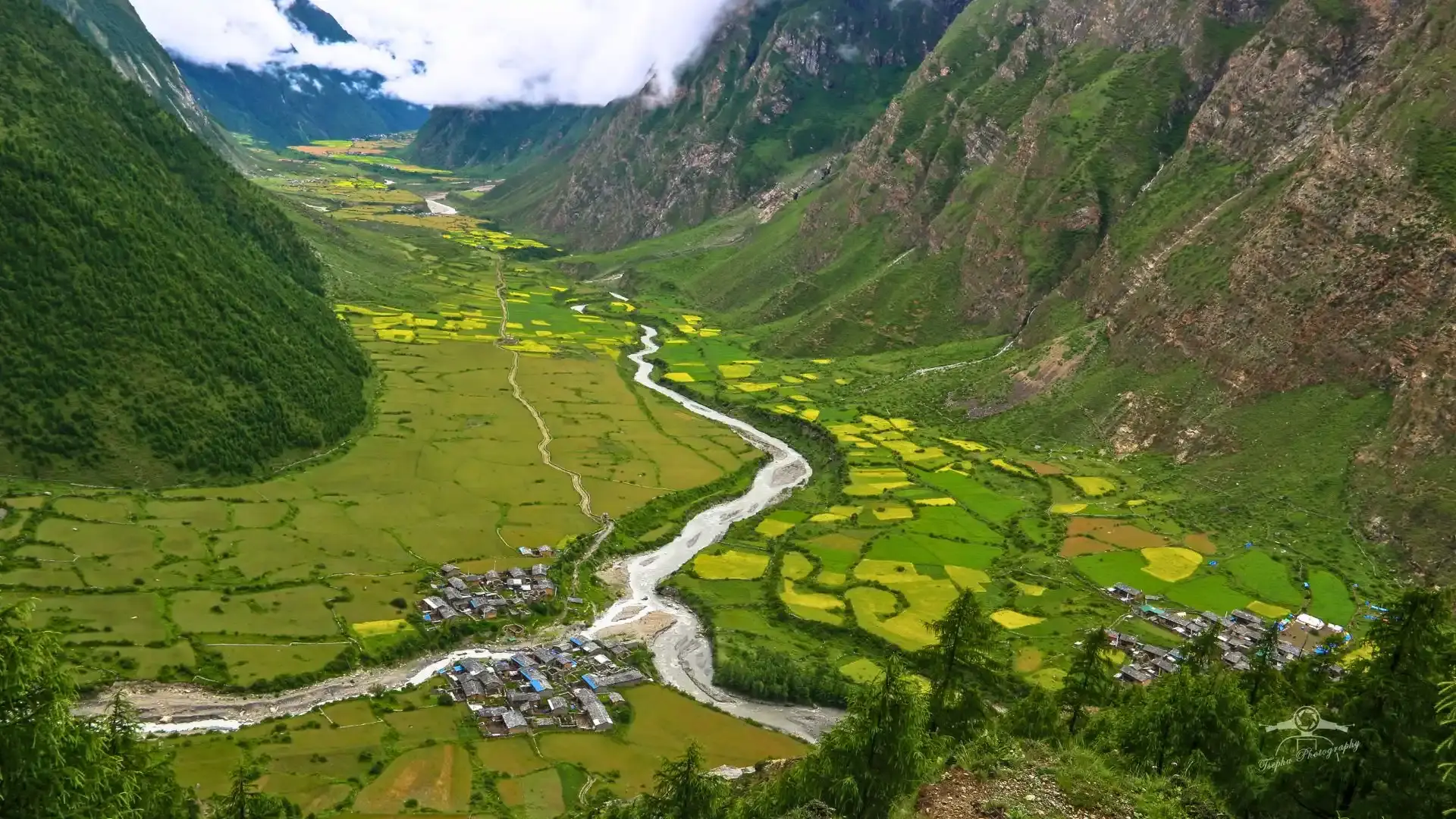
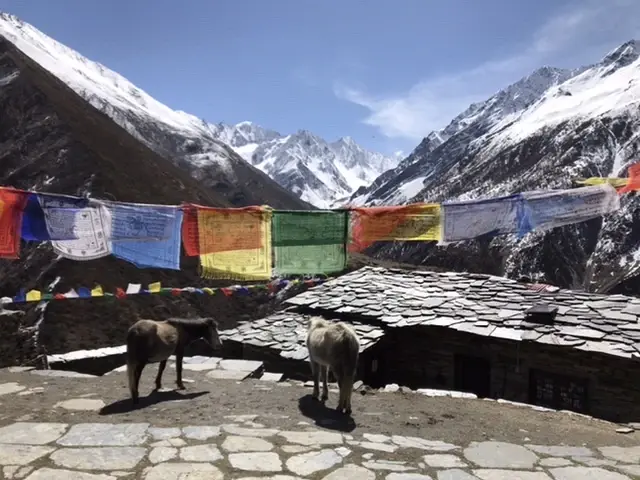




 Guaranteed to run