Everest Base Camp Trek by Road
Nepal
15 Days
Challenging
Experience Everest—No Flights, Just Pure Adventure.
From US$ 1,450
US$ 1,350
No of people Price per person
1 - 2 $1,350
3 - 5 $1,300
6 - 10 $1,200
11 - 15 $1,000

What's included?

Guide

Everest Expert Guide

Accommodations

All teahouse/lodges accommodation

Airport Transfer

Airport Pick-up / Drop-off

Entry Fee

All necessary permits

Transportations

All ground transfers as per the Itinerary

Foods

All meals (Breakfast, Lunch & Dinner)

What is it really like?

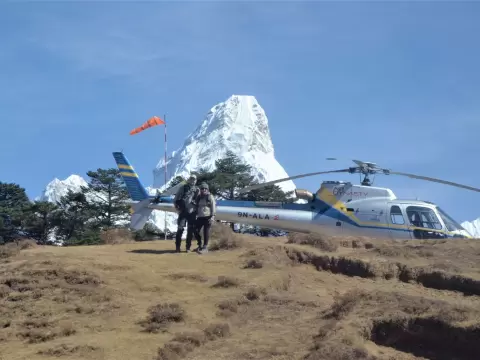
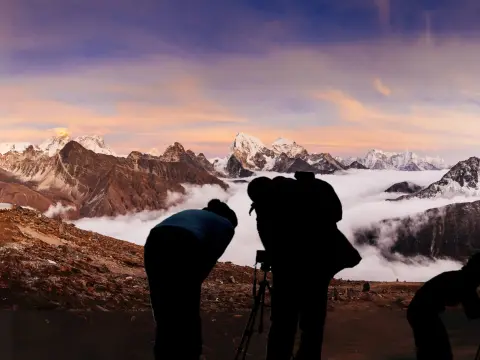
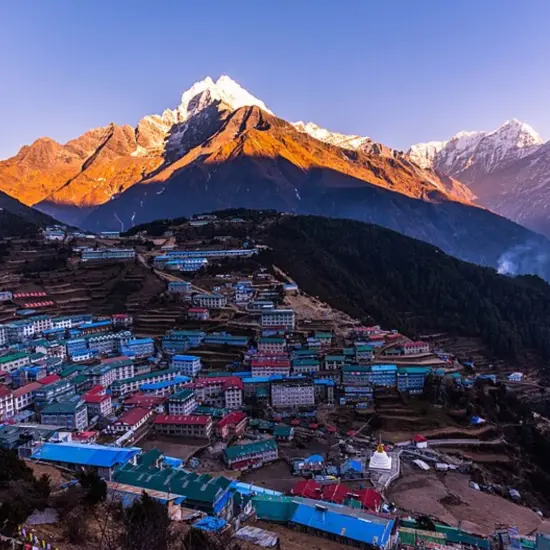
Photos from the Everest Base Camp Trek by Road

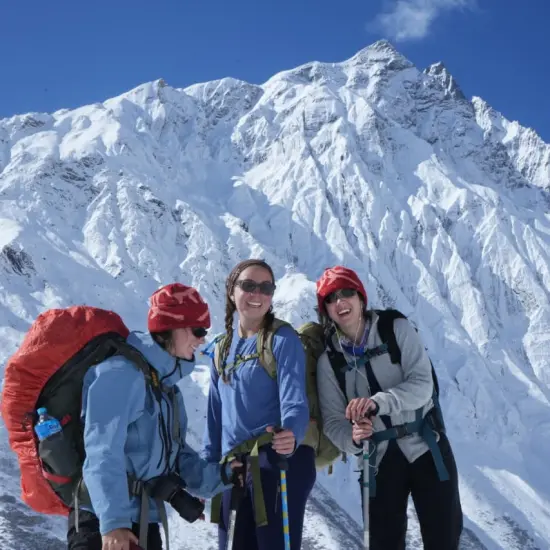
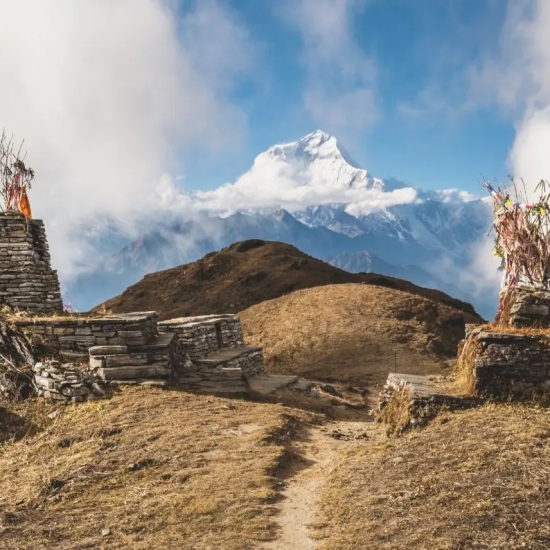
Explore traditional Sherpa villages, ancient monasteries, and colorful prayer flags while learning about Buddhist customs.

Visit iconic spots like Namche Bazaar, Tengboche Monastery, Kala Patthar, and Everest Base Camp without missing any highlights.

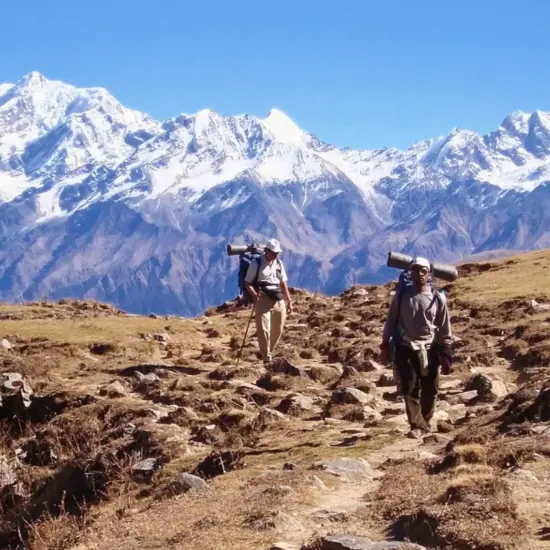
Trek through quiet trails like Kharikhola, Surke, and Phortse, away from the usual crowds, for a more peaceful journey.

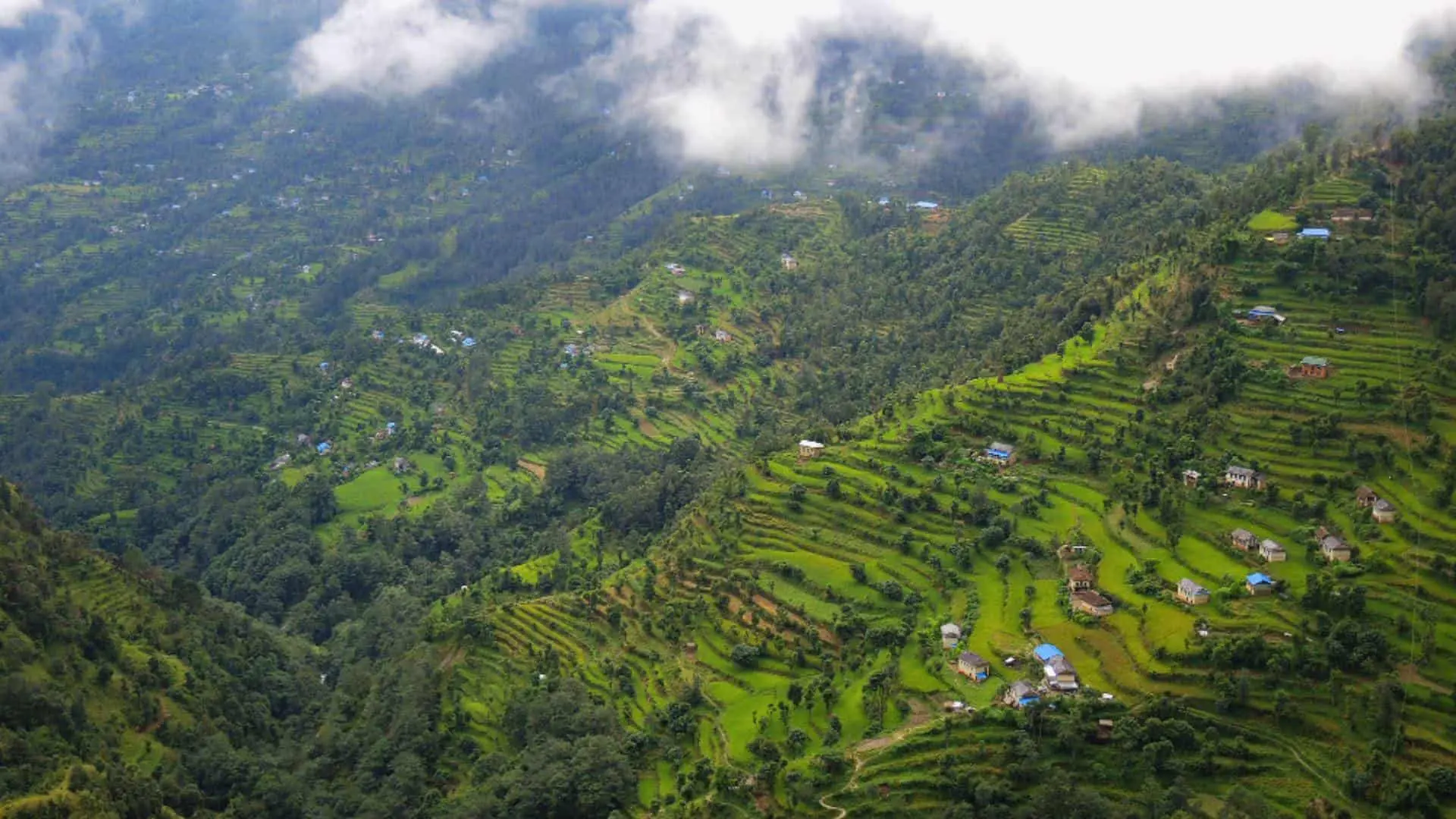
Skip the Lukla flight and enjoy a scenic jeep ride through the Solu region, experiencing remote villages and dramatic landscapes.

Key Information

Max. altitude

2,070 m / 6,791 ft

Accommodation

Mountain Guest House

Meals

Breakfast

Today begins our journey toward the Himalayas. We start early with a scenic overland drive via jeep, heading southeast along the BP Highway. The first part of the road is paved and smooth until we reach Okhaldhunga and eventually Salleri. Along the way, you'll pass terraced farms, riverside villages, and distant glimpses of the mid-hill ranges. After a lunch break in Salleri, we switch to a rugged dirt track leading deeper into the Solukhumbu region. The drive becomes more adventurous with winding mountain roads, waterfalls, and rustic landscapes. We arrive at Kharikhola in the late evening—a small Sherpa village nestled on a ridge overlooking lush valleys.

Max. altitude

2,535 m / 8,317 ft

Accommodation

Mountain Guest House

Our trek officially begins today. Leaving Kharikhola after breakfast, we descend through farmland and forests toward the Dudh Koshi River. We’ll cross suspension bridges draped in prayer flags and pass small settlements like Jubing, where you can observe the daily lives of the Rai and Sherpa people. The trail features a mix of gradual ascents and descents through sub-tropical forests filled with rhododendron, pine, and bamboo. As we approach Surke, the trail steepens, offering glimpses of the high peaks in the distance. Tonight, we rest in this peaceful riverside village, preparing for tomorrow’s entry into the main Everest trail.

Max. altitude

2,835 m / 9,301 ft

Accommodation

Mountain Guest House

Today we connect with the main Everest Base Camp trail. The trek begins with a gradual climb to Chaurikharka and then to Choplung, where trekkers from Lukla usually begin their journey. We’ll pass vibrant Mani walls, fluttering prayer flags, and traditional homes as we move through villages like Ghat and Phakding. The Dudh Koshi River accompanies us along the route, providing a soothing soundtrack. After lunch in Phakding, we continue through pine forests and over multiple suspension bridges, one of which is the iconic Hillary Bridge. A final ascent brings us to Manjo, the entrance to Sagarmatha National Park. We'll check permits here before settling in for the night.

Max. altitude

3,440 m / 11,286 ft

Accommodation

Mountain Guest House

Today’s trek is both beautiful and challenging. We begin with a walk through the gates of Sagarmatha National Park, entering a UNESCO World Heritage Site known for its rich biodiversity. After crossing the Dudh Koshi several times via high suspension bridges, we begin the steep three-hour climb to Namche Bazaar. The trail zigzags through dense pine and juniper forests with occasional openings that offer your first distant view of Mount Everest, if weather permits. By mid-afternoon, we arrive at Namche, the bustling heart of the Khumbu. Explore the lively markets, artisan bakeries, and quaint lodges. In the evening, visit the Sherpa Culture Museum and Namche Monastery for insight into local traditions.

Max. altitude

3,880 m / 12,730 ft

Accommodation

Mountain Guest House

To help your body adjust to the altitude, we’ll take an acclimatization hike after breakfast. Our trail climbs up to Syangboche, home to one of the world’s highest airstrips. From here, we’ll ascend to Hotel Everest View (3,880m/12,729ft), offering a panoramic view of Everest, Lhotse, Nuptse, and Ama Dablam. Enjoy tea on the terrace while taking in the dramatic Himalayan skyline. After some rest, we descend gently through yak pastures to the traditional Sherpa village of Khumjung. Here, you can visit the Hillary School and the Khumjung Monastery, which claims to house a Yeti scalp. Spend the night in this serene village surrounded by stone houses and snow-capped peaks.

Max. altitude

3,950 m / 12,959 ft

Accommodation

Mountain Guest House

We leave the bustling trail and take the less-trodden path to Phortse, a hidden gem of the Khumbu. The trail descends past the Khunde Hospital and drops into the Dudh Koshi Valley. We cross the river and begin a steady ascent through thick rhododendron and birch forests. Along the way, enjoy expansive views of Ama Dablam and Tengboche across the valley. Phortse is a peaceful Sherpa farming village, far from the crowds, known for producing many Everest climbers. In the afternoon, take time to visit the local monastery or join your guide for a walk through the potato fields and terraced farmland.

Max. altitude

4,910 m / 16,109 ft

Accommodation

Mountain Guest House

The trail climbs gradually as we head toward the moraine of the Khumbu Glacier. We reach Thukla, where we’ll pause for tea and pay respects at the climbers’ memorial—a moving site dedicated to those who lost their lives on Everest. From here, a steep climb brings us to the top of Thukla Pass. The path then levels out as we approach Lobuche, with dramatic views of Nuptse and Pumori rising in the distance. The evening can be spent exploring the glacier’s edge or resting in preparation for the big day ahead.

Max. altitude

4,410 m / 14,469 ft

Accommodation

Mountain Guest House

From Phortse, we traverse a narrow, rugged trail carved into steep hillsides. This is one of the most scenic sections of the trek, with dramatic views of the Imja Valley and towering peaks like Kangtega and Thamserku. We reach Pangboche, the oldest Sherpa village in the region. After visiting Pangboche Monastery, we cross the Imja Khola via a wooden bridge and continue through alpine meadows and yak pastures to Dingboche. The village is surrounded by stone walls that protect crops from grazing animals and wind. You'll spot colorful chortens, prayer wheels, and mani stones as you explore the village in the evening.

Max. altitude

5,100 m / 16,732 ft

Accommodation

Mountain Guest House

Today is a vital acclimatization day. After breakfast, we’ll hike to Nangkartshang Peak, a rocky viewpoint above Dingboche. The trail is steep but rewarding, offering panoramic vistas of Ama Dablam, Makalu, Lhotse, and the Imja Valley. This "hike high, sleep low" practice aids your adjustment to altitude. After descending, enjoy a leisurely afternoon: visit nearby yak farms, chat with local tea house owners, or relax with a book in the cozy lodge. Stargazing here at night is also phenomenal, with the Milky Way often clearly visible overhead.

Max. altitude

5,364 m / 17,598 ft

Accommodation

Mountain Guest House

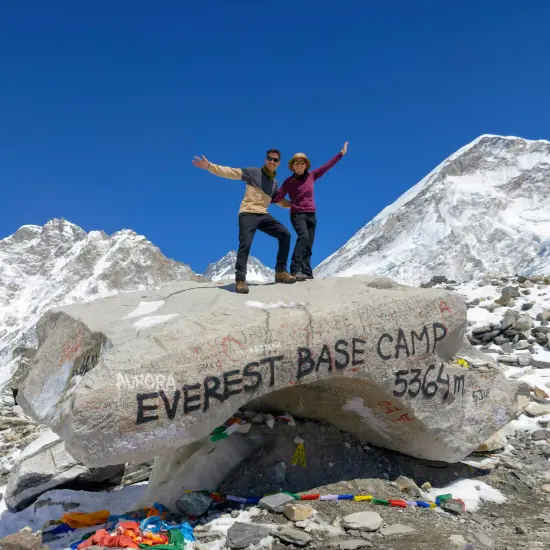
This is the most anticipated day of the trek. After an early breakfast, we follow the trail along the Khumbu Glacier's edge, passing through rocky terrain and glacial moraines to Gorak Shep. After a short break and dropping our bags, we push onward to Everest Base Camp. The walk is challenging but deeply rewarding. Standing at the foot of the world's tallest mountain, surrounded by ice towers, colorful prayer flags, and possibly climbing tents, is a moment of awe. After soaking it all in and taking photos, we return to Gorak Shep for the night.

Max. altitude

5,550 m / 18,209 ft

Accommodation

Mountain Guest House

Before dawn, we begin our ascent to Kala Patthar, the best viewpoint for Mount Everest. The sunrise here is unforgettable, casting golden light on Everest, Lhotse, Pumori, and Nuptse. After plenty of photos, we descend to Gorak Shep for breakfast and then begin a long downhill trek to Pheriche. This windswept valley is home to the Himalayan Rescue Association, where trekkers can learn about altitude sickness and mountain medicine.

Max. altitude

4,240 m / 13,911 ft

Accommodation

Mountain Guest House

Our descent continues through alpine meadows and rhododendron forests, retracing our steps through Pangboche and Tengboche. Take time to visit the Tengboche Monastery again, where afternoon prayers echo through the Himalayas. Continue down to the river and ascend back to Namche Bazaar. With lower altitude and more oxygen, you'll feel rejuvenated. Spend the evening relaxing in a café, shopping for souvenirs, or enjoying a warm Sherpa stew.

Max. altitude

3,440 m / 11,286 ft

Accommodation

Mountain Guest House

The final trekking day takes us through familiar villages like Monjo, Phakding, and Ghat. We descend steadily through pine forests and cross several suspension bridges over the Dudh Koshi River. This long but rewarding day ends in Lukla, where you'll celebrate with your team and guide. In the evening, explore Lukla village or visit Tenzing-Hillary Airport, known for being one of the most challenging airstrips in the world.

Max. altitude

2,840 m / 9,318 ft

Accommodation

Mountain Guest House

After breakfast, we begin our descent from Lukla to Kharikhola, retracing our steps through Surke and Jubing. The trail is mostly downhill, offering a chance to enjoy the landscape at a slower pace. After lunch in Kharikhola, we begin our jeep ride toward Salleri. Expect a bumpy but scenic journey as we drive through mountain roads and deep valleys. Overnight in Salleri.

Max. altitude

1,400 m / 4,593 ft

Accommodation

3-Star Hotel

Meals

Farewell Dinner

Our overland adventure wraps up with a long drive back to Kathmandu. As we retrace the highway through the hills of Solukhumbu, enjoy final views of the countryside and reflect on your incredible journey. Upon arrival in Kathmandu, you'll check into your hotel and enjoy a farewell dinner in the evening. Share stories, laughter, and photos as you celebrate the completion of a truly epic trek.

⇀ Starts 

Kathmandu Airport (KTM)

Arrive before 16:00 on Day 1

↼ Ends

Kathmandu Airport (KTM)

Departure anytime on Day 17

Transfers:

All airport transfers in Kathmandu are included, regardless of your arrival or departure time—even if you’ve booked extra nights before or after your trek. Just make sure to complete your passenger information form and provide us with your international flight details in advance.

Your Journey Begins Overland

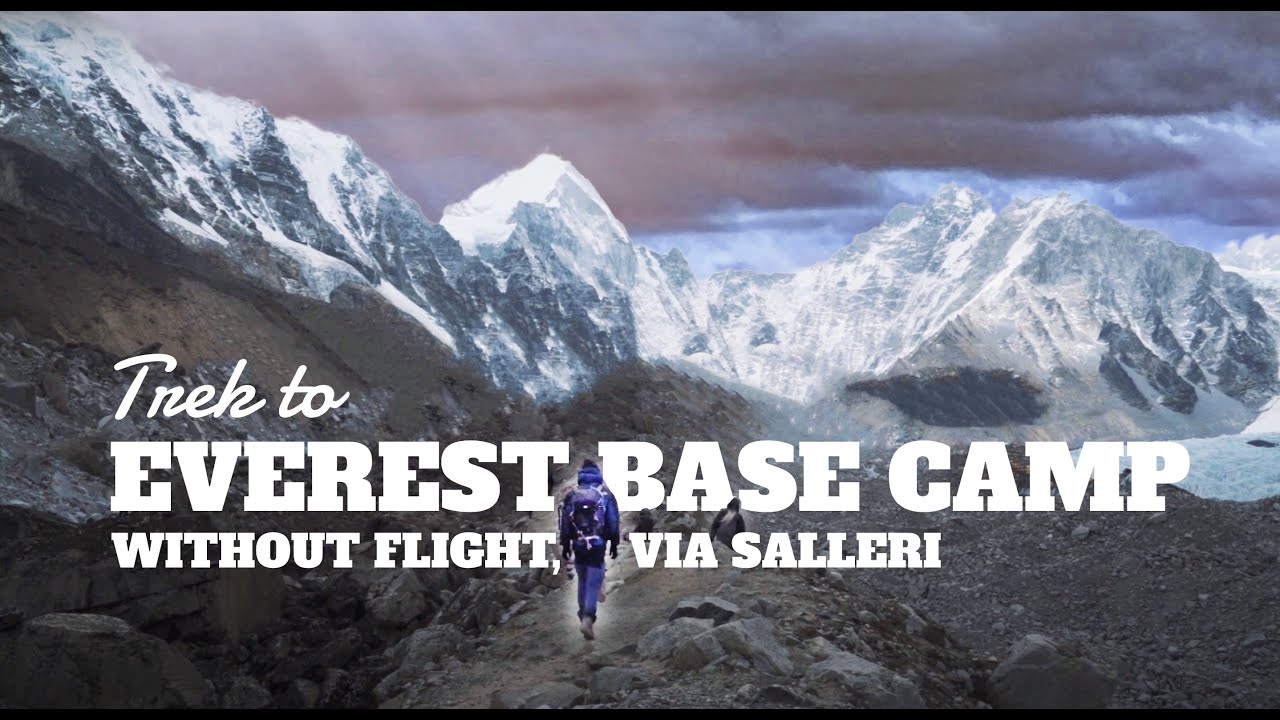
Unlike the popular option of flying to Lukla, this trek takes the classic and original route to Everest Base Camp, used by early mountaineers before the Lukla Airport was established.


Your journey starts with a scenic shared jeep drive from Kathmandu to Kharikhola—a long but rewarding 10–11 hour drive that passes through the beautiful mid-hills of the Solu region via Salleri, the administrative hub of Solukhumbu.


From Kharikhola, your trekking adventure officially begins, gradually ascending through Sherpa villages and forested ridges toward the Everest Base Camp. After reaching EBC and Kala Patthar, you will retrace your steps down to Kharikhola, where a return jeep drive to Kathmandu (via Salleri) awaits.


The jeep service is shared with other trekkers for a more budget-friendly experience. However, private jeep options are available for added comfort and flexibility upon request. Let us know in advance if you wish to upgrade.

Everest Base Camp Trek by Road
Elevation Chart
Day 1
Teahouse
Breakfast
Lunch
Dinner
Day 2
Kharikhola Teahouse
Breakfast
Lunch
Dinner
Day 3
Manjo Teahouse
Breakfast
Lunch
Dinner
Day 4
Namche Bazaar lodge
Breakfast
Lunch
Dinner
Day 5-14
Teahouse
Breakfast
Lunch
Dinner

The route via Salleri and Kharikhola offers more authentic and peaceful lodging experiences, often with fresher food in lower villages thanks to easier road access.

Foods on the Trek 

Typical Meals You’ll Find:

  • Breakfasts: Tibetan bread, porridge, pancakes, boiled eggs, omelets, toast, muesli.

  • Lunch/Dinner: Dal Bhat (rice, lentil soup, and vegetables), fried rice, chow mein, pasta, momos (dumplings), thukpa (noodle soup), and occasional treats like pizza or burgers.

Vegetarian? No problem—dal bhat is a staple and widely available.

Vegan or gluten-free? Options are more limited; bring backup snacks.

Meat caution: At high altitudes, it's best to avoid meat due to poor refrigeration.


How Much Cash to Bring

Trekkers should carry USD 200–300 (or the equivalent in Nepali Rupees) for personal expenses during the trek. While most core costs are covered in the package, extra services in the mountain villages—such as hot showers, Wi-Fi, device charging, snacks, bottled water, hot/cold beverages, and souvenirs—must be paid out of pocket.

ATM Access

There are no reliable ATMs along this route, so you must withdraw enough cash before leaving Kathmandu. Do not rely on ATMs in the lower villages, as power and connectivity issues can make them unavailable.

Accommodation During EBC Alternate Route

Accommodations During the Trek

Trekking accommodation is in locally-run teahouses—simple but cozy lodges that provide a warm mountain experience.

What to Expect:

  • Twin-sharing rooms (some may be dorm-style at higher altitudes)

  • Shared bathrooms

  • Communal dining halls with heaters or fire stoves

  • Basic bedding (bring a warm sleeping bag rated to at least -10°C)

Final Tips
  • Bring snacks: Energy bars, nuts, and hydration salts are helpful between meals.

  • Carry local cash: Only NPR is accepted along the trail

  • Follow your guide’s food suggestions, Especially at high altitude, where digestion is more sensitive.

  • Stay hydrated: Drink 3–4 liters of water daily to support acclimatization.

This trek is rated Challenging.

The Alternative Way to Everest Base Camp Trek is rated as challenging, best suited for trekkers with good physical fitness and previous high-altitude hiking experience.

This extended route bypasses the flight to Lukla. It follows the historic trail through Salleri and Kharikhola, which means longer trekking days, more gradual elevation gain, and extended time on foot—typically around 6 to 8 hours of walking per day. You'll encounter rugged terrain, steep ascents and descents, and varying weather conditions, especially as you ascend above 4,000 meters (13,000 feet).

The trek's highest point, Kala Patthar (5,545m / 18,192ft), requires strong acclimatization and stamina. While no technical climbing skills are needed, the physical demand, altitude, and remoteness make it a difficult yet incredibly rewarding adventure. With proper preparation, determination, and guidance from experienced trekking staff, this route offers an immersive, less crowded path to the base of the world’s highest mountain.

The Alternative Everest Base Camp Trek via Kharikhola and Salleri is accessible year-round, making it a flexible option for trekkers with varying schedules. However, weather conditions and trail experiences change significantly with the seasons and altitude. The route begins in the subtropical mid-hills and gradually ascends to the alpine zone above 4,000 meters, where temperatures drop and conditions become more rugged.

Best Seasons to Trek

The ideal times for this route are:

  • Spring (March to May)

  • Autumn (September to November)

These seasons bring clear skies, stable weather, and spectacular mountain views, making for the most enjoyable trekking experience. While daytime temperatures are generally mild, nights above 4,000 meters can be very cold, often dipping below freezing.

Winter Trek (December to February)

Trekking is still possible in winter, but it’s significantly colder, especially at higher elevations. Snow can block some parts of the trail, requiring extra preparation and gear. Teahouses may have limited services in remote areas, but the trails are peaceful and less crowded.

Monsoon Trek(June to August)

The summer months bring heavy rainfall in the lower regions and cloud cover in the mountains. While the trail remains accessible, conditions can be slippery and leeches are common in forested areas. However, the landscape is lush and green, with fewer trekkers on the trail.

    • Private vehicle transfers for all airport pick-ups and drop-offs (international and domestic).
    • Welcome and farewell dinners at an authentic local restaurant.
    • Shared jeep transport between Kathmandu - Kharikhola - Surke, and from Salleri to Kathmandu.
    • National Park entry permit and TIMS trekking card.
    • A professional, friendly, English-speaking, government-licensed guide. All his expenses—salary, meals, accommodation, transport, and insurance—are included.
    • One porter for every two trekkers, with their insurance, wages, meals, accommodation, and equipment covered.
    • Twin/double shared accommodation in the best available mountain lodges during the trek.
    • Three meals a day while trekking—breakfast, lunch, and dinner—plus tea or coffee in the morning.
    • First-aid kit.
    • Places Nepal’s gear, such as a T-shirt, a cap, a duffel bag, and maps (provided if needed).
    • Support for emergency evacuation arrangements (your travel insurance must cover the cost - Mandatory).
    • Daily oxygen-level and heart-rate checks using an oximeter to monitor for altitude sickness.
    • All government and local taxes included in the itinerary.
    • Farewell dinners at an authentic local restaurant
    • Hotels in Kathmandu before or after the trek.
    • Lunch and dinner in Kathmandu.
    • Nepal visa fee.
    • International flights to and from Kathmandu (there is no departure tax for leaving Nepal).
    • Personal travel insurance and health insurance, including helicopter evacuation coverage (Mandatory)
    • Personal expenses such as laundry, phone calls, charging batteries, drinks and bar bills, bottled or boiled water, hot/cold showers, and hiring extra porters.
    • Tips for guides, porters, and drivers.
    • Additional costs due to weather issues, strikes, or other events beyond our control.
    • An optional private Jeep to/from the starting/ending point (available at an extra charge and highly recommended).

    Being physically fit and mentally prepared allows you to fully enjoy the trek, adapt to the terrain, and experience the Himalayas with confidence and joy.

    1. Start Training Early (2–3 Months Before)

    Begin your fitness routine well in advance to build a strong foundation. Gradual, consistent training is key.

    • Cardio Training: Walk, hike, jog, or cycle regularly—at least 4–5 times a week.

    • Duration: Begin with 30–45 minutes and slowly increase to 1.5–2 hours per session.

    • Hills & Stairs: Train on inclines and stairs to mimic Himalayan terrain.

    2. Train with a Backpack

    Get used to the feel and weight of your trekking gear.

    • Practice Hikes: Do local hikes with a 5–8 kg (11–18 lbs) backpack.

    • Uphill & Downhill: Focus on steep ascents and descents to strengthen muscles and balance.

    3. Strength Training

    Build muscle to support your joints and reduce fatigue on the trail.

    • Target Areas: Legs (squats, lunges), core (planks, crunches), and lower back.

    • Frequency: 2–3 times per week alongside your cardio routine.

    4. Flexibility & Balance

    Improving flexibility helps prevent injury and keeps you stable on uneven terrain.

    • Stretching: Incorporate full-body stretching after workouts.

    • Yoga or Pilates: Add sessions 1–2 times a week to enhance mobility and balance.

    5. Simulate the Trek

    Prepare your body and mind for long trekking days.

    • Full-Day Hikes: Do at least one or two long hikes (5–8 hours) with your gear.

    • Realistic Conditions: Hike on rough trails, with breaks, to mirror trekking days.

    6. Altitude Awareness

    You can't train for altitude directly, but overall fitness helps with acclimatization.

    • Pace Yourself: Walk slowly and steadily on the trail—avoid rushing.

    • Hydration: Drink 3–4 liters of water daily while trekking.

    • Rest Days: Embrace acclimatization days to let your body adjust.

    7. Mental Preparation

    A strong mindset is just as important as physical strength.

    • Stay Positive: Expect challenges and stay mentally flexible.

    • Breathe & Focus: Practice mindfulness or breathing exercises to stay calm and present.

    Packing the right gear is essential for a successful trek to Everest Base Camp, especially when taking the overland route through Kharikhola and Salleri. You'll be hiking across varied terrain, experiencing different weather conditions, and staying in remote teahouses—so preparation is key.

    Gear & Essentials

    • Backpack (30–40L) – For daily essentials.
    • Duffel Bag (provided by us) – Carried by porters; max weight 10–12kg.
    • Sleeping Bag (rated to -10°C or below) – Available for rent, but bringing your own is best.
    • Headlamp with Extra Batteries – For early morning starts and power outages.
    • Trekking Poles – Helpful for balance and reducing knee strain.
    • Water Bottles or Hydration Bladder (2L) – Wide-mouth or filter-compatible preferred.
    • Water Purification Tablets or Filter – Though purified water is provided, it's good to have backup.
    • Sunglasses (UV Protection) – Essential for high-altitude glare.
    • Sunscreen & Lip Balm (SPF 30+) – Strong sun exposure at altitude.
    • Toiletries – Toothbrush, biodegradable soap, toilet paper, small towel, etc.
    • Wet Wipes & Hand Sanitizer – Useful in places without showers or sinks.

    Clothing

    • Base Layers (Thermal Top & Bottom) – For warmth during cold nights and high-altitude days.
    • Trekking Shirts (3–4) – Moisture-wicking, lightweight, and breathable.
    • Fleece Jacket or Pullover – Insulation layer for cooler days.
    • Insulated Jacket (Down or Synthetic) – Essential for cold evenings and mornings.
    • Waterproof Jacket & Pants – Lightweight and breathable for unexpected rain or snow.
    • Trekking Pants (2–3 pairs) – Comfortable and quick-drying.
    • Warm Hat & Sun Hat – One to retain heat, one to protect from sun exposure.
    • Neck Gaiter or Buff – For wind protection and warmth.
    • Gloves (Inner + Waterproof Outer) – Layered gloves to handle both mild and extreme cold.
    • Underwear & Sports Bras – Comfortable and quick-drying.
    • Sleepwear – Comfortable clothes for teahouse nights.

    Footwear

    • Sturdy Trekking Boots – Waterproof with ankle support; broken in before the trek.
    • Camp Shoes or Sandals – For evenings at teahouses.
    • Hiking Socks (4–5 pairs) – Wool or synthetic; avoid cotton.
    • Sock Liners – Optional, for blister prevention.

    Health & Safety

    • Personal First Aid Kit – Include altitude sickness medication, painkillers, band-aids, and any prescriptions.
    • Blister Care – Moleskin, Compeed, or similar.
    • Face Masks & Personal Hygiene Items – Especially useful in shared facilities.
    • Altitude Sickness Info Sheet – Know the symptoms and steps to take.

    Documents & Miscellaneous

    • Passport & Permits – Always carry a copy during the trek.
    • Travel Insurance Documents – Make sure they cover high-altitude trekking.
    • Cash in Nepali Rupees – For meals, snacks, tips, and charging fees along the trail.
    • Notebook & Pen / Trekking Journal – For memories or notes.
    • Snacks (Nuts, Energy Bars, Electrolyte Powder) – For extra energy on long days.
    • Universal Travel Adapter & Power Bank – For charging in teahouses.

    The Alternate Route to EBC was everything I dreamed of — and more.

    Trekking with Places Nepal and our incredible guide, Sishir was transformative. We avoided the crowds, discovered hidden Sherpa villages, and stood above the Khumbu Glacier in awe. Karma’s local wisdom—where to stop for the best view, how to connect with the community—made this trek profound. I returned home with a full heart and a newfound sense of possibility. Thank you, Places Nepal!

    L
    Lucy Rhodes
    United Kingdom

    La ruta alternativa al Campo Base del Everest fue mágica, mucho más de lo que imaginé.

    El trekking con Places Nepal y nuestro guía Fura fue una experiencia única. Recorrimos aldeas poco conocidas, cruzamos puentes colgantes sobre el Khumbu y evitamos las multitudes del camino clásico. Fura nos enseñó a percibir cada detalle: el aroma del té tibetano, las sonrisas de los sherpas, los cánticos al amanecer. Volví lleno de gratitud y nuevas perspectivas. ¡Gracias, Places Nepal!

    J
    Julia Pope
    Spain

    Le parcours alternatif vers l’EBC a été un enchantement absolu.

    Avec Places Nepal et notre guide Manoj, chaque jour était une célébration de la montagne. Nous avons traversé des vallées secrètes, visité des monastères isolés et contemplé l’Everest depuis des points de vue inédits. Manoj, avec sa générosité et ses histoires sherpa, a rendu cette aventure inoubliable. Je suis revenu apaisé, inspiré et si reconnaissant. Mille mercis, Places Nepal.

    R
    Riley Parker
    France

    Die alternative Route zum Everest-Basislager war absolut beeindruckend.

    Mit Places Nepal und unserem Guide Bhola erlebten wir Nepal fernab vom Massentourismus. Wir wanderten durch stille Sherpa-Dörfer, machten Pause an Bergbächen und genossen Sonnenaufgänge über dem Khumbu. Bholas Herzlichkeit und sein Wissen über Himalaya-Kultur machten die Reise tief bewegend. Ich kehre zurück mit Ruhe, Stärke und riesiger Dankbarkeit. Danke, Places Nepal!

    V
    Violet Greene
    Netherlands

    Il percorso alternativo per l’Everest Base Camp è stato un’esperienza straordinaria

    Con Places Nepal e il nostro esperto guida Fura, abbiamo scoperto sentieri meno battuti, incrociato sherpa sorridenti e ammirato l’Everest da prospettive segrete. Fura ci ha narrato leggende locali, indicato i posti migliori per fotografare e ci ha portato al cuore dell’Himalaya. Sono tornato con il cuore pieno di gratitudine e ricordi incancellabili. Grazie mille, Places Nepal!

    V
    Victoria Hayes
    Italy

    Dreaming of reaching Everest Base Camp but not keen on flying into the famously unpredictable Lukla Airport? The Alternative Way to Everest Base Camp Trek is your perfect solution. This off-the-beaten-path adventure takes you along the original route to the base of the world’s highest mountain—without ever needing to board a flight.

    Instead of the short but often delayed Lukla flight, this journey begins with an exciting Jeep ride from Kathmandu to Kharikhola via Salleri, giving you a chance to explore more remote corners of the Everest region. This route not only offers a smoother and more reliable start but also lets you walk in the footsteps of early Everest pioneers who trekked this very path before the Lukla airstrip was built.

    Route & Altitude Description

    The trek begins in Kharikhola (2,120 m / 6,955 ft) and gradually ascends through picturesque villages like Paiya, Phakding, and Namche Bazaar—the bustling Sherpa hub of the Khumbu region. As you climb higher, you'll cross the famed suspension bridges of the Dudh Koshi River, pass through rhododendron forests, and eventually reach the icy heights of Everest Base Camp (5,364 m / 17,598 ft) and Kala Patthar (5,545 m / 18,192 ft), the best vantage point for panoramic views of Everest and neighboring peaks.

    The return follows the same trail back to Kharikhola, where a shared or private Jeep awaits to bring you back to Kathmandu.

    Everest Base Camp Trek Map

    While this alternative route follows a longer path compared to the classic fly-in version, it's equally rich in natural beauty and cultural experience. A detailed Everest Base Camp trek map will show your journey from Kharikhola to Everest Base Camp and back, with major highlights like Namche Bazaar, Tengboche Monastery, Dingboche, Lobuche, Gorakshep, and Kala Patthar.

    Historical and Cultural Significance

    This route is historically significant—it was the original path to Everest used by Sir Edmund Hillary and Tenzing Norgay in the 1950s. You'll pass through traditional Sherpa villages, visit centuries-old Buddhist monasteries, and witness vibrant spiritual life fueled by Tibetan culture. The Tengboche Monastery in particular is a serene and sacred highlight, offering blessings to all who pass.

    Himalayan Views

    From the moment you leave the lower hills to your arrival at the high-altitude Himalayan amphitheater, you’ll be surrounded by snow-capped giants. Expect jaw-dropping views of Mt. Everest (8,848 m / 29,029 ft), Lhotse, Nuptse, Ama Dablam, Thamserku, and many more. Sunrise from Kala Patthar is truly unforgettable—a 360° panorama of Himalayan glory.

    Flora and Fauna

    Trekking through varied elevations allows you to witness a rich diversity of Himalayan ecosystems. Lower forests are filled with blooming rhododendrons, oak, and pine, while higher regions are dotted with juniper shrubs and alpine mosses. Keep your eyes open for Himalayan monals, musk deer, blue sheep, and, if you’re lucky, even snow leopards in remote stretches of Sagarmatha National Park.

    Permits and Permissions

    To do this trek legally and responsibly, you’ll need the following:

    • Sagarmatha National Park Entry Permit
    • Khumbu Pasang Lhamu Rural Municipality Entry Permit

    Your guide or agency will take care of all permits and necessary permissions

    Who Can Do This Trek?

    This trek is ideal for adventurous trekkers who are moderately to highly fit and wish to avoid flying to Lukla. It’s perfect if you have a bit more time and want a deeper, less-touristy Everest experience. The longer walking days at the start allow better acclimatization, reducing your chances of altitude sickness. Beginners with strong physical preparation and determination can also attempt it with a good guide and porter.

    Alternative to Flying to Lukla

    One of the biggest advantages of this trek is that it completely eliminates the need to fly to or from Lukla, avoiding common delays or cancellations due to bad weather. Instead, you’ll enjoy a scenic drive to Kharikhola, soaking in countryside views, mountain foothills, and traditional villages along the way. It’s a safer, often more affordable, and more flexible option for those with the time and curiosity to take the road less traveled.

    Final Thoughts

    Skip the Lukla flight and take the scenic, original route to Everest Base Camp. This off-the-beaten-path trek offers stunning Himalayan views, rich Sherpa culture, and a safer, more gradual ascent.

    Trek with Places Nepal and discover a side of Everest most travelers miss.

    📞 Contact us now to join a group, book a private trek, or customize your itinerary.

    Monday 9th February 2026
    To Monday 23rd February 2026
    Guaranteed to run
    Available - Only 4 spots left
    Monday 2nd March 2026
    To Monday 16th March 2026
    Guaranteed to run
    Tuesday 7th April 2026
    To Tuesday 21st April 2026
    Guaranteed to run
    Available - Only 5 spots left
    Monday 11th May 2026
    To Monday 25th May 2026
    Guaranteed to run

    Know Before Booking

    Everest Base Camp Trek by Road

    The Everest Base Camp (EBC) Trek by Road is a growing alternative to the traditional flight-based approach to the Everest region. Instead of taking the short but weather-dependent flight from Kathmandu to Lukla, trekkers travel by road from Kathmandu to the lower Solu region and then begin their journey on foot. This road-based route offers a more gradual progression into the mountains, additional cultural exposure, and a safer, more predictable start to the trek—especially valuable when Lukla flights are delayed or cancelled.

    Although it adds extra days compared to flying, the Everest Base Camp Trek by Road provides a richer look at rural Nepal and gives trekkers the chance to follow sections of the original historic trail used before the Lukla airstrip existed.

    The road-based teahouse trek offers a genuine Himalayan experience without the rush of flying into Lukla. Starting from Kathmandu, you'll gradually climb toward Everest, staying in family-run lodges and connecting with local communities.

    Teahouse trekking is inherently social. You'll share meals and trail stories with adventurers from around the world, creating friendships and a shared sense of achievement that lasts beyond the trek.

    Your Stay

    Teahouses are modest but comfortable, offering twin or double rooms with basic bedding, shared bathrooms, and hot showers (usually a small fee). Each evening, you'll gather in the common dining area to eat and meet other trekkers—these lodges become your second home.

    Pacing & Acclimatization

    Expect 4–7 hour trekking days with built-in rest days, particularly around Dingboche. This slower rhythm gives your body time to adapt to altitude while reducing the risk of sickness. You'll also have opportunities for optional summit hikes to nearby peaks.

    Food & Comfort

    Three daily meals keep you fueled. Breakfast ranges from porridge to pancakes, while lunch and dinner feature local staples like dal bhat, momos, and noodles alongside familiar comfort foods. Hot drinks are available throughout the day.

    The Experience

    You'll trek through Sherpa villages adorned with prayer flags and mani walls, cross suspension bridges, and witness views of Everest, Lhotse, and Ama Dablam. The road-based route takes you through quieter parts of Solu and lower Khumbu, offering a less crowded trek with deeper cultural immersion.

    Total Trek Duration: 15 days | Highest Elevation: 5,364m (EBC)

    Daily walks range from 4–9 hours depending on altitude and terrain. Most days involve steady climbing with mixed surfaces—rock, mud, and occasional snow at higher elevations. Rest days and acclimatization hikes break up the intensity. This pace requires moderate fitness and proper preparation.

    Distance Breakdown

    Approach Phase (Days 1–4) Your journey begins with an 11–12 hour drive from Kathmandu to Kharikhola, followed by three trekking days with moderate distances (6–7 hours) as you gradually gain altitude to Namche Bazaar.

    Lower Khumbu (Days 5–7) Shorter days (4–6 hours) allow acclimatization while exploring scenic ridges, viewpoints, and traditional Sherpa villages around Namche, Khumjung, and Phortse.

    Main Ascent (Days 8–10) The trek intensifies with longer days (5–9 hours) as you climb toward Everest Base Camp. Day 10's push to EBC spans 8–9 hours through high-altitude terrain via Gorak Shep.

    Summit Hikes & Descent (Days 10–12) An early morning hike to Kala Patthar (7–8 hours) offers the best mountain views, followed by a descent to Pheriche and eventually back to Namche Bazaar.

    Return Journey (Days 13–15) Days out: 8–9 hours trekking to Lukla, then a 6–7 hour trek and drive back to Salleri, finishing with an 11-hour drive to Kathmandu.

    The short answer: Both reach the same destination, but they demand different things from you.

    Surke is not "harder"—it's "longer and steadier." If you have time and prefer gradual acclimatization with cultural immersion, Surke suits you. 

    If you're time-limited and prefer shorter but more intense days, Lukla may work better. Fitness matters more than route choice—moderate fitness handles both well with proper preparation.

    The Surke Route (Road-Based Trek)

    Advantages:

    • Gradual altitude gain starting from 2,070m, giving your body more time to adapt
    • Longer trek (15 days) spreads the physical demand across more days
    • Less crowded—quieter villages and trails through Solu region
    • No flight anxiety or altitude shock

    Challenges:

    • Extended commitment—you're walking or driving for 2+ weeks
    • Initial 11-hour drive can be tiring before the trek begins
    • More cumulative wear on knees and joints over 15 days
    • Slower pace means longer overall time away

    The Lukla Route (Flight-Based Trek)

    Advantages:

    • Shorter overall trip (10–12 days typically)
    • Fewer total trekking days with less joint impact
    • Quicker acclimatization schedule
    • More established infrastructure and teahouses

    Challenges:

    • Rapid altitude gain from Lukla (2,840m)—your body has less time to adjust
    • Higher risk of altitude sickness due to quick ascent
    • Flight delays common during bad weather, adding uncertainty
    • More crowded trails and teahouses

    Mobile Networks

    Nepal's main providers (NCell and NTC) are available only up to Tengboche, a day's walk from Namche Bazaar. Higher elevations have no cellular coverage. Expect sporadic signal in lower villages, poor service above Namche.

    EverestLink WiFi

    EverestLink, founded in 2014, is the world's highest internet service provider, operating at Everest Base Camp (5,380m). The network covers the region between Lukla and Base Camp via 36 solar-powered towers.

    Prepaid WiFi cards are available in 100+ stores and lodges along the trekking route. This is your most reliable option for consistent connectivity from Kharikhola through EBC.

    Coverage includes: Lukla, Namche, Tengboche, Dingboche, Gorakshep, and Everest Base Camp.

    Teahouse WiFi

    Many lodges offer free or paid WiFi, though speeds vary by weather and number of users. Typically slower and less reliable than EverestLink.

    Practical Tips

    • Buy an EverestLink card if you need consistent connectivity
    • Download offline maps before trekking
    • Charge devices daily at teahouses (often free)
    • Bring a power bank for high-altitude segments
    • Accept that bad weather = no internet at high elevations

    Most trekkers finish this route without serious altitude issues. Gradual pacing and rest days work in your favor.

    Gradual ascent from 2,070m over 15 days gives your body time to adapt. This minimizes altitude sickness risk compared to flying into Lukla.

    Symptoms

    Mild symptoms (headache, nausea, fatigue) are common above 2,500m and usually pass within 24–48 hours. Severe symptoms (confusion, difficulty breathing) are rare on this trek and require immediate descent.

    Prevention

    • Ascend slowly—the itinerary includes rest days at Dingboche
    • Drink 3–4 liters daily
    • Eat regular meals
    • Avoid alcohol
    • Descend after EBC rather than staying high

    When to Descend

    If symptoms worsen or become severe, descend immediately. Your guide carries oxygen and can arrange evacuation.

    Medication

    Ask your doctor about Diamox before trekking. It's optional but helpful for altitude-prone individuals.

    FAQs for Everest Base Camp Trek by Road

    General FAQs

    Starting from Surke means gradual acclimatization from 2,070m over 15 days, significantly lowering altitude sickness risk compared to flying into Lukla. You avoid flight delays, altitude shock, and expensive plane tickets.

    The road drive eases you out of Kathmandu chaos into mountain rhythm naturally, giving your body time to adapt before serious climbing begins.

    The lower Solu region between Kharikhola and Namche offers authentic cultural immersion through quieter villages and farmland most visitors miss.

    With fewer crowds than the Lukla route, you experience genuine Sherpa hospitality, better teahouse availability, and solitude on the trail. You control your entire timeline without weather dependencies, making the trek more personalized, predictable, and rewarding.

    The Surke route begins with an 11–12 hour drive from Kathmandu to Kharikhola at 2,070m and then to Surke at 2,535m before trekking begins. The Lukla route, by contrast, involves a 45-minute flight from Kathmandu directly to Lukla at 2,840m, after which you trek immediately.

    The fundamental difference lies in acclimatization. Starting from Surke means gradual altitude gain over 14 days, allowing your body to adapt steadily and reducing altitude sickness risk significantly. Starting from Lukla subjects you to rapid ascent within hours, creating higher altitude sickness risk despite the shorter overall trek duration of 10–12 days.

    On the trail itself, Surke takes you through the quieter Solu region with farmland, forests, and traditional villages, offering genuine cultural immersion and fewer crowds. The Lukla route heads directly to popular Khumbu valleys with more established infrastructure but busier trails and teahouses.

    Time commitment differs between the two. Surke demands 15 days with longer but steady daily walks of 4–9 hours, spreading physical demand across a comfortable pace. Lukla fits into 10–12 days with shorter treks but faster intensity, better suited for time-limited trekkers.

    Cost-wise, Surke eliminates expensive domestic flights, making it more budget-friendly despite the longer duration. Lukla requires a flight that typically adds $400–500+ per person to your total expense.

    Weather dependency also sets them apart. Surke lets you control your timeline independently, unaffected by bad weather. Lukla flights face frequent cancellations due to weather, potentially adding unexpected delays and additional costs.

    Ultimately, choose Surke if you prioritize gradual acclimatization, cultural experience, fewer crowds, and budget flexibility. Choose Lukla if you're time-limited and willing to accept higher altitude risk for a shorter trip.

    The trekking portion from Surke to Everest Base Camp takes approximately 7-8 days of active walking. This timeframe covers the journey from Surke (2,535m) through Manjo, Namche Bazaar, Khumjung, Phortse, and Dingboche, before reaching Everest Base Camp (5,364m) via Gorak Shep on Day 10 of the overall itinerary.

    Starting Point Options

    There are now two practical approaches to beginning this trek:

    The traditional route starts from Kharikhola, requiring an 11-12 hour drive from Kathmandu followed by a 7-hour trek to Surke. This gradual approach provides additional acclimatization time as you gain elevation slowly from lower altitudes.

    Alternatively, the newly constructed road now provides direct vehicle access to Surke, allowing trekkers to cover the Kathmandu-to-Surke distance by jeep and begin their trek from there. This shortens the overall journey significantly, reducing travel time while still maintaining adequate acclimatization through the trekking stages that follow.

    Elevation Gain and Acclimatization

    Regardless of your starting point, once trekking commences from Surke, you progress through well-established stops that allow for proper altitude adjustment. The route includes strategic rest days, particularly at Dingboche, where many trekkers spend time acclimatizing before the final ascent to Everest Base Camp.

    The option to start from Surke via the new road makes this trek more flexible and accessible for those with limited time.

    Technically, you're not legally required to hire a guide or porter for the Surke to Everest Base Camp trek. Many independent trekkers complete this route on their own. However, hiring them offers significant practical and safety advantages.

    Guide and Porter Inclusion with Places Nepal Treks

    When you book the Surke to Everest Base Camp trek with Places Nepal Treks, both a guide and porter are included in your package. The porter arrangement follows a practical ratio of one porter for every two trekkers, with a maximum carrying capacity of 20kg per porter.

    Independent Trekking

    If you choose to trek independently without a guide or porter, you'll need strong navigation skills, self-sufficiency, and confidence managing potential challenges alone. Most first-time trekkers find having at least a guide beneficial for safety and peace of mind.

    For most trekkers, beginners or experienced, hiring both a guide and porter enhances the overall experience considerably.

    The trek passes through several Sherpa and Rai communities, offering authentic glimpses into mountain village life.

    You'll encounter traditional stone houses, prayer flags, and mani walls (stone structures with carved mantras) that reflect the deep Buddhist heritage of the region. Interactions with local families at teahouses provide opportunities to learn about their daily lives, traditions, and the role trekking plays in their economy.

    Namche Bazaar, a bustling trading town, serves as a cultural hub where you can explore local markets, visit monasteries, and experience the vibrant atmosphere of a mountain settlement. This is where many trekkers spend acclimatization time and absorb Sherpa culture.

    Scenic Highlights

    The route offers progressively stunning mountain views as you gain elevation. From lower sections around Manjo and Namche Bazaar, you'll see terraced hillsides and forested valleys. As you trek higher through Khumjung and Phortse, views of nearby peaks become increasingly prominent.

    The hike to Kala Patthar (included in your itinerary) provides one of the most spectacular vantage points for viewing Mount Everest and surrounding peaks. Dingboche sits in a high-altitude valley surrounded by dramatic mountain scenery, offering breathtaking landscapes at every turn.

    Religious and Historical Sites

    Along the route, you'll encounter Buddhist monasteries and temples that have served mountain communities for centuries. These sacred sites reflect the spiritual significance of the Himalayas to local people.

    The combination of cultural immersion and spectacular natural beauty makes the Surke route memorable beyond just reaching Everest Base Camp.

    Transportation

    The drive takes approximately 11-12 hours from Kathmandu to Kharikhola, and with the newly constructed road now accessible to Surke, you can continue further by vehicle.

    The total driving time to reach Surke directly would be somewhat longer than the Kharikhola leg, though the exact duration depends on road conditions and traffic.

    The roads transition from more developed highways near Kathmandu to narrower mountain roads as you progress. Given that Surke is now accessible by a newly built road, you can expect this final section to be relatively newer infrastructure, though mountain roads in Nepal can still be winding and require careful navigation.


    Best Time to Trek Everest

    The optimal trekking seasons align with Nepal's clearer weather patterns and more stable mountain conditions. There are two primary windows for undertaking this trek:

    Autumn Season (September to November)

    This is widely considered the ideal trekking period. During these months, the monsoon rains have cleared, resulting in crisp, clear air and excellent visibility of the Himalayan peaks. The skies are typically blue, and you'll have the best chances of clear views of Mount Everest and surrounding peaks. Temperatures are cool but manageable, and trails are dry and well-defined. October tends to be particularly popular due to consistently pleasant weather throughout the month.

    Spring Season (March to May)

    Spring offers another excellent window for trekking. The weather gradually warms as you progress through the season, and skies become progressively clearer. Rhododendron flowers bloom during this period, adding visual appeal to the lower elevation sections of the trek. While some afternoon clouds may develop as the season progresses toward May, overall conditions remain favorable for trekking.

    Seasons to Avoid for Beginners

    The monsoon season (June to August) brings heavy rainfall, which creates slippery trails, limited visibility, and increased risk of landslides. Winter months (December to February) bring cold temperatures and potential snow at higher elevations, though some experienced trekkers do undertake the journey during this period for fewer crowds.

    Trek Difficulty

    This trek presents a moderate to challenging difficulty level, though the specific demands depend on various personal factors rather than technical climbing skills.

    Physical Demands on EBC Trek

    The trek involves substantial daily walking distances, typically ranging from 5-9 hours per day across varied terrain. You'll be traversing mountain trails with frequent elevation changes—sometimes steep ascents and descents—rather than flat, easy paths.

    The cumulative effect of walking for a full week or more requires reasonable cardiovascular fitness and leg endurance. However, the pace is generally leisurely and can be adjusted to match your comfort level.

    The Primary Challenge: Altitude

    The most significant difficulty factor is altitude gain rather than physical exertion. You're ascending from Surke at 2,535 meters to Everest Base Camp at 5,364 meters—a gain of nearly 2,830 meters.

    At these elevations, the air contains considerably less oxygen, which affects how your body functions regardless of your fitness level. This can manifest as shortness of breath, headaches, nausea, and fatigue—symptoms of altitude sickness that impact trekkers of all fitness backgrounds.

    The itinerary you provided includes strategic acclimatization days, particularly at Dingboche, which are essential for allowing your body to adjust gradually rather than pushing too quickly upward.

    Environmental Factors

    Mountain weather can change rapidly and dramatically. Cold temperatures, especially at higher elevations, require appropriate clothing layers. Uneven and rocky trail surfaces demand careful footing, particularly on descent sections where knee strain becomes a concern.

    Who Can Undertake This EBC Trek

    Most people in reasonably good health can complete this trek successfully. You don't need mountaineering experience or advanced technical skills.

    Regular cardiovascular activity prior to trekking—such as hiking, running, or cycling—provides helpful preparation, but isn't absolutely mandatory.

    The key to success is pacing yourself appropriately and respecting the altitude rather than rushing through the journey.

    The straightforward answer is no—you don't need previous trekking experience to undertake this journey. This trek is designed to be accessible to people from various backgrounds and fitness levels.

    Why Prior Experience Isn't Essential

    The EBC route follows well-established trails with clear paths and established teahouses at regular intervals. You're not navigating unmarked terrain or dealing with technical climbing challenges.

    Thousands of trekkers complete this route annually, many of whom have never trekked before. The infrastructure along the trail—lodges, restaurants, and porters—provides substantial support throughout your journey.

    What Actually Matters

    Rather than previous trekking experience, what's more important is your current physical condition and mental preparation. Having reasonable cardiovascular fitness helps tremendously.

    Regular walking, hiking, or other aerobic activities in the months before your trek will prepare your body for the sustained physical demands.

    Mental readiness is equally valuable—understanding what to expect regarding altitude effects, daily walking hours, and basic mountain conditions helps you approach the trek with realistic expectations.

    Learning as You Go

    Many first-time trekkers successfully complete this route by learning fundamentals during the early days. You'll quickly develop appropriate pacing, understand how your body responds to altitude, and gain confidence navigating the trails.

    Our local guides and lodge staff provide valuable advice and support throughout.

    Recommended Preparation

    If you're new to trekking, spending a few months doing regular hiking or walking exercises beforehand significantly improves your experience and reduces physical strain.

    Familiarizing yourself with basic altitude sickness symptoms and acclimatization strategies also helps you trek more comfortably and safely.

    The trek welcomes beginners who approach it with reasonable fitness and realistic expectations.

    Yes, beginners can successfully complete this trek with proper preparation. The 15-day timeframe provides gradual altitude gain from 2,535m to 5,364m, allowing your body adequate time to acclimatize and reducing altitude sickness risk.

    You don't need mountaineering experience or technical climbing skills. Instead, focus on building reasonable cardiovascular fitness through 2-3 months of regular walking, hiking, or cycling. Training on hills and practicing with a backpack will prepare you effectively.

    Daily trekking ranges from 4-9 hours, which is manageable with training. Acclimatization days, particularly at Dingboche, provide rest periods. Having a professional guide and porter eliminates navigation stress and reduces physical strain.

    The established trail features clear paths, reliable teahouses, and regular human presence, making logistics straightforward. Understanding what to expect regarding altitude and daily routines helps you approach the trek confidently.

    With reasonable fitness, proper training, and a realistic mindset, beginners can absolutely succeed on this trek.

    Health and Safety

    Overall, trekking to Everest Base Camp is a relatively safe activity when approached with proper preparation and common sense. Thousands of trekkers complete this route successfully each year, including people of varying ages and backgrounds.

    The established trail from Surke to Everest Base Camp has well-developed infrastructure with teahouses, lodges, and regular human presence throughout.

    The route is heavily trafficked, meaning you're rarely isolated, and help is generally accessible. Emergency evacuation services, though not instantaneous in remote areas, do exist and can be arranged by our team.

    Your Places Nepal guides understand local conditions, recognize altitude sickness symptoms early, and know evacuation procedures.

    Travel insurance that covers trekking and potential evacuation is mandatory. Proper acclimatization, adequate hydration, and realistic pacing reduce most risk factors considerably.

    Primary Risks to Be Aware Of

    Altitude sickness represents the most significant health concern. At elevations above 2,500 meters, some people experience symptoms ranging from mild headaches to more serious conditions. The itinerary you referenced includes acclimatization days specifically designed to minimize this risk. Listening to your body, staying hydrated, and ascending gradually are effective preventative measures.

    Weather-related challenges can occur, particularly sudden storms or temperature drops at higher elevations. Proper clothing and gear preparation mitigate these risks substantially. Trail conditions vary by season—monsoon rains can create slippery sections, while winter brings potential snow.

    When Extra Caution Is Needed

    Individuals with pre-existing heart or lung conditions should consult medical professionals before undertaking high-altitude trekking. Pushing beyond your physical comfort level or ignoring altitude sickness symptoms increases risk unnecessarily.

    With reasonable preparation and sensible decision-making, most trekkers complete this trek without significant incidents.

    Altitude sickness can affect any trekkers at higher elevations due to reduced oxygen levels. Common symptoms include headaches, nausea, fatigue, and difficulty sleeping.

    Following the acclimatization schedule, staying hydrated, eating well, and ascending gradually are the most effective ways to prevent serious altitude sickness. Most trekkers complete this route without significant altitude-related issues when they respect the trekking pace and listen to their bodies.

    Places Nepal Treks' EBC trek by road is specifically designed with a gradual itinerary that reduces the risk of altitude sickness significantly.

    The route starts at lower elevations and includes acclimatization days in Dingboche, allowing your body to gradually adjust to higher altitudes. This thoughtful pacing minimizes the likelihood of developing serious altitude-related issues.

    Role of Your Licensed Guide

    Places Nepal's licensed guide is trained to recognize altitude sickness symptoms early and can advise you on managing them effectively. Guides understand when to adjust your pace, recommend rest days, or suggest descending to lower elevations if symptoms become serious. Their experience with mountain conditions and ability to monitor your health throughout the trek is invaluable.

    Heli Evacuation & Travel Insurance 

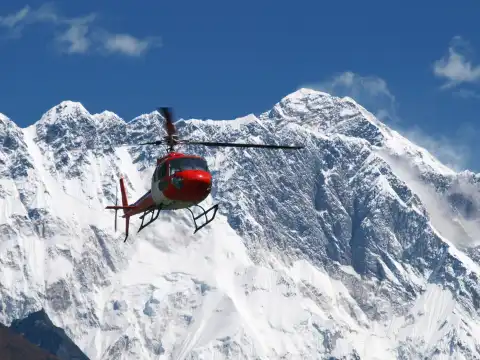
    In the event of a serious medical emergency that cannot be managed at teahouses or local clinics, Places Nepal's operation team will assist in arranging a helicopter rescue if necessary. This ensures you have professional support for critical situations, though helicopter evacuation is expensive and time-consuming.

    Travel insurance that covers trekking above 6,000 meters in Nepal is mandatory when trekking with Places Nepal. This insurance protects you financially in case of medical emergencies, evacuations, or other unforeseen circumstances. Ensure your policy specifically includes high-altitude trekking coverage before departure.

    Trek Permit Required

    All Permits Required for Surke to Everest Base Camp Trek

    1. Sagarmatha National Park Entry Permit – Required to enter the protected area around Namche Bazaar and proceed to Everest Base Camp. This is the primary and essential permit for this trek.
    2. TIMS Card (Trekkers' Information Management System) – Previously mandatory for all trekkers, but the requirement has been substantially reduced or eliminated in recent years for those trekking with organized companies. Independent trekkers should verify current status with the Nepal Tourism Board.

    That's it. The Surke to Everest Base Camp route doesn't require additional special permits like the Khumbu Region Restricted Area Permit, which applies only to certain higher-altitude or restricted routes.

    With Places Nepal: All permit arrangements are handled for you upfront, so you don't need to manage these details independently.

    Accommodation

    Expect comfortable, functional accommodation rather than luxury amenities. Hot showers may require additional fees at some teahouses, particularly at higher elevations.

    The experience is authentic and allows you to immerse yourself in local mountain culture while maintaining reasonable comfort during your trek.

    Teahouse Lodging

    Throughout the trek from Kharikhola to Everest Base Camp, you'll stay in teahouses—simple lodges run by local families along the established trail.

    These teahouses provide basic bedding but comfortable accommodation with shared rooms and a few private rooms. Most have dining hall heating, though facilities become more basic at higher elevations.

    Teahouses offer a social atmosphere where you can meet other trekkers and interact with locals.

    Meals

    Teahouses provide meals throughout your stay, with breakfast, lunch, and dinner available daily. The menu includes Nepali staples like dal bhat (lentils and rice), noodles, potatoes, and vegetables, along with some Western options like pasta and eggs.

    Tea, coffee, and hot drinks are constantly available. While the food is simple, it's nutritious and suited to trekking demands.

    Teahouses can accommodate dietary requirements if you inform them in advance, though options become more limited at higher elevations.

    Staying hydrated is essential, and boiled or purified water is available at all lodges.

    With Places Nepal Treks

    When booking through Places Nepal Treks, accommodation and meals are included in your package. This simplifies planning considerably—you don't need to arrange lodging or food independently or carry cooking equipment.

    Your guide can communicate dietary preferences or requirements with teahouse owners along the way.

    Trek Cost

    The Everest Base Camp Trek by Road via Surke is an affordable alternative to the traditional Lukla flight-based route. Pricing for this trek typically ranges from US$1,300 to US$1,500 per person, depending on group size and season.

    Our all-inclusive 15-day EBC trek via Surke varies based on group size:

    • 1-2 people: US$ 1,350 per person
    • 3-5 people: US$ 1,300 per person
    • 6-10 people: US$ 1,200 per person
    • 11-15 people: US$ 1,000 per person

    What's Included in the Package

    Our trek cost covers a range of services, including a professional English-speaking licensed guide, accommodation in mountain teahouses throughout the trek, all meals (breakfast, lunch, and dinner), airport transfers from Kathmandu, shared jeep transport to and from Kharikhola, all necessary permits (Sagarmatha National Park entry permit), and one porter for every two trekkers with a maximum carrying capacity of 20kg per porter.

    The package also includes a first-aid kit, Places Nepal's branded gear such as a t-shirt and cap, daily health monitoring using an oximeter to check for altitude sickness symptoms, and support for arranging emergency evacuations if needed.

    What's Not Included

    Personal expenses not covered include hotels in Kathmandu before or after the trek, meals in Kathmandu, Nepal visa fees, international flights, travel insurance (which is mandatory), personal items and services like laundry and phone calls, tips for guides and porters, costs related to weather delays or strikes, and optional private jeep upgrades.

    Additional Costs to Budget

    During the trek itself, expect to carry 200-300 USD in Nepali Rupees for personal expenses such as hot showers, Wi-Fi access, snacks, bottled water, and souvenirs. ATM access is limited along the route, so cash must be withdrawn in Kathmandu beforehand.

    Travel Insurance

    Yes, travel insurance is mandatory when trekking to Everest Base Camp via Surke. This requirement ensures you have financial protection in case of medical emergencies or unexpected situations at high altitude.

    What Insurance Must Cover

    Your travel insurance policy must specifically include coverage for high-altitude trekking above 6,000 meters in Nepal. Standard travel insurance often excludes high-altitude activities, so verify your policy includes this coverage before booking your trek. The insurance should cover medical emergencies, evacuation costs, and helicopter rescue if needed.


    Communications on the Trek

    Limited connectivity is part of the authentic mountain trekking experience and allows you to disconnect from daily distractions while enjoying the Himalayas.

    Mobile Network and Internet Connectivity on the Surke to Everest Base Camp Trek

    Mobile network coverage is limited on this trek. Nepal's main providers (NCell and NTC) offer service only up to Tengboche. Above this point, there is no cellular coverage.

    Teahouse WiFi During the Trek

    Most teahouses along the route offer free or paid WiFi access, though speeds vary depending on weather conditions and user numbers. Connection quality is generally slower at higher elevations due to limited infrastructure.

    Teahouse WiFi is convenient for daily communication but can be unreliable during bad weather or peak usage times.

    EverestLink WiFi Cards

    For more reliable internet connectivity, purchase an EverestLink WiFi card available at lodges and shops along the route. EverestLink is the world's highest internet service provider, operating solar-powered towers throughout the Everest region.

    Coverage extends to major stops including Namche Bazaar, Dingboche, Gorakshep, and Everest Base Camp.

    Tips for Staying Connected While Trekking

    Download offline maps before departure. Charge devices daily at teahouses, often for free. Carry a power bank for segments where charging isn't available. Accept that bad weather at high elevations typically means no internet access.

    Ready to make a choice

    Check out these other trips in Nepal.

    Adventure with Experts

    Our trips are led by certified expert guides, granting you access to Nepal’s hidden gems that most travelers miss.

    Small Groups, Big Experiences

    At Places Nepal, trekking is a celebration of nature, a journey that nourishes the body, mind, and soul. Most of our travelers join solo.

    hassle-free Adventure

    All Logistics taken care of. Just show up and have a blast. We handle the details, you enjoy the adventure.

    Our Trek Again philosophy

    Life happens. If you can't finish your trek, or if you simply love it and want to do it again, you're welcome to repeat it with us, free of charge.

    Tried and Trusted

    Hear what our travelers had to say about us.

    Jeroen & Lina - Belgium
    Manaslu Circuit Trek
    Family Trek: Gillian - London
    Short Manaslu Circuit Trek
    Senior Trek - Spain
    Ghorepani Poon Hill Trek
    Jaoa - Portugal
    Manaslu Circuit Trek
    Kylan - United Kingdom
    Short Manaslu Circuit Trek
    Monica Troilo - Italy
    Manaslu Circuit Trek
    Pedro - Portugal
    Manaslu Circuit Trek
    A Family Trek
    Manaslu Circuit Trek
    Dave - London
    Manaslu Circuit Trek

    Planning a Trek?

    Talk to our experts first.

    Plan My Trip