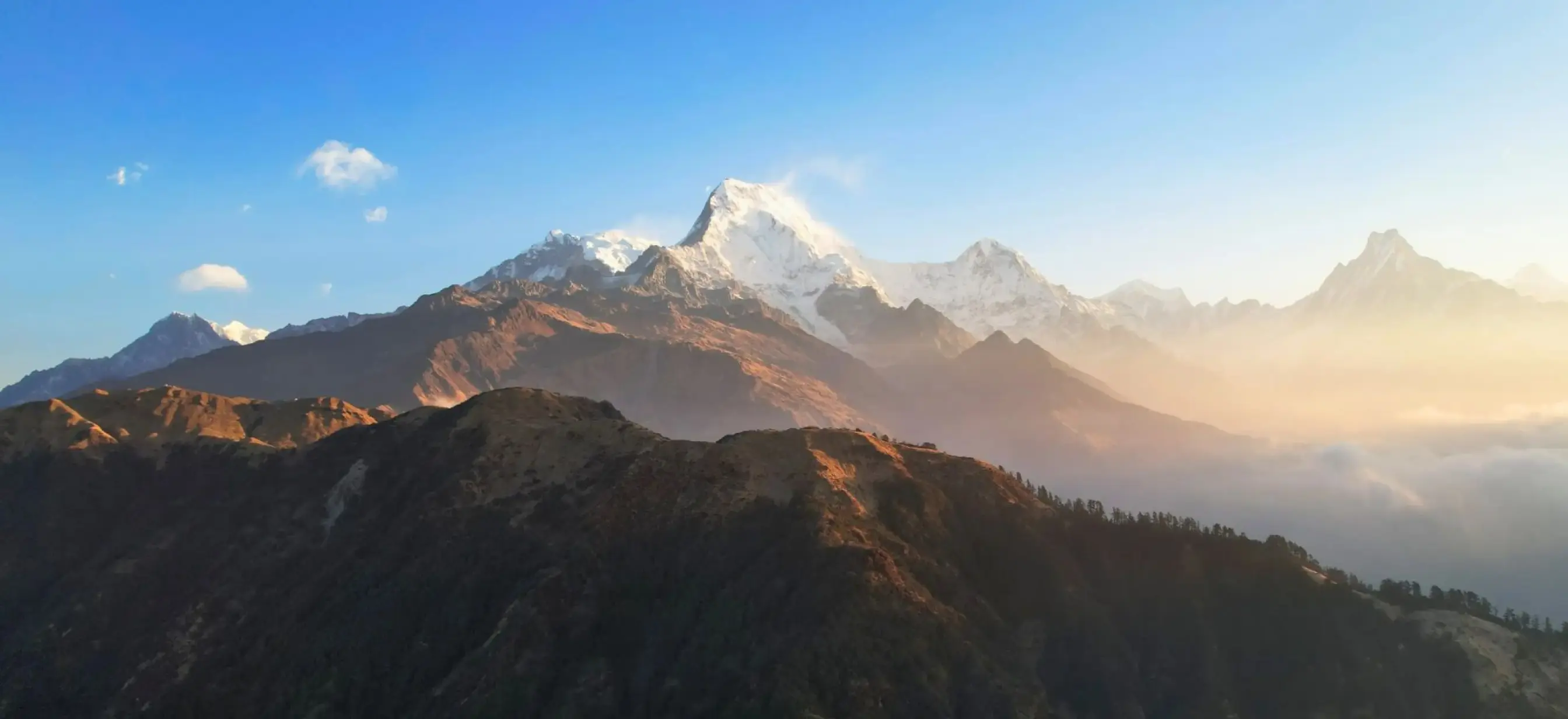
Ghorepani Poon Hill Trek

Nepal
4 Days
Easy
Nepal's biggest mountain view, in the shortest possible trek. One sunrise. The whole Annapurna skyline.
From US$ 440
US$ 390
No of people Price per person
1 - 1 $440
2 - 5 $390
6 - 10 $300

What's included?

Accommodations

All teahouse accommodations during the trek

Permits

All necessary permits and documentation

Transportation

Private transportation to/from starting/ending point to Pokhara

Guide

Licensed English speaking guide

All Meals

Breakfast, Lunch & Dinner during the trek

What is it really like?

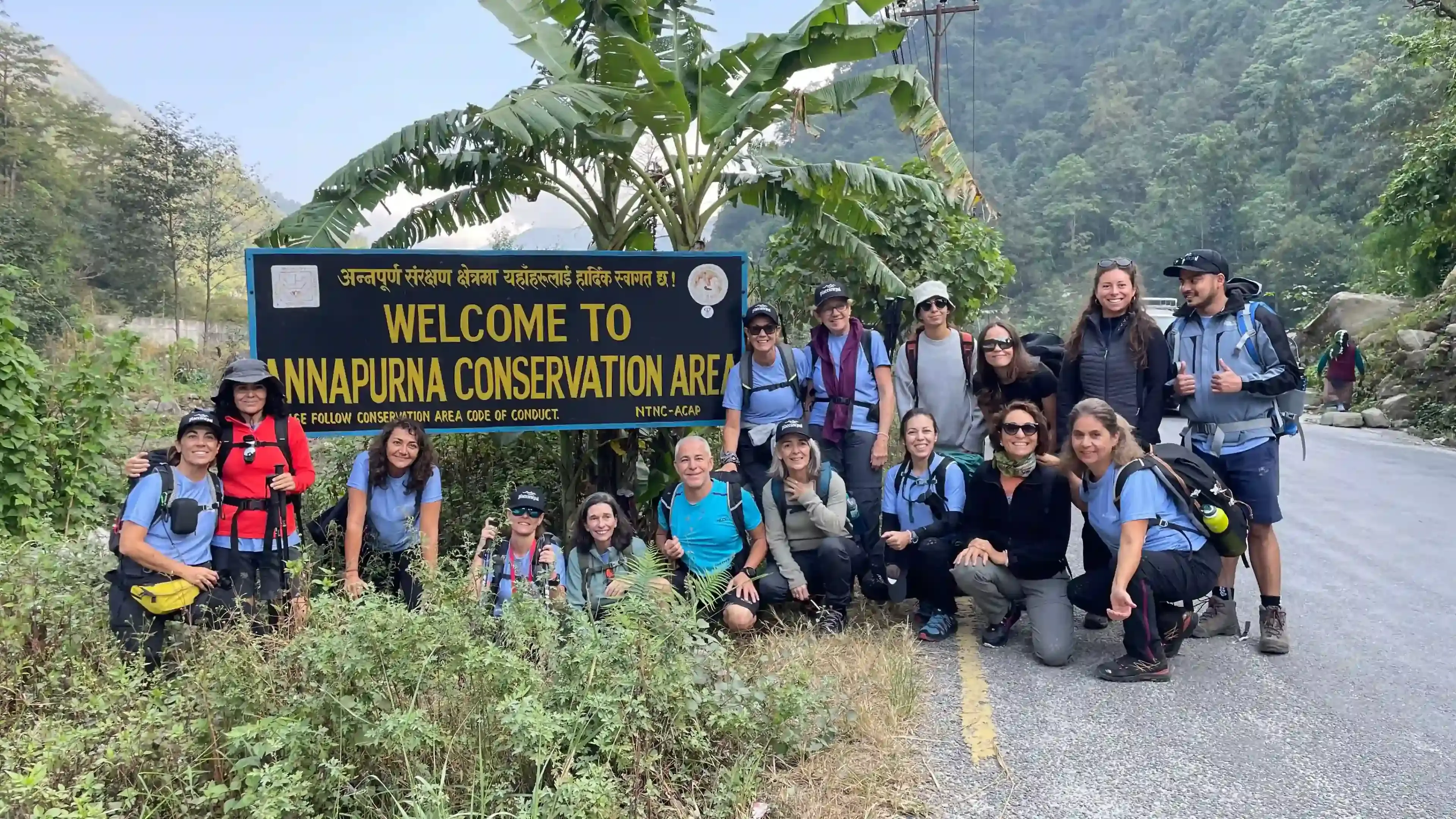
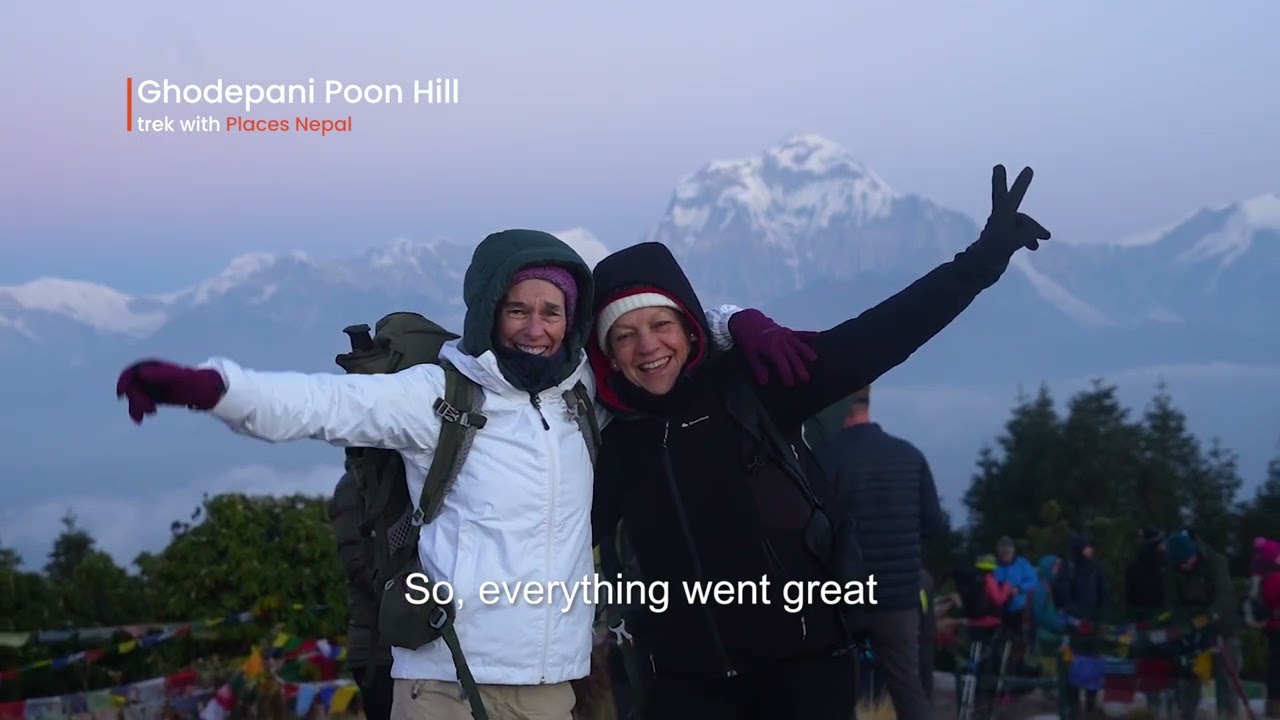
Photos from the Ghorepani Poon Hill Trek

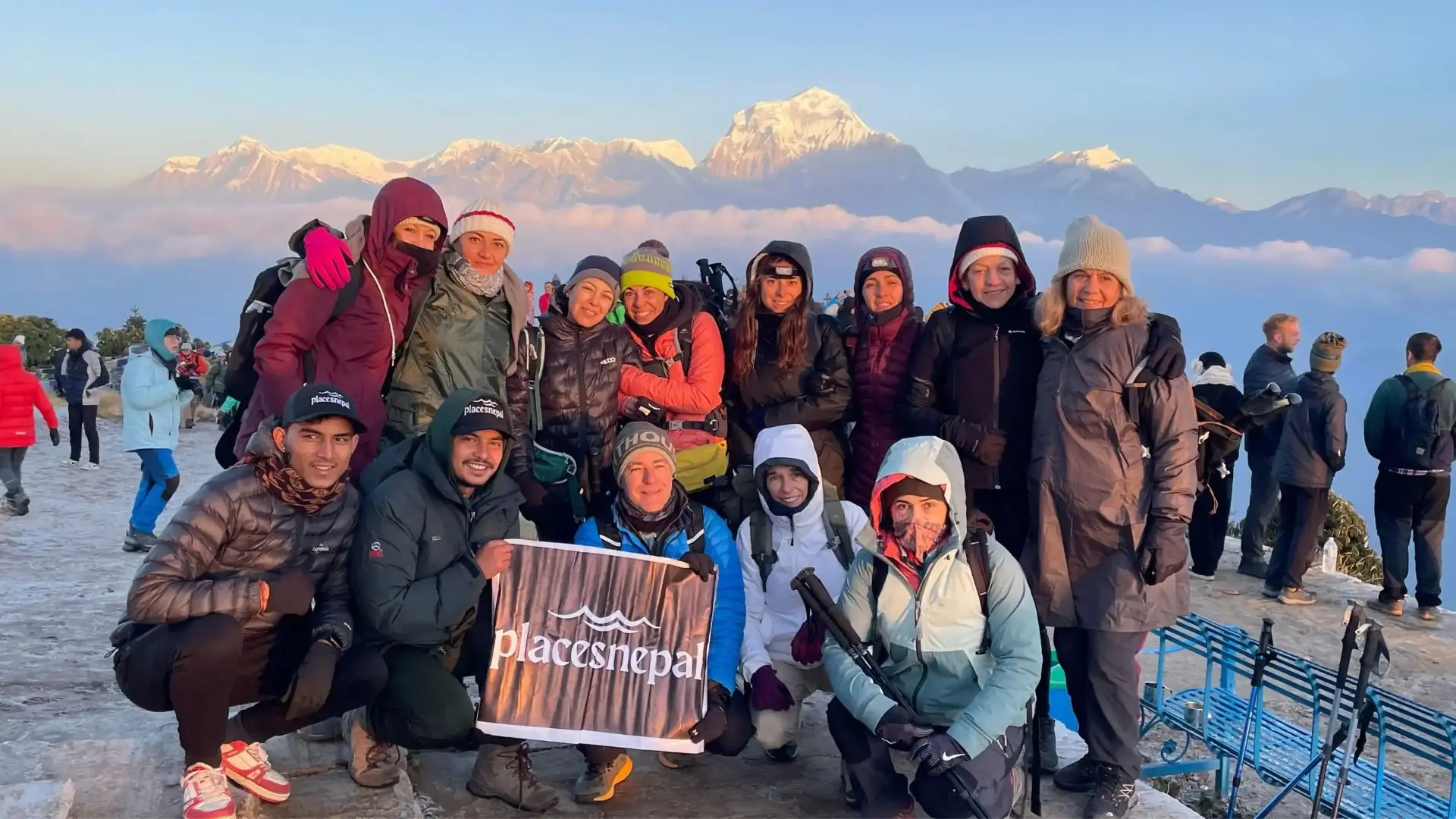
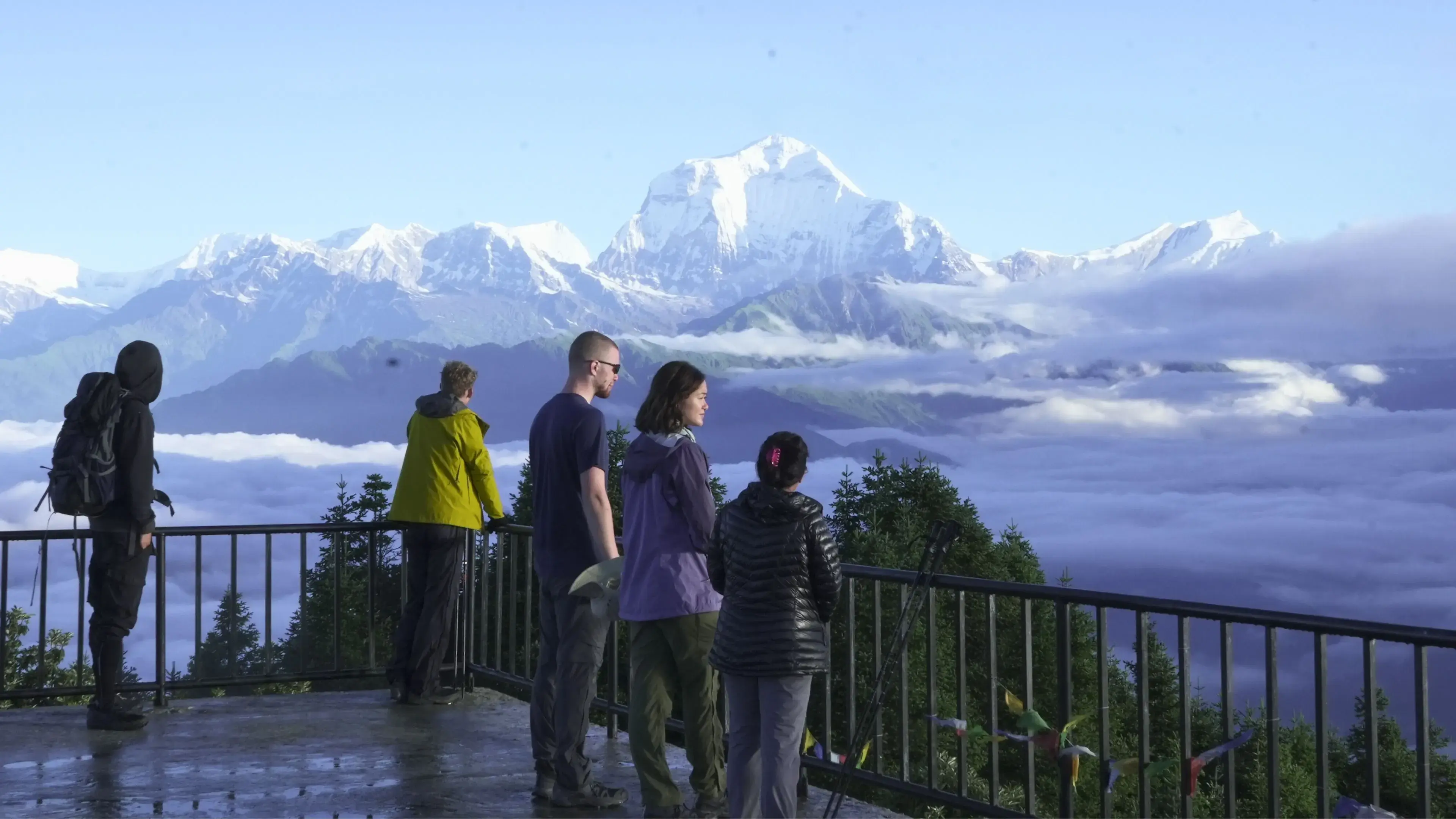
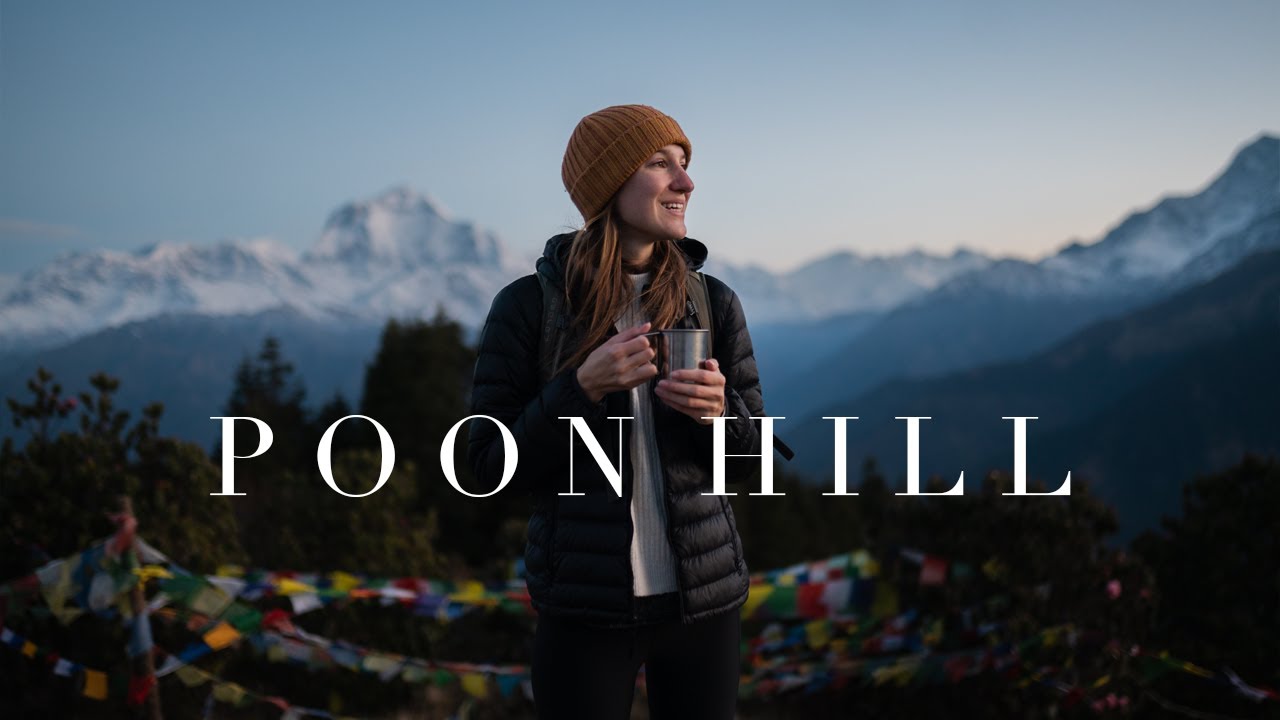
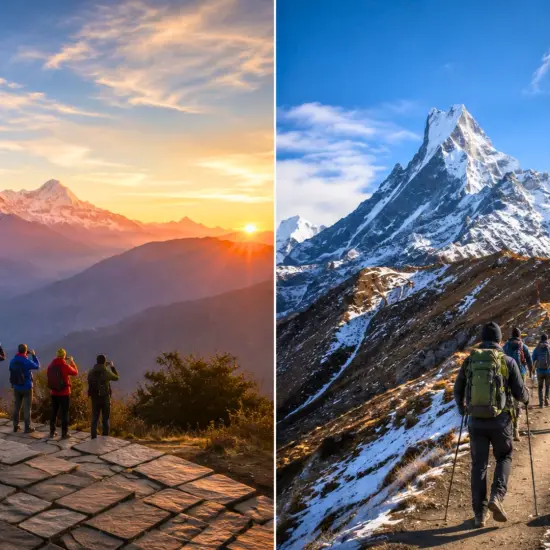
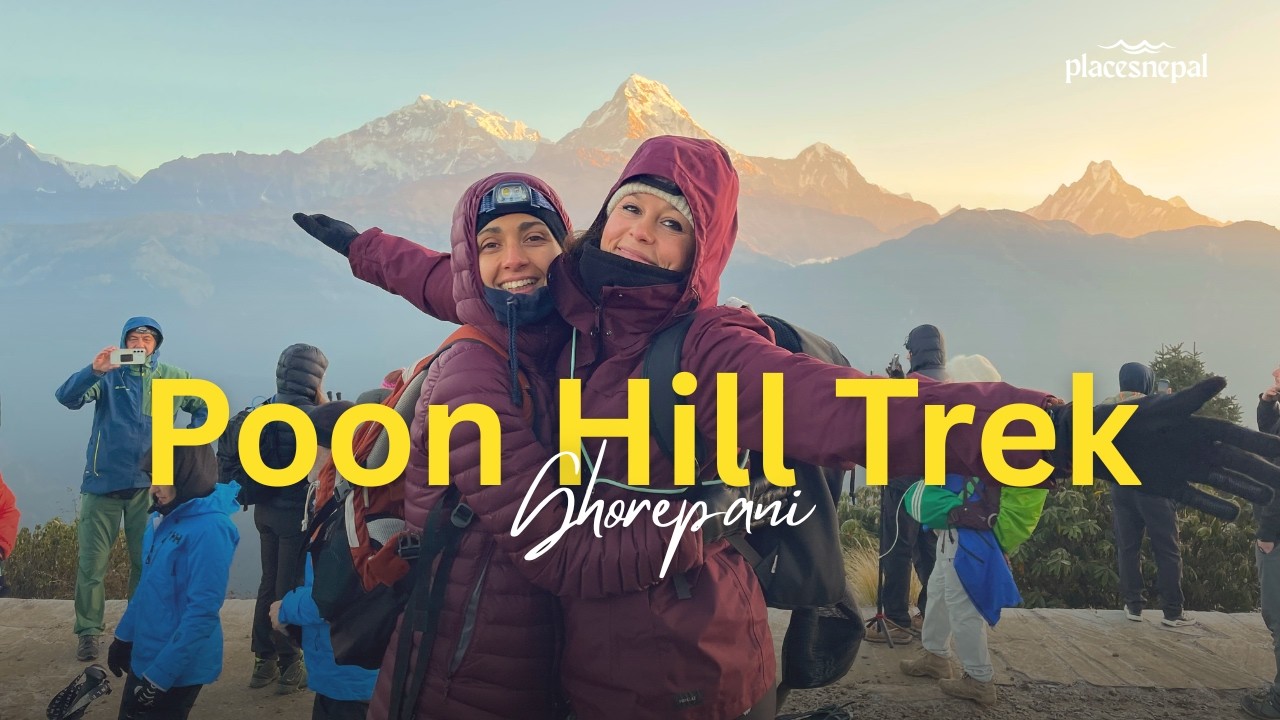
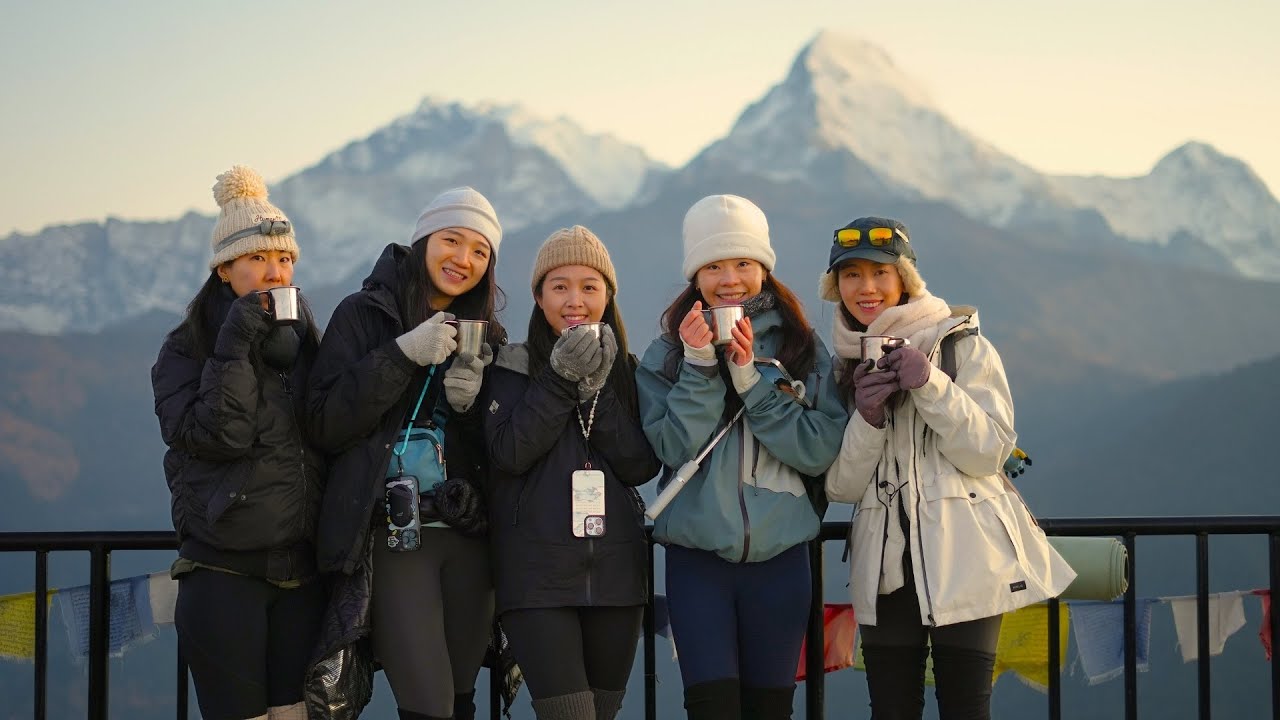
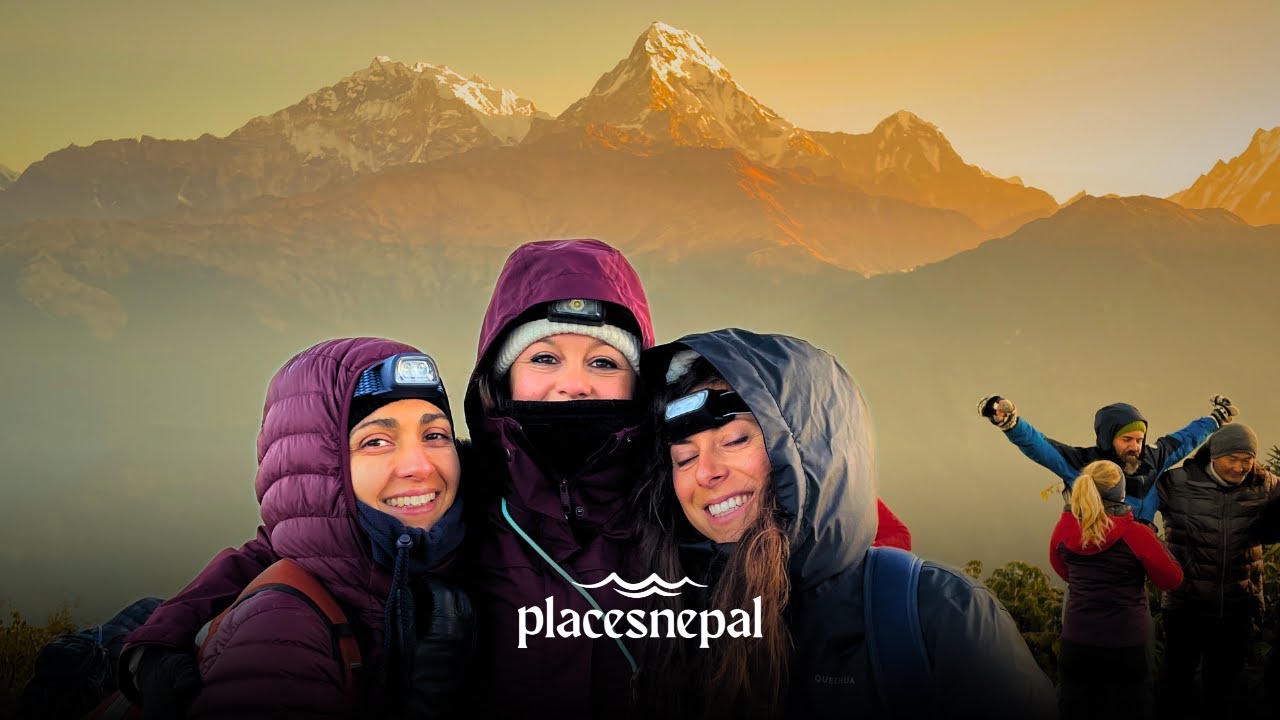
Witness panoramic views of Annapurna, Dhaulagiri, and Machapuchare at sunrise from poon Hill

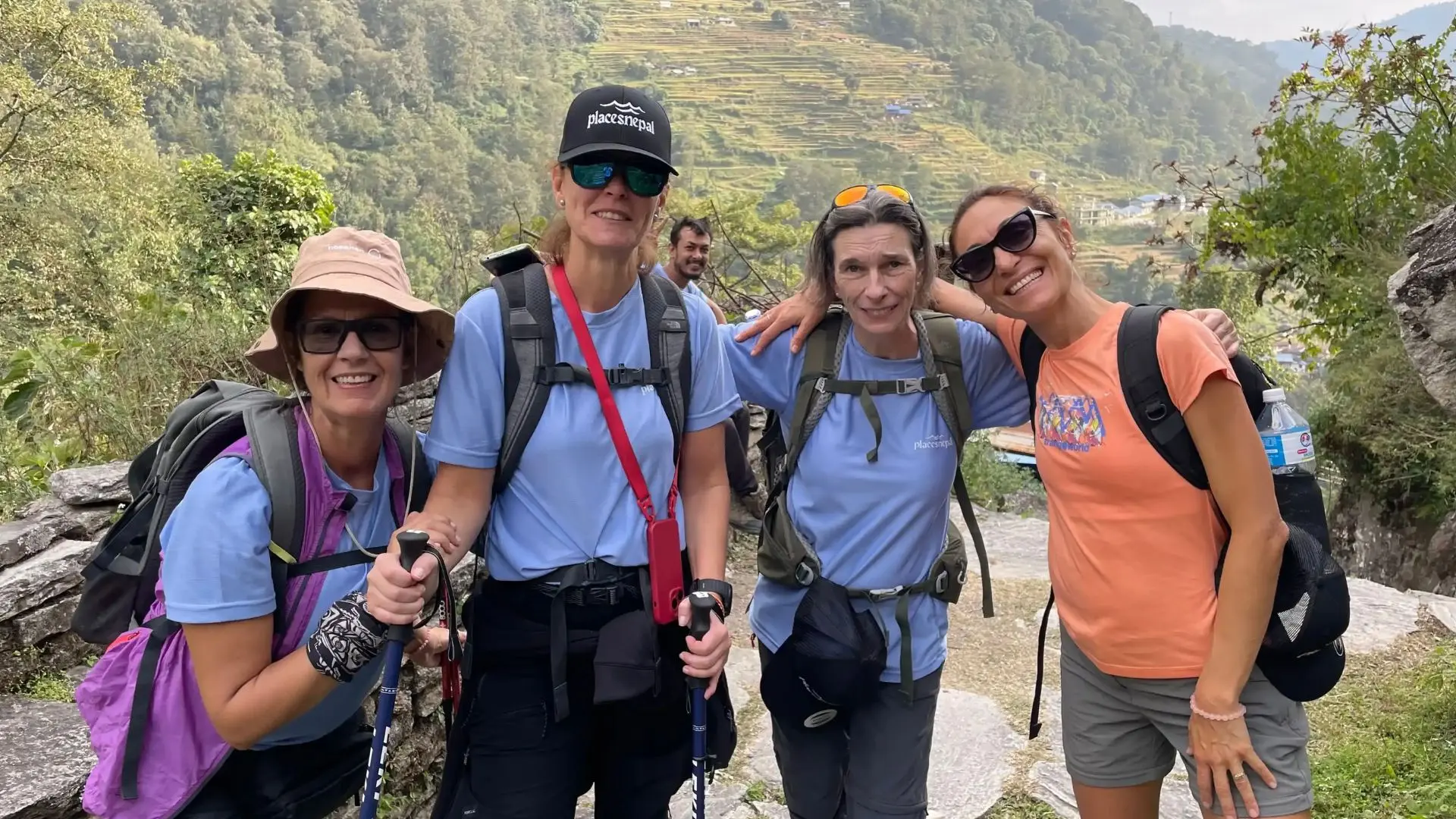
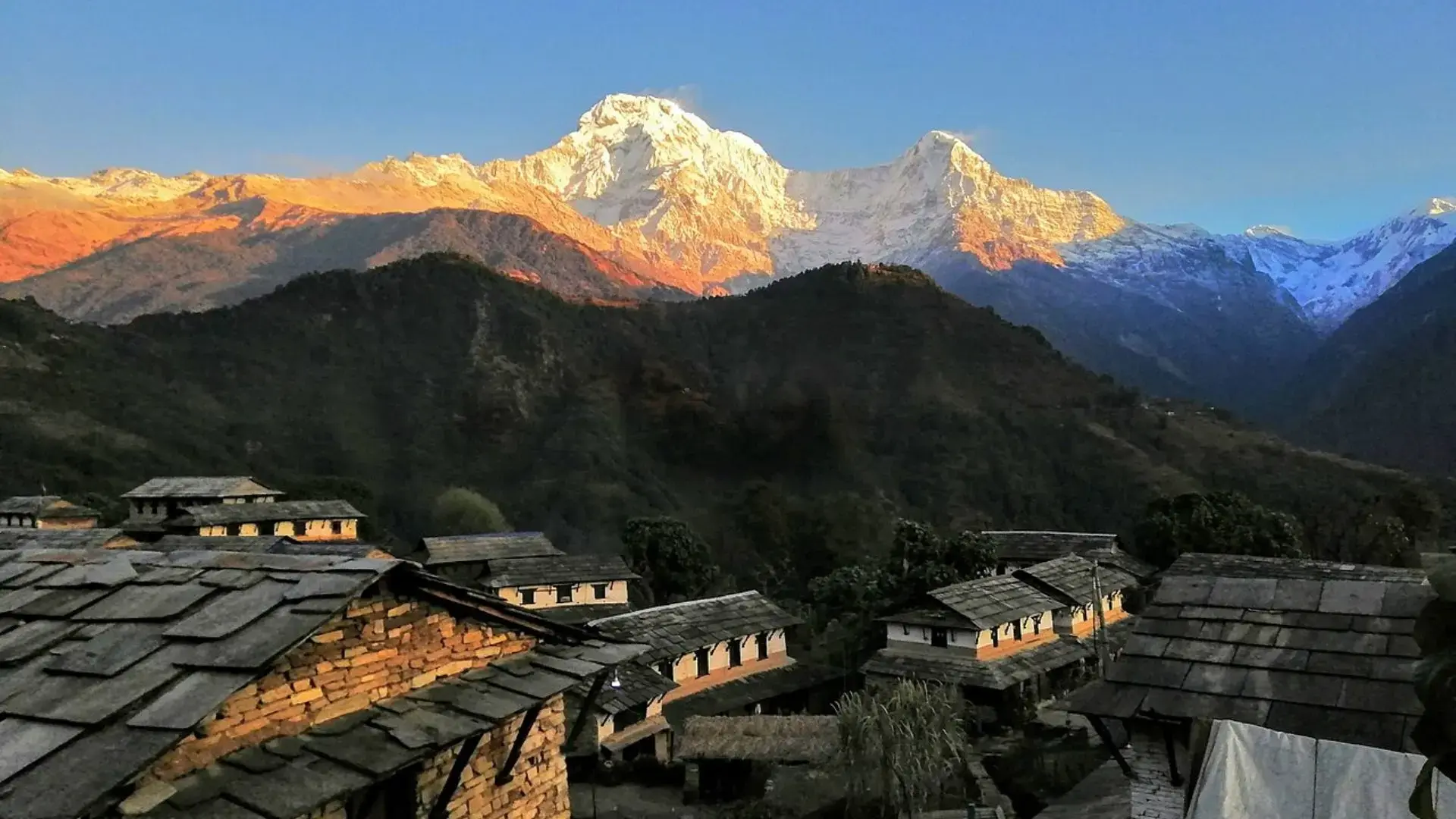
Explore traditional villages like Ghandruk, rich in culture and warm hospitality.

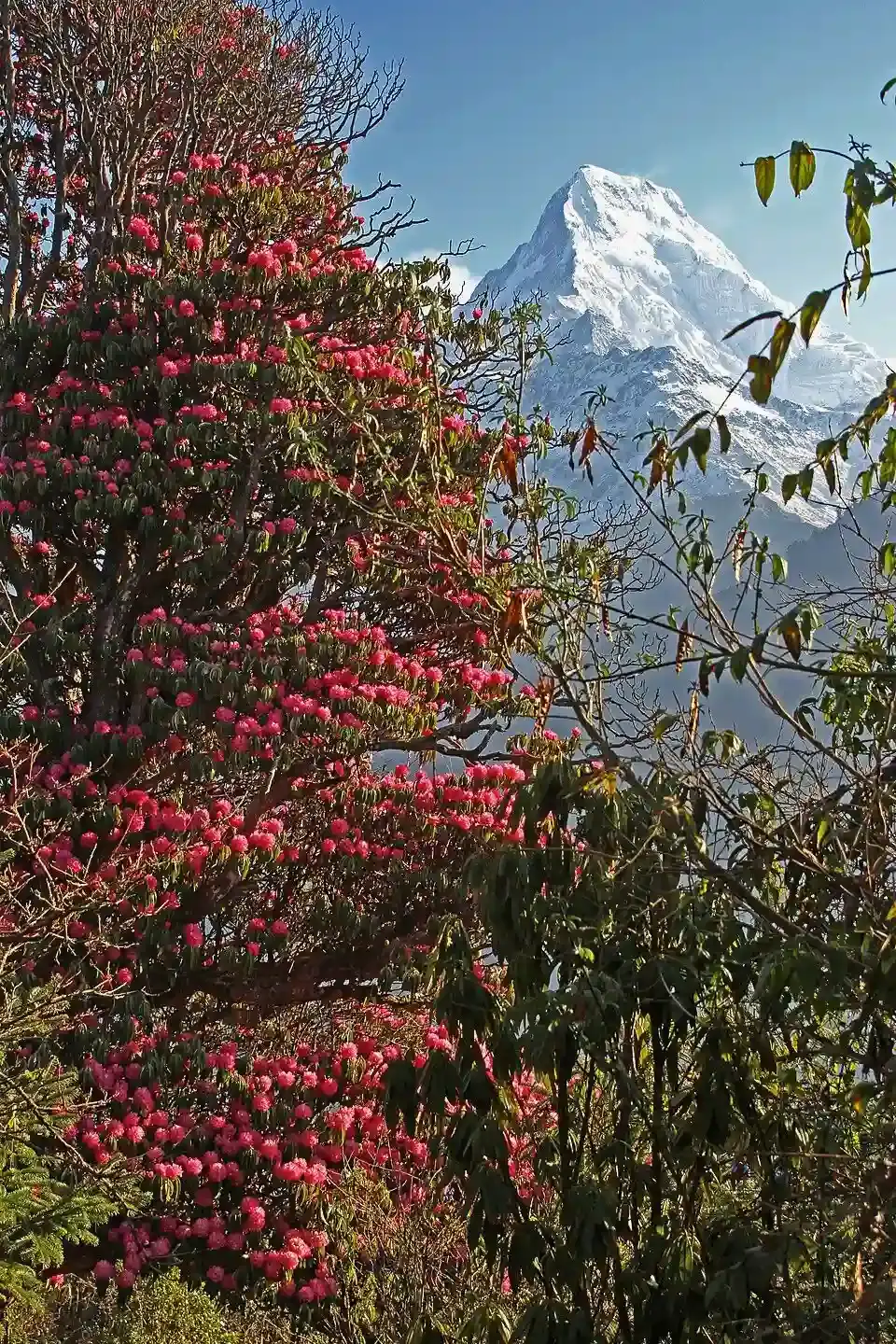
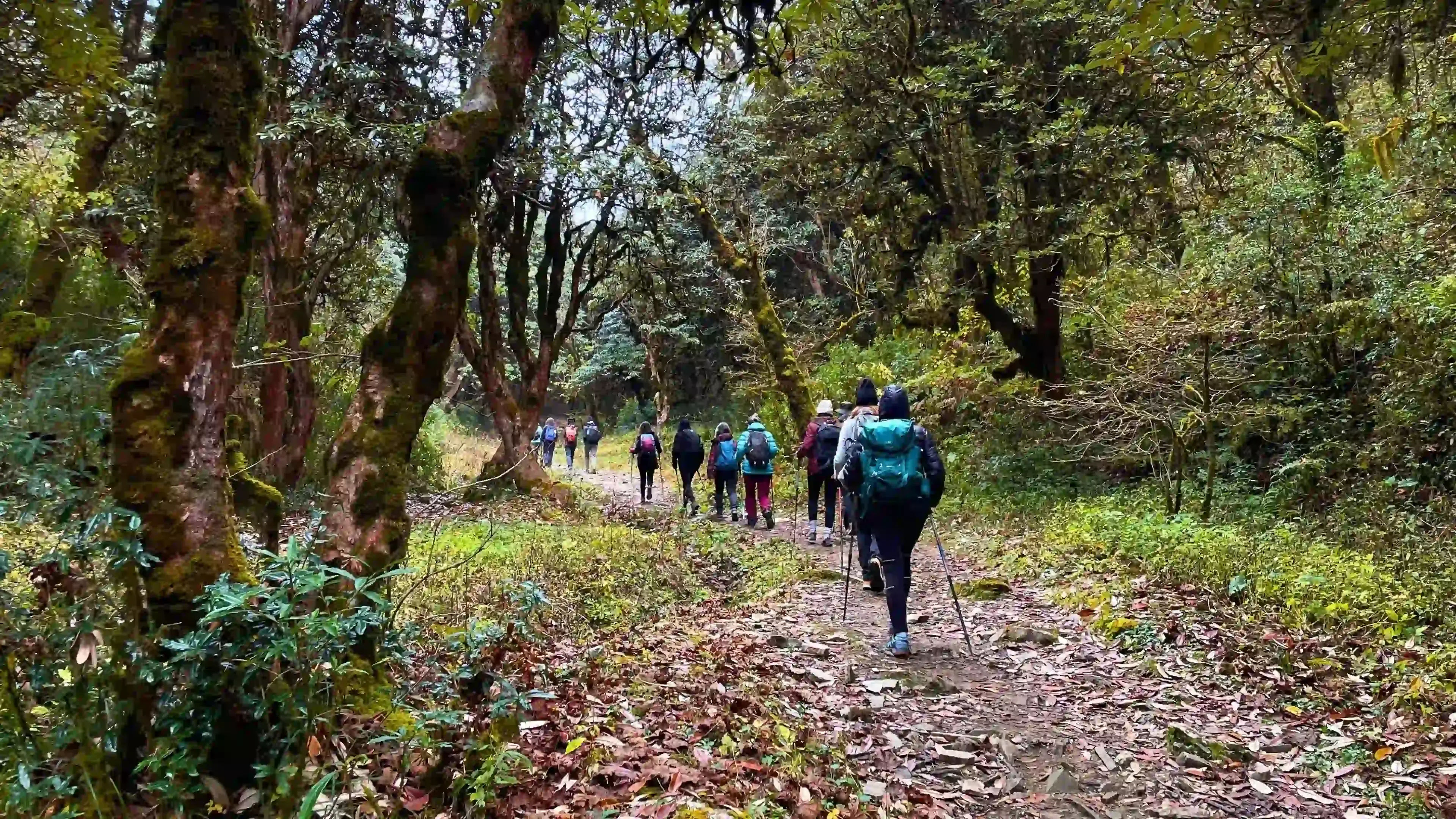
Trek through lush rhododendron and oak forests, especially vibrant during spring bloom (April)

Ideal for those with limited time, offering a perfect mix of nature, views, and local culture.

Key Information

Max. altitude

2,050 m / 6,726 ft

Accommodation

Teahouse

Meals

Lunch, & Dinner

1.5–2 hrs drive + 8–9 km trek

Hile to Ulleri

4–5 hrs

Walking time

Route overview

Pokhara822 m · drive
Hile1,070 m · trailhead
Tikhedhungariver crossing, lunch
Ulleri2,050 m · overnight

The trek begins with a scenic drive from Pokhara along the Baglung Highway to Hile, the roadhead village where trekking traffic and vehicle traffic part ways. From here, the trail drops gently to the Bhurungdi Khola river at Tikhedhunga, before tackling the day's real work: a long, famous stone staircase — often cited at well over 3,000 steps — climbing steeply through terraced farmland and forest to Ulleri, a Magar village perched on a ridge at 2,050 m. It's the single steepest climb of the entire trek, front-loaded deliberately so the days that follow feel progressively gentler.

  • Morning · Pokhara to Hile

    Leaving the lake behind

    A short, scenic drive into the Annapurna foothills

    The drive out of Pokhara follows the Baglung Highway, with the Annapurna range visible ahead on clear mornings before the road turns off toward Hile. Your guide handles the ACAP and TIMS permit checks along the way.

  • Midday · Hile to Tikhedhunga

    Into subtropical trail country

    Terraced fields, waterfalls, and the last low-altitude warmth of the trek

    The trail descends gently through cultivated hillside and small settlements to Tikhedhunga, a riverside stop with a good lunch option and the last real flat ground before the climb begins.

  • Afternoon · The Ulleri stone staircase

    Climbing to Ulleri 2,050 m

    The steepest sustained climb of the whole itinerary

    A relentless, well-built stone staircase gains roughly 1,000 vertical metres from Tikhedhunga to Ulleri — hard work, but short enough that it's done by mid-to-late afternoon. Ulleri itself is a traditional Magar village with excellent Annapurna South views from its upper lodges.

Tips for Day 1

  • Pace the staircase deliberately — it's the hardest single climb of the trip; slow and steady beats fast and breathless.
  • Start hydrating early — this section is exposed to full sun through the middle of the day.

Max. altitude

2,874 m / 9,429 ft

Altitude Gain

824 m / 2,703 ft

Accommodation

Teahouse

Meals

Breakfast, Lunch & Dinner

8 km / 5 miles

Trek distance

4–5 hrs

Walking time

Route overview

Ulleri2,050 m · start
Banthantiforest teahouses
Nangethantirhododendron forest
Ghorepani2,874 m · overnight

After yesterday's steep test, today settles into a steadier, more sustainable rhythm. The trail leaves Ulleri's farmland behind and enters continuous forest — first oak and magnolia, then increasingly dense stands of Rhododendron arboreum, Nepal's national flower, which blankets this exact stretch of trail in crimson, pink, and white blooms every March and April. By the time you reach Ghorepani, a bustling ridge-top village that exists almost entirely because of what lies above it, you're standing at 2,874 m with Dhaulagiri already visible to the northwest.

  • Morning · Ulleri into the forest

    Banthanti and the changing canopy

    Oak gives way to rhododendron as the trail climbs

    A gentler gradient than yesterday lets the scenery take over — thick, mossy forest, the occasional langur monkey overhead, and a steady, satisfying climb through Banthanti's small cluster of teahouses.

  • Midday · Nangethanti

    The heart of the rhododendron belt

    One of the densest rhododendron forests in the Annapurna region

    This stretch is the reason spring trekkers plan their trip around this exact route — in bloom season, the forest canopy turns almost entirely red and pink for kilometres at a stretch, a sight genuinely rare outside the Himalaya.

  • Afternoon · Ghorepani 2,874 m

    The trek's staging village

    Dhaulagiri appears — and an early night is essential

    Ghorepani is easily the busiest, best-equipped village on the route — a genuine trekking hub with a wide choice of lodges. Get an early dinner and lay out tomorrow's warm layers: the Poon Hill hike leaves in the dark.

About Ghorepani

Altitude2,874 m / 9,429 ft
CommunityMixed Magar and Gurung settlement
FacilitiesWide choice of lodges, bakeries, charging (paid), Wi-Fi
Ghorepani sits at the junction of several trekking routes — it's also a stop on the longer Annapurna Circuit and Annapurna Base Camp trails, so expect a genuinely international, lively atmosphere in peak season.

Max. altitude

3,210 m / 10,531 ft

Accommodation

Teahouse

Meals

Breakfast, Lunch & Dinner

5 km round trip + 10 km trek

Poon Hill + Tadapani

6–7 hrs

Total walking time

Route overview

Ghorepani4–5 AM start
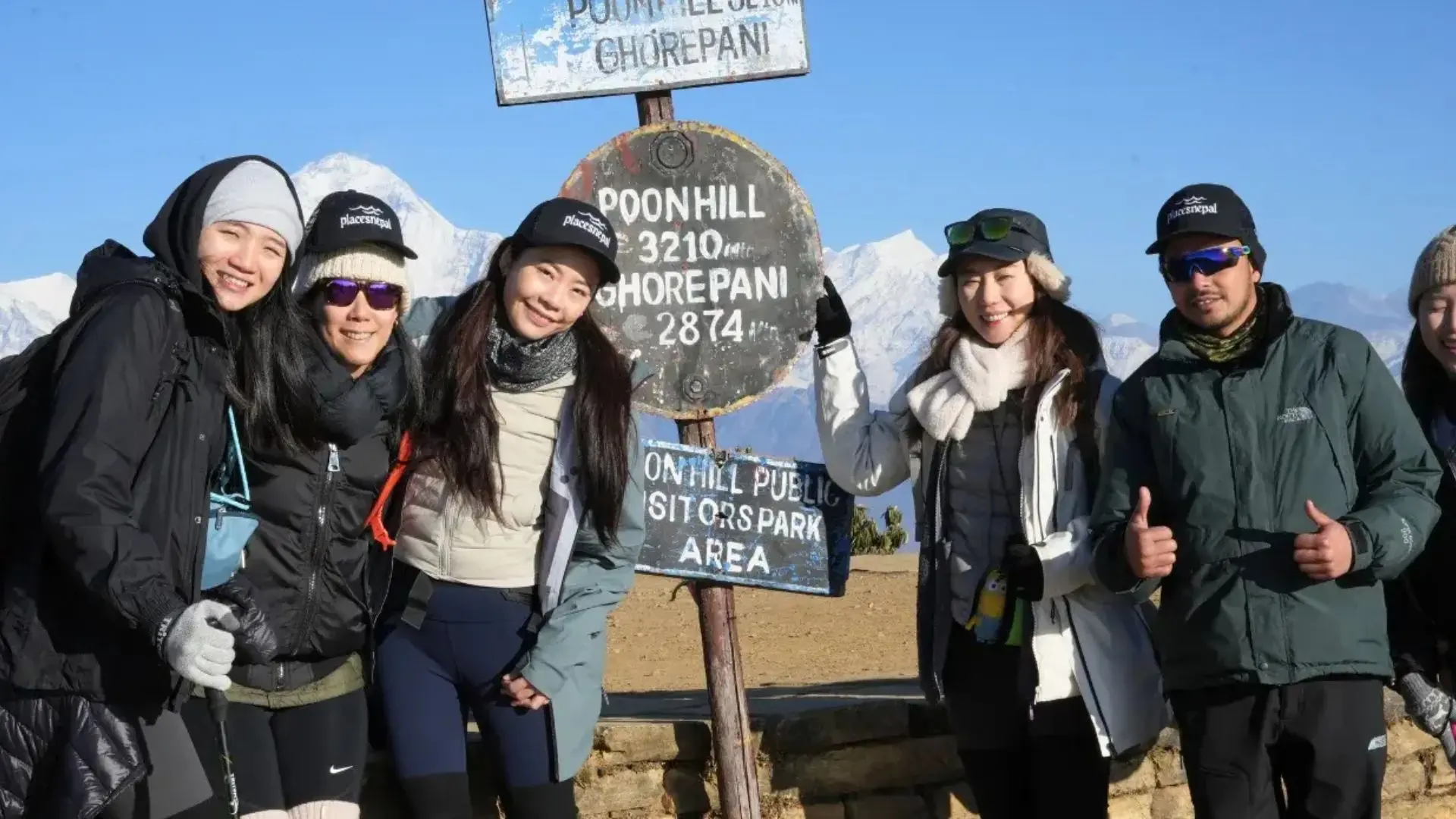
Poon Hill3,210 m · sunrise
Ghorepanibreakfast
Deuraliridge trail
Tadapaniovernight

This is the day the whole trek is built around. A steady 45–60 minute pre-dawn climb by headlamp gains Poon Hill's summit at 3,210 m just as the sky begins to lighten — and the panorama that unfolds is one of the most complete in the Himalaya without setting foot above 3,500 m: Dhaulagiri (8,167 m, the world's seventh-highest peak) to the west, Annapurna I (8,091 m — the first 8,000 m peak ever climbed, in 1950) and Annapurna South directly ahead, and the sacred, unclimbed spire of Machhapuchhre (Fishtail) anchoring the eastern skyline. After breakfast back in Ghorepani, the trail turns toward Tadapani through more rhododendron forest and quieter ridge trail.

  • Pre-dawn · The climb to Poon Hill

    3,210 m — the Annapurna region's signature panorama

    A full mountain skyline reached without a single high-altitude pass

    The summit platform is busy with headlamps and murmured conversation in the dark, everyone waiting on the same first light. When it comes, the peaks catch it in sequence — Dhaulagiri first, then the Annapurnas, then Machhapuchhre's unmistakable fishtail summit glowing gold against a still-dark sky.

  • Morning · Back to Ghorepani, then onward

    Breakfast, then a change of direction

    The trail turns away from the Circuit route toward quieter country

    After a hot breakfast, the trek leaves the busier Ghorepani corridor behind and heads toward Deurali and Tadapani — noticeably fewer trekkers, more forest, and a different, gentler character than the first two days.

  • Afternoon · Tadapani

    A quiet ridge-top overnight

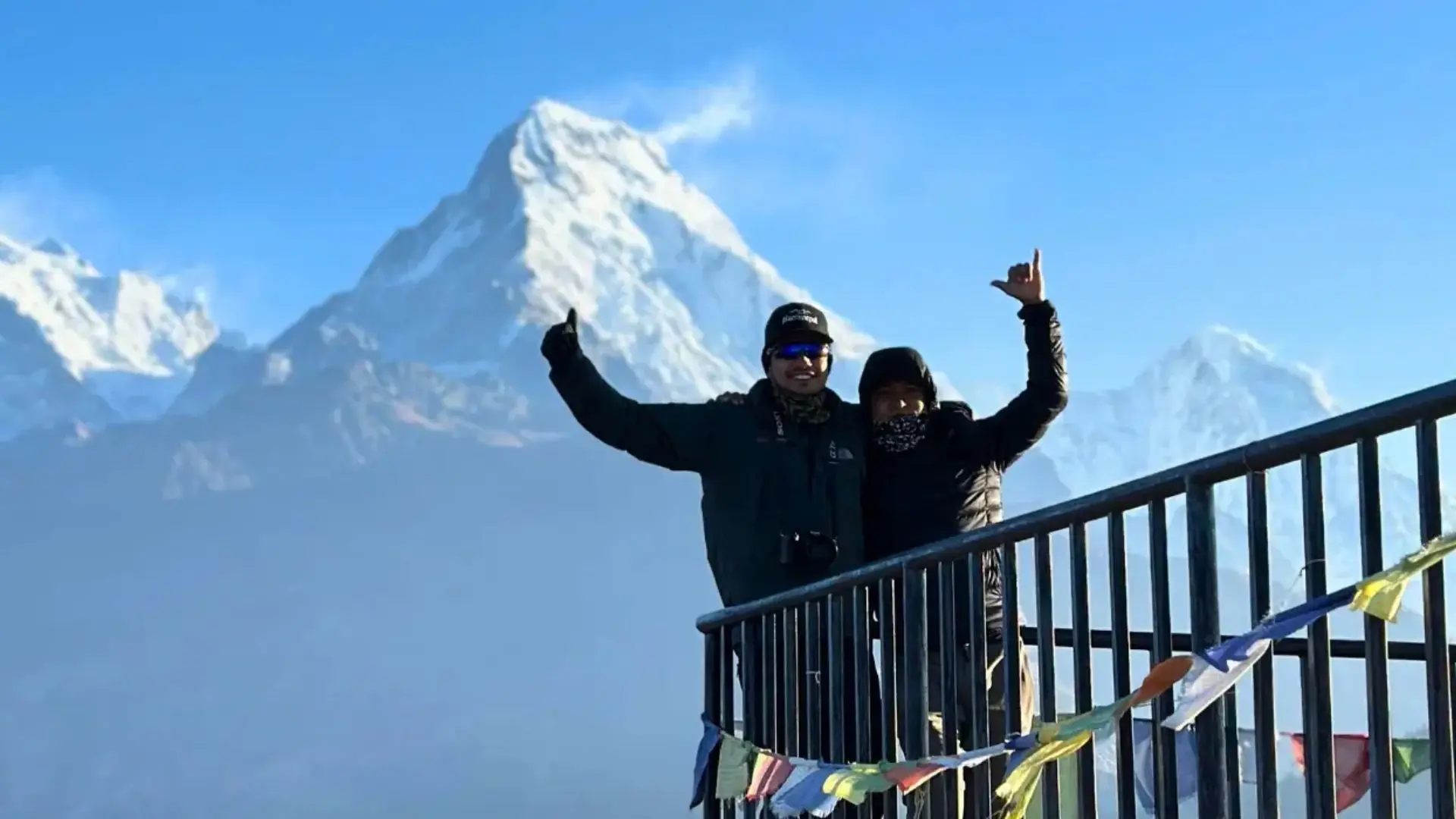
    Close-range views of Annapurna South and Machhapuchhre

    Tadapani's small cluster of lodges sits directly beneath Annapurna South and Machhapuchhre — on a clear evening or morning, these are some of the closest mountain views of the entire trek.

Tips for Day 3

  • Dress warmer than the temperature suggests — Poon Hill's open summit catches wind, and pre-dawn temperatures are colder than anywhere else on this trek.
  • Leave Ghorepani by 4:30–5 AM in peak season — the summit platform fills up, and the best unobstructed spots go early.

Max. altitude

2,012 m / 6,601 ft

Meals

Breakfast, Lunch

9 km trek

Tadapani to Ghandruk

3–4 hrs

Walking time

Route overview

Tadapanistart
Ghandruk1,940 m · Gurung village
Pokhara822 m · drive, arrival

The final day descends through forest into Ghandruk, one of the largest and best-preserved Gurung villages in the Annapurna region — stone-paved streets, traditional slate-roofed houses, and a small museum documenting the Gurung community's deep-rooted Gurkha military heritage. It's a genuinely worthwhile cultural stop to close out a trek that began in dense forest and ends in living mountain culture. From Ghandruk's road, a private vehicle takes over for the scenic drive back to Pokhara, completing the loop.

  • Morning · Descending to Ghandruk

    Forest gives way to terraced village life

    One of the finest Annapurna South and Hiunchuli views on the trail

    The trail drops through forest and increasingly cultivated hillside, with Ghandruk itself framed by Annapurna South and Hiunchuli — one of the most photographed village views in the whole Annapurna region.

  • Midday · Ghandruk village

    Gurung culture and Gurkha heritage

    Stone lanes, a community museum, and centuries of mountain tradition

    Time here rewards a slow lunch and a walk through the village's stone-paved lanes — Ghandruk is widely regarded as the best-preserved traditional Gurung settlement accessible on a short trek, and its small heritage museum is worth the visit.

  • Afternoon · Drive to Pokhara

    Closing the loop

    Back to lakeside Pokhara by early evening

    A private vehicle collects the group at Ghandruk's roadhead for the drive back to Pokhara — arriving with the afternoon still ahead for a shower, a proper meal, and a well-earned evening on Phewa Lake's Lakeside strip.

Tips for Day 4

  • Budget time for Ghandruk's museum — it's a small stop, but it adds real cultural depth to a trek that's otherwise all landscape.

Unlike our longer circuit treks, the Ghorepani Poon Hill Trek starts and ends in Pokhara, not Kathmandu — a shorter, simpler set of logistics that suits its shorter itinerary. Here's how each stage works, and exactly where the included package begins and ends.

⇀ Starts

Pokhara — Day 1 morning drive to Hile
Package pickup is from your Pokhara hotel — getting to Pokhara itself is arranged separately (see Step 1)

↼ Ends

Pokhara — Day 4 afternoon drop-off from Ghandruk
Onward travel from Pokhara (to Kathmandu or elsewhere) is arranged separately, or ask us to add it on
International entry
Kathmandu (TIA)
Trek base
Pokhara — trip starts & ends here
Trailhead
Hile (1,070 m) — included drive
Pokhara transfers
Free — hotel to Hile, Ghandruk to hotel
1
Before Day 1

Get to Pokhara — this is where your trek package begins

Most international trekkers fly into Kathmandu's Tribhuvan International Airport (TIA) first, then continue on to Pokhara. This Kathmandu–Pokhara leg is not part of this trek package — arrange it yourself, or let us know at booking and we'll add it on for you.

Domestic flight — Kathmandu to Pokhara~25 min · Optional

The fastest option, with frequent daily departures and excellent mountain views on a clear day. Airport transfers on the Kathmandu side aren't included in this package.

Tourist bus — Kathmandu to Pokhara6–7 hrs · Optional

A comfortable, budget-friendly overland option along the scenic Prithvi Highway, following the Trishuli River valley.

Already flying into Pokhara directly?
Pokhara has its own regional airport with growing route options — if a direct or connecting flight works for your itinerary, that's a perfectly good way to start, and skips Kathmandu entirely. Check current routes with your airline when booking flights.
2
The Pokhara pickup

Free hotel pickup in Pokhara — this is where inclusion starts

Once you're in Pokhara, everything is handled. Let us know your Pokhara hotel at booking, and a Places Nepal representative meets you there for the pre-trek briefing and, on Day 1 morning, the drive to the trailhead.

Hotel pickup, Pokhara → HileIncluded
Day 1 morning · ~1.5–2 hr drive along the Baglung Highway

Your guide and vehicle collect you directly from your Pokhara hotel and drive to Hile, the roadhead where the trek itself begins.

Nepal Visa on Arrival (if entering via Kathmandu)
Most nationalities receive a Tourist Visa on arrival at TIA: USD $30 (15 days), USD $50 (30 days), or USD $125 (90 days), payable in cash. The 15-day visa comfortably covers this short trek.
3
Required permits

Two permits — processed right in Pokhara

Because this trek starts and ends in Pokhara, permits are processed locally — no Kathmandu paperwork delay to plan around. Both are arranged by Places Nepal and included in your package.

Annapurna Conservation Area Permit (ACAP)
NPR 3,000
~USD $23 per person, flat fee · Checked at the Hile trail entrance. Included in your package.
TIMS Card (Trekkers' Information Management System)
NPR 2,000
~USD $15 per person, via a registered agency · Standard for all organised Annapurna region trekking. Included in your package.
A guide is mandatory — since April 2023
Independent trekking without a licensed guide has not been permitted anywhere in the Annapurna Conservation Area since April 2023. A guide arranged through a registered agency is required, and this is handled as standard for every booking.
4
Day 4 · The way back

Ghandruk to Pokhara — closing the loop

After the final morning's trek into Ghandruk, a private vehicle collects the group at the village roadhead for the drive back to Pokhara — arriving with the afternoon still ahead of you. This drop-off is where your included package ends.

Ghandruk → Pokhara hotelIncluded
~2–2.5 hr drive

Direct drop-off at your Pokhara hotel, with the rest of the day free — a shower, a proper meal, and an evening on Phewa Lake's Lakeside strip.

Onward travel from Pokhara is separate
If you're continuing to Kathmandu, another trek, or flying home from Pokhara, arrange that leg yourself or ask us to add it at booking — it isn't included in this package.
5
Important notes

Before you go — a few things to confirm

Travel insurance — standard trekking cover is sufficient
This trek stays below 3,210 m throughout, so unlike our high-altitude routes, you don't need helicopter-evacuation cover to 5,500 m — standard trekking insurance covering activity up to 4,000 m is enough. We still recommend confirming your policy at the briefing.
Cash for the trail — Pokhara is the last reliable ATM
Ulleri, Ghorepani, Tadapani, and Ghandruk are all cash-only for personal extras — hot showers, charging, snacks, bakery treats, tips. Budget roughly NPR 1,000–1,500 per day and withdraw what you need in Pokhara before Day 1.
Elevation Chart
Day 1
Teahouse
Breakfast
Lunch
Dinner
Day 2-3
Teahouse
Breakfast
Lunch
Dinner
Day 4
Transfer to Pokhara
Breakfast
Lunch
Dinner

A short trek with one of the most straightforward inclusion structures we offer — everything on the trail is covered, everything in Pokhara is yours to choose.

What's included — and what isn't
All teahouse accommodation during the trek — three nights, at Ulleri, Ghorepani, and Tadapani.
All meals during the trek — breakfast, lunch, and dinner, chosen freely from each teahouse menu.
Pokhara hotel nights are not included — before Day 1 and after Day 4, accommodation in Pokhara is your own arrangement.
Meals in Pokhara are not included — this covers Day 1 breakfast (before departure) and any meals once you're back in Pokhara on Day 4.

Accommodation — three nights on the trail

Ulleri (Night 1)
Simple mountain lodge

A traditional Magar village teahouse — twin rooms, shared bathrooms, and a warm dining room after the day's steep climb. Comfortable, unpretentious, and typical of the route's lower-altitude villages.

Ghorepani (Night 2)
Best facilities on the route

The trek's busiest, best-equipped village — a wide choice of lodges, bakeries, hot showers, and reliable Wi-Fi. As a junction point for several Annapurna trekking routes, it has the most developed infrastructure of any overnight stop.

Tadapani (Night 3)
Quiet, close-range mountain views

A smaller, quieter cluster of lodges with some of the closest views of Annapurna South and Machhapuchhre on the whole trek. Simpler than Ghorepani, but the mountain views from the dining room more than make up for it.

The food — village kitchens all the way

Dal bhat — the trail's reliable standard

Rice, lentil soup, seasonal vegetables, and pickles, with free refills always. Freshly cooked at every stop, and the honest, satisfying fuel for four days of steady climbing and descending.

A genuinely varied menu, even at this scale

Because this route stays below 3,000 m and sees steady trekking and mule traffic, menus are noticeably fuller than on higher, more remote treks: momos, noodle soups, fried rice, pizza and pasta in Ghorepani, and fresh bakery items — a real perk of a shorter, lower-altitude trek.

Breakfast & drinks

Porridge, muesli, eggs, Tibetan bread, and pancakes power the mornings; milk tea, masala tea, and hot chocolate run all day. Ghorepani's bakeries add fresh pastries and good coffee to the mix.

Good to know

A three-season sleeping bag is plenty
This trek never sleeps above 2,874 m, so unlike our high-altitude routes, you don't need a −15°C bag — a comfort rating of around −5°C to −10°C is sufficient, with the lodge's own blankets as extra warmth on colder nights. Quality bags rent cheaply in Pokhara if you don't own one.
Water — refill, treat, repeat
Carry a reusable bottle and refill with boiled water at teahouses (small charge) or treat tap water with tablets or a filter. 2–3 litres a day is plenty at this altitude — noticeably less demanding than our higher routes.
Dietary requirements — easy to manage on this route
With Ghorepani's varied menus and the generally lower altitude, vegetarian, vegan, and most dietary requirements are simple to accommodate. Tell us at booking, and your guide briefs each teahouse kitchen ahead of every meal.

The Ghorepani Poon Hill Trek is one of the most accessible teahouse treks in the Annapurna region — no high pass, no altitude risk to speak of, and well-built trails throughout. The only real physical test is a single steep climb on Day 1; everything else is well within reach of a reasonably fit beginner.

Overall difficulty

  Easy – Moderate 
2 out of 5 on the standard Nepal trekking scale. Well suited to first-time trekkers, active families, and older trekkers in good general health — regular walkers with no major health conditions handle this comfortably with light preparation.
Highest point
Poon Hill — 3,210 m (Day 3)
Highest sleep
Ghorepani — 2,874 m
Trekking days
4 days, no rest day needed
Hardest stretch
Tikhedhunga–Ulleri staircase, Day 1

The Ulleri stone staircase

The one real test

A steep, sustained climb of roughly 1,000 vertical metres on well-built stone steps, done in a single afternoon on Day 1. It's genuinely hard work for 2–3 hours — but it's also short, non-technical, and done early, so the days that follow feel noticeably easier by comparison.

Altitude

Minimal risk

At a maximum of 3,210 m, this trek sits well below the altitude range where serious mountain sickness becomes a real concern. Some trekkers notice mild breathlessness above 2,800 m, but no acclimatisation day is needed, and symptoms beyond mild are rare.

Terrain

Well-built trails throughout

Stone-paved paths and forest trail the entire way — no exposure, no scrambling, no technical sections. The main demand on your knees is the daily up-and-down rhythm typical of Nepali hill trekking, not the terrain's difficulty.

Daily walking

4–7 hrs, achievable pace

Each day's walking is well within reach of anyone who hikes occasionally — the longest day (Day 3, including the Poon Hill sunrise hike) runs 6–7 hours, but at a comfortable, guide-set pace with regular stops.

A genuinely good first trek

If you've never trekked in the Himalaya before, this is one of the best places to start — real mountain scenery, an authentic village-to-village trekking experience, and one of Nepal's best sunrise panoramas, all without the altitude risk or extended commitment of longer routes.

Still take it seriously

"Easy" is relative to other Himalayan treks, not to a walk in the park — four consecutive days of hill walking, including one genuinely steep climb, is real exercise. A little preparation makes the difference between enjoying Day 1 and merely surviving it.

Because this trek never climbs above 3,210 m and crosses no high pass, its weather window is genuinely more forgiving than our longer circuit treks — there's no single crossing that can shut the route down entirely.

Best time: two equally strong seasons

Autumn (late September – November) offers the clearest skies and the most reliable mountain views from Poon Hill. Spring (March – May) is just as strong for a different reason — this is exactly when the rhododendron forests between Ulleri and Ghorepani are in full bloom, arguably this trek's single best visual reward alongside the sunrise itself.
Late Sep – Nov (clearest views)March – April (rhododendron bloom)

Autumn

Late September – November
Prime season
Pokhara / Hile (day)18°C – 25°C / 64°F – 77°F
Ghorepani (day)8°C – 14°C / 46°F – 57°F
Ghorepani (night)0°C – −3°C / 32°F – 27°F
Poon Hill (pre-dawn)−4°C – −8°C / 25°F – 18°F
Post-monsoon clarity — the most reliable sunrise views of the year
Comfortable daytime trekking temperatures throughout
The busiest season — Ghorepani lodges fill fast; we book ahead

Spring

March – May
Prime season
Pokhara / Hile (day)20°C – 27°C / 68°F – 81°F
Ghorepani (day)9°C – 15°C / 48°F – 59°F
Ghorepani (night)−1°C – 2°C / 30°F – 36°F
Poon Hill (pre-dawn)−3°C – −7°C / 27°F – 19°F
Rhododendron forests in full bloom between Ulleri and Ghorepani — this route's signature season
Warmer nights than autumn, generally milder overall
Late-spring haze (April–May) can soften long-range mountain views by mid-morning — an early sunrise hike still delivers clear skies

Winter

December – February
Doable — quieter & colder
Ghorepani (day)2°C – 8°C / 36°F – 46°F
Ghorepani (night)−5°C – −10°C / 23°F – 14°F
Poon Hill (pre-dawn)−8°C – −12°C / 18°F – 10°F, windy
Unlike our high-pass treks, there's no pass to close — winter is genuinely trekkable here, just colder
The quietest season on the trail, with a real chance of a light snow dusting at Ghorepani and Poon Hill — a striking, less-photographed version of the sunrise view
Some smaller lodges reduce services or close in the depths of winter — we confirm availability before booking

Monsoon

June – mid September
Not recommended
Pokhara / Hile (day)22°C – 28°C / 72°F – 82°F, humid
Ghorepani (day)12°C – 18°C / 54°F – 64°F
Cloud cover is the real problem — Poon Hill's entire purpose is the mountain panorama, and monsoon skies rarely deliver it
Leeches in the lower forest sections, and slick stone steps on the Ulleri staircase
The Baglung Highway approach can face landslide delays after heavy rain

No high pass, more flexible planning

Every other trek in our range is built around one crossing that can close entirely — this one isn't. You have real flexibility on when to book, with autumn and spring as the two strongest windows rather than one narrow prime season.

Sunrise is never guaranteed, in any season

Even in the clearest months, a stray bank of cloud can roll in overnight and soften Poon Hill's view. It happens rarely, but honestly — no operator can promise a perfect sunrise, only give you the best odds by choosing the right season and getting you to the summit on time.
  • Private transportation from Pokhara to Hile (trek start point) and from Ghandruk back to Pokhara.
  • Licensed and experienced trekking guide (English-speaking) for the entire duration of the trek
  • All meals (Breakfast x 3, Lunch x4 & Dinnerx3 during the trek)
  • 3 nights' accommodation in local teahouses during the trek (twin-sharing basis)
  • Annapurna Conservation Area Permit (ACAP)
  • First aid kit carried by the guide for emergency use
  • All government taxes and official paperwork
  • Guides and staff salaries, meals, accommodations, and insurance
  • Pick-up and drop-off at your hotel in Pokhara before and after the trek
  • Porter service (Optional $100, select during checkout)
  • Food and accommodation in Pokhara before or after the trek
  • Personal expenses such as snacks, drinks, hot showers, Wi-Fi, or battery charging at teahouses
  • Travel insurance (mandatory; must include coverage for trekking up to 3,500m)
  • Tips for your guide and any additional staff (optional but appreciated)

This is one of the lightest trekking commitments in our range — a few weeks of general fitness preparation is genuinely enough for most people.

No prior trekking experience required

Unlike our high-altitude routes, this trek doesn't demand previous Himalayan experience. Regular walkers, active parents with older kids, and reasonably fit beginners all complete this comfortably — the preparation below is about making Day 1's staircase feel manageable, not about altitude readiness.

General cardio

3x / week

Brisk walking, hiking, cycling, or swimming for 30–45 minutes. Anything that gets your heart rate up consistently for a month before departure makes a real difference.

Stair or hill practice

1x / week

A few sessions of sustained stair climbing or hill walking directly prepares you for the Tikhedhunga–Ulleri staircase — the one section of this trek that genuinely rewards specific training.

One practice hike

2–3 weeks before

A single 3–4 hour hike on hilly terrain, ideally in the hiking boots you'll wear in Nepal, is enough to confirm your fitness and break in your footwear before you fly.

The honest bar to clear

If you can comfortably walk for 4–5 hours on hilly terrain with a light daypack, you're ready for this trek. A month of the sessions above turns "comfortable" into "genuinely enjoyable" — especially on Day 1's climb.

Packing List

  • 30–40L daypack (with porter) or 40–50L backpack (without porter)
  • Rain cover for backpack
  • Reusable drinking water bottles (2L total capacity) or hydration bladder
  • Trekking poles (highly recommended)
  • Sunglasses with UV protection
  • Sun hat or cap
  • Warm beanie
  • Lightweight buff or neck gaiter
  • Headlamp with spare batteries
  • Lightweight sleeping bag (recommended during winter months)
  • Dry bags or packing cubes to organize gear
  • Small waterproof bag for electronics
Base Layers
  • 2 moisture-wicking trekking T-shirts
  • 1 lightweight long-sleeve hiking shirt
  • 2 pairs of underwear
  • 2 pairs of sports socks
Mid Layers
  • 1 fleece jacket or lightweight insulated jacket
Outer Layers
  • Waterproof and windproof rain jacket
  • Lightweight rain pants (especially during monsoon)
Trekking Bottoms
  • 2 trekking pants
  • 1 pair of comfortable shorts (optional)
Evening Wear
  • Comfortable T-shirt
  • Lightweight pants for teahouses
Cold Weather (October–March)

  • Lightweight down jacket
  • Thermal top and bottom (recommended in winter)
  • Waterproof trekking boots (well broken-in)
  • Comfortable camp shoes or sandals
  • 2–3 pairs of hiking socks
  • Lightweight liner socks (optional)
  • Thin trekking gloves (spring/autumn)
  • Warm insulated gloves (winter)
  • Toothbrush and toothpaste
  • Biodegradable soap
  • Shampoo (travel size)
  • Quick-dry towel
  • Sunscreen (SPF 50+)
  • Lip balm with SPF
  • Wet wipes
  • Hand sanitizer
  • Toilet paper
  • Personal toiletries
  • Feminine hygiene products (if needed)
  • Nail clippers
  • Comb or hairbrush
  • Personal medications
  • Adhesive bandages (Band-Aids)
  • Blister treatment (Compeed or moleskin)
  • Antiseptic cream
  • Antiseptic wipes
  • Pain reliever (Ibuprofen or Paracetamol)
  • Anti-inflammatory medication
  • Anti-diarrheal medicine
  • Oral rehydration salts (ORS)
  • Antihistamines
  • Motion sickness tablets (if prone to travel sickness)
  • Tweezers
  • Elastic bandage
  • Small roll of medical tape
  • Passport (or copy)
  • Travel insurance details
  • Cash in Nepalese Rupees (ATMs are not available on the trail)
  • Mobile phone
  • Phone charger
  • Power bank (10,000–20,000 mAh recommended)
  • Camera (optional)
  • Charging cables
  • Universal travel adapter
  • Notebook and pen (optional)
  • Snacks (energy bars, nuts, chocolate)
  • Reusable shopping bag
  • Zip-lock bags for trash or wet clothing
  • Earplugs (teahouses can be noisy)

Four days, one sunrise, and arguably the best mountain-panorama-to-effort ratio of any trek in Nepal.

Duration
4 days · Pokhara to Pokhara
Highest point
Poon Hill — 3,210 m / 10,531 ft
Difficulty
Easy – Moderate — 2/5
Style
Teahouse trek · licensed guide required
Permits
ACAP + TIMS — processed in Pokhara
Best seasons
Late Sep–Nov · Mar–Apr (bloom)

Ask any experienced Himalayan guide which trek gives the best view for the least effort, and Ghorepani Poon Hill comes up more often than any other route in Nepal. In four days — no restricted permits, no high pass, no altitude risk — you get a genuine village-to-village teahouse trek through Gurung and Magar country, a night sleeping in a forest of Nepal's national flower, and a sunrise from an open 3,210 m summit that rivals views normally reserved for treks three times as long. It's the trek we recommend most often to first-timers, and the one seasoned trekkers quietly admit they'd happily do again.

The panorama that made this hill famous

Poon Hill's summit platform delivers one of the widest unobstructed Himalayan skylines reachable on a short trek anywhere in Nepal. Looking west, Dhaulagiri — at 8,167 m, the seventh-highest mountain on earth — dominates the horizon. Directly ahead, the Annapurna massif spreads across the skyline, led by Annapurna I at 8,091 m, the first 8,000-metre peak ever climbed by any expedition, summited by Maurice Herzog's French team in 1950 — years before Everest itself.

To the east, the sharp, unmistakable double spire of Machhapuchhre ("Fishtail") anchors the view — a peak considered sacred to Shiva and never officially summited, by mutual agreement between climbers and the local community. On a clear morning, all of it catches first light within minutes of each other, from a summit most trekkers reach less than an hour after leaving bed.

A forest of Nepal's national flower

The trail between Ulleri and Ghorepani passes through one of the densest Rhododendron arboreum forests in the Annapurna region — known locally as lali guras, Nepal's national flower. Time the trek for late March or April, and the forest canopy turns almost entirely crimson and pink for kilometres, a spectacle that draws its own dedicated wave of spring trekkers independent of the sunrise itself. Outside bloom season, the same forest is quiet, mossy, and genuinely good birdwatching territory — this route offers something worth seeing in every month it's open.

Gurung and Magar country

This trek moves through the heartland of two of Nepal's most storied hill communities. Ulleri is a traditional Magar village; Ghandruk, visited on the descent, is one of the largest and best-preserved Gurung settlements in the country — stone-paved lanes, slate-roofed houses, and a small heritage museum documenting the community's deep connection to the Gurkha regiments that have served in the British and Indian armies for more than two centuries. Trekking through these villages isn't a cultural detour bolted onto a mountain trek — it's as central to this route's identity as the summit itself.

Why four days works

Maximum payoff, minimum commitment.Everest Base Camp and the Annapurna Circuit demand one to three weeks. This trek delivers a comparably iconic Himalayan moment in a long weekend, without sacrificing authenticity.
No altitude risk to plan around.At a maximum of 3,210 m, there's no acclimatisation day to schedule, no high-pass weather gamble, and no need for high-altitude insurance.
It pairs naturally with the rest of a Nepal trip.Starting and ending in Pokhara, this trek slots easily alongside paragliding, Phewa Lake, a Chitwan safari extension, or a longer Kathmandu stay — a genuine "and" trek, not an "instead of."
It's a real trek, not a shortcut.Teahouse nights, a steep climb, forest trail, and village culture — everything that defines Himalayan trekking is here, just compressed rather than diluted.

Who this trek is for

Perfect for you if…

This is your first trek in Nepal, or your first Himalayan trek anywhere
You have 4–5 days available, not two or three weeks
You're trekking as a family, with older kids, or with a mixed-fitness group
You want a genuine sunrise-over-the-Himalaya moment without altitude risk

Look elsewhere if…

You want to reach a genuine base camp or cross a high Himalayan pass — look at Annapurna Base Camp, Annapurna Circuit, or Everest Base Camp
You're after multi-day remoteness and solitude — this is one of the more sociable, well-trodden routes in the region
You need at least a week of trekking to feel satisfied — consider combining this with another short route or a longer circuit

Ghorepani Poon Hill Trek Cost

The Ghorepani Poon Hill Trek in Nepal cost varies depending on how you book. Private trips range from USD 300 to 440 per person depending on group size, while travellers joining Places Nepal's fixed departure can join at USD 390 per person.

Group SizePrice Per Person
Solo TrekkerUSD 440
Private Group of 2–5 PeopleUSD 390
Private Group of 5–10+ PeopleUSD 300
Fixed Departure (join a group)USD 390

Private trips give you flexible departure dates and a personalised itinerary — a good fit for families, couples, and friends travelling together. If you don't have your own group, our fixed departure runs on pre-scheduled dates at a flat USD 390 per person, regardless of whether you join alone or with others — making it a solid value pick for solo trekkers who still want good company on the trail.

Good to know before booking

Starts and ends in Pokhara

Unlike our longer circuit treks, this package begins and ends in Pokhara, not Kathmandu. Getting yourself to Pokhara, and any hotel nights or meals there, are arranged separately — full detail in our How to Get There and Food & Accommodation sections.

Sunrise is weather-dependent, like anywhere

Autumn and spring give you the best odds, but no operator can guarantee a cloudless sunrise on any single morning. We give you the timing and the season to maximise your chances — the rest is Himalayan weather.

Simple permits, guide included

Just ACAP and a TIMS card, both processed locally in Pokhara — no restricted-area paperwork or Kathmandu processing delay. A licensed guide is mandatory under Annapurna Conservation Area rules and is included as standard.

Monday 14th September 2026
To Thursday 17th September 2026
Guaranteed to run
Monday 14th September 2026
To Thursday 17th September 2026
Guaranteed to run
Sunday 20th September 2026
To Wednesday 23rd September 2026
Guaranteed to run
Thursday 24th September 2026
To Sunday 27th September 2026
Guaranteed to run
Sunday 4th October 2026
To Wednesday 7th October 2026
Guaranteed to run
Tuesday 6th October 2026
To Friday 9th October 2026
Guaranteed to run
Monday 12th October 2026
To Thursday 15th October 2026
Guaranteed to run
Wednesday 14th October 2026
To Saturday 17th October 2026
Guaranteed to run
Monday 19th October 2026
To Thursday 22nd October 2026
Guaranteed to run
Monday 26th October 2026
To Thursday 29th October 2026
Guaranteed to run
Wednesday 28th October 2026
To Saturday 31st October 2026
Guaranteed to run
Monday 2nd November 2026
To Thursday 5th November 2026
Guaranteed to run
Monday 2nd November 2026
To Thursday 5th November 2026
Guaranteed to run
Monday 9th November 2026
To Thursday 12th November 2026
Guaranteed to run
Monday 16th November 2026
To Thursday 19th November 2026
Guaranteed to run

Know Before Booking

Ghorepani Poon Hill Trek

Ghorepani and Poon Hill both sit inside the Annapurna Conservation Area (ACA). Since April 2023, Nepal's tourism authorities have required all foreign trekkers entering ACA to be accompanied by a licensed guide — independent, guideless trekking is no longer permitted here, regardless of experience level. This isn't a Places Nepal policy; it's a national regulation tied directly to how your ACAP permit is issued and checked at trail checkposts.

What this means in practice:

  • A licensed guide is arranged automatically with every Places Nepal package — you don't need to source one separately.
  • Solo trekkers and independent travelers should budget for guide costs even if they were planning to "just carry a map."
  • Checkpoints along the Ghandruk–Tadapani–Ghorepani route verify your permit and your guide's license together, so trekking without one risks being turned back at the gate.

If you're comparing this trek against fully independent routes elsewhere in Nepal, know that Ghorepani Poon Hill isn't one of them — and that's actually a safety upgrade, not a restriction, given how quickly weather and trail conditions can change above Tadapani.

There are no ATMs once you leave Pokhara. Ghandruk, Tadapani, Ghorepani, and Ulleri all run on cash only, and teahouse Wi-Fi/card machines are unreliable at best.

  • Withdraw before you go: Pokhara Lakeside has plenty of ATMs; withdraw all the Nepali Rupees you'll need for 4 trekking days plus a buffer.
  • Small denominations matter: Teahouses rarely have change for large notes — break big bills in Pokhara.
  • Budget guide: Beyond your package cost, plan roughly NPR 3,000–5,000 (USD 25–40) per day for hot showers, Wi-Fi top-ups, snacks, and bottled or boiled water, more at Ghorepani where prices run slightly higher due to portering costs.
  • Emergency buffer: We recommend carrying a USD 200 equivalent emergency fund in cash, since there's no way to withdraw more mid-trek.
  • Tipping cash: Keep your guide/porter tip money separate and in a mix of smaller notes — it's customary to hand this over on the final evening.

Credit cards work fine in Pokhara and Kathmandu hotels, restaurants, and gear shops, but treat the trail itself as a cash-only zone.

Connectivity is better here than on most Himalayan treks, which is one of the underrated perks of a short Annapurna-region route.

  • Mobile signal: NTC (Nepal Telecom) has the widest coverage through Ghandruk, Tadapani, and Ghorepani; Ncell coverage is patchier above Ghandruk.
  • Buy a local SIM in Kathmandu or Pokhara (passport + passport photo required) before heading out — signal is far more reliable than relying on international roaming.
  • Teahouse Wi-Fi is available at nearly every stop for a small per-day fee (USD 2–5), though speeds slow down noticeably at Ghorepani during peak season when hundreds of trekkers are online at once.
  • Poon Hill summit itself has patchy-to-no signal — plan to enjoy the sunrise rather than livestream it, and catch up on messages once you're back down at the teahouse.
  • Power banks are worth their weight: device charging costs USD 2–5 per charge at teahouses, so a 10,000mAh+ power bank pays for itself within a couple of days.

If staying reachable for work or family is a priority, this is one of the few treks in Nepal where that's realistically possible without major compromises.

Yes — this is consistently one of the most solo-female-friendly treks in Nepal, and it's a common first Himalayan trek for women traveling alone.

  • Guide requirement works in your favor here: since a licensed guide is mandatory in the ACA (see above), you're never navigating unfamiliar trails alone.
  • Well-established route: Ghandruk, Tadapani, Ghorepani, and Ulleri are busy, well-trodden teahouse villages with a constant flow of other trekkers, especially in spring and autumn — you're rarely isolated.
  • Teahouse rooms: most lodges offer twin-share rooms, and solo female trekkers can request a female staff member or specific room placement through their guide if that's a preference.
  • Cultural respect: dress modestly in villages (leggings/shorts are fine on-trail, but a light layer is appreciated in teahouse dining halls), and always ask before photographing locals, especially in Gurung and Magar communities.
  • Female guides: Places Nepal can offer a female guide on request.

Many of our women travelers use Ghorepani Poon Hill specifically as a confidence-building first trek before attempting Annapurna Base Camp or Everest Base Camp solo.

Poon Hill is one of the most photographed viewpoints in Nepal, and during peak season (October–November, March–April) it gets genuinely busy.

  • Peak sunrise crowds: Expect anywhere from a few dozen to several hundred trekkers on the viewing platform during high season — arriving 15–20 minutes before the recommended departure time secures a better spot near the main viewing tower.
  • Teahouse availability: Ghorepani's lodges fill up fast in autumn; independent trekkers sometimes arrive to find their preferred teahouse fully booked. Places Nepal pre-arranges rooms for every fixed departure and private booking, so this isn't something our trekkers need to worry about.
  • Trail traffic: the Ghandruk–Tadapani and Ghorepani–Ulleri sections can feel more like a shared trail than a wilderness experience in peak weeks — if solitude matters more to you than guaranteed clear skies, consider shoulder-season dates (early March, or late November).
  • Off-peak trade-off: winter and early spring see far fewer trekkers on Poon Hill itself, though cold mornings and a slightly higher chance of cloud cover are the trade-offs.

If crowd-free mornings matter to you, ask us about early-season or late-season dates when you book — we can steer you toward the quieter window without sacrificing your summit views.

Travel insurance covering high-altitude trekking is mandatory for anyone joining a Places Nepal departure, and it isn't included in the package price.

  • What your policy must cover: trekking up to at least 3,500m (Poon Hill tops out at 3,210m, so this gives a safety margin), emergency helicopter evacuation, and medical treatment abroad.
  • Recommended provider: We generally point clients toward asc360 or an equivalent policy that explicitly lists Nepal trekking and helicopter rescue.
  • Why it matters even on an "easy" trek: altitude sickness risk is genuinely low below 3,210m, but injuries (twisted ankles on stone steps, for example) are the more common reason for an evacuation request on this route — insurance covers rescue regardless of the cause.
  • Send us your policy details after booking, alongside your passport copy, so your guide has your insurer's emergency contact number on file throughout the trek.
  • Purchase before you fly, not after arrival — most reputable trekking insurers won't backdate coverage once you're already in Nepal.

Absolutely — Ghorepani Poon Hill is one of the most common "gateway" routes in the Annapurna region, and several longer treks share its early stages.

FAQs for Ghorepani Poon Hill Trek

General FAQs

This itinerary runs 4 days, starting and ending in Pokhara. It's one of the shortest genuine teahouse treks in the Annapurna region, making it a strong option for travellers without two or three weeks to spare.

Total trekking distance is roughly 35–40 km (22–25 miles) across the four days, split into daily walks of 4–7 hours. Day 1's climb from Hile to Ulleri is the steepest single stretch; the rest of the route is gentler up-and-down hill trail.

Both start and finish in Pokhara, not Kathmandu. Day 1 begins with a drive to Hile, the trailhead; Day 4 ends with a drive back to Pokhara from Ghandruk. Getting yourself to Pokhara beforehand is arranged separately from the trek package itself.

Late September to November gives the clearest skies and best sunrise odds. March to April is equally strong for a different reason — the rhododendron forests between Ulleri and Ghorepani are in full bloom. Winter remains trekkable, just quieter and colder; only the monsoon (June to mid-September) is genuinely not recommended.

Yes — this trek is run as a private departure, so you choose your own dates rather than joining a fixed group schedule. Let us know your preferred window at booking, ideally with a few days' notice for permit processing in Pokhara.

All teahouse accommodation during the trek (three nights: Ulleri, Ghorepani, Tadapani), all meals while trekking (breakfast, lunch, and dinner), your licensed guide, ACAP and TIMS permits, and transport between Pokhara and the trailhead on Day 1 and Day 4.

Getting yourself to Pokhara (flight or bus from Kathmandu), any Pokhara hotel nights before or after the trek, meals in Pokhara, travel insurance, personal expenses, tips, and porter service, which is available as an optional add-on.

No — Pokhara is the last reliable ATM. Ulleri, Ghorepani, Tadapani, and Ghandruk are all cash-only for personal extras. Budget roughly NPR 1,000–1,500 per day and withdraw everything you need before Day 1.

A wide Himalayan panorama including Dhaulagiri (8,167 m, the world's seventh-highest peak), the Annapurna massif led by Annapurna I (8,091 m — the first 8,000 m peak ever climbed, in 1950), Annapurna South, Nilgiri, Hiunchuli, and the sacred, unclimbed spire of Machhapuchhre (Fishtail).

No — no operator can honestly guarantee a clear sunrise on any single morning, in any season. Autumn and spring give the best odds, and we time the hike to give you the best possible chance, but Himalayan weather has the final say.

Your guide will still take you up — mountain weather often clears quickly, and even a partial view is common. If you're building in a flexible itinerary or an extra night in Ghorepani, ask us at booking about the option of a second attempt.

Poon Hill is shorter (4 days vs 7–11), lower altitude (3,210 m vs roughly 4,130 m), and easier (2/5 vs moderate-hard). ABC takes you inside the Annapurna Sanctuary, surrounded by peaks; Poon Hill gives a wide external panorama from one viewpoint. Poon Hill suits shorter trips and beginners; ABC suits those wanting deeper immersion.

Very easily — starting and ending in Pokhara makes this trek a natural add-on to paragliding, boating on Phewa Lake, or a Chitwan safari extension. Many trekkers treat it as one leg of a broader Nepal itinerary rather than a standalone trip.

Trek Difficulty

It rates 2 out of 5 — easy to moderate, among the most accessible teahouse treks in Nepal. Trails are well-built throughout with no technical sections. The one genuine physical test is a steep, roughly 1,000 m stone staircase between Tikhedhunga and Ulleri on Day 1.

Yes — it's one of our most family-friendly routes. There's no altitude risk, no technical terrain, and a manageable daily pace. It suits active older children comfortably; very young children may still find the Day 1 staircase and the multi-day walking demanding.

Yes, on both counts. No prior Himalayan trekking experience is required, and older trekkers in good general health complete this comfortably with light preparation. It's genuinely one of the best introductions to Himalayan trekking available in Nepal.

Serious altitude sickness is very unlikely. At a maximum of 3,210 m, this trek sits well below the range where acute mountain sickness becomes a real concern. Some trekkers notice mild breathlessness above 2,800 m, but no acclimatisation day is built in or needed.

If you can comfortably walk 4–5 hours on hilly terrain with a light daypack, you're ready. A few weeks of general cardio and some stair or hill practice beforehand — particularly for the Day 1 climb — makes the trip noticeably more enjoyable.

For most trekkers, 4 days is genuinely enough — it covers every highlight of the route without padding. If you have more time and want a deeper Annapurna experience, ask us about extending toward Annapurna Base Camp or combining with the Annapurna Circuit instead of lengthening this itinerary.

Trek Permit Required

Just two: an Annapurna Conservation Area Permit (ACAP) and a TIMS card. Both are processed locally in Pokhara — there's no restricted-area paperwork or Kathmandu processing delay to plan around. Places Nepal arranges both as part of your package.

A licensed guide is mandatory. Since April 2023, independent trekking without a guide has not been permitted anywhere in the Annapurna Conservation Area, including this route. A guide through a registered agency is included as standard in every booking.

We strongly recommend it, though the requirement is lighter than on our high-altitude treks. Standard trekking insurance covering activity up to 4,000 m is sufficient — you don't need the helicopter-evacuation-to-5,500-m cover required for higher routes.

Accommodation

Traditional teahouses and lodges throughout — simple twin rooms with shared bathrooms in Ulleri and Tadapani, and noticeably better facilities in Ghorepani, the trek's largest and best-equipped village, including hot showers and Wi-Fi.

Foods on the Trek

Dal bhat is the reliable staple everywhere, with free refills. Because this route stays below 3,000 m and sees steady foot traffic, menus are fuller than on higher treks — momos, noodle soups, fried rice, and in Ghorepani, genuine bakery items, pizza, and pasta.

Communications on the Trek

Most teahouses offer paid Wi-Fi, and Ghorepani in particular has reliable connectivity given its size. Nepali mobile networks generally reach most of this route, though signal can be patchy in forested sections between villages.

Packing and Prep

Layered clothing, sturdy broken-in trekking boots, a warm layer and headlamp for the pre-dawn Poon Hill climb, and a three-season sleeping bag (around −5°C to −10°C comfort rating is enough — no need for the −15°C bags our higher treks require).

Not essential, but genuinely useful — the stone staircase up to Ulleri and the descent through Tadapani to Ghandruk are both easier on the knees with poles. If you're prone to knee strain on descents, bring a pair.

Ready to make a choice

Check out these other trips in Nepal.

Adventure with Experts

Our trips are led by certified expert guides, granting you access to Nepal’s hidden gems that most travelers miss.

Small Groups, Big Experiences

At Places Nepal, trekking is a celebration of nature, a journey that nourishes the body, mind, and soul. Most of our travelers join solo.

hassle-free Adventure

All Logistics taken care of. Just show up and have a blast. We handle the details, you enjoy the adventure.

Our Trek Again philosophy

Life happens. If you can't finish your trek, or if you simply love it and want to do it again, you're welcome to repeat it with us, free of charge.

Tried and Trusted

Hear what our travelers had to say about us.

Zeno - Germany
Manaslu Circuit Trek
Carlos Javier - Spain
Mardi Himal Trek
Manaslu Circuit Trek Explained
Manaslu Circuit Trek
Tessa - United States
Manaslu Circuit Trek
Dawid (Poland)
Manaslu Circuit Trek
Swammy - United States
Everest Base Camp Trek
Jeroen & Lina - Belgium
Manaslu Circuit Trek
Family Trek: Gillian - London
Short Manaslu Circuit Trek
Jaoa - Portugal
Manaslu Circuit Trek
Kylan - United Kingdom
Short Manaslu Circuit Trek
Monica Troilo - Italy
Manaslu Circuit Trek
Pedro - Portugal
Manaslu Circuit Trek
A Family Trek
Manaslu Circuit Trek
Dave - London
Manaslu Circuit Trek

Planning a Trek?

Talk to our experts first.

Plan My Trip