Tsum Valley Culture is more than a list of gompas. This guide places Mu Gompa, Rachen Gompa and Milarepa's Cave inside the Tsumba people's Shagya non-violence pledge, shows where sources disagree, and tells you which stops our 11-day route passes and how to visit them respectfully.
Tsum Valley Culture Guide: Mu Gompa, Rachen Gompa, Milarepa's Cave and the Shagya Non-Violence Tradition
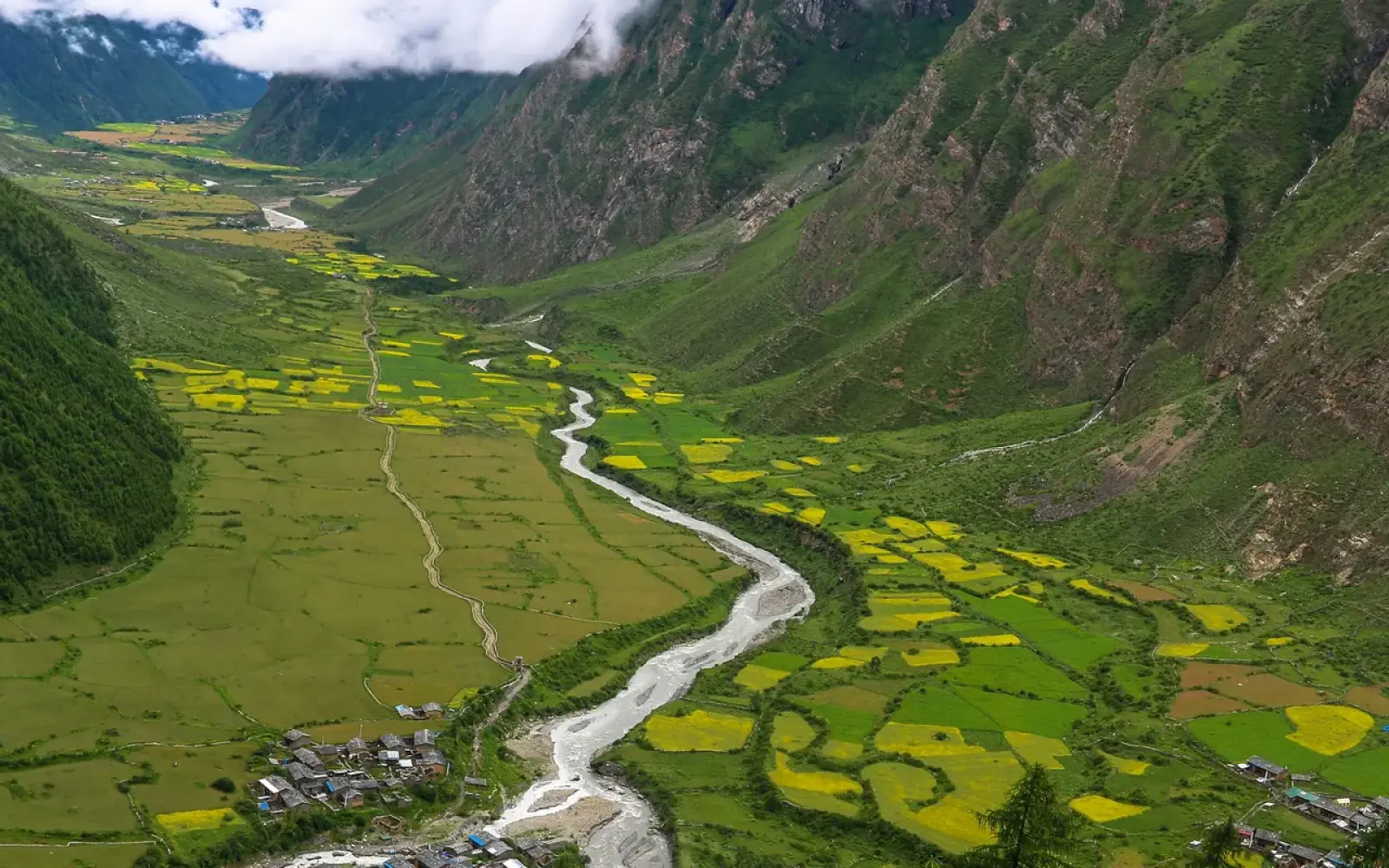
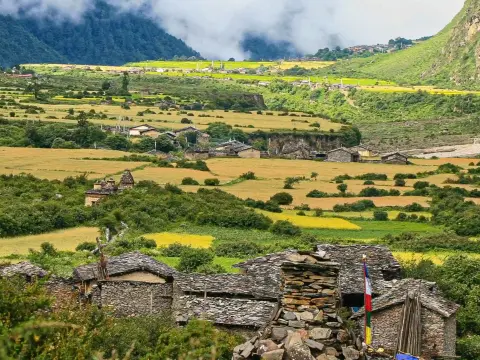
Tsum Valley is the homeland of the Tsumba, an Indigenous people of about 1,800 who live in 33 settlement clusters in northern Gorkha, close to the Tibetan border. Foreigners were not allowed into the valley from 1975 until 2008. Tsum Valley culture is a living one, not a set of sights, and a trekker meets it in a monastery, a nunnery, a cave linked to the Tibetan yogi Milarepa and a written community pledge of non-violence that people still keep.
That pledge is called Shagya. It is spelled Shyagya in most research and Shargya in some writing by Tsumba authors. In short, the community promised not to kill, hunt, trap or burn. It was declared around 1920, renewed several times, and written into municipal law in 2023.
This guide explains what you are looking at: Mu Gompa (a gompa, also spelled gomba, is a Tibetan Buddhist monastery or temple), Rachen Gompa, Milarepa's Cave, the idea of a beyul (a "hidden valley" in Tibetan Buddhist belief), and Shagya itself. It does not repeat the route, altitude or weather. Those have their own pages: the Tsum Valley trekking itinerary, the altitude guide and the weather guide.
How we label what we say. Much of what follows is belief or tradition, and some of it is disputed. We say which. A documented record is a written source or a named study. A tradition or belief is what the community or Buddhist teaching holds. We report it as such and do not present it as verified history. Where sources disagree on a date, we give each version and the source. We are a trekking company, not a community authority, so we lean on sources written or co-written by Tsumba people where we could find them, and we say when we could not confirm something.
Trek the Tsum Valley Trek
Discover the Tsum Valley trek, a remote Himalayan journey through a sacred, restricted valley. Explore the full itinerary, trail map, and package pricing before you book your adventure.
The four places at a glance
| Place | What it is | Elevation | On our 11-day standalone trek |
|---|
| Panago and Gurwa gompas | Two monasteries beside Chumling village | Chumling is 2,386 m | Yes. Day 4, in the afternoon |
| Milarepa's Cave | A meditation cave linked to Milarepa by tradition | Not confirmed | Yes. Day 6, a short stop |
| Rachen Gompa | A Buddhist nunnery | About 3,240 m | Yes. Day 6, between Chhekampar and Nile |
| Mu Gompa | The valley's largest monastery | About 3,700 m | Yes. Day 7, a day excursion from Nile |
The Tsum Valley Trek page is the source of record for what each departure includes.
Who Are the Tsumba People?
The Tsumba are the Indigenous people of Tsum Valley, and the valley is their traditional homeland. The Territories of Life report, written by Jailab Kumar Rai and Nima Lama, a Tsumba community leader, counts about 1,810 Tsumba in 529 households across 33 settlement clusters. The ICCA Consortium puts 11 settlements in Upper Tsum and 22 in Lower Tsum. The valley belongs to Tsum Nubri Rural Municipality.
Language. The Tsumba speak Tsumke, also called Tsumba. The Territories of Life report describes it as a dialect influenced by the Tibetan language. We did not find a linguistic study that classifies it, so we say no more than that.
Religion and identity. The Tsumba follow Tibetan Buddhism, and the valley has long ties across the border. That does not make them Tibetans, and it does not make them Nubri people. Nubri, the neighbouring valley on the main Manaslu Circuit, has its own identity. Our guide to Manaslu region culture sets out the difference.
Who decides things. Rai, Lama and Verschuuren, in a 2016 chapter on Tsum Valley in Asian Sacred Natural Sites, name three customary leadership roles, the Ghenchen, the Shyara and the Ghyange, and say they work alongside the lamas as the main institutions governing social and spiritual life. The valley also has community bodies such as the Tsum Welfare Committee and, since 2018, the Tsum Shyagya Conservation Committee. Since 1998 Tsum has been part of the Manaslu Conservation Area, which the National Trust for Nature Conservation (NTNC) manages.
Livelihoods and tourism. A 2004 Nepali Times feature described subsistence farming, cattle rearing and trade. Trekking tourism began after 2008. The Tsumba decided not to let outsiders buy land or run lodges and shops in the valley, according to Territories of Life and Rai and colleagues, so the lodges you stay in are Tsumba-run. Rai and colleagues also note that people working in tourism are mostly family members who are comparatively well off and well connected, and that food sold to visitors is mostly imported from Tibet, India and other parts of Nepal. The benefits are not evenly spread.
Not a culture frozen in place. Territories of Life lists the pressures the community itself names: road building (the report mentions a bulldozer in 2013), tourism growth, people leaving the valley with a loss of language, and climate change. The numbers show how small tourism still is. The report gives 236 foreign visitors in 2015, 476 in 2017 and 387 in 2019, then 27 in 2020. Rai and colleagues list possible effects of tourism that the community has to manage: more human pressure on the valley, uneven involvement in tourism, outside cultural influence and a loss of social cohesion. Visiting is not neutral, and the sections below on etiquette are part of how a visitor reduces the effect.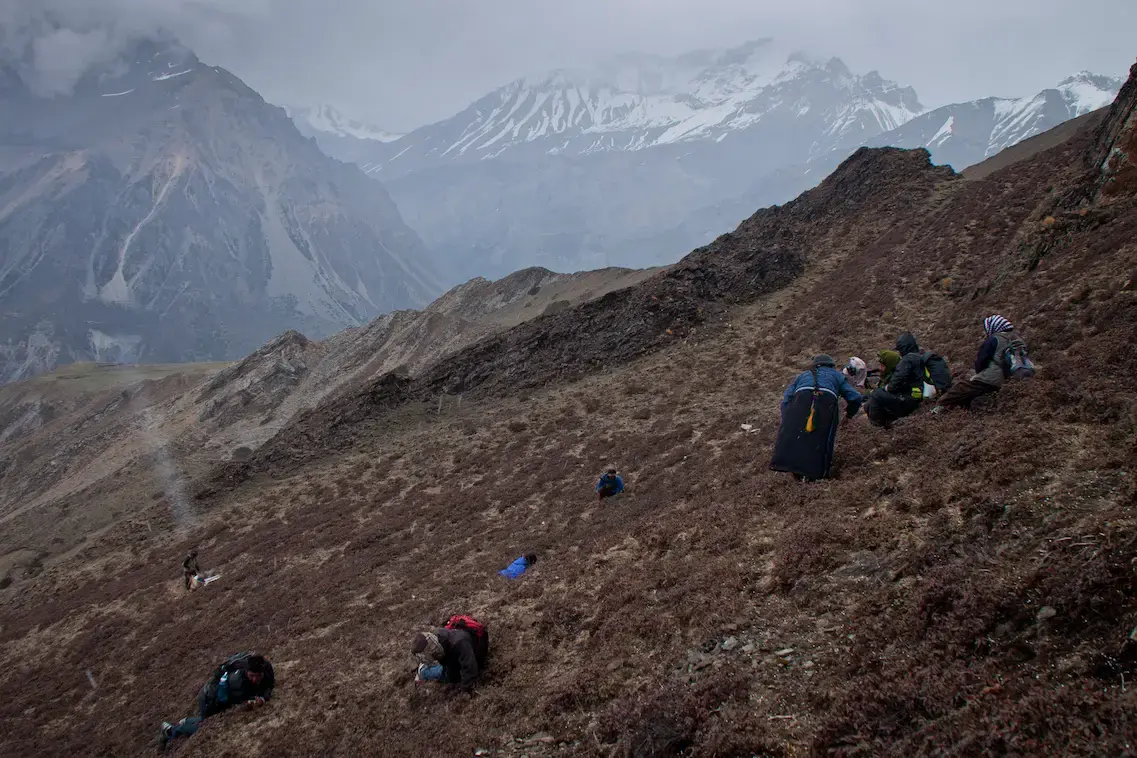
Photo: Local searching for Cordyceps on the slopes of Tsum Valley
The Shagya Non-Violence Tradition
Shagya is a collective pledge by the Tsumba not to harm living beings. It is customary law and a religious commitment at once. It is not a marketing slogan or a recent conservation campaign, and we do not use it as one. Here is what the sources say, in order.
What the word means and how it is spelled
The spellings we found are Shagya, Shyagya (Territories of Life, Rai and colleagues, our regional culture guide), Shyakya (a festival name used in Rai and colleagues and on the Tsum Welfare Committee's site) and Shargya (Pema Norbu Lama in the Nepali Times). Rai, Lama and Verschuuren translate Shyagya as "non-violence in Tsum language." Pema Norbu Lama, a research associate from Tsum Valley, writes in the Nepali Times that the term means commitments taken collectively by the people or community. The two readings fit together: one names the content, the other the way it was made. We found no linguistic source, so we treat Shagya as a Tsum term and use "non-violence" as the English gloss.
How it began
The documented date for the first declaration, in Upper Tsum, is 1920 in Territories of Life and the ICCA Consortium, and in the Tsum-authored Nepali Times piece. The Himalayan Times gives it as 1977 in the Nepali calendar. The NTNC board at Mu Gompa and the text of the Rai and colleagues chapter, as we could read it, say 1921. A 2023 article from the Rights and Resources Initiative says 1922 and ties the first commitment to Buddha Jayanti. The Nepali year 1977 runs from April 1920 to April 1921, so a calendar conversion may explain a gap of one year. That is our observation, and no source we read says it. We use 1920 and show the others.
Who made the commitment depends on whose account you read, and the accounts fit together. Pema Norbu Lama writes that the Tsumba invited a respected monk from Dragkar monastery in Tibet and also summoned the Bhutanese lama Drukpa Ngawang Palsang. The people asked Drukpa Rinpoche (rinpoche is a title of respect for a senior teacher, and Drukpa names the Bhutan-linked Drukpa Kagyu lineage) to stay in Tsum, and he led them to adopt a shared edict for peace and harmony with nature. Territories of Life and Rai and colleagues say the main lama, Serap Dorje Drukpa Rinpoche, proposed it, and Territories of Life describes the ceremony as a wang-pooja. The ICCA Consortium credits "the Tsumba people and their Lamas." Several operator pages treat Serap Dorje and Ngawang Palsang as one person. None of the stronger sources we read says so, so we call him Drukpa Rinpoche and give the name each source uses.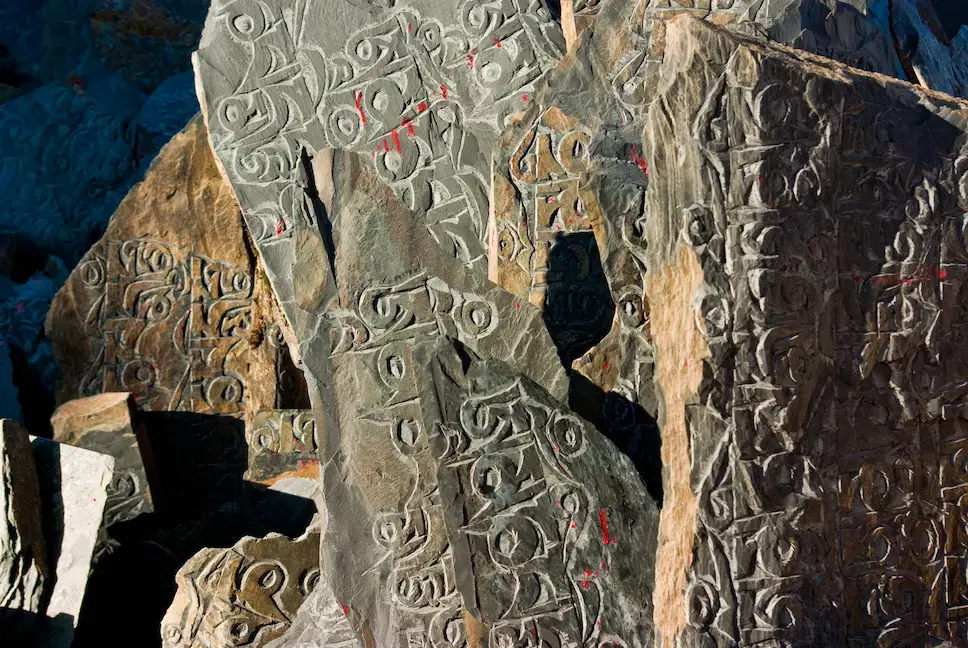
Photo: Om mani padme hum written on Mani stones
How it was recorded and renewed
Territories of Life reports that the declaration note was written in the Sambota script, signed collectively and became law. The commitment was renewed many times.
| Year | What happened | Source |
|---|
| 1920 (some sources say 1921 or 1922) | Upper Tsum declares non-violence | Territories of Life, ICCA, Nepali Times |
| 1939 | Reaffirmed at a gathering of lamas from all the gompas during Saka Dawa, the Buddhist holy month (see the festivals section) | Territories of Life |
| 1965, 1970, 1972, 1998 | Further reaffirmations | Territories of Life |
| 2008 | Upper Tsum boundaries re-marked under Nima Lama | Territories of Life |
| 2009 and 2012 | Shyagya festivals and public recommitments | Rai and colleagues, Territories of Life |
| 2012 | Lower Tsum declares itself a non-violence area, and 58 illegal guns are handed over. The Nepali Times piece records the then prime minister, Baburam Bhattarai, at the festival | Territories of Life, Nepali Times |
| 2018 | Tsum Shyagya Conservation Committee formed | Territories of Life |
| April 2023 | Centennial festival held after a pandemic delay. Tsum Nubri Rural Municipality adopts the Shyagya Tradition Preservation Act, 2023, a local gazette | Himalayan Times, RRI |
The ICCA Consortium described the planned centennial in 2020 as a four-day festival with a nature-worship ritual called Rilung thrisole, a Chewang prayer for good health, songs, dances and sports, the raising of sacred flags and poles, a march for world peace, and a collective signature on the commitments. The Himalayan Times says the 2023 act was issued to support the recognition, continuity, spread and protection of biological diversity in the area of non-violence.
Trek the Manaslu Circuit Trek
A remote and off-the-beaten-path Himalayan adventure in Nepal. The trek covers roughly 126 km (78.2 miles) and involves 5–7 hours of hiking per day through villages, forests, and the Larkya Pass
The seven principles, and why the lists differ
The best-supported list is the seven-point version in Rai, Lama and Verschuuren (2016), which Territories of Life repeats in almost the same words. The ICCA Consortium printed a different seven-point wording in 2020.
| # | Rai, Lama and Verschuuren (2016), Territories of Life (2021) | ICCA Consortium (2020) |
|---|
| 1 | Not to kill any animals | Hunting is forbidden |
| 2 | Not to hunt | Setting traps is forbidden |
| 3 | Not to collect honey | Harvesting honey is forbidden |
| 4 | Not to sell animals to butchers | The sale of livestock is forbidden |
| 5 | Not to trap animals or birds | Violence against calves of Himalayan cows and other aquatic and terrestrial species is forbidden |
| 6 | Not to trade meat | Restrictions on the import and export of animals for meat will be respected |
| 7 | Not to burn forests | Burning in forests and mountains is banned |
Both lists cover hunting, traps, honey, the sale of animals, meat and forest burning. They differ in wording and emphasis. The Nepali Times piece lists four commitments: no slaughtering of animals (or humans), no setting traps, no bee-keeping, and no selling of domestic animals for commercial purposes, mostly to Tibet and the lower valleys. The author adds that people who break the commitments pay a fine, and that for an extreme violation a person can be sent out of the valley. Some operator pages say six rules. We found no source that explains the differences, so we do not merge them into one list. The community's own wording should govern, and a visitor does not need the exact count to follow the commitments.
Why Tsum is called a non-violence area
The sources tie the pledge to Buddhist teaching on non-harm. Territories of Life says the declaration is guided by Buddhist philosophy. Rai and colleagues write that killing, slaughtering, hunting and trading animals are considered sinful among the Tsumba. The Territories of Life report also quotes this statement: "We feel proud to have been born and grown up in such a historically valuable place of the world where nature-culture conservation is sustaining through beliefs and practices based on the culture of non-violence or locally called Shyagya tradition."
How it is kept today
Pema Norbu Lama writes that a Shargya committee teaches younger people and patrols the area against hunting, animal slaughter, tree felling and wildfires. Territories of Life names the Tsum Shyagya Conservation Committee. Since 2023 there is a municipal act as well.
On wildlife, Rai and colleagues cite a 2008 ICIMOD survey that recorded 33 mammal species, more than 110 bird species, 11 butterfly species and three reptile species in the valley. That is a list of what has been recorded. It is not a measurement of what the pledge has achieved, and we found no study that credits a change in wildlife to Shagya. The same sources are plain that pressures remain, from roads to tourism to climate. Shagya does not mean that the valley has no environmental problems.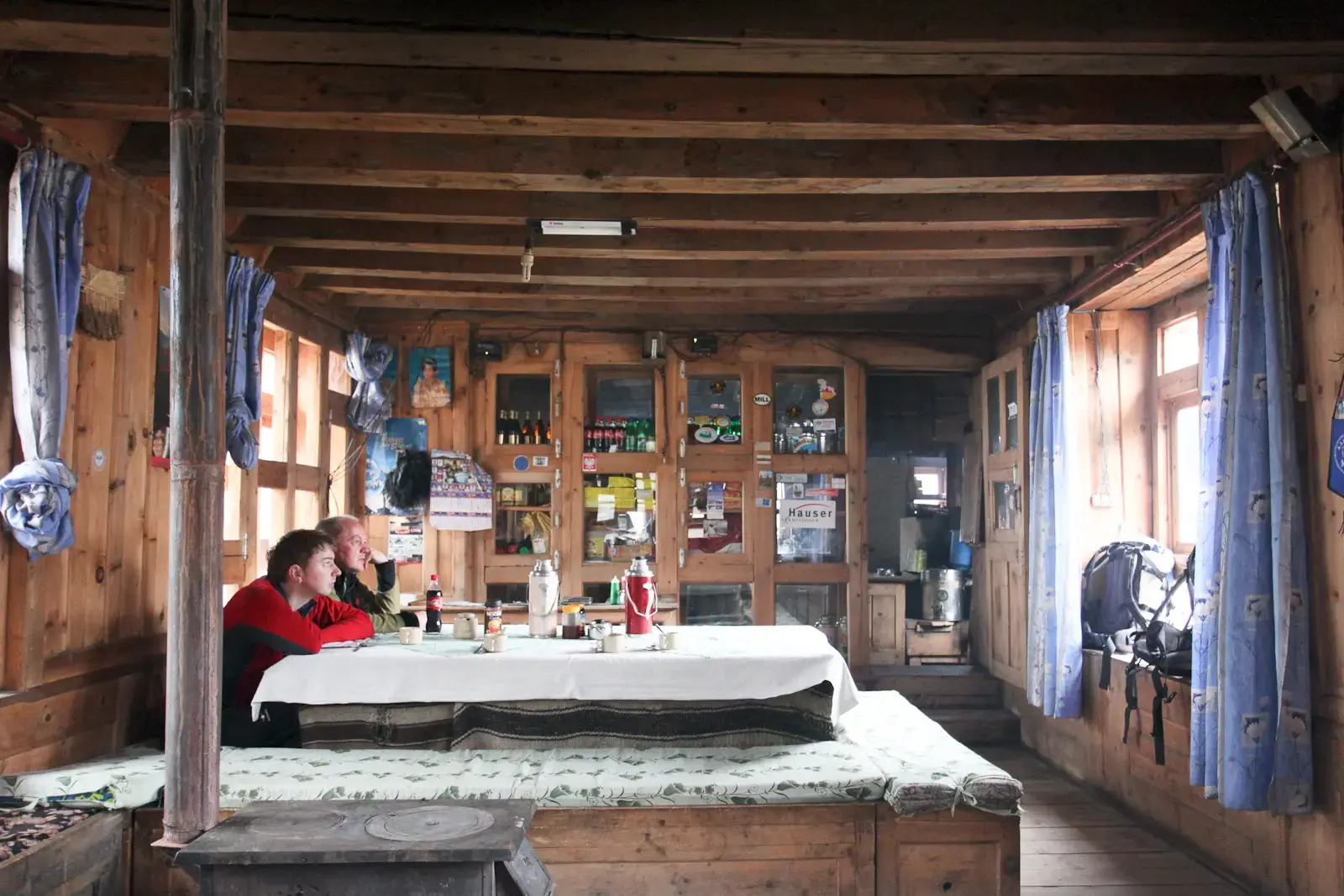
Photo: Tourist sitting in a common dinning area
What it means for you
The rule that reaches visitors directly is NTNC's request, posted at Mu Gompa, that visitors do not bring meat or animal products into the upper valley or the monastery. Do not hunt, trap or collect honey, and ask your guide how the commitments apply in each village, because practice can differ from one village to the next.
Mu Gompa: An Important Monastic Centre
Mu Gompa (also written Mu Gumba) is the largest and most significant monastery in Tsum Valley, according to our trip page. A board and information sheet from the NTNC, which manages the conservation area, put it at about 3,700 m. It stands above Nile, the last village before the Tibetan border, and it is reached on a day excursion from there.
When it was founded: unsettled
The NTNC document says the monastery was established in the late 19th century, around 1895, by Buddhist monks and Tibetan lamas. Elsewhere in the same document it calls the monastery 150 years old. Those two figures do not match, so we treat 1895 as approximate.
Other sources name a founder. FPMT and Buddhistdoor say that Mu Gompa and Rachen Gompa were both established by Drukpa Rinpoche. The abbot of Rachen, Geshe Tenzin Nyima, says the present Drukpa Rinpoche is the reincarnation of the lama who founded both. Operator pages and social posts give 1895 and a founder named Serab Dorje Drukpa Rinpoche or Ngawang Palsang. We have not seen a primary record for any of these dates.
Which tradition
NTNC describes the monastery as Gelugpa, the school associated with the Dalai Lamas. The founder's title, Drukpa, comes from the Drukpa Kagyu school, and some operator pages say Nyingma or Kagyu. A University of Bern doctoral project description says the second Drukpa Rinpoche, Ngawang Khenrab, offered Rachen and the nearby Mu monastery to Kopan Monastery and so to the FPMT, a Gelug-linked organisation. A gompa founded by a Drukpa lama and now overseen through Kopan could be described either way. That is our reading, not a documented explanation, and we do not know how the monastery describes itself today.
What is there
The NTNC document lists a statue of Avalokiteshvara, the bodhisattva of compassion, which it describes as 125 years old; images of Guru Rinpoche (Padmasambhava, the teacher credited with bringing Buddhism to Tibet); the Kangyur, the Tibetan collection of the Buddha's teachings; woodblocks used to print scriptures; and thangkas (painted scrolls) and murals. Our trip page describes monks performing daily rituals and intricate murals. We cannot tell you which rooms are open on a given day. The monastery decides that.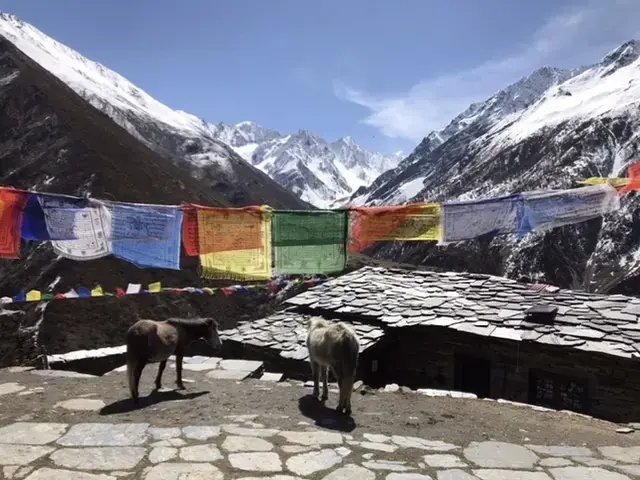
Photo: Donkeys at Mu Gompa
FPMT's account of a pilgrimage in May 2018 found the resident monks on their annual Saka Dawa nyung nä retreat, a practice of fasting and prayer. Territories of Life records that lamas from all the gompas met at Saka Dawa in 1939 to reaffirm Shagya. The monasteries are part of how the community holds its commitments, as well as places of worship and study.
On the route
Our Tsum Valley Trek page makes Mu Gompa a day excursion on Day 7, about 340 m up from Nile. Depending on pace and weather, the group either returns to Nile for the night or, if it is strong, stays at the basic guest house near the gompa. The guide makes the final call. Snow can cover the upper trail in winter and early spring, and the guide decides whether to go up, so the month you walk matters. Our best-time guide covers the months. The altitude guide covers what 3,700 m means for the body. The NTNC board asks visitors to walk clockwise around the monastery, remove hats and shoes, ask before taking photographs, and not bring meat or animal products. Our trip page says to ask before photographing the monks or the interior, and to leave a small donation.
Rachen Gompa: The Buddhist Nunnery
Rachen Gompa is a nunnery, a Tibetan Buddhist community where nuns live, study and pray. A monastery houses monks. Gompa is the general word for both. Rachen lies at about 3,240 m, between Chhekampar and Nile, and our Day 6 walk passes it.
When it was founded: two dates
The University of Bern project description says Rachen was founded in 1905 by the Bhutanese lama Drukpa Rinpoche Ngawang Palsang. Buddhistdoor's 2024 feature says it was established 88 years earlier, which is 1936, by the same lama. Both name the same founder, and we cannot choose between the dates. "Early 20th century" is safe. Operator pages repeat one date or the other without saying where it comes from.
Who lives and studies there
The abbot is Geshe Tenzin Nyima. In an interview with Buddhistdoor in 2024 he said that the nunnery was offered to Lama Zopa Rinpoche of Kopan Monastery, who sent him to Rachen after he finished his geshe degree, an advanced scholarly qualification in Tibetan Buddhism, and that he had lived in Tsum for about 12 years. The Buddhistdoor author reported about 36 nuns, from children to the very elderly, and wrote that their lives centre on studying Tibetan Buddhism and spiritual practice, with secular schooling for the youngest. He describes the nunnery as an opportunity for women of Tsum to dedicate themselves to study and practice as an alternative to their traditional roles as wives and mothers. Another operator page gives about 80 nuns in the main season. Numbers vary by source and by time of year, so we give none.
The abbot describes the nunnery's role in the community as regular pujas (ritual prayers), social services and helping local people understand Buddhist teaching. He says lay practitioners from the community will be invited each year for foundational teachings. A heritage restoration of the shrine room statues, done with help from the local lay community, was under way at the time of the interview.
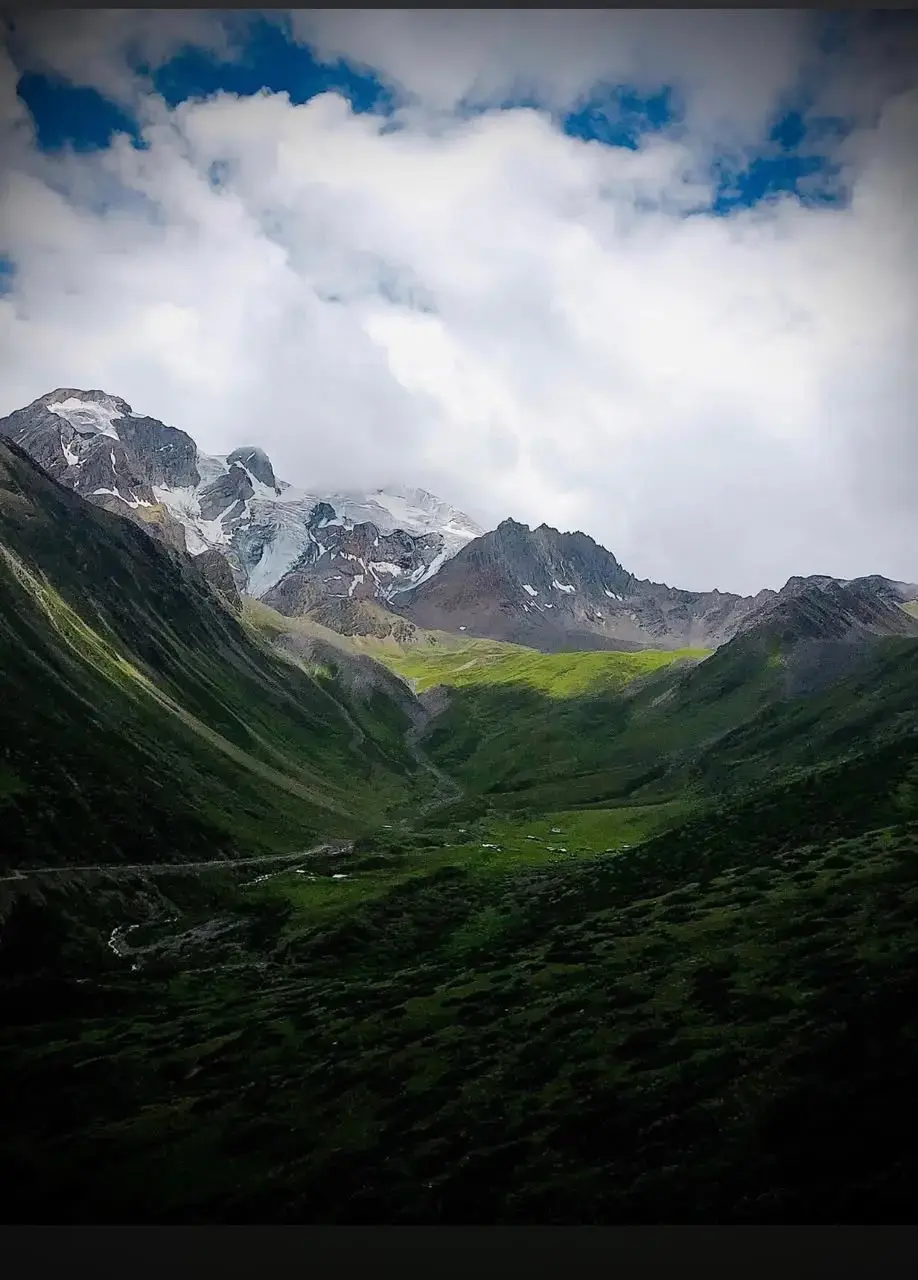
Photo: Tsum Valley during Monsoon
Rachen and Shagya
We found no source saying that Rachen holds a particular role in the Shagya pledge. The link we can document runs through the lineage. The lama named as founder is the Drukpa Rinpoche who proposed the pledge in the account of Territories of Life, and a photograph caption in the Nepali Times shows a signing ceremony at the 2012 festival by his reincarnation.
Visiting
Our itinerary guide and trip page place Rachen on Day 6, and the trip page describes it as quiet, welcoming and active, and asks visitors to be respectful of the nuns' routine and to ask before taking photographs. The nunnery is a home and a place of study. It is not an exhibit. Follow the nuns' instructions, do not ask to see living quarters, and keep your voice low. We have not confirmed visiting hours, so ask your guide on the day.
Milarepa's Cave: A Sacred Meditation Site
Who Milarepa was
Milarepa was a Tibetan yogi and poet of the 11th and 12th centuries, one of the best-loved figures in Tibetan Buddhism and especially in the Kagyu school. The dates usually given, 1052 to 1135, come from his best-known biography, written by Tsangnyon Heruka (1452 to 1507) centuries after his death. The Treasury of Lives notes that "very little of his life is known with any historical certainty," and that some Tibetan historians place his birth in 1028 or earlier.
According to the biography, he began as a young man who used black magic to cause deaths, repented, trained under the translator Marpa, and was told to spend the rest of his life meditating in solitary mountain retreats. He taught through spontaneous songs, and he is revered as someone who reached enlightenment in a single lifetime. No source we read connects his story to Shagya, and we do not draw that link.
Why caves are sacred
Retreat places are central to his memory. The Treasury of Lives records that he travelled widely in the Himalayan borderlands of southern Tibet and northern Nepal, and that dozens of places associated with his life are now pilgrimage sites and retreat centres. It also notes that many of his retreat places are said to have been used earlier by Padmasambhava. A place where a master is said to have meditated is treated as blessed. That is a statement of faith, and it does not depend on archaeology.
The cave in Tsum Valley
Our trip page says the saint is "said to have meditated" at the cave, and Buddhistdoor's author calls it a cave where Milarepa is believed to have meditated. Both are the language of tradition. Most sources use the name Piren Phu (also written Pire Phu), which one operator translates as "Pigeon Cave," and place it near the village of Burgi, also written Burji, on the stretch between Chhekampar and Nile. We have not confirmed the exact location with the community.
FPMT's 2018 pilgrimage report calls it the "Cave of the Doves." It describes a small meditation gompa, a small cave with a footprint on a rock, and another small gompa, and it passes on a tradition about doves that it identifies with dakinis, female enlightened beings in Vajrayana Buddhism. An operator that writes about the cave states that there is no independent proof that Milarepa was at this exact place. That is a fair statement of what is known. Religious belief does not need independent proof, but a guide should say which kind of claim it is making.
Do not merge the caves
Several places in the Himalaya are linked to Milarepa, including caves on other trekking routes. A cave called Milarepa's in one valley is not the cave in another, and we have not found a verified second Milarepa cave in Tsum or Nubri. Use the local name, and be wary of pages that give the Tsum cave a name from somewhere else.
What to expect
Our trip page calls it "a short stop with real weight" and suggests you take a few minutes to sit and look around before moving on. The site is small. Do not climb on the rock or touch the footprint, and ask your guide before photographing any shrine.
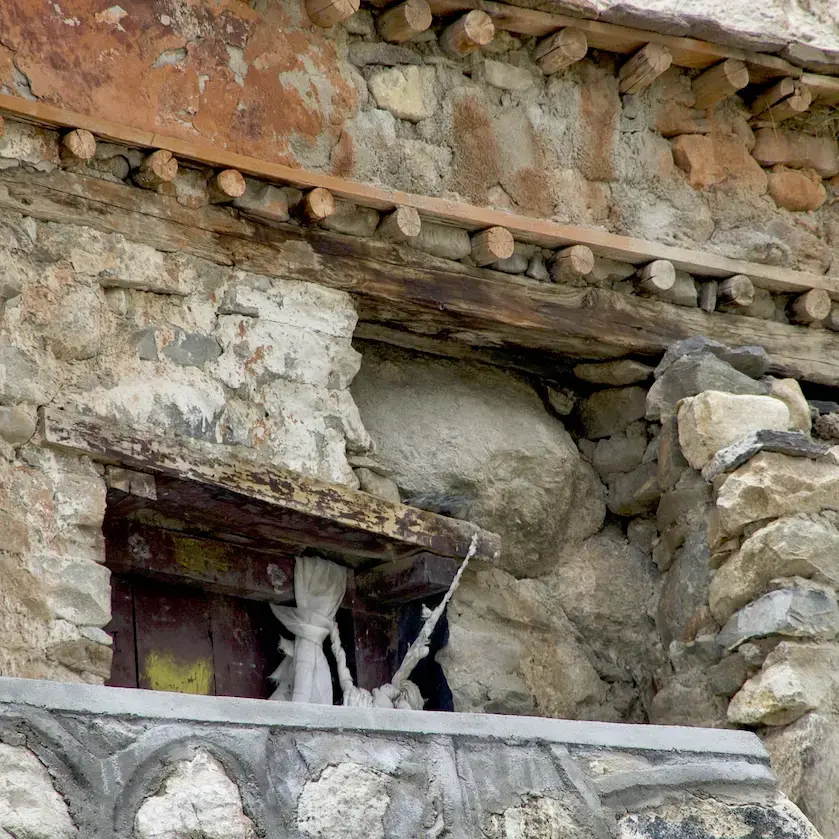
Photo: One of many Milarepa caves
Beyul Kyimolung: The Sacred Hidden Valley
A beyul is, in Tibetan Buddhist belief, a valley that Guru Rinpoche (Padmasambhava), the eighth-century teacher credited with establishing Buddhism in Tibet, blessed and concealed as a refuge for future times of hardship. A later teacher called a tertön is believed to reveal it. The nekhor.org introduction says beyuls are often said to number 108, that their locations are debated, and that their reality is "neither entirely psychological nor geographical." Rai and colleagues describe beyuls as havens of peace, prosperity and spirituality, and a sacred refuge for believers.
Tsum as a beyul
Territories of Life and Rai and colleagues describe Tsum as a beyul created by Guru Rinpoche. That is the community's belief, and we report it as belief. Our trip page says tradition holds that Guru Rinpoche meditated in the valley in the eighth century. Rai and colleagues and FPMT say that in the 17th century Tsum became known as Beyul Kyimolung, and the 2004 Nepali Times feature translates Kyimolung as "the valley of happiness." The trip page's "Hidden Valley of Happiness" is that name in English. We found no historical record for the 17th-century naming beyond these retellings.
The name is not only Tsum's
Lotsawa House publishes Tulku Urgyen Rinpoche's In Praise of Kyimolung, translated by Samye Translations in 2018. Its notes tie the verses to the sacred places of Nubri, with Manaslu as the protector mountain, and say the people of Nubri requested the text. So Kyimolung is used for Nubri, for Tsum or for both, depending on the source. Do not read the name as a map line.
Sacred places and conservation
When a valley is held to be sacred, belief shapes behaviour in it. Research that cites Rai and colleagues reports that climbing the surrounding peaks is forbidden because they are the home of protector deities, and that felling trees near the old monasteries is taboo because the forests are home to village deities. Rai and colleagues argue that Tsum should be recognised as a sacred natural site in national conservation planning, and they note that customary institutions lacked legal recognition. The 2023 municipal act gives Shagya a local legal basis. It does not make belief and conservation the same thing, and the two do not always agree. We report both and leave the argument to the people who live there.
Mani Walls, Chortens and Other Cultural Landmarks
You will pass more of these than you will pass gompas, so it helps to know what they are.
- Mani wall. A long wall of stones carved with prayers, most often the mantra Om Mani Padme Hum, which is associated with Avalokiteshvara. People add carved stones over many years, often as an offering.
- Chorten. The Tibetan form of a stupa, a monument that holds sacred relics or texts. Chortens stand at village edges, on ridges and beside trails.
- Kani. A gateway chorten that you walk through, usually at the entrance to a village.
- Prayer flags. Cloth flags printed with prayers. In Buddhist belief the wind carries the prayers outward.
- Prayer wheel. A cylinder that holds written mantras. Turning it clockwise is a form of prayer.
The custom is to pass these on your left, walking clockwise. The NTNC board at Mu Gompa asks for this at the monastery, and our trip page asks visitors to walk clockwise around mani walls, stupas and prayer wheels. Do not climb on, sit on, step over or remove stones.
Our trip page places mani walls and chortens around Chhekampar, where you spend Night 5, and names the Panago and Gurwa gompas at Chumling, with stone-paved lanes and prayer flags in the village. We did not find an independent source that describes the two Chumling gompas in detail, so we say only what our trip page says: two monasteries within an easy walk, where you should ask before photographing monks or interiors.
We have left out other monasteries in the wider Manaslu region. This guide covers what a standalone Tsum Valley trek passes.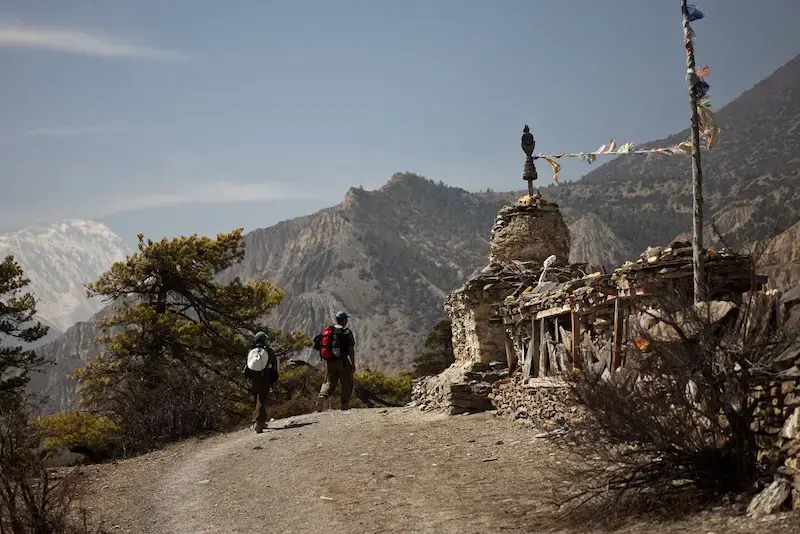
Photo: Trekkers walking past Mani Walls
Festivals and Everyday Life in Tsum Valley
What is documented
The best-documented gatherings are the Shagya festivals of 2009, 2012 and 2023, public recommitments of the pledge that drew lamas and, at the larger ones, senior officials. The Nepali Times piece records the then prime minister, Baburam Bhattarai, at the 2012 festival, and the Rights and Resources Initiative reports that Prime Minister Dahal opened the 2023 festival on 19 April. These are community events. They are not organised for visitors.
Saka Dawa falls in the fourth month of the Tibetan lunar calendar, usually in May or June, and marks the Buddha's birth, enlightenment and passing. FPMT found the monks at Mu on their Saka Dawa retreat in 2018, and Territories of Life records the lamas' gathering of 1939. Buddhistdoor's team visited Rachen during the Tibetan new year, Losar, in 2024.
What we cannot confirm
Operator pages name other Tsum celebrations, including Dumje and Dhachyang, which some describe as an archery festival. None of the stronger sources we read gives Tsum-specific dates or descriptions for them, so we repeat none here. Our guide to festivals in the Manaslu region covers the wider region.
Can you plan to see one?
Not reliably. Tibetan festival dates follow the lunar calendar, so they move against the Gregorian calendar every year, and some events are community or religious occasions where visitors may not be welcome. Our standard departures are not built around them. If seeing a festival matters to you, tell us early. A private departure lets us choose dates, but we still cannot promise an invitation.
Everyday life
The 2004 Nepali Times feature described farming, cattle rearing and trade, and tourism is now part of the local economy too, as the section on the Tsumba above sets out. We did not find a source on the seasonal calendar of farming, grazing and trade that we could cite, so we do not describe one. What a trekker will see is a working valley: lodges run by local families, a monastery and a nunnery in daily use, and a pledge that shapes how people treat animals and forest. Treat it as someone's home, because it is.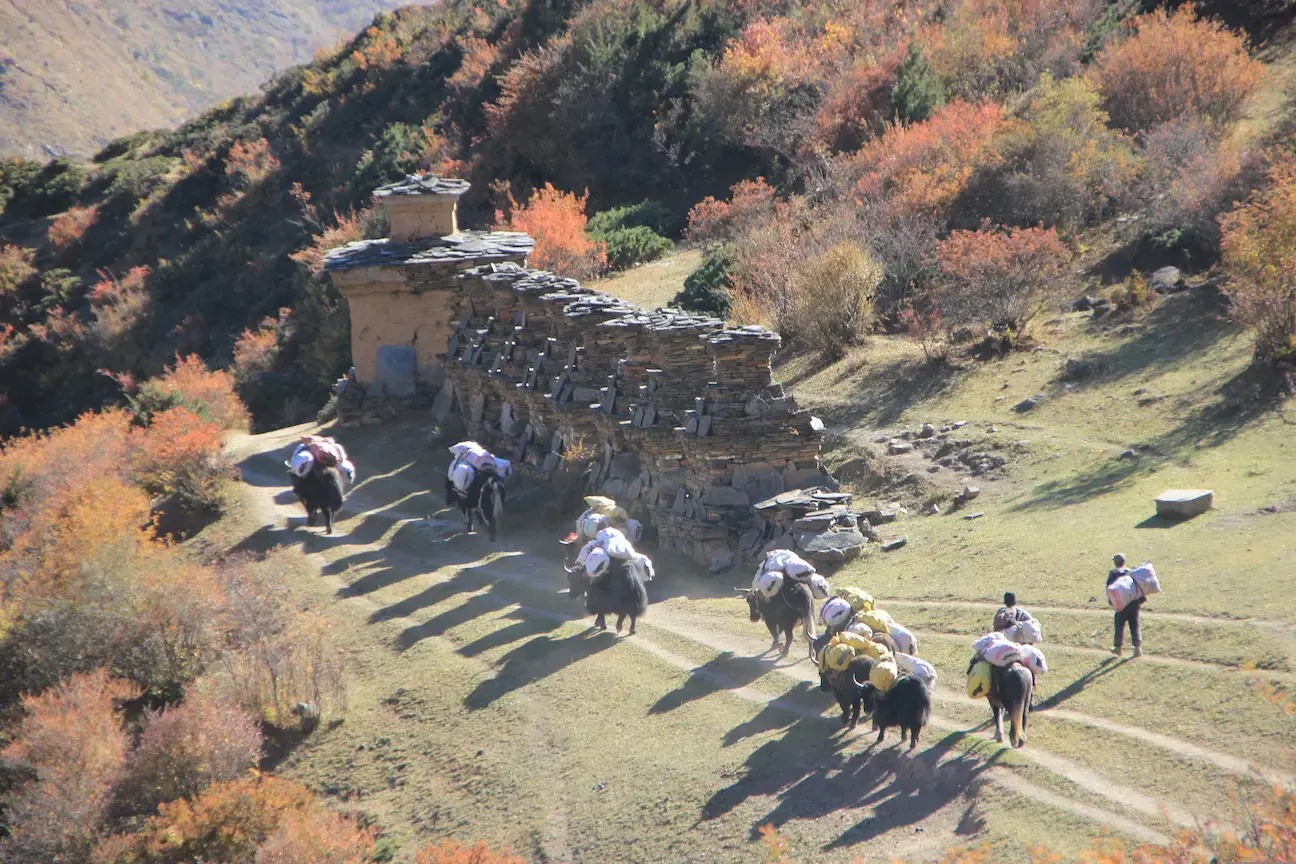
Photo: Caravan of Yaks leaving Chhekampar village
How to Visit Monasteries and Respect Local Customs
Rules differ between villages and monasteries, and the people who live and practise there decide them. Follow your guide and your hosts before anything written here.
Ask before you go in. Do not assume a gompa is open. Shrine rooms open at times set by the monks or nuns, and some rooms are private. Your guide will ask on your behalf. Our trip page asks visitors to leave a small donation at gompas.
Dress and behave. The NTNC board at Mu Gompa asks visitors to remove hats and shoes. Dress modestly, which usually means covering shoulders and knees. Keep your voice low and keep your distance during prayer or ceremony.
Move clockwise. Pass mani walls, chortens, prayer wheels and monasteries on your left.
Do not touch sacred objects such as statues, scriptures, thangkas and ritual instruments unless you have been invited to. Our regional culture guide has more on hands, feet and sacred objects.
Photography
| Situation | What to do |
|---|
| Mani walls, chortens, the outside of gompas, village lanes, views | Usually fine. Ask before photographing people, including children |
| Monks and nuns | Ask first and accept a no. Our trip page and the NTNC board both say to ask |
| Shrine rooms and interiors | Ask before photographing the interior. Some are not open to photographs. Never use flash |
| Prayer ceremonies and festivals | Do not photograph unless you have been told you may. Do not hold a phone up at face level |
| Statues, thangkas and scriptures | Ask first, and do not touch |
| Living quarters, kitchens and other private areas | Do not photograph |
Food and the non-violence pledge
The NTNC board at Mu Gompa asks visitors not to bring meat or animal products into the upper valley or the monastery. Shagya also restricts hunting and the meat trade, so ask your guide what applies in each village.
Support the valley and protect it
The lodges are Tsumba-run, so staying in them is one direct way money reaches local households, although the benefits are uneven, as noted above. Carry your plastic and batteries out. Ask your guide before giving gifts or money, because what the community prefers matters more than good intentions. Our accommodation guide covers what the lodges offer.
Trek the Everest Base Camp Heli Tour with Breakfast at Hotel Everest View
The Everest Helicopter Tour offers stunning aerial views of Mount Everest and the surrounding Himalayan ranges in a single unforgettable flight.
Cultural Sites Along the Tsum Valley Trek
This is what the current 11-day standalone Tsum Valley Trek includes, taken from our trip page. The full day-by-day route is in our trekking itinerary guide.
| Day | Where | Cultural stop | How it is included |
|---|
| 4 | Lokpa to Chumling (2,386 m) | Panago and Gurwa gompas | Afternoon at Chumling, two monasteries within an easy walk of the village |
| 5 | Chumling to Chhekampar (3,031 m) | Mani walls and chortens | In and around Chhekampar. No separate visit |
| 6 | Chhekampar to Nile (3,361 m). Our page gives 5 to 6 hours of walking and +330 m | Milarepa's Cave, then Rachen Gompa | Both on the way. The cave is described as a short stop |
| 7 | Nile to Mu Gompa (3,700 m) and back | Mu Gompa | A day excursion from Nile. The group returns to Nile for the night, or stays at the basic guest house near the gompa if it is strong. The guide makes the final call |
What is fixed and what is optional. The Day 4 gompas, the Day 6 stops and the Day 7 excursion are all part of the published itinerary. The optional element is where you sleep on Day 7. In winter and early spring, when snow can cover the upper trail, the guide decides whether the group goes up to Mu Gompa at all.
Is there enough time? The Day 6 stops are short, and we do not publish how long a group stays at each. Mu Gompa is a full excursion. If you want longer at Rachen or at the cave, tell us before you book. A private departure can be built with extra time, and the fixed departures follow the published itinerary. Both are on the Tsum Valley Trek page, with current dates, prices and inclusions. If you are travelling alone, our guide to joining a group trek as a solo traveller sets out the options, and Plan My Trip is the place to ask for private dates.
What this route does not include. It is not timed around Shagya festivals, and it does not include the Larkya La crossing or any stop on the combined trek. The combined route is a separate trip, described on the Tsum Valley with Manaslu Circuit page and in our comparison of the Manaslu Circuit with and without Tsum Valley.
Check conditions. Trail conditions after the October 2026 Budhi Gandaki flood are covered in our trail-status article, so read it before you plan. For what Day 7 asks of you, see the altitude guide and the difficulty guide.
Frequently Asked Questions
1. What is special about Tsum Valley's culture?
It is the homeland of the Tsumba, an Indigenous people with their own language and a Tibetan Buddhist culture. The valley holds a community pledge of non-violence, Shagya, first declared around 1920 and made a municipal act in 2023. It was closed to foreigners from 1975 to 2008, and a monastery, a nunnery and a cave linked to Milarepa lie along the trekking route.
2. Who are the Tsumba people?
They are the Indigenous people of Tsum Valley, about 1,810 people in 529 households according to Territories of Life (2021). They speak Tsumke, which Territories of Life describes as a dialect influenced by Tibetan, follow Tibetan Buddhism, and are guided by lamas and customary leaders as well as local government. They are distinct from the people of neighbouring Nubri.
3. What is the Shagya or Shyagya tradition?
It is a collective pledge by the Tsumba not to harm living beings, backed by fines and, for serious breaches, exile. It is also spelled Shyagya, Shyakya and Shargya. It was declared in Upper Tsum around 1920, extended to Lower Tsum in 2012 and given a municipal act in 2023.
4. Why is Tsum Valley known as a non-violence area?
Because the community declared it one. The pledge forbids killing animals, hunting, trapping and burning forests, among other things, and the sources link it to Buddhist teaching on non-harm. It has been renewed many times, in 1939, 2012 and 2023, among other years.
5. What are the seven principles of Shagya?
The best-supported list, from Rai, Lama and Verschuuren (2016), is: not to kill any animals, not to hunt, not to collect honey, not to sell animals to butchers, not to trap animals or birds, not to trade meat, and not to burn forests. The ICCA Consortium prints a different seven-point wording, and other writers give four or six. We show them side by side above and do not merge them.
6. What is Mu Gompa famous for?
Our trip page calls it the largest and most significant monastery in the valley. It stands at about 3,700 m, and NTNC lists a statue of Avalokiteshvara, images of Guru Rinpoche, the Kangyur scriptures, printing woodblocks, thangkas and murals. The founding date is unsettled: about 1895 by NTNC's account.
7. Is Rachen Gompa a monastery or a nunnery?
A nunnery. Nuns live, study and pray there, and it stands at about 3,240 m on the Day 6 route. Sources give its founding as 1905 or 1936, both by Drukpa Rinpoche.
8. Who was Milarepa?
A Tibetan yogi and poet whose traditional dates are 1052 to 1135, honoured especially in the Kagyu school for his meditation and his songs. His life is known mainly from a biography written centuries later, and the Treasury of Lives says very little is known about him with historical certainty.
9. Where is Milarepa's cave in Tsum Valley?
Most sources place it at Piren Phu, near the village of Burgi, on the walk between Chhekampar and Nile. It is our Day 6 stop. That Milarepa meditated there is tradition, and a source that describes the site says there is no independent proof. We have not confirmed the exact location with the community.
10. What does Beyul Kyimolung mean?
A beyul is a hidden valley that, in Tibetan Buddhist belief, Guru Rinpoche concealed as a refuge. Kyimolung is given as "the valley of happiness." Tradition says Tsum became known as Kyimolung in the 17th century, and the name is also used for Nubri.
11. Can tourists visit monasteries in Tsum Valley?
Yes, where and when the community allows it. Our standard trek visits the Panago and Gurwa gompas, Rachen and Mu. Access depends on the day and on the monks and nuns, some rooms are closed, and visitors should ask first and leave a small donation.
12. Are visitors allowed to take photographs inside monasteries?
Not by default. The NTNC board at Mu Gompa and our trip page both say to ask first. Some interiors do not allow photographs. Do not use flash, and do not photograph ceremonies unless you are told you may.
13. What cultural customs should trekkers respect?
Walk clockwise around mani walls, chortens and monasteries. Remove hats and shoes at monasteries, dress modestly, and keep quiet during prayer. Do not touch sacred objects. NTNC asks visitors not to bring meat or animal products into the upper valley or Mu Gompa. Ask before photographing people.
14. Can visitors experience local festivals during the Tsum Valley Trek?
Not reliably. Dates follow the lunar calendar and are set locally, our standard departures are not planned around them, and some are community occasions where visitors may not be welcome. Tell us early if a festival matters to you.
15. Is Tsum Valley culturally different from the main Manaslu Circuit?
Yes. The main Manaslu Circuit Trek follows the Budhi Gandaki through Nubri, and Tsum is a separate valley with its own people, language and customs. On our Tsum route, the shared stretch ends at Ekle Bhatti on Day 3. Our regional culture guide sets out the differences.
Sources
Where a statement is belief or tradition, the article says so. Dates and figures come from the sources below, read between 12 and 18 November 2026.
- Rai, Lama and Verschuuren (2016). Sacred Tsum Valley: improving biodiversity conservation with lessons for effective management of protected areas in Nepal. In Asian Sacred Natural Sites, Routledge, pp. 121 to 138.
- Rai, J. K. and Lama, N. (2021). Tsum Valley, Nepal. Territories of Life report.
- Thing, S. J., with Nima Lama and Jailab Rai (2020). 100 years of declaring non-violence in the Tsumba Territory of Life. ICCA Consortium.
- Lama, P. N. Do no harm. Nepali Times.
- Himalayan News Service (15 May 2023). Sacred Tsum Valley promulgates non-violence charter. The Himalayan Times.
- Rights and Resources Initiative (24 May 2023). Blog post on the 2023 Shagya festival.
- NTNC. Mu Gumba (information sheet).
- University of Bern. Doctoral project description, Buddhism in Tsum (German, undated).
- Buddhistdoor Global (2024). Buddhism in the Hidden Valley, Part 1, Part 4 and Part 5. Part 1 is by Craig Lewis (19 January 2024).
- Parisi-Smith, N. (31 October 2018). Pilgrimage to the hidden valley of Tsum, Nepal. FPMT.
- Priesner, S. (18 June 2004). Kyimolung, the blessed land. Nepali Times.
- Quintman, A. Milarepa. Treasury of Lives.
- Tulku Urgyen Rinpoche (translated by Samye Translations, 2018). In Praise of Kyimolung. Lotsawa House.
- Hidden valleys: introduction. nekhor.org.
- Milarepa's Cave in Tsum Valley. Himalayan Masters (a trekking operator, used only for the cave's name and location).