Quick answer: Guided trekking is now the standard way international visitors experience Nepal's major Himalayan routes — not just by preference, but by regulation. Since April 1, 2023, Nepal's Tourism Board and the Trekking Agencies' Association of Nepal (TAAN) have required a licensed guide on almost every trekking route that runs through a national park or conservation area, including Everest, Annapurna, Langtang, Manaslu, and Kanchenjunga. A handful of short, low-altitude walks outside protected areas — day hikes around Kathmandu or Pokhara like Nagarkot or Dhulikhel — fall outside the rule. Everywhere else, the question isn't really "do I need a guide," it's "what does a good one actually do, what will it cost, and how do I pick a company that won't let me down." That's what this guide covers.
A guide's job goes well past knowing the trail. On a properly run trek, a guide is handling route decisions, permit paperwork, altitude pacing, accommodation, weather calls, and — if something goes wrong — the first response and the coordination that follows. None of that is guaranteed just because a trek is technically "guided." The regulation sets a floor. The quality of the guide and the company behind them is what actually determines whether your trek goes well.
What Does Guided Trekking in Nepal Actually Mean?
"Guided trekking" covers more than the person walking next to you on the trail. A properly organized guided trek has three phases, and what's included in each varies by operator and package — always check before you book.
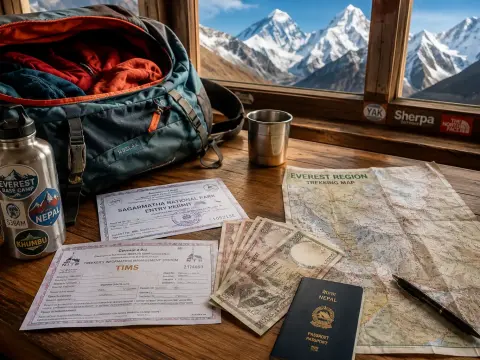
Before the trek, a trekking company should be handling itinerary planning around your fitness and available time, permit applications (national park entry, conservation area permits, restricted-area permits, TIMS/e-TIMS where applicable), domestic transport or flight bookings to the trailhead, matching you with a guide who actually works that specific region, and a pre-trek briefing on what to expect, what to pack, and what the acclimatization plan looks like.
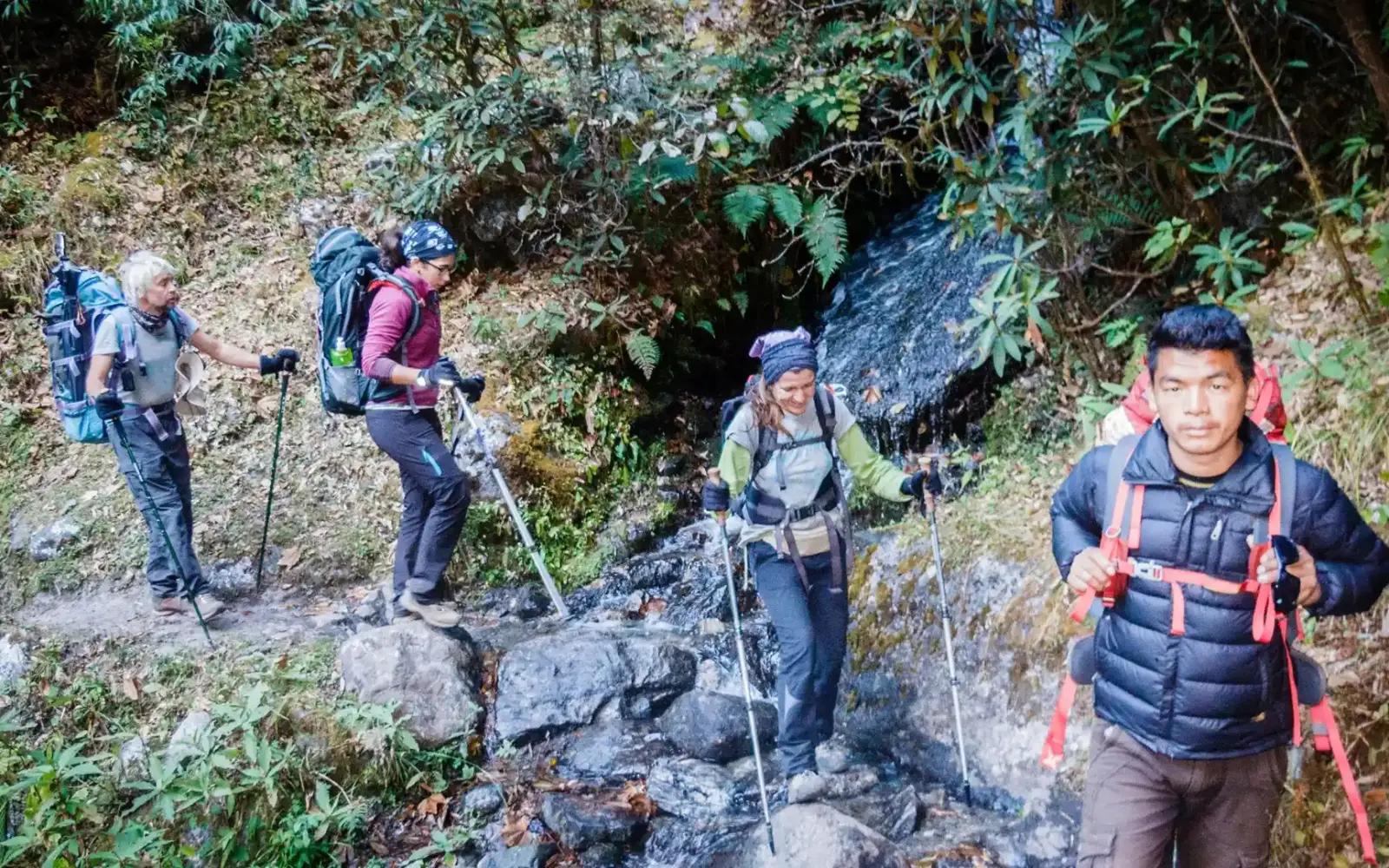
During the trek, your guide leads the route and sets the daily schedule, arranges accommodation and meals at each stop, monitors how you're adjusting to altitude, handles the language and cultural interpretation with local villages and teahouse owners, and is the first point of contact if you're sick, injured, or the weather turns. If a landslide closes a section of trail or a flight gets cancelled, this is who reroutes or rebooks.
After the trek, a good operator arranges your return transport, any included Kathmandu hotel transfers, and follows up to make sure nothing was left unresolved.
That's the shape of it. What's actually included — porter, meals, permits, insurance, airport transfers — depends entirely on the specific package, and it's one of the first things to pin down before you pay a deposit (more on that in the checklist further down).
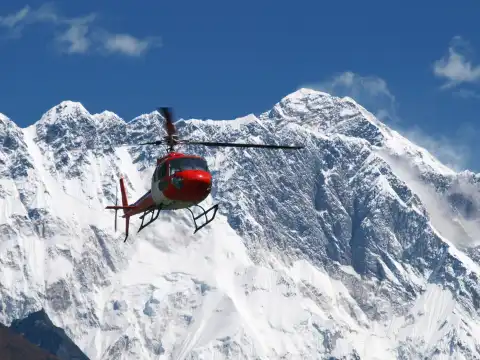
Trek the Everest Base Camp Trek Helicopter Return
Everest Base Camp, Without the Long Walk Back. Reach 5,364m on Foot. Return by Air.
Do You Need a Guide to Trek in Nepal?
Here's the precise answer, not the oversimplified one: it depends on the route, not a blanket national rule. Nepal doesn't require a guide for every trail in the country — a short day walk to a viewpoint outside a national park or conservation area (Nagarkot, Dhulikhel, a Shivapuri day loop) doesn't trigger the requirement, because there's no park or conservation-area permit involved. But once a route runs through a national park, conservation area, or restricted area — which covers essentially every internationally known trekking route — a licensed guide is mandatory.
That rule came from Nepal's Tourism Board and TAAN on April 1, 2023, following years of search-and-rescue cases involving trekkers who'd gone missing or gotten into trouble without local support. It's since been reinforced, not relaxed. The one meaningful change came in March 2026, when Nepal's Department of Immigration dropped the old two-person minimum for restricted-area permits (Manaslu, Upper Mustang, Nar Phu, Dolpo, and others) — so a solo traveler can now get a restricted-area permit without needing to find a second trekker first. The guide requirement itself didn't change; only the group-size rule did.
The TIMS card system that used to be the universal permit for independent trekkers has also been phased out in most regions in favor of guide-linked digital permits (e-TIMS), issued through the agency handling your trek rather than picked up solo at a Tourism Board counter. The Everest region works slightly differently — TIMS was replaced there back in 2018 by the Khumbu Pasang Lhamu Rural Municipality entry permit, which is a separate local fee, not TIMS.
ⓘ Exact current permit names, fees, and TIMS status vary by region and change often enough that we keep a dedicated, actively updated page for it — see our Nepal Trekking Permits guide for the current figures rather than relying on this table for costs.
| Trekking Region | Example Treks | Guide Required? | Main Permit / Registration |
|---|
| Everest | EBC, Gokyo Lakes, Three Passes | Yes | Sagarmatha National Park entry + Khumbu Pasang Lhamu Rural Municipality permit |
| Annapurna | Annapurna Circuit, ABC, Poon Hill, Mardi Himal | Yes (mandatory since April 2023) | ACAP + e-TIMS |
| Langtang | Langtang Valley, Gosaikunda | Yes | Langtang National Park entry + e-TIMS |
| Manaslu | Manaslu Circuit | Yes — restricted area | MCAP + Restricted Area Permit, agency-issued only |
| Kanchenjunga | Kanchenjunga Circuit, South Base Camp | Yes — restricted area | KCAP + Restricted Area Permit, agency-issued only |
| Upper Mustang | Upper Mustang Trek | Yes — restricted area | Restricted Area Permit, agency-issued only |
| Dolpo | Upper Dolpo Circuit, Shey Phoksundo | Yes — restricted area | Restricted Area Permit, agency-issued only |
| Makalu | Makalu Base Camp | Yes | Makalu-Barun National Park entry + e-TIMS |
For restricted areas — Manaslu, Upper Mustang, Nar Phu, Dolpo, Tsum Valley — the permit itself can only be applied for through a registered trekking agency. You can't walk into a Tourism Board office and buy one independently, guide or no guide. That's a structural difference from Everest or Annapurna, where the permits are the same regardless of who's applying, but the guide requirement still applies.
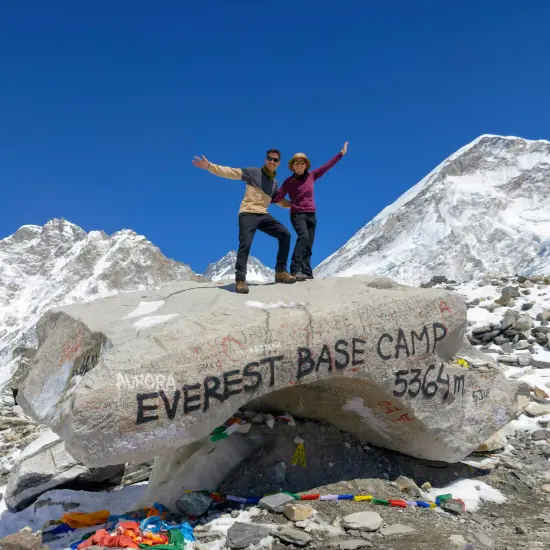
Trek the Everest Base Camp Trek
This classic trek takes you through the heart of the Khumbu region, past vibrant Sherpa villages, ancient monasteries, and towering Himalayan peaks.
Guided trekking, independent travel, and unguided trekking aren't the same thing
It's worth separating these, because they get conflated constantly. Independent travel around Nepal generally — Kathmandu, Pokhara, riding local buses, exploring on your own — isn't regulated the way trekking routes are. Guided trekking means a licensed guide leads you on a regulated route. Unguided trekking means attempting a regulated route without one, which is what the 2023 rule change was specifically designed to end. You can absolutely travel independently in Nepal in the broader sense while still trekking with a guide once you're on a national-park or conservation-area route — those aren't in tension with each other.
Why Did Nepal Introduce Guide Requirements?
The rule wasn't introduced to inconvenience travelers. Nepal Tourism Board officials cited a pattern that had built up over years: dozens of missing-trekker cases annually, drawn-out search-and-rescue operations in terrain where cell coverage is unreliable and weather can shut down a valley for days, and a mismatch between how straightforward routes look on a map or in a blog post and how quickly conditions can change at altitude. A licensed guide gives authorities a registered point of contact for every trekker on a regulated route, which matters when something goes wrong and rescue teams need to know where to look and how many people to look for. It also formalizes what had informally been standard practice for most first-time trekkers anyway: local support on unfamiliar, high-altitude terrain.
None of that means a guide eliminates risk. It changes who's making route and pacing decisions and how quickly help gets coordinated if something happens — which is a meaningful difference, but not a guarantee.
What Does a Nepal Trekking Guide Actually Do?
Navigation. On well-trodden routes like EBC or Poon Hill, "navigation" sounds unnecessary until a landslide, a fresh snowfall, or a washed-out bridge changes the trail overnight. A guide working a route regularly knows the current state of it, not the state it was in when a map was printed.
Altitude awareness. A trained guide watches for early signs of acute mountain sickness — headache, nausea, disrupted sleep, unusual fatigue — and makes the call on whether to rest a day, adjust the pace, or descend. This is judgment built from repetition on a specific route, not a substitute for your own acclimatization discipline. A guide cannot prevent altitude sickness. They can catch it earlier and respond faster than you would alone.
Accommodation. Guides handle which teahouse to stop at, room assignments, and coordinating meal timing — useful logistics on any trek, and genuinely important during peak season (October–November, March–April) when popular villages fill up fast.
Permits and checkpoints. The paperwork side — conservation area permits, national park entry, restricted-area permits, e-TIMS where required — is handled by the operator, not something you're managing trailside.
Local culture. A good guide can explain what a particular monastery is, why a village is arranged the way it is, what's happening during a local festival you happen to walk through, and why prayer flags or mani walls sit where they do — the kind of context that turns a scenic walk into something with actual depth.
Problem-solving. Lukla flight delays, a landslide closing the planned route, a teahouse fully booked, a piece of lost luggage, an unexpected illness — a guide working within an operator's support system has options you don't have trailside alone: alternate routing, a phone call to the Kathmandu office, knowledge of which teahouse still has a room.
Emergency coordination. If evacuation becomes necessary, your guide is the one initiating contact with your operator, arranging transport to a lower altitude, and coordinating with insurance or helicopter rescue services if it comes to that. This is coordination and communication, not a guaranteed rescue outcome — weather and terrain still set real limits on how fast help can arrive in the Himalayas.
Guide vs. Porter vs. Porter-Guide
These three roles get mixed up constantly, and the distinction matters — a porter is not a substitute for a guide, and it's illegal in Nepal to use an unlicensed porter as your primary guide on a regulated route.
| Role | Main Job | Carries Your Luggage? | Leads the Trek? | Suitable as Your Guide? |
|---|
| Trekking Guide | Route leadership, safety decisions, logistics, cultural interpretation | No (typically carries a light daypack of their own) | Yes | Yes — this is the licensed role the guide requirement refers to |
| Porter | Carries your main luggage so you trek with a light daypack | Yes | No | No — a porter alone does not satisfy the guide requirement |
| Porter-Guide | Combines both roles, where qualified | Yes, or shared with a separate porter | Sometimes, depending on licensing and the route | Only if independently licensed as a guide — not every porter-guide is |
A trekking guide is the licensed professional responsible for leading the route, managing safety decisions, and handling the logistics and cultural side of the trek. A porter carries your main bag — typically shared between two trekkers per porter on a well-run trek — so you're walking with just a daypack of water, layers, and anything you need during the day. Responsible operators cap porter loads at roughly 25–30 kg and provide appropriate clothing and shelter, in line with widely recognized porter-welfare standards; ask directly if a company doesn't volunteer this.
A porter-guide combines both jobs on smaller or lower-budget treks, which can work well on less technical routes — but confirm they're actually licensed as a guide, not just an experienced porter who's picked up route knowledge informally. For the full breakdown of porter costs, roles, and hiring logistics, see our complete guide to hiring a guide or porter in Nepal and our dedicated piece on whether you need a porter for your specific trek.
Why Choose a Guided Trek in Nepal?
Setting the regulation aside, here's what a good guide actually adds:
- Local expertise you can't get from a guidebook — current trail conditions, which teahouses are reliable this season, how a specific pass behaves in shifting weather.
- Logistics handled — permits, accommodation, transport, all arranged before you arrive.
- Faster response if plans change — flight delays, weather, illness, a closed section of trail.
- Language and cultural access — conversations with villagers, monks, and teahouse owners you'd otherwise walk past.
- Altitude support — a second set of eyes trained to notice symptoms you might dismiss yourself.
- Less administrative overhead — no separate trips to permit offices, no researching which conservation area covers which route.
What it doesn't do: guarantee good weather, eliminate altitude risk, or replace your own fitness preparation. Guided trekking reduces uncertainty and adds support — it doesn't remove the mountain from the equation.
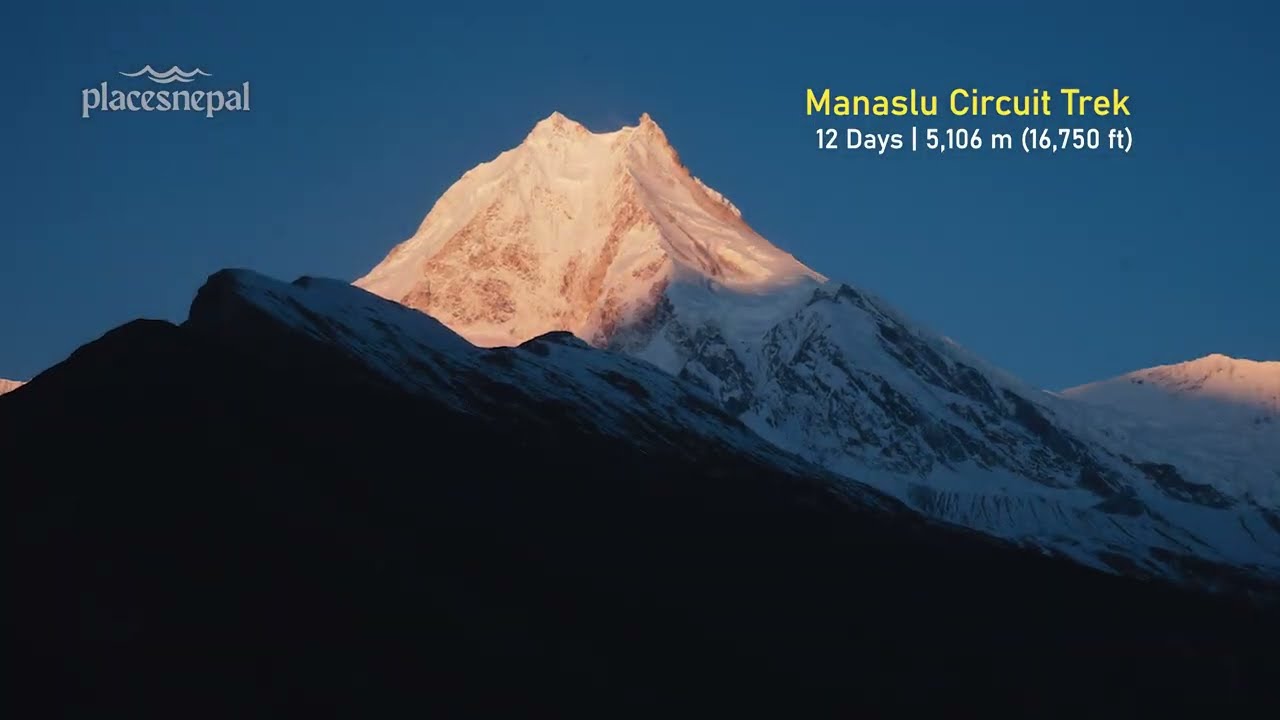
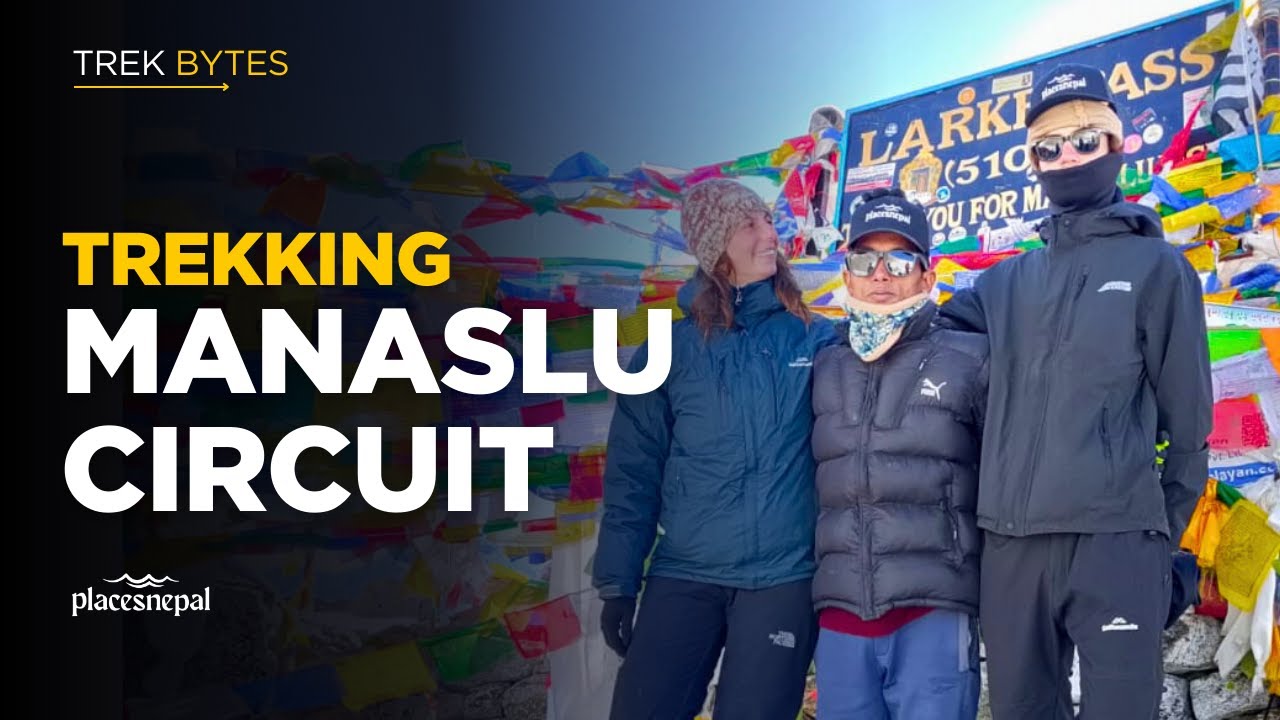
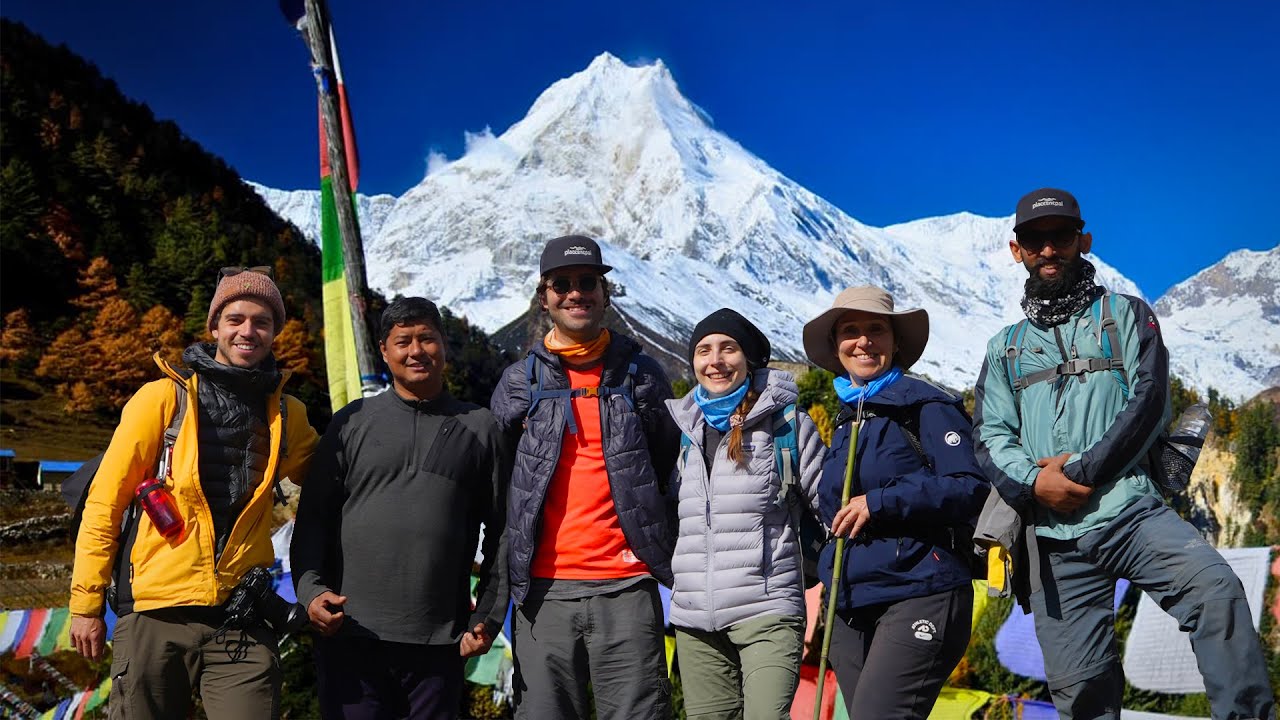
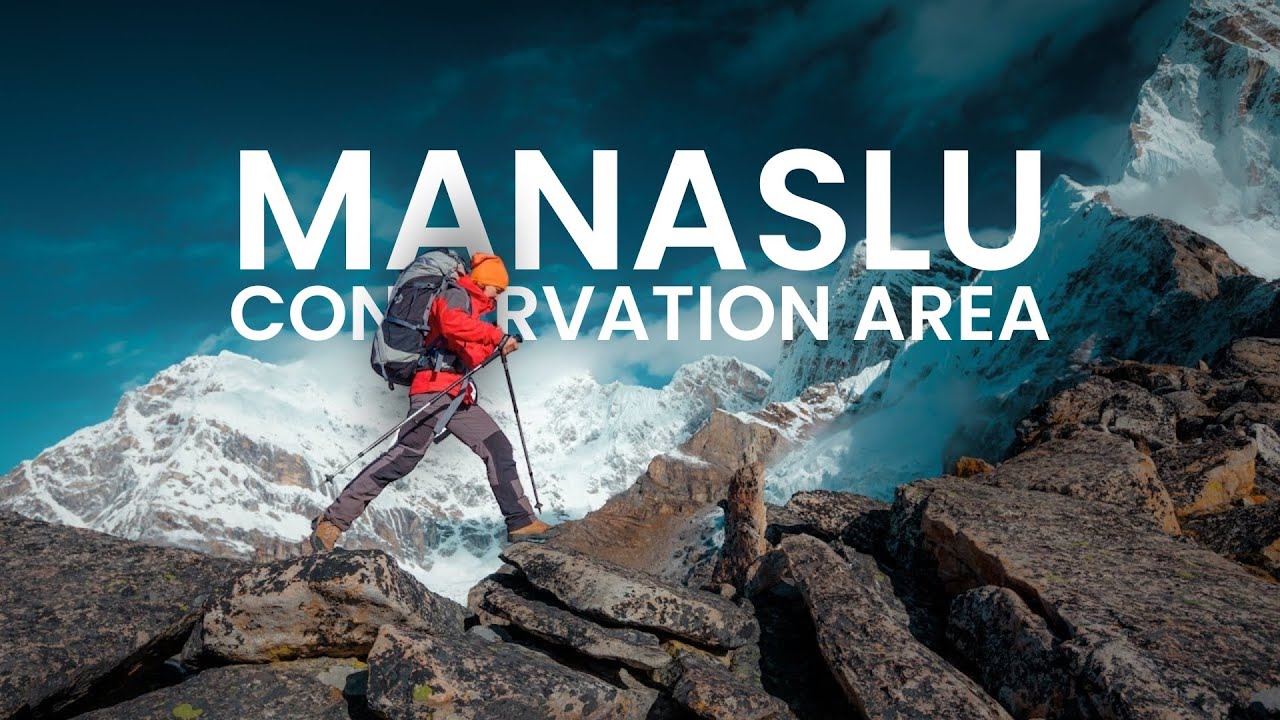
Trek the Manaslu Circuit Trek
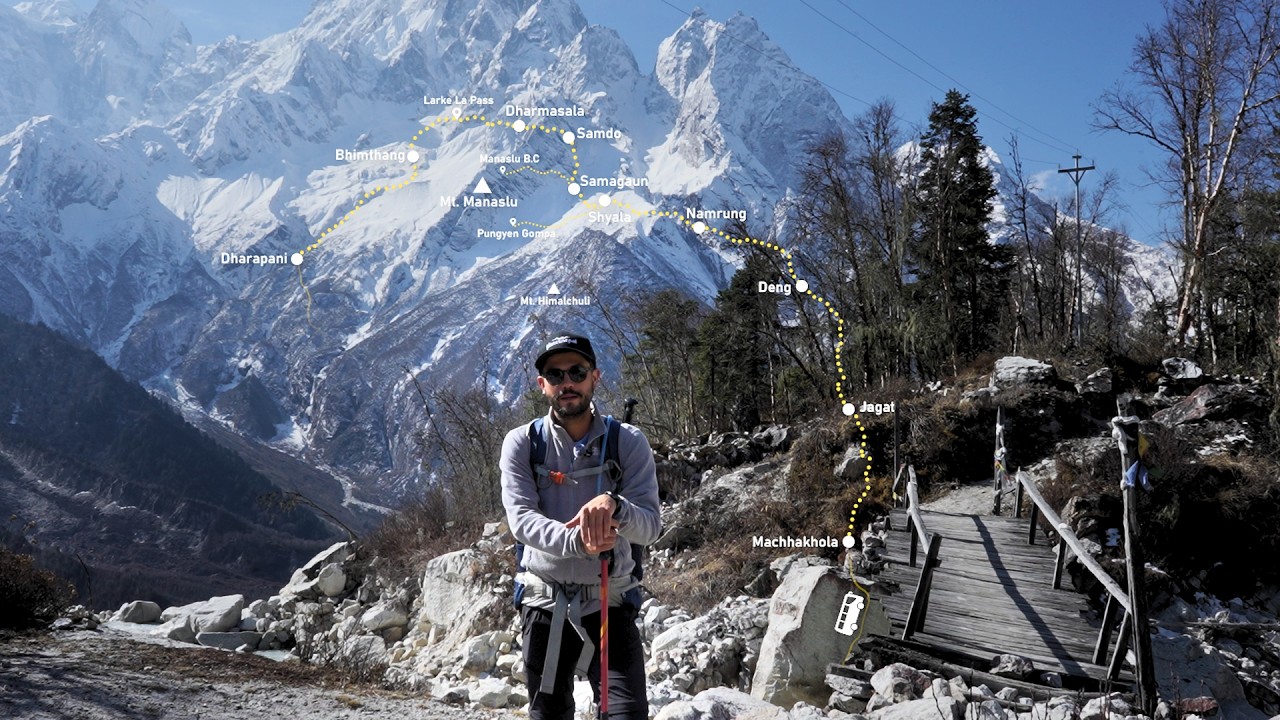
A remote and off-the-beaten-path Himalayan adventure in Nepal. The trek covers roughly 126 km (78.2 miles) and involves 5–7 hours of hiking per day through villages, forests, and the Larkya Pass
Guided vs. Independent Trekking
| Factor | Guided Trek | Independent Trek (where still legally possible) |
|---|
| Route planning | Handled by guide and operator | Self-managed |
| Permits | Arranged by the agency, including restricted-area permits you can't get solo | Self-arranged, limited to non-restricted regions where the guide rule doesn't legally apply |
| Accommodation | Coordinated in advance, especially useful in peak season | Found trailside, first-come basis |
| Local knowledge | Built into the trek via your guide | Dependent on your own research and trailside conversations |
| Navigation | Guide's responsibility | Your own responsibility |
| Emergency coordination | Guide and operator initiate response | You coordinate directly with insurance and rescue services |
| Flexibility | Set by the itinerary, though private treks can flex significantly | Fully self-directed |
| Social experience | Built-in on group-joining treks; more solitary on private ones | Entirely self-directed, often more solitary |
| Cost | Guide, porter (optional), and agency margin included | Lower direct cost, but no support infrastructure |
| Regulations | Compliant by default on regulated routes | Only legally viable on the narrow set of routes outside the guide requirement |
Neither approach is "the irresponsible one." Experienced high-altitude trekkers with strong self-sufficiency skills may genuinely prefer more independence on the small number of routes where that's still an option. But for the vast majority of Nepal's well-known trekking routes, current regulation has already made this decision for you — the practical question is which guided format fits you, not whether to go guided at all.
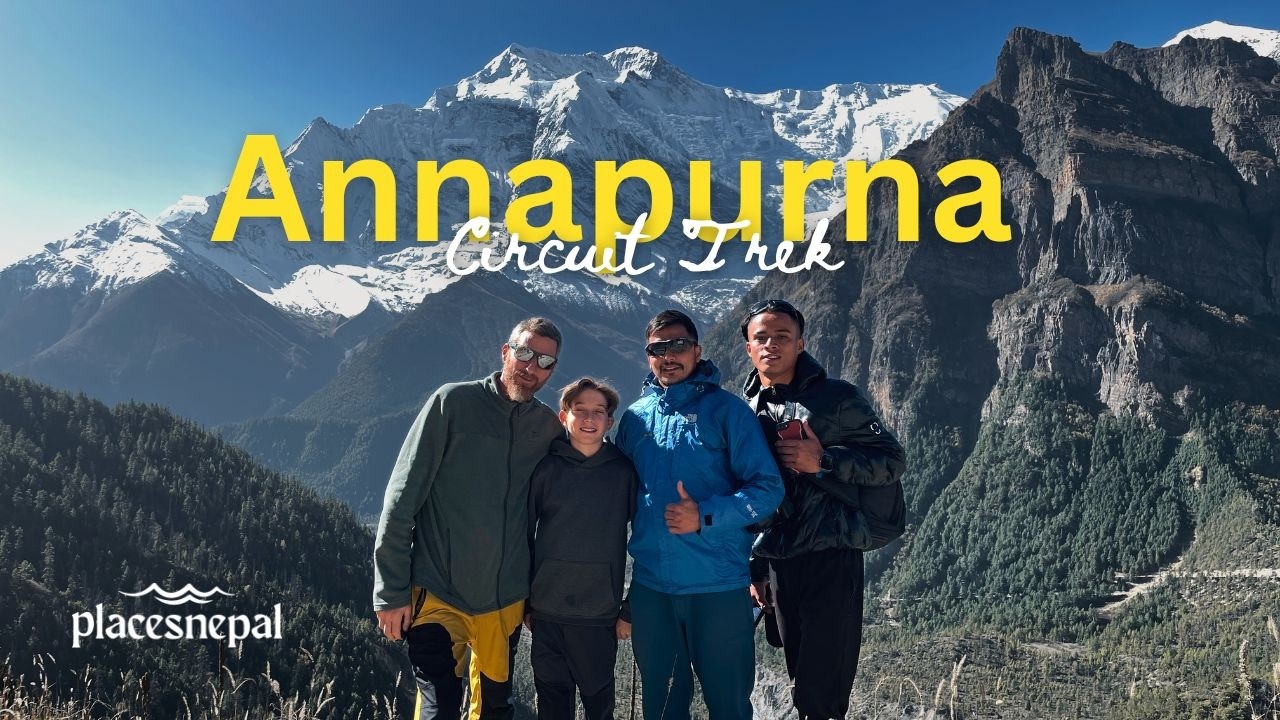
Trek the Annapurna Circuit Trek
A legendary high-altitude trek in Nepal that encircles the Annapurna Massif, offering dramatic scenery, diverse cultures, and the iconic crossing of Thorong La Pass at 5,416 meters.
Private vs. Group-Joining Treks in Nepal
This is often the more useful decision than "guided or not," since it's the one still fully in your control.
Group-joining treks run on fixed departure dates that you join alongside other travelers. You share a guide (and often a porter arrangement) with the rest of the group, follow a set day-by-day itinerary, and typically pay less per person than a private trek covering the same route, since guide and logistics costs are spread across the group. It's also the easiest way to meet other trekkers if you're traveling solo and want company on the trail.
Private treks run on your own dates with your own dedicated guide. You set the pace — an extra acclimatization day, a slower start, a different route variation — without syncing to anyone else's schedule. This suits couples, families, and friend groups who want a itinerary genuinely built around them rather than fitted into a fixed template. Per-person cost runs higher, since you're not sharing the guide or fixed costs across a larger group.
Which should you choose?
| If you want... | Best option |
|---|
| Lowest practical per-person cost | Group-joining |
| To meet other travelers on the trail | Group-joining |
| Flexible dates around your own schedule | Private |
| A custom itinerary or route variation | Private |
| A family trek with kids or a mixed-fitness group | Private |
| A couple's trek at your own pace | Private |
| Solo travel with built-in company | Group-joining |
| A specific, controllable daily pace | Private |
Places Nepal runs both formats, plus fully customized itineraries built around your dates, fitness level, and interests — see current group departures or get in touch about a private or customized trek.
Best Guided Treks in Nepal
This is a short-list overview, not a substitute for full trek research — durations, difficulty ratings, and maximum altitudes below come from current product data and should always be checked against the live trip page before booking, since exact numbers vary by itinerary length and route variant.
| Trek | Duration | Difficulty | Max Altitude | Best For |
|---|
| Everest Base Camp | 12–14 days | Challenging | 5,364 m (EBC) / 5,545 m (Kala Patthar) | The classic Himalayan trek, fit beginners with training |
| Annapurna Base Camp | 7–12 days | Moderate | ~4,130 m | A shorter, still-dramatic high-altitude experience |
| Annapurna Circuit | 12–18 days | Challenging | 5,416 m (Thorong La) | Trekkers wanting route variety and a real pass crossing |
| Ghorepani Poon Hill | 4–6 days | Easy–Moderate | ~3,210 m | First-time trekkers, short-timeframe travelers |
| Langtang Valley | 7–10 days | Moderate | ~4,984 m (Kyanjin Ri) | Cultural depth close to Kathmandu, shorter logistics |
| Manaslu Circuit | 14–17 days | Challenging | 5,106 m (Larkya La) | Remote-route trekkers wanting fewer crowds |
| Kanchenjunga Circuit | 18–22 days | Very Challenging | Varies by route variant | Serious remote trekkers, longest commitment |
| Upper Mustang | 10–14 days | Moderate | ~3,840 m | Trekkers prioritizing culture and landscape over altitude |
| Mardi Himal | 5–7 days | Moderate | ~4,500 m (High Camp) | Shorter trek with real high-altitude payoff |
| Gokyo Lakes | 12–14 days | Challenging | ~5,357 m (Gokyo Ri) | Everest-region trekkers wanting an alternative to EBC crowds |
| Everest Three Passes | 18–21 days | Very Challenging | ~5,535 m (Kongma La) | Experienced trekkers wanting the full Khumbu circuit |
ⓘ For the fuller cost, duration, and difficulty comparison across all current packages, see Nepal Trekking Packages.
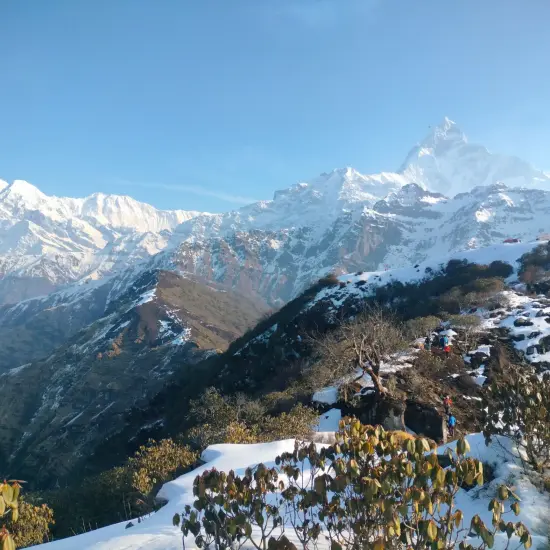
Trek the Mardi Himal Trek
Five days, one ridge, and the closest you'll legally get to Machhapuchhre.
Which Trek Should You Choose?
First Himalayan trek: Poon Hill, Langtang Valley, or Annapurna Base Camp — all genuinely rewarding without demanding prior high-altitude experience.
The classic Himalayan experience: Everest Base Camp remains the trek most people picture when they think "Nepal trekking" — for good reason, though it demands real preparation.
A high-altitude circuit with a real pass crossing: Annapurna Circuit or Manaslu Circuit, depending on whether you want more infrastructure (Annapurna) or more remoteness (Manaslu).
Genuinely remote trekking: Manaslu or Kanchenjunga — fewer trekkers, longer approach, more logistical planning.
A culturally focused trek: Upper Mustang for Tibetan-influenced high desert culture, Langtang for Tamang villages and post-earthquake recovery, or Annapurna region routes depending on the specific itinerary.
A short trek that still delivers: Poon Hill, Mardi Himal, or a shorter Langtang itinerary, depending on how many days you actually have.
None of these is universally "the best" — each involves real trade-offs in altitude, remoteness, crowding, and time commitment. The honest answer depends on your fitness, available days, and what you're actually looking for out of the trek.
Trek the Langtang Valley Trek
An 8-day trek through Langtang villages, forest and high alpine terrain, with a day at Kyanjin Gompa.
How Much Does Guided Trekking in Nepal Cost?
There's no single number here worth publishing, and any article that gives you one flat figure is oversimplifying. Total cost depends on trek duration, route and permit type (restricted areas cost more to access), whether you book group-joining or private, group size, season, guide and porter arrangements, accommodation and meal standard, and domestic transport — a trek requiring a Lukla flight carries different logistics costs than one accessible by road from Kathmandu or Pokhara.
Group-joining treks spread the guide and fixed logistics costs across everyone on the departure, which is why per-person pricing runs lower than an equivalent private itinerary.
Private treks cost more per person because you're not sharing a guide, and the operator isn't spreading fixed costs (permits, transport coordination) across a group — you're paying for a dedicated, flexible itinerary built around you.
For current, trek-specific pricing, check the live trip page for the route you're considering — package pricing shifts by season and departure, and a number quoted in a blog post ages faster than the trip page itself does.
What Is Included in a Guided Trekking Package?
Potential inclusions across the industry: airport transfers, Kathmandu accommodation nights, domestic transport or flights to the trailhead, trekking permits (national park, conservation area, restricted area, TIMS/e-TIMS where applicable), guide, porter, teahouse accommodation during the trek, meals during the trek, and some level of emergency support coordination.
What's actually included varies significantly by operator and by specific package — never assume a generic list applies to the trek you're looking at. Always check the current, specific inclusions and exclusions listed on the live trip page before booking.
Hidden Costs to Watch For
The advertised headline price on any trekking package rarely tells the full story. Before booking, ask specifically about: permit costs (sometimes quoted separately from the package price), your guide and porter's own meals and accommodation on trek (usually covered by the operator, but confirm), domestic flights if the route requires one, ground transport to and from the trailhead, hot showers and device charging at teahouses (often a small per-use fee, especially higher up the trail), Wi-Fi access, drinks and snacks beyond included meals, tipping for guide and porter, comprehensive travel insurance covering high-altitude trekking and emergency evacuation, and the cost of an emergency evacuation itself if insurance doesn't fully cover it.
None of this is about any specific operator cutting corners — it's simply the nature of quoting a headline trek price. The cheapest advertised number isn't automatically the cheapest final cost. Ask what's excluded before you compare prices across companies, not just what's included.
How to Choose a Guided Trekking Company in Nepal
This deserves real scrutiny before a deposit, and it's worth going deeper than this section alone — see our complete guide to choosing a Nepal trekking company for the full operator-vetting checklist. The points below are the ones specific to guided trekking:
Guide credentials. Ask directly whether your guide is individually licensed by the Nepal Tourism Board, not just employed by a registered agency. Both matter — a licensed agency can still assign an under-qualified or unlicensed guide if you don't ask.
Legal registration. Confirm the company is registered with the Nepal government, licensed by the relevant ministries, and a member of TAAN (the Trekking Agencies' Association of Nepal). TAAN maintains a general members directory if you want to verify independently.
Emergency procedures. Ask specifically how the company handles altitude sickness, injury, evacuation, and major weather disruption — not whether they "have a plan," but what that plan actually is.
Independent reviews. Check Google, TripAdvisor, and Trustindex rather than testimonials curated on the company's own site. Genuine reviews are inconsistent in tone and detail — that's a sign they're real.
Clear, specific inclusions. A vague "everything included" claim isn't useful. Ask for the itemized list.
Real communication before booking. Can you talk to an actual person — by phone, WhatsApp, or email — who can answer specific questions about your trek, not just a booking form?
Group size. Ask how many people will actually be on your departure. A "small group" claim with no number attached isn't verifiable.
Trek the Everest Three Passes Trek
Conquer the Three Passes, Experience Everest’s Ultimate Trekking Adventure.
Why Book With a Local Nepal Trekking Operator?
This isn't a claim that local is automatically better — it's what tends to change when the company planning your trek and the one operating it are the same people, based in the same country and time zone as your guide.
- Faster local decisions. When a pass closes or a teahouse is full, the person who can approve a route change is in Kathmandu, not relaying the question through a call center overseas.
- Direct communication. You're talking to the people actually running your trek, not a reseller passing your questions to a ground operator they've never met.
- Current permit and regulation knowledge. Rules change — restricted-area permits, guide requirements, route conditions. A company operating in Nepal daily tends to catch these changes before international resellers' itinerary templates do.
- Established relationships with teahouses, transport, and communities built from repeated operation in these regions, not a one-off contractor booking.
Booking directly removes a layer between you and the company actually running your trek. It doesn't automatically mean cheaper — it means fewer intermediaries relaying your questions and your money.
Guided Trekking With Places Nepal Treks
Places Nepal is a Kathmandu-based trekking operator, registered as a Nepali company (Registration No. 319351080081), a TAAN member, and NMA certified. The company runs guided treks across Nepal's main Himalayan regions — Everest, Annapurna, Manaslu, Langtang, Kanchenjunga, and Upper Mustang, among others — through three formats: fixed group-joining departures, fully private treks, and custom itineraries built around your own dates, fitness, and interests.
Guides are matched to the regions they actually work — the team includes guides based in Dhading, Solukhumbu, and other districts who lead the specific routes they know, rather than generalists rotated across regions. Every traveler is required to carry comprehensive travel insurance covering high-altitude trekking, and the company's route planning is built around acclimatization and current trail conditions rather than the shortest itinerary that looks best on a price comparison.
You can read independent, unedited reviews on Google, TripAdvisor, and Trustindex rather than curated testimonials.
Places Nepal Group Departures
Group-joining departure dates and current per-person pricing change by season and route, so rather than publish a table here that goes stale within a few months, check the live, current schedule on the group departures page — it reflects real-time availability rather than a snapshot that could mislead you by the time you're reading this.
Trekking With Places Nepal, By Region
Everest, Annapurna, Manaslu, Langtang, Kanchenjunga, and Upper Mustang are the core regions — browse current options by region or start with a specific route: Everest Base Camp, Manaslu Circuit, Annapurna Circuit, Langtang Valley, Kanchenjunga Circuit, or Upper Mustang.
Safety on a Guided Trek in Nepal
A guide improves support and response time. It doesn't eliminate the real risks of Himalayan trekking: altitude sickness, sudden weather changes, difficult trail conditions, falls, dehydration, exhaustion at altitude, flight and transport delays, landslides, and — on the highest routes — genuinely limited rescue options during bad weather. Comprehensive travel insurance covering high-altitude trekking and emergency evacuation isn't optional risk management on these routes — treat it as a booking requirement, not an add-on to consider later.
Is Guided Trekking Suitable for Solo Travelers?
Group-joining treks are a genuinely good way to meet other travelers if you're heading out alone. Private solo treks offer more control over pace and route but a more solitary experience. Some travelers — particularly women trekking solo — prefer to request a female guide where one is available; ask directly when booking rather than assuming. One distinction worth being precise about: "solo travel" and "unguided trekking" are not the same thing — you can travel to Nepal alone and still trek with a licensed guide, which is in fact the only legal option on most regulated routes. For a fuller look at safety, routes, and practical tips specific to women trekking in Nepal, see our dedicated guide.
Is Guided Trekking Suitable for Families?
Generally yes, with the caveat that route and pacing selection matters more than it does for a solo adult trekker. Private treks tend to be more practical for families — a fixed group-joining itinerary isn't built around a child or teen's pace or an extra acclimatization day if someone needs it. Route choice matters too: shorter, lower-altitude treks like Poon Hill or Langtang Valley suit families better than a demanding high-pass crossing. Age and fitness suitability vary genuinely by child and by route — this isn't a one-size answer, and it's worth discussing specifics directly with your operator before booking rather than assuming a trek marketed as "family-friendly" fits your specific situation.
Guided Trekking and Responsible Travel
A good local operator's role here is practical, not just a marketing section. It typically means route and accommodation choices that route money toward local teahouses and communities rather than bypass them, guides and porters employed fairly and treated as skilled professionals rather than interchangeable labor, waste reduction on trail, and respect for conservation-area rules that exist to protect the terrain you're there to see. If a company's responsible-tourism claims are vague and unverifiable, that's worth noticing — ask what they specifically do, not what they say they believe in.
What Should You Expect From a Good Nepal Trekking Guide?
A good guide demonstrates real route knowledge (not just familiarity — actual, current knowledge of the specific trail), clear communication, patience with trekkers moving at different paces, altitude awareness, problem-solving under pressure, and professionalism.
A good guide should not: pressure you to continue when you're showing real symptoms of altitude sickness, downplay or hide genuine risks on the route, misrepresent what a permit covers, demand unexplained extra payments mid-trek, behave disrespectfully toward the villages and communities you're passing through, or quietly deviate from the itinerary you agreed to without a real reason and without telling you.
If any of that happens on a trek, it's worth raising directly with the operator — and worth remembering when choosing who to book with in the first place.
Questions to Ask Before Booking
Before paying a deposit, ask:
- Is my guide individually licensed, not just employed by a licensed agency?
- What permits are included in the price?
- What's the actual group size on my departure?
- Is a porter included, or is that a separate add-on?
- What's the plan if I develop altitude sickness partway through?
- What happens if my Lukla flight (or equivalent) is delayed or cancelled?
- What exactly is included in the quoted price?
- What's explicitly excluded?
- What insurance do I need, and is it required or just recommended?
- What's the cancellation and refund policy?
- Can the itinerary be adjusted for my pace or an extra acclimatization day?
- Can I join an existing group departure instead of booking private?
- Who's my actual point of contact in Nepal before and during the trek?
Guided Trekking Myths and Facts
Myth: "A guide means I don't need to prepare." Fact: You still need real fitness preparation, properly tested gear, and your own altitude awareness. A guide supports your trek — it doesn't replace your preparation.
Myth: "A guide guarantees I won't get altitude sickness." Fact: No guide, however experienced, can eliminate altitude risk. They can recognize symptoms earlier and respond faster than you would alone.
Myth: "Guided trekking means walking in a large group." Fact: Private and small-group trekking are both genuinely available — "guided" doesn't mean "crowded."
Myth: "Guided trekking is only for beginners." Fact: Experienced trekkers use guides too, especially on remote or restricted routes — for logistics, current local knowledge, and legal access, not just hand-holding.
Frequently Asked Questions
What is guided trekking in Nepal? Trekking a route with a licensed local guide handling navigation, safety decisions, permits, and logistics, rather than managing those yourself.
Do I need a guide to trek in Nepal? On essentially every major trekking route — Everest, Annapurna, Langtang, Manaslu, Kanchenjunga, Upper Mustang, and other national park, conservation area, or restricted routes — yes, since April 2023. Short day hikes outside protected areas, like Nagarkot or Dhulikhel, are the exception.
How much does a trekking guide cost in Nepal? It varies by trek, season, group size, and whether you're booking private or group-joining. Rather than quote an industry-wide number here, check current, trek-specific pricing on the live trip page you're considering.
Is guided trekking worth it? For the vast majority of trekkers, yes — beyond being the legal requirement on regulated routes, a guide adds safety support, logistics handling, and cultural depth that's hard to replicate independently.
Can I trek in Nepal alone with a guide? Yes — traveling solo and trekking with a guide aren't in conflict. In fact, on most regulated routes, a licensed guide is the only legal way to trek without a larger group.
What's the difference between a guide and a porter? A guide leads the route and manages safety and logistics; a porter carries your main luggage. A porter alone does not satisfy Nepal's guide requirement, and it's not legal to use an unlicensed porter as your primary guide on a regulated route.
What's the best guided trek in Nepal? There isn't a single universal answer — it depends on your fitness, available time, and what you want from the trek. See the "Which Trek Should You Choose" section above for a breakdown by traveler type.
What's the best Nepal trek for beginners? Ghorepani Poon Hill, Annapurna Base Camp, or Langtang Valley are commonly recommended starting points — shorter or more moderate than routes like Manaslu or the Everest Three Passes.
Can I join a group trek in Nepal? Yes — group-joining departures run on fixed dates and are typically more cost-efficient than private treks, with the trade-off of a set itinerary and schedule.
Can I book a private guided trek? Yes — private treks run on your own dates with a dedicated guide and a flexible, customizable itinerary.
Can I request a female guide? Many operators, including Places Nepal, can arrange this where available — ask directly when booking rather than assuming.
Are Nepal trekking guides licensed? Legitimate guides are licensed by the Nepal Tourism Board. Always ask to confirm your specific guide's license, not just the agency's registration.
What does a trekking guide do? Leads the route, manages daily logistics and accommodation, monitors altitude adjustment, handles permits and checkpoints, provides cultural context, and coordinates any emergency response. See the full breakdown above.
Does a trekking package include a guide? On a properly organized guided trek, yes — but always confirm what's specifically included, since packages vary by operator.
Is food included on guided treks? Varies by package — check the specific inclusions listed on your trip's page rather than assuming.
Are permits included? Usually yes on a fully guided package, but confirm which specific permits (national park, conservation area, restricted area, e-TIMS) are covered before booking.
Is travel insurance required? Comprehensive travel insurance covering high-altitude trekking and emergency evacuation should be treated as required, even where an operator doesn't legally mandate it — the cost of evacuation without it can be severe.
Which Nepal treks require a guide? Everest, Annapurna, Langtang, Manaslu, Kanchenjunga, Upper Mustang, Dolpo, and Makalu routes all require a licensed guide. See the region table above for specifics.
Can experienced trekkers skip the guide requirement? No — the guide requirement applies regardless of experience level on regulated routes. Experience affects how much you personally rely on the guide day to day, not whether one is legally required.
How do I choose a reliable Nepal trekking company? Verify legal registration and TAAN membership, confirm individual guide licensing (not just agency registration), check independent reviews on Google, TripAdvisor, and Trustindex, get itemized inclusions in writing, and ask specifically how the company handles emergencies. See our full guide to choosing a Nepal trekking operator for the complete checklist.
Plan Your Guided Trek in Nepal
If you know which route you want, start there: browse current group departures or explore treks by region. If you're still deciding between routes, get in touch and talk through fitness, timeframe, and what you actually want out of the trek with someone who can build the itinerary around it rather than the other way around.