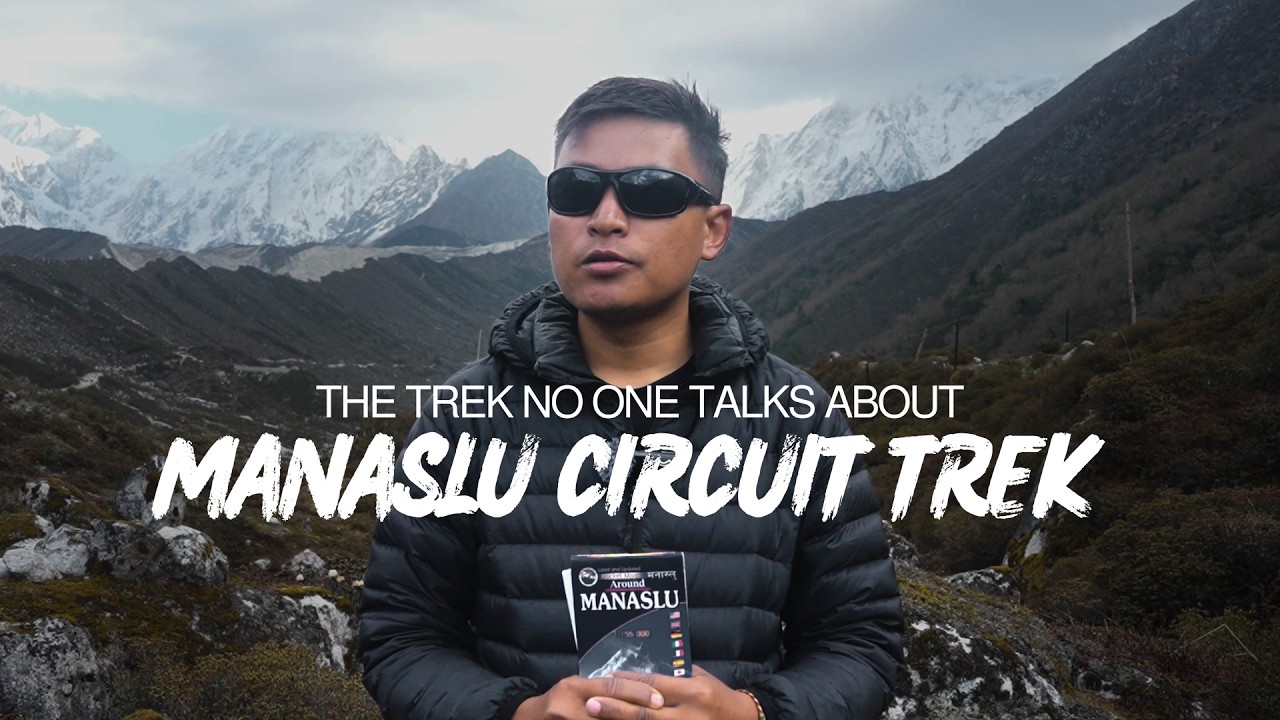
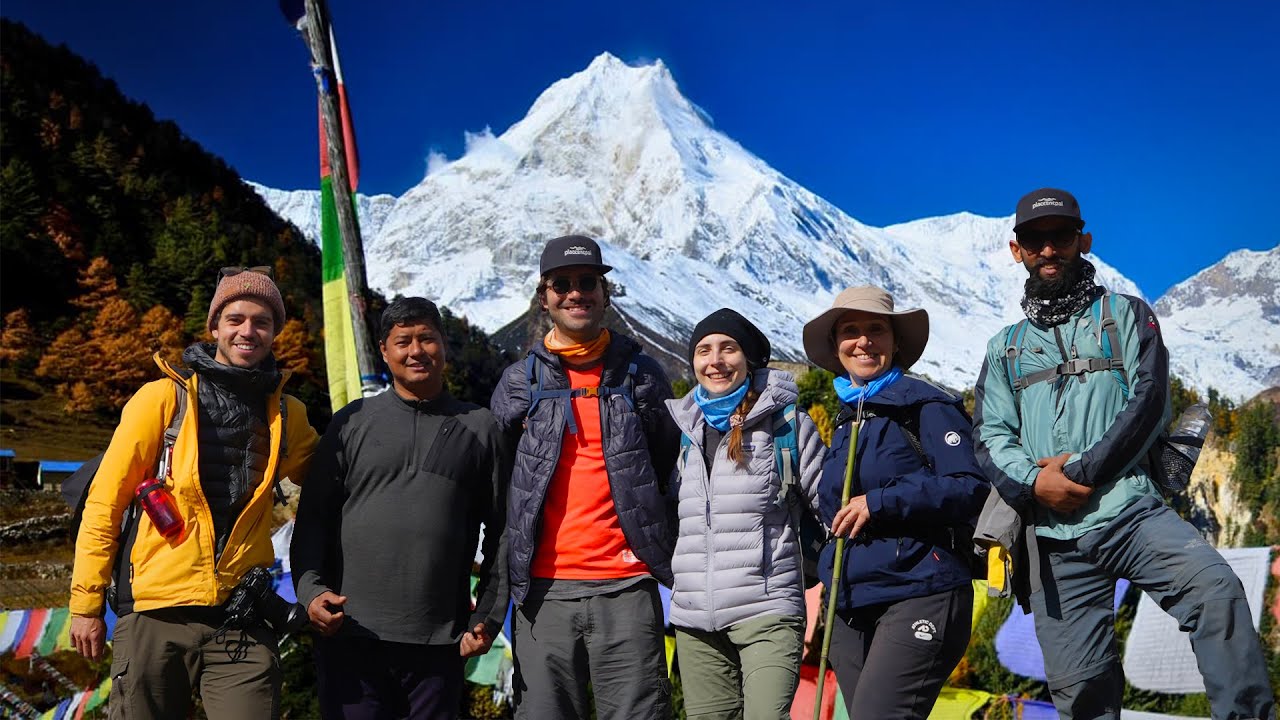
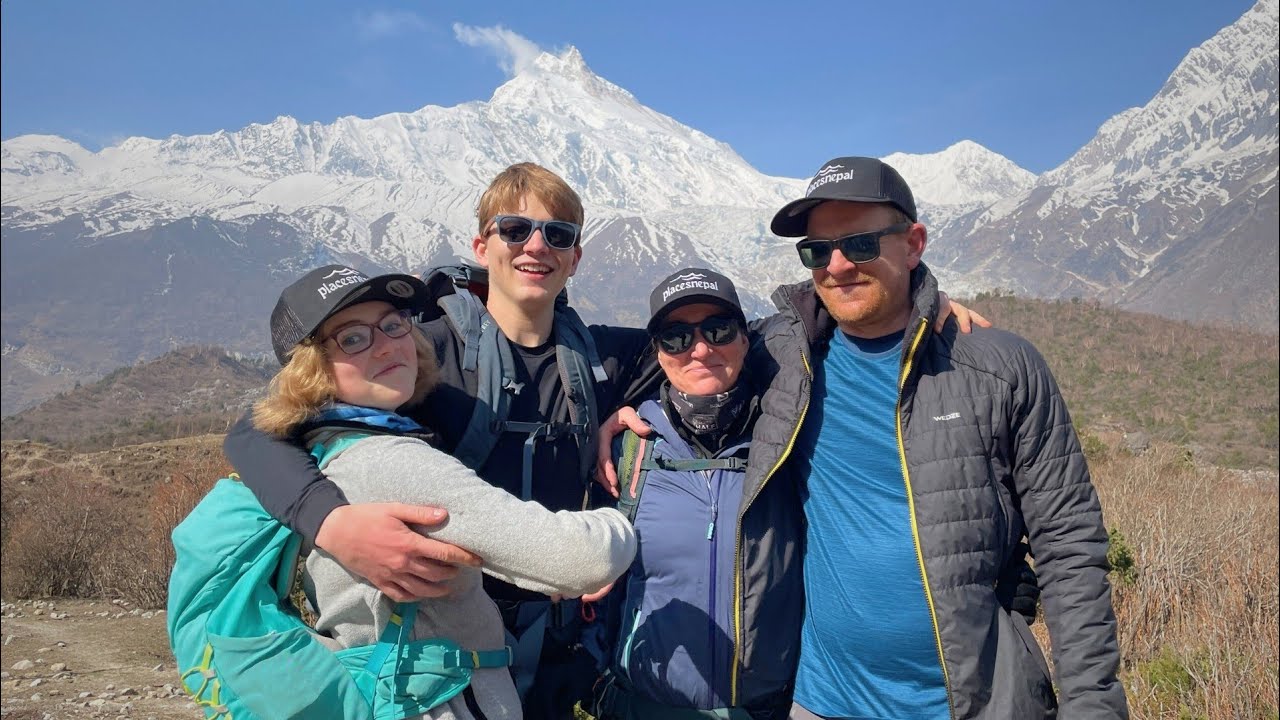
Every trekker asks the same question before committing to the Manaslu Circuit: where exactly will I sleep? The honest answer is that you'll spend almost every night of the trek in a family-run teahouse — a simple lodge built and operated by the same Gurung, Nubri, or Tibetan-descent families who have lived in the Budhi Gandaki valley for generations. This is not hotel accommodation, and it was never designed to be.
Manaslu sits inside a restricted trekking area that only opened to foreign visitors in 1991, and it still requires a licensed guide and a Restricted Area Permit today. That history matters for accommodation, because it explains why the region's teahouse network is younger and thinner than Everest's or Annapurna's. Fewer trekkers pass through each season, so fewer families have had the capital — or the reason — to build the multi-room lodges with attached bathrooms and reliable WiFi that are now standard in the Khumbu.
What you get instead is something that's become harder to find on Nepal's busier routes: a genuinely local, low-commercialized trekking experience, where the person serving your dal bhat is often the same person who built the room you're sleeping in.
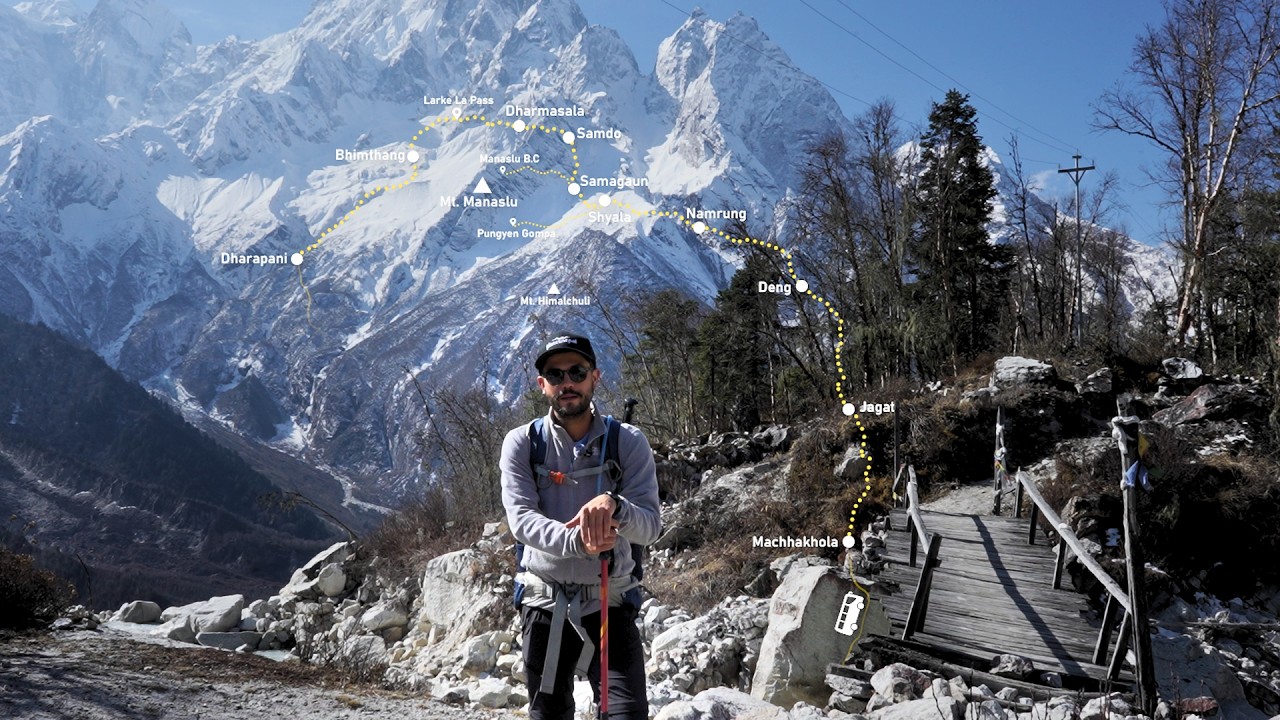
This guide sets out exactly what to expect, village by village, from your first night in Machha Khola to your last teahouse before rejoining the Annapurna trail at Dharapani. We run Manaslu Circuit Trek for trekkers from across the US, UK, Europe, and Australia every season, and this is the same briefing we give our own clients before they fly to Kathmandu.
Trek the Manaslu Circuit Trek
A remote and off-the-beaten-path Himalayan adventure in Nepal. The trek covers roughly 126 km (78.2 miles) and involves 5–7 hours of hiking per day through villages, forests, and the Larkya Pass
Quick Answer: What Accommodation Is Available on the Manaslu Circuit Trek?
You'll stay in teahouses — also called lodges or guesthouses — for the entire trek. There are no hotels once you leave Kathmandu, and no need for a tent on a standard itinerary. Rooms are almost always twin-share: two single beds, thin mattresses, a shared bathroom down the corridor, and a communal dining room that doubles as the only heated space in the building.
Electricity, WiFi, and hot showers are available in most villages below Samagaon, usually for a small fee, and become less reliable — and occasionally unavailable — above roughly 3,800m. Private rooms and attached bathrooms exist in the lower half of the route but are genuinely rare above Namrung. Expect the most basic night of the entire trek at Dharamsala (Larkya Phedi), the staging point below Larkya La Pass.
Types of Accommodation on the Manaslu Circuit Trek
Tea Houses
Teahouses are the backbone of trekking accommodation anywhere in Nepal, and Manaslu is no exception. Nearly every building you sleep in on this route is a family home that's been extended — a floor added, a wing built on — to include guest rooms and a dining hall. The family that owns the teahouse usually lives on site, cooks the meals, and runs the front desk, which in practice often means a teenage daughter taking your dinner order or a grandmother feeding the stove.
Because the model is family-run rather than corporately managed, quality varies more than it would between branches of a hotel chain. Two teahouses in the same village, thirty meters apart, can differ noticeably in cleanliness, mattress thickness, or how recently the roof was repaired. Your guide will usually know the difference — one of the quieter advantages of trekking with a local operator rather than arriving cold and picking whichever lodge has a sign out front.
Trek the Manaslu Circuit Trek
A remote and off-the-beaten-path Himalayan adventure in Nepal. The trek covers roughly 126 km (78.2 miles) and involves 5–7 hours of hiking per day through villages, forests, and the Larkya Pass
Small Mountain Lodges
In the handful of larger stopover villages — Namrung, Samagaon, and Bimthang in particular — some teahouses have grown into what's more accurately described as a small lodge: two or three stories, ten or more rooms, a dining hall separated from the kitchen, and occasionally a private bathroom attached to a few of the better rooms. This isn't really a different category of business, just the more established end of the same teahouse system. Expect a modest step up in comfort and a modest step up in price, rarely more than a dollar or two a night.
Camping Accommodation (Historical vs Current)
Camping was how most Manaslu expeditions operated in the 1990s, when the teahouse network barely existed. That's no longer true for a standard Manaslu Circuit itinerary. Every overnight stop from Machha Khola to Dharapani now has at least one teahouse, and most have several. Today, camping on Manaslu is mostly reserved for mountaineering expeditions pushing on to Manaslu Base Camp and the peak itself, or for specialized off-route detours where no lodge exists. If you're booking a standard Manaslu Circuit Trek — including ours — you will not need to carry or pitch a tent.
Trek the Tsum Valley with Manaslu Circuit Trek
Into the Hidden Valley of Tsum and Around Manaslu.
What Are Rooms Like on the Manaslu Circuit Trek?
Teahouse rooms on the Manaslu Circuit follow the same basic template almost everywhere, with the main variable being how well-maintained that template is.
Walls are wood or a thin plywood partition — thin enough that you'll hear your neighbors turning over in bed. Two single beds sit against opposite walls with a narrow aisle between them, topped with foam mattresses that get thinner and older the higher you climb. You'll get a pillow and at least one blanket per bed, sometimes two at altitude, but even two teahouse blankets often aren't enough once temperatures drop below freezing — one reason we tell every client to bring a proper sleeping bag regardless of season.
Storage is minimal to nonexistent: a hook on the door, maybe a shelf, and that's usually it. Your duffel bag or backpack sits on the floor. Privacy comes from a door that latches (not always a proper lock) rather than any real soundproofing, so earplugs are worth packing even if you don't normally use them.
Single rooms exist, mostly in the lower half of the route and mostly outside peak season, for a small supplement — often USD 3–5 extra a night. Above Namrung, don't count on getting one; the higher teahouses are smaller and have fewer rooms to spare, especially in October and November.
| Feature | What to Expect |
|---|
| Room type | Twin-share (two single beds) is standard; single rooms possible lower down, limited or unavailable above Namrung |
| Walls | Wood or plywood partition — thin, sound carries easily |
| Mattress | Thin foam, generally firmer and more worn at higher altitude |
| Bedding | Pillow plus one to two blankets; often not warm enough alone above roughly 3,500m |
| Storage | A hook or small shelf at most — no wardrobe, no drawers |
| Door lock | Simple latch, not always secure — keep valuables on you or with your guide |
| Lighting | Solar bulb or single overhead light, sometimes switched off between meals to save power |
| Privacy upgrade | Single room available for a small supplement where offered (roughly USD 3–5/night) |
Trek the Manaslu Circuit Trek
A remote and off-the-beaten-path Himalayan adventure in Nepal. The trek covers roughly 126 km (78.2 miles) and involves 5–7 hours of hiking per day through villages, forests, and the Larkya Pass
Bathroom Facilities on the Manaslu Circuit Trek
Bathrooms are the facility trekkers ask about most, and the honest answer is that shared is the default and private is the exception.
In the lower villages — Machha Khola, Jagat, and occasionally Deng — you'll find a mix of squat and Western-style toilets, along with a small number of rooms that have an attached bathroom. From Namrung upward, shared corridor-based squat toilets become the norm, and attached bathrooms all but disappear until you're back down at Dharapani. Flush mechanisms rely on a bucket or cistern that can freeze overnight at altitude, so don't be surprised if you're pouring water down the pan yourself on a cold morning.
Hot showers usually cost extra — typically NPR 200–500, roughly USD 1.50–4 — heated by gas, solar, or occasionally a wood-fired boiler. They're dependable in the lower and mid-altitude villages and progressively less so above Samagaon. At Samdo, a hot shower is technically on offer, but the water is often lukewarm at best. At Dharamsala, don't expect one at all — most trekkers skip washing entirely for that one night and wait until Bimthang, on the far side of the pass.
Toilet paper, hand sanitizer, and a small quick-dry towel are worth carrying yourself. Shared rolls run out, and running water for hand-washing isn't guaranteed at the higher stops.
| Area of the Route | Bathroom Situation |
|---|
| Machha Khola to Jagat | Mix of Western and squat toilets; some attached bathrooms; running water generally reliable |
| Deng to Namrung | Mostly shared squat toilets; a few private toilets in newer lodges; hot bucket or gas shower for a fee |
| Lho to Samagaon | Shared squat toilets standard; Samagaon has the best odds of a private or Western-style option |
| Samdo | Shared squat toilets only; hot shower offered but often slow and lukewarm |
| Dharamsala (Larkya Phedi) | Basic shared or outdoor squat toilets; may freeze overnight; showering isn't realistic |
| Bimthang to Dharapani | Facilities improve again — shared and some private bathrooms, more reliable hot water |
Electricity and Charging
Electricity on the Manaslu Circuit follows the same downward curve as everything else: better low, thinner high.
Below Jagat, small hydropower schemes and the valley's growing road access keep the lights on and charging fairly dependable. From Deng through Shyala, most villages run on solar power, supplemented by a generator in a few of the larger teahouses. On a clear day with several sunny hours, charging is straightforward; after two or three overcast days, the same teahouse may be rationing power to the dining room lights alone.
Samagaon has the most reliable electricity of any village above Namrung, drawing on a mix of solar and small hydro. Samdo's supply is weaker and slower. Dharamsala has the least of all — power is sparse and solar-dependent, and on a bad day nonexistent, so treat any charging there as a bonus rather than a plan.
Charging almost always costs extra once you're past the lower valley, typically NPR 200–500 per device per session, and it's rarely fast. Bring a 10,000–20,000mAh power bank, charge it — and your phone, camera, and headlamp — whenever you reach a village with reliable power, and don't assume you'll get another chance before Bimthang. Our Manaslu Circuit Trek packing list covers exactly what to pack for this.
Internet and WiFi on the Manaslu Circuit Trek
WiFi is available in most teahouses from Machha Khola through Samagaon, usually as a paid add-on rather than something bundled into the room rate. Speed is fine for messaging and photos, and unreliable for much more than that.
Mobile coverage broadly follows the same pattern. Nepal Telecom's signal reaches further into the valley than Ncell's, and both fade in and out depending on the ridgeline you're walking beneath. Samdo is generally the last point on the circuit with any meaningful connectivity — patchy, but present. Past Samdo, through Dharamsala and over Larkya La, plan on being offline until you reach Bimthang or Dharapani.
The reason connectivity weakens with altitude isn't really about elevation itself — it's about infrastructure. Fewer permanent residents and fewer paying trekkers per season mean less commercial incentive to extend fibre or install additional relay towers, so the network simply stops growing much past the last major village. If staying reachable matters for work or family, let people know in advance that you'll be offline for two to three days around the pass.
Heating and Warmth
Almost no teahouse on the Manaslu Circuit heats the guest rooms. The dining room has a stove — wood-fired in the lower villages, often dung or kerosene-fuelled higher up — and that's where trekkers spend the evening: eating, drying wet gear, and putting off the walk back to a cold bedroom for as long as possible.
Once you leave the dining room, your room sits at roughly outside temperature, give or take a few degrees from having four walls around you. This is normal, not a sign of a bad teahouse, and it holds true from Deng all the way to Bimthang. Pack accordingly: a warm base layer for sleeping, a hat, and a sleeping bag rated for well below freezing once you're above Namrung.
Do You Need a Sleeping Bag on the Manaslu Circuit Trek?
Yes. Bring one, and don't rely on teahouse blankets to get you through the higher villages. What's provided is usually a single, well-used blanket per bed — sometimes two at altitude — and while that's enough at Machha Khola in October, it isn't enough at Samdo in November or at Dharamsala on any night of the year.
A four-season bag rated to at least -15°C is the standard recommendation for the nights immediately before and after the Larkya La crossing. Something rated to -10°C is usually sufficient for the rest of the route in the main spring and autumn seasons. There's also a hygiene angle worth being upfront about: teahouse blankets are washed on the owner's schedule, not yours, and bringing your own bag or a sleeping bag liner is simply the cleaner option over two weeks on the trail. Our Manaslu Circuit Trek packing list has exact gear recommendations by season.
Food Facilities Along With Accommodation
On a teahouse trek, food and lodging are effectively the same transaction. Rooms are priced low — sometimes just a couple of dollars, occasionally free — because the teahouse makes its margin on the meals you buy, and you're expected to eat breakfast and dinner, and often lunch, wherever you're sleeping. Nobody enforces this as a hard rule, but it's the unwritten etiquette of the system, and it's also simply practical: there's rarely another dining option within reach.
Every dining hall runs on roughly the same menu: dal bhat (rice, lentil soup, vegetable curry, and a pickle, refillable at no extra charge), fried noodles and rice, thukpa and other soups, momos, Tibetan bread, and simple pasta. Samagaon is the one village where the menu genuinely stretches further — pizza and apple pie show up on more than one lodge's board, a small sign of how much more established that stop has become. Vegetarian food is straightforward everywhere; vegan requests are usually manageable with notice; gluten-free gets harder the higher you go, and it's worth flagging to your guide before you set out so meals can be planned around it.
Prices climb steadily with altitude, for the simple reason that everything not grown locally arrives by porter, mule, or yak, and every additional day's carry adds cost. A plate of dal bhat that costs a few hundred rupees in Machha Khola will cost noticeably more by the time you reach Samdo or Dharamsala. Budget more for food as you go, not less.
Accommodation by Village: Manaslu Circuit Trek Teahouse Guide
The table below is a quick-reference summary of where you'll sleep on a standard Manaslu Circuit itinerary. Detailed notes on each village follow underneath — worth reading in full, because averages hide a lot of the texture that actually matters on the ground.
| Village | Approx. Altitude | Accommodation Type | Facilities |
|---|
| Machha Khola | 890m / 2,920ft | Basic teahouses, some larger lodges | Shared and some attached bathrooms; WiFi and hot shower usually available for a fee |
| Jagat | 1,340m / 4,396ft | Teahouses and small guesthouses | Permit checkpoint village; WiFi, charging, and hot shower generally available |
| Deng | 1,860m / 6,102ft | Basic teahouses | Simple rooms, shared bathrooms; hot shower and WiFi inconsistent |
| Namrung | 2,630m / 8,626ft | Improved teahouses — first real comfort step-up | Solar and generator power, WiFi sometimes, hot shower for a fee |
| Lho | 3,180m / 10,433ft | Teahouses beneath an old monastery | Solar power (inconsistent), shared bathrooms, WiFi not guaranteed |
| Shyala | 3,575m / 11,732ft | Basic, rustic teahouses | Informal acclimatization stop; shared bathrooms, paid charging |
| Samagaon | 3,530m / 11,581ft | Largest, most developed high-altitude village | Best facilities above Namrung — hot showers, WiFi, some private bathrooms |
| Samdo | 3,875m / 12,713ft | Basic teahouses, Tibetan-influenced village | WiFi, electricity, hot shower available but slow and unreliable; no attached bathrooms |
| Dharamsala (Larkya Phedi) | 4,460m / 14,633ft | Very basic — purpose-built trekker shelter | Minimal to no electricity, no WiFi, no realistic hot shower; shared dorm-style rooms |
| Bimthang | 3,720m / 12,205ft | Comfortable teahouses — welcome relief after the pass | Hot shower, WiFi, and charging typically available |
| Dharapani | 1,860m / 6,102ft | Larger, more developed village | Better rooms, more reliable hot water, some private bathrooms; road access |
Altitudes and village order follow a standard west-to-east Manaslu Circuit itinerary, 12 days including acclimatization days. Sometimes private trips adjust the daily split slightly, but the villages themselves and their accommodation character stay the same.
Trek the Manaslu Circuit Trek
A remote and off-the-beaten-path Himalayan adventure in Nepal. The trek covers roughly 126 km (78.2 miles) and involves 5–7 hours of hiking per day through villages, forests, and the Larkya Pass
Machha Khola (890m / 2,920ft)
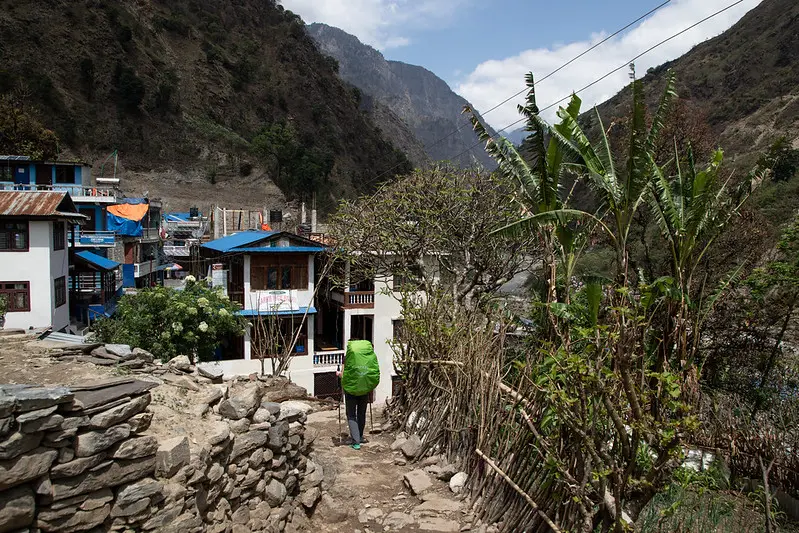 Machha Khola is where the Manaslu Circuit properly begins, reached by a long jeep or bus ride from Kathmandu along the Budhi Gandaki. "Fish River" is the literal translation — a nod to the river running past the village.
Accommodation here is the most comfortable of the entire trek, simply because road access makes construction and supply easier. Expect a mix of basic teahouses and slightly larger lodges, twin rooms with foam mattresses, and — in a number of them — an attached bathroom for a small premium. WiFi and hot showers are usually available for a fee, and the local hydropower connection makes charging generally straightforward.
It's worth resisting the temptation to read Machha Khola as a preview of what's ahead. This is the easiest night of the trip for accommodation, and the standard drops fairly steadily from here.
Jagat (1,340m / 4,396ft)
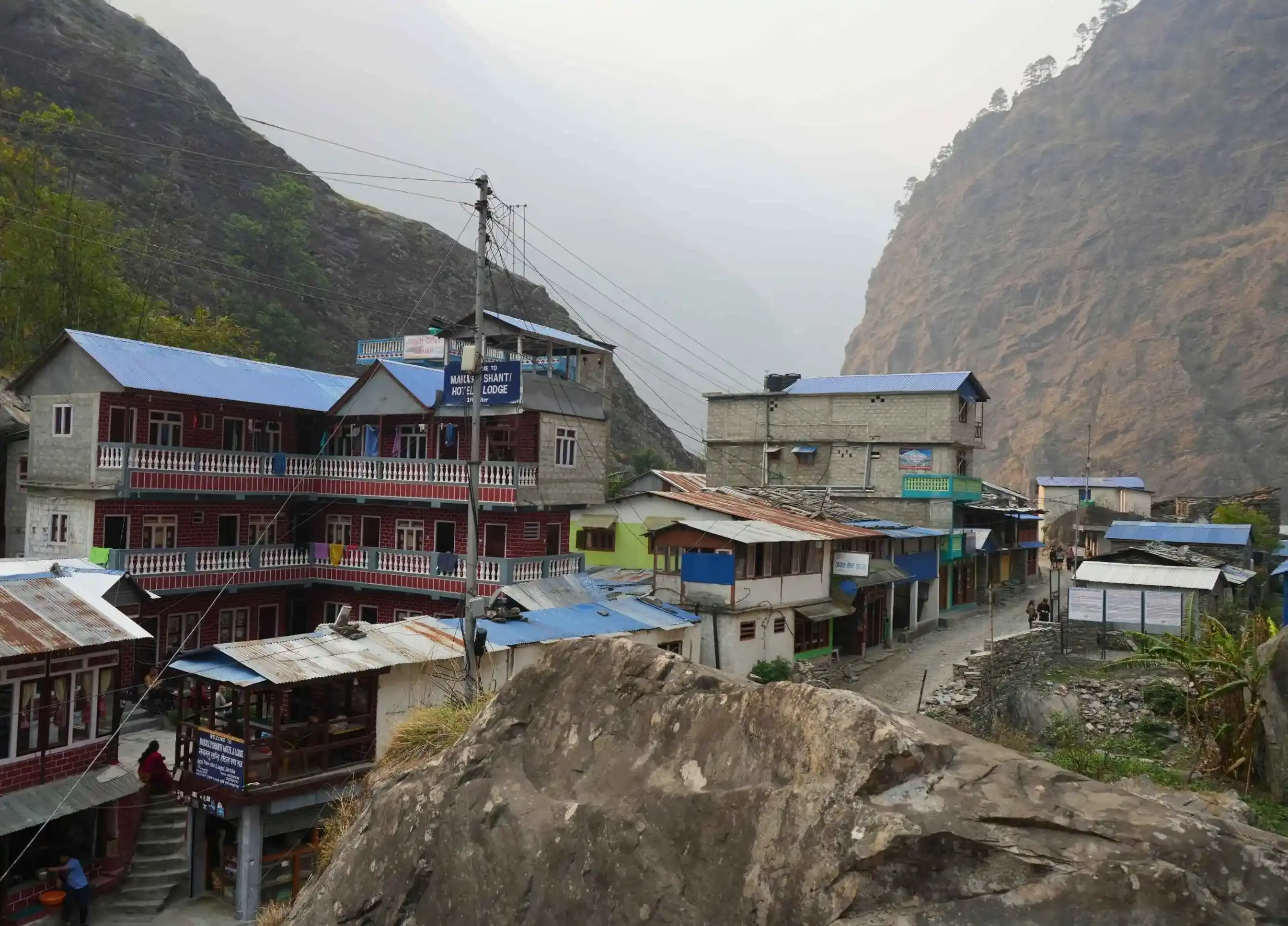 Jagat is the first true checkpoint village on the route — this is where your Restricted Area Permit gets checked and logged, so expect a short stop at the police post before you settle in for the night.
There are more teahouses here than in Machha Khola, giving you slightly more choice, and standards are similar: twin rooms, mostly shared bathrooms with a handful of attached options, and WiFi and hot showers available for a fee. Jagat sits at a scenic bend of the Budhi Gandaki, and several of the better teahouses make the most of it with rooms or a dining hall facing the river.
Deng (1,860m / 6,102ft)
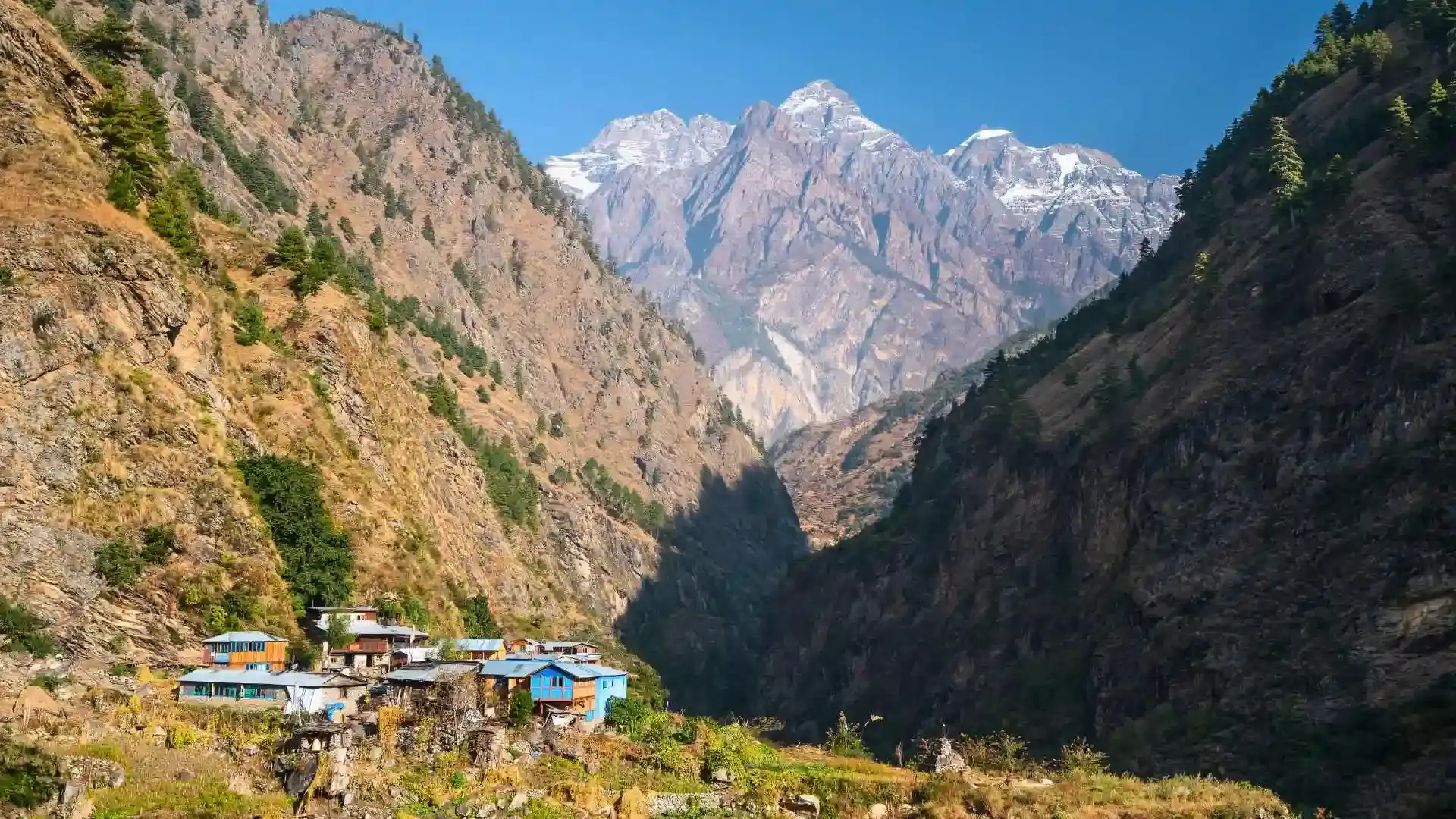 Deng is less a village in the traditional sense and more a small cluster of teahouses that exists because trekkers need somewhere to stop between Jagat and Namrung. Tamang and Gurung families run the handful of lodges here.
This is where the trip starts to feel more basic. Rooms are simple — a bed, a blanket, four wooden walls — and bathrooms are shared. Hot showers are inconsistent and sometimes unavailable; WiFi and charging are hit-and-miss depending on recent weather and how full the solar batteries are. The dining hall's wood stove is the social center of the evening, and the food, usually straightforward dal bhat, tends to be good precisely because there's little else to do but cook well.
Namrung (2,630m / 8,626ft)
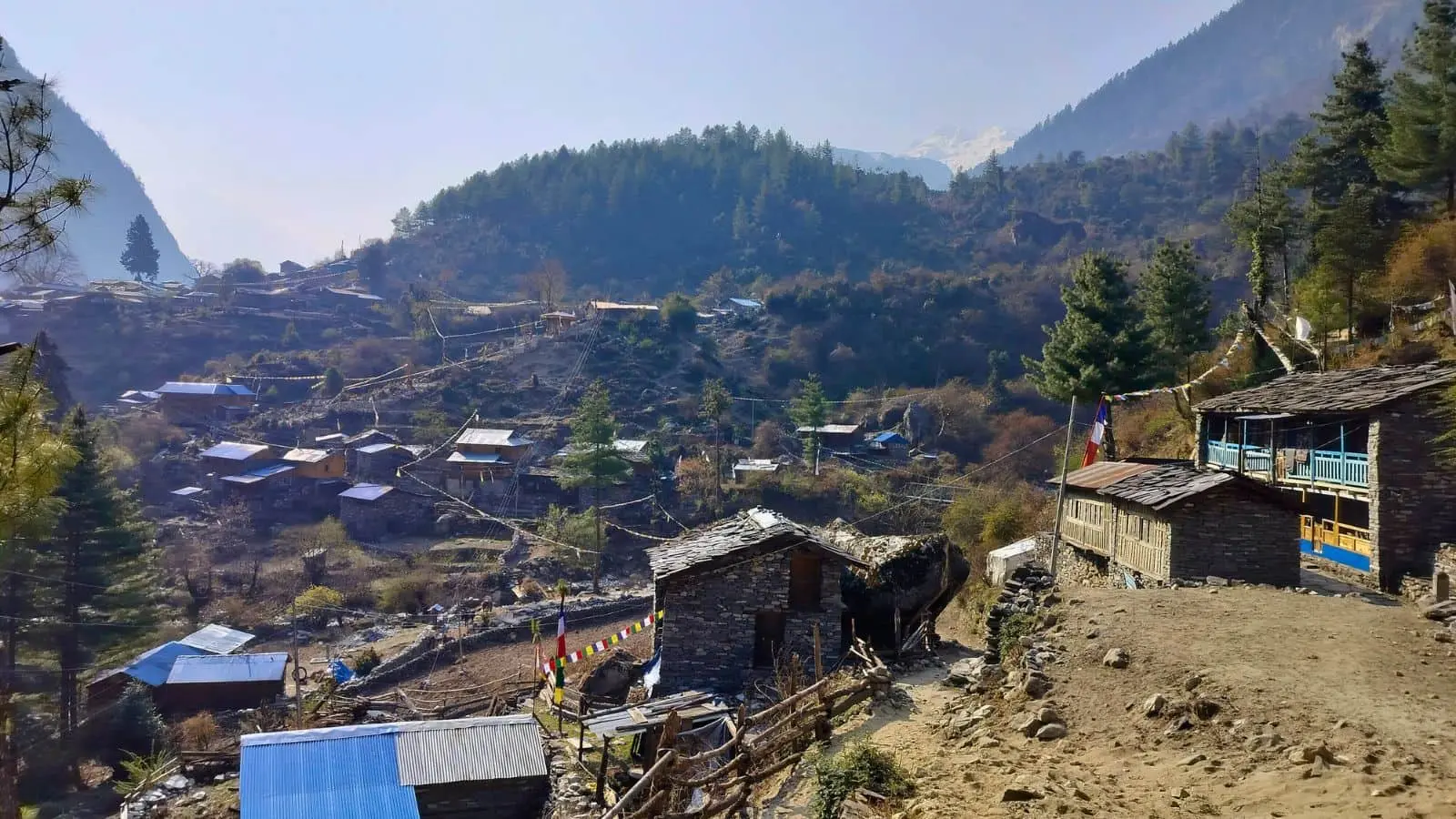 Namrung is the first village where you'll notice a real step up in comfort, and most trekkers on the route remark on it. Improved insulation, better-built rooms, and more dependable solar-plus-generator power set it apart from Deng.
Some lodges here offer a private toilet, hot showers are available for a fee, and WiFi is more common than not. The village also marks a cultural shift — Tibetan-influenced architecture becomes noticeably more present from here onward, and the views open up toward Siring Himal and Ganesh Himal on a clear evening.
Lho (3,180m / 10,433ft)
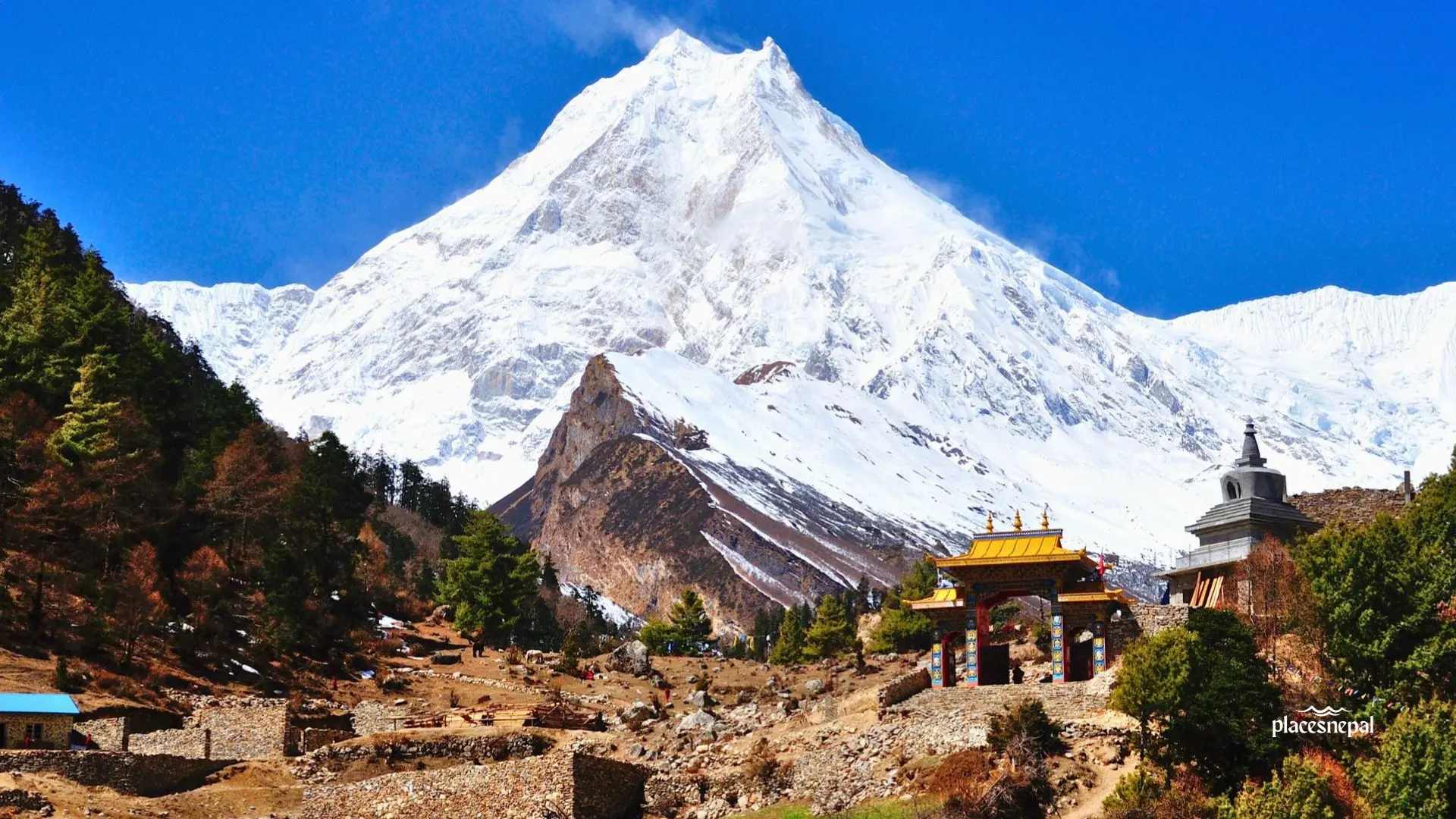 Lho sits beneath an old monastery and is widely considered one of the most photogenic overnight stops on the entire circuit, with some of the closest views of Manaslu itself before Samagaon.
Accommodation is comfortable by Manaslu's standards — solid teahouses with twin rooms and shared, squat-toilet bathrooms. Electricity is solar-powered and noticeably less consistent than in Namrung; don't count on WiFi here, though a few lodges are starting to offer it. This is also roughly where altitude begins to make itself felt for a meaningful number of trekkers, so an early night is worth more than an extra hour exploring the monastery.
Shyala (3,575m / 11,732ft)
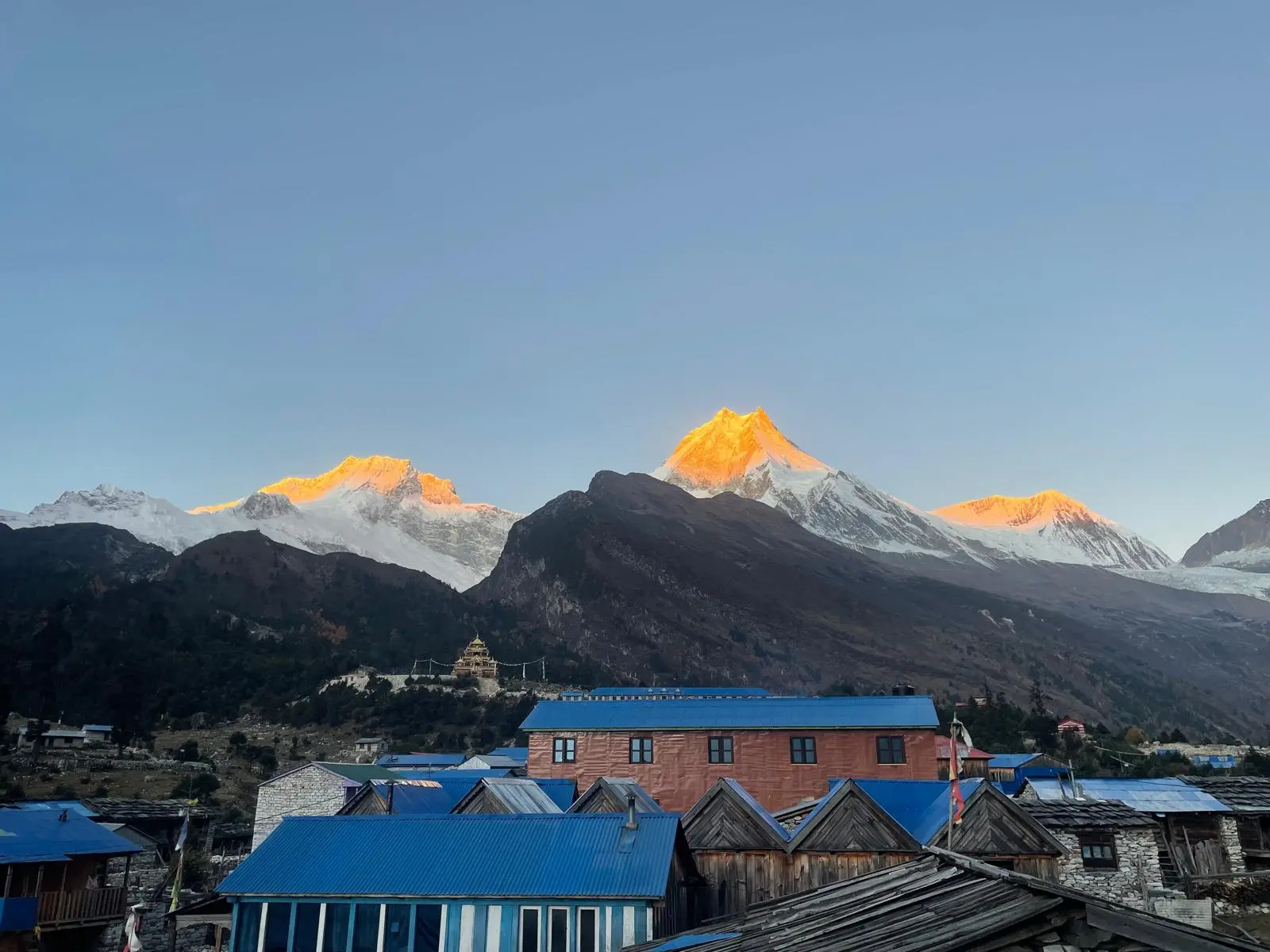 Shyala, sometimes spelled Syala, is the last stop before Samagaon and a natural, if informal, acclimatization point — the trail gains real elevation getting here from Lho, and the wide glacial valley it sits in offers some of the best 360-degree mountain views on the route.
Teahouses are basic: stone and wood construction, twin-share rooms, shared bathrooms, and charging that costs extra and isn't always reliable. What Shyala lacks in facilities it makes up for in scenery and quiet — this is one of the least crowded stops even in peak season.
Samagaon (3,530m / 11,581ft)
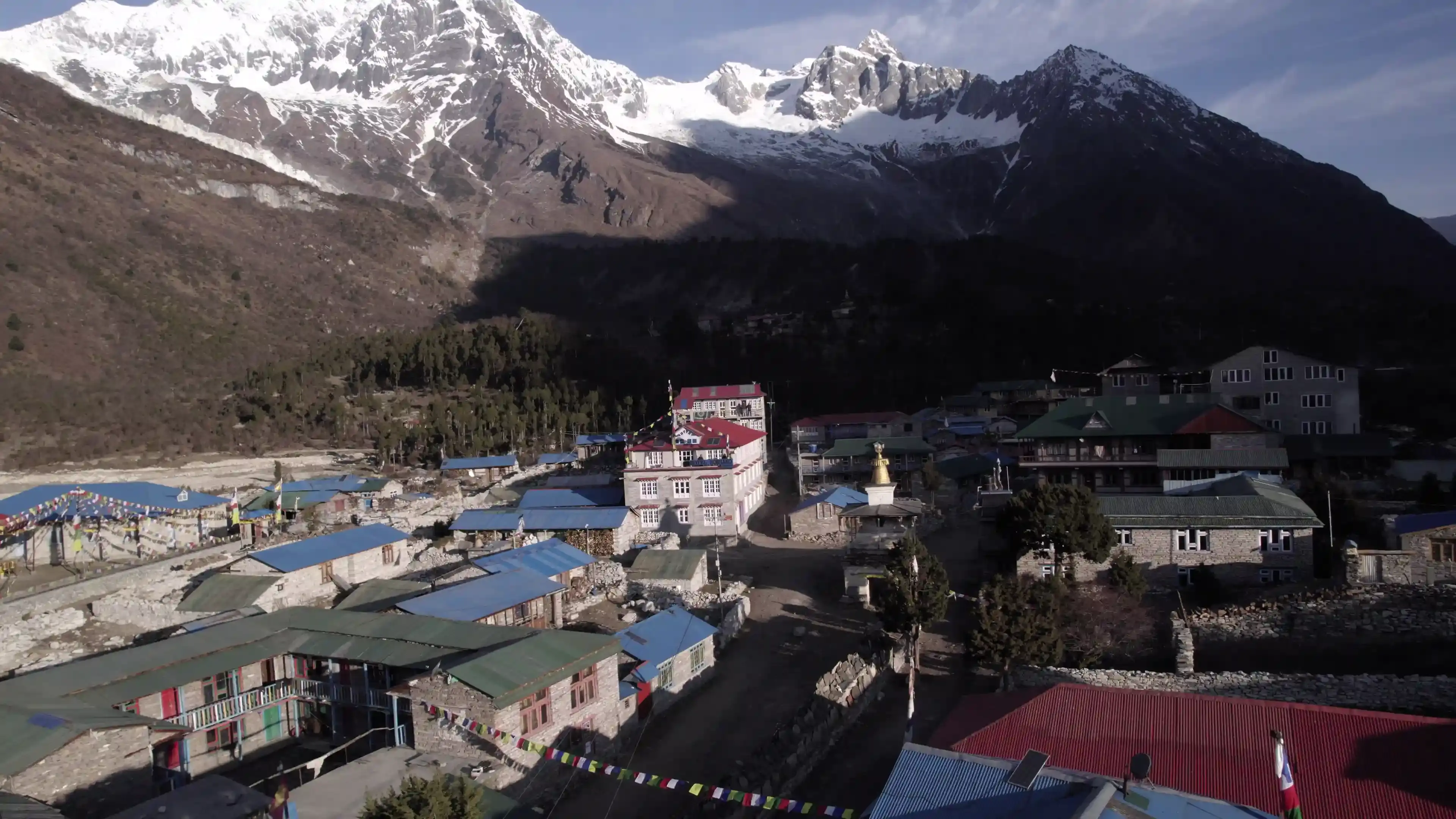 Samagaon, also written Sama Gaun, is the largest and best-developed village above Namrung, and it's built into every sensible Manaslu itinerary as a full acclimatization day — you sleep here twice, with a side trip to Manaslu Base Camp or Pungyen Gompa in between.
This is where accommodation genuinely improves again after the basic stretch through Deng and Shyala. Several lodges offer private or semi-private bathrooms, hot showers are dependable, WiFi is widely available, and the food menu is the most varied on the entire circuit — pizza and apple pie turn up alongside dal bhat and thukpa. Samagaon is also the busiest village on the route in peak season, so arriving reasonably early gives you first pick of rooms.
Samdo (3,875m / 12,713ft)
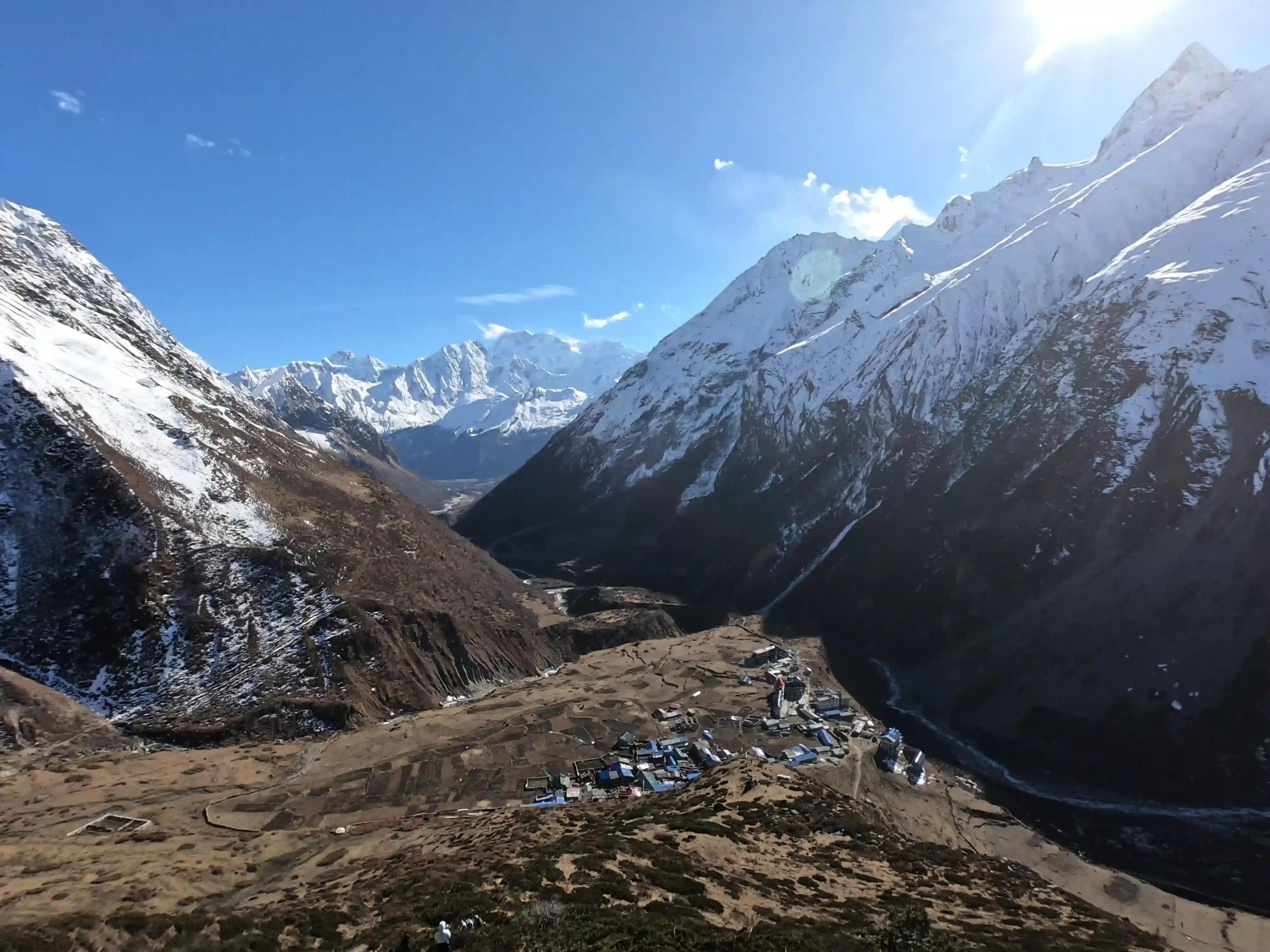 Samdo is the last true settlement before the pass, and the last village on the Nepali side of the old Tibetan trade route. Around six or seven teahouses serve trekkers here, run largely by Tibetan and Bhotia families.
Facilities exist but strain at this altitude: WiFi, electricity, and hot showers are all technically available, but slower, pricier, and less dependable than lower down. Attached bathrooms are effectively nonexistent. Many trekkers choose to skip showering here entirely and wait for Bimthang, on the far side of the pass, rather than deal with a lukewarm trickle in a freezing room.
Dharamsala / Larkya Phedi (4,460m / 14,633ft)
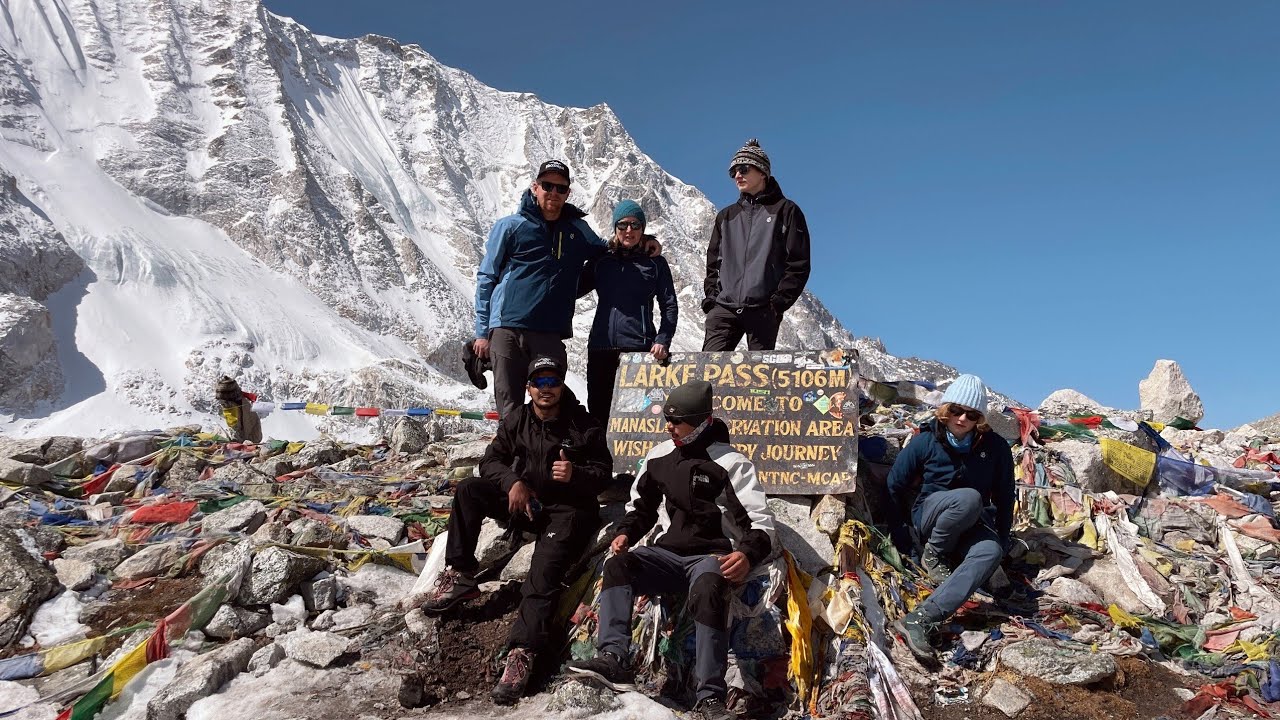
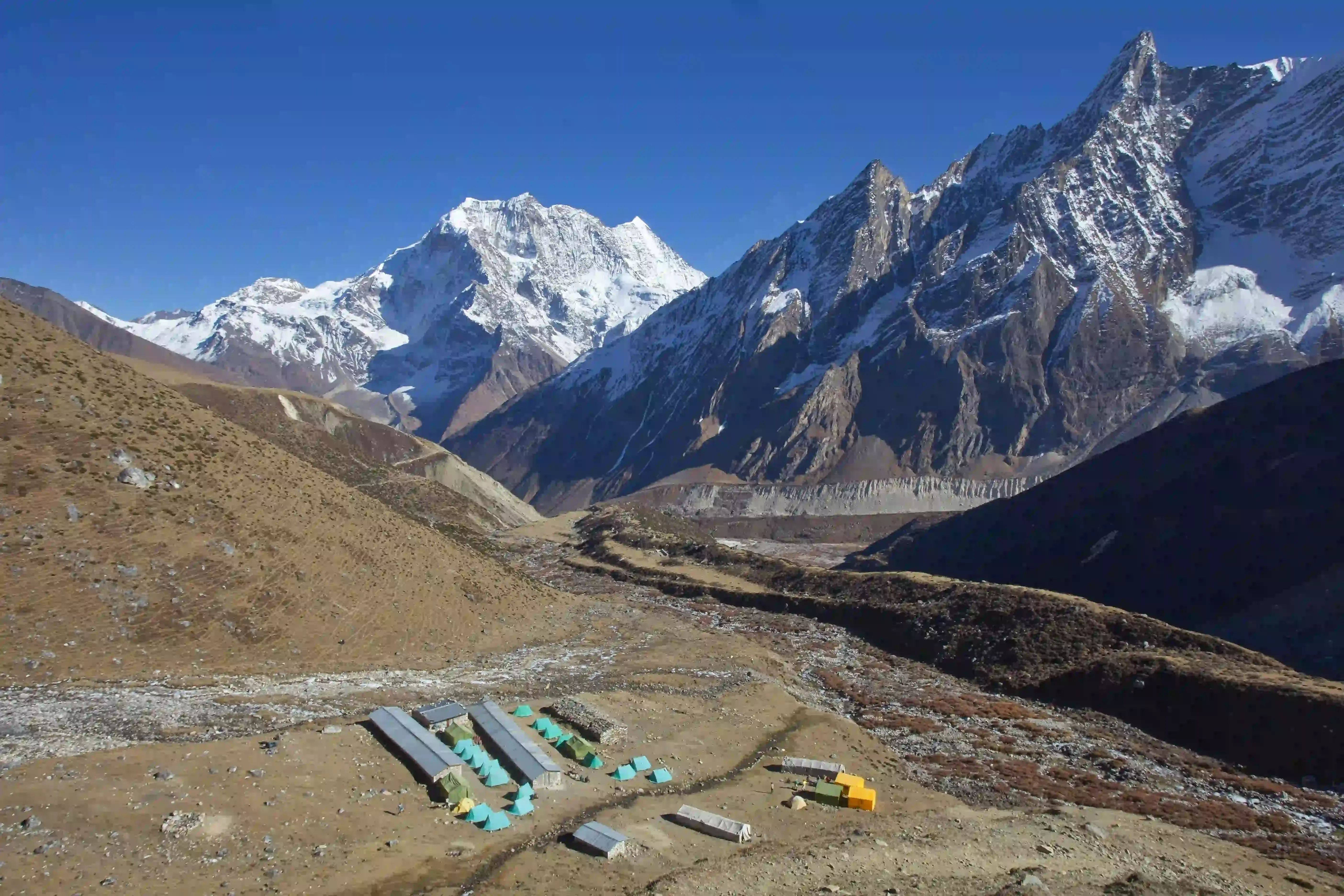 Dharamsala, also called Larkya Phedi, isn't a village in the way every other stop on this list is — it exists purely because trekkers need somewhere to sleep before crossing Larkya La (5,106m / 16,752ft) the next morning. A handful of stone lodges, sometimes supplemented by tents in peak season when rooms run out, make up the entire settlement.
This is the most basic night of the trek, and it's worth being told that plainly rather than discovering it on arrival. Electricity is minimal to nonexistent. There's no WiFi and no realistic hot shower. Rooms are dormitory-style and the shared bathrooms are outdoor and basic, sometimes freezing solid overnight. Prices for food and any available extras are the highest on the route, since everything arrives by porter or yak from Samdo. Bookings aren't guaranteed even with an agency in the busiest weeks of October and November — one more reason to trek with a guide who knows the teahouse owners and can secure a bed in advance.
Bimthang (3,720m / 12,205ft)
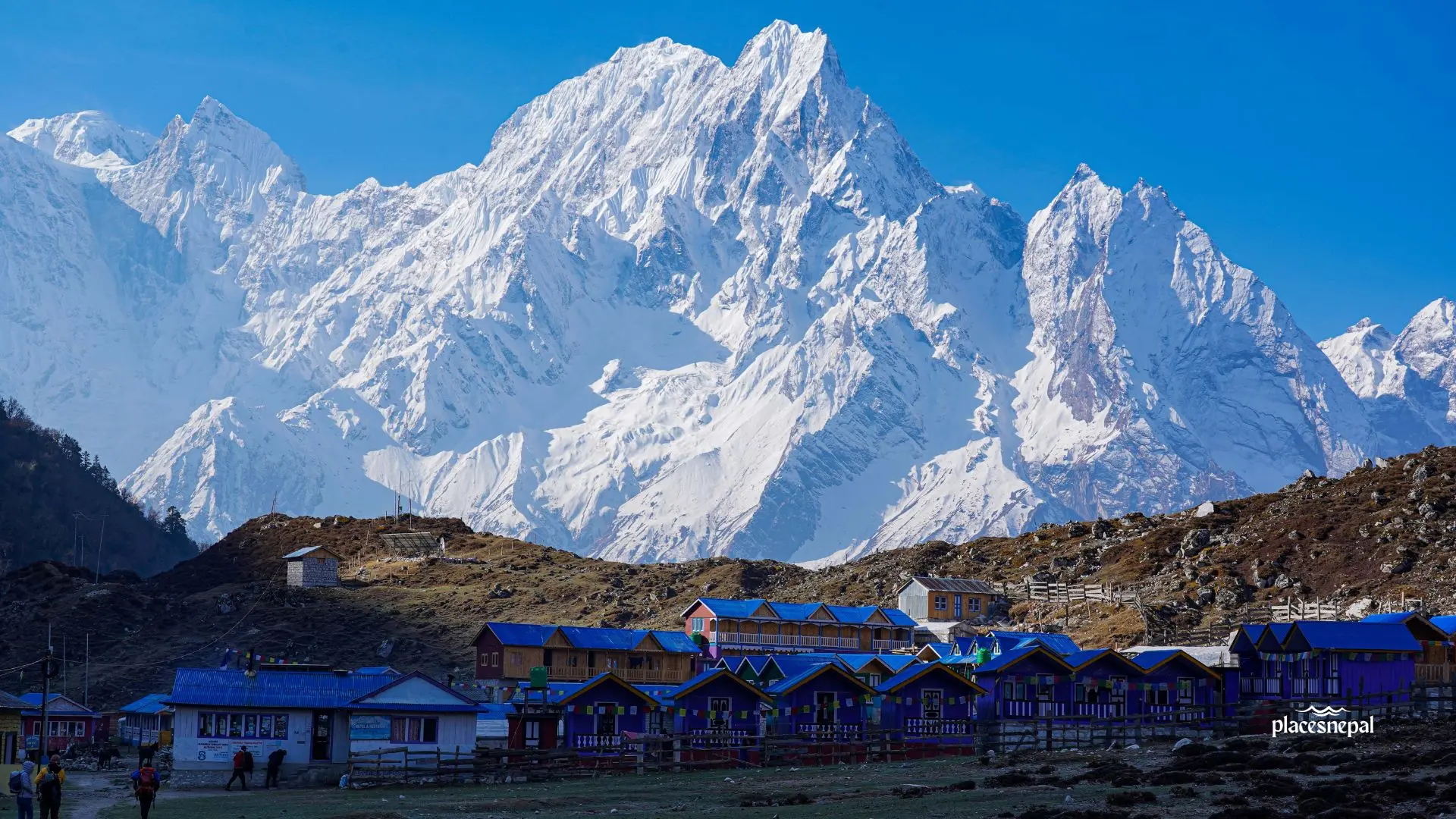 Bimthang, also spelled Bhimthang, is the first stop after crossing Larkya La, and after Dharamsala it feels like real comfort. Most trekkers describe it as one of the best nights of the whole circuit, both for the accommodation and for the setting — a wide valley with strong views back toward Manaslu from its western side.
Teahouses here typically offer hot showers, WiFi, and charging, all noticeably more reliable than anything you had access to for the previous two days. Rooms remain simple by international standards, but after the pass, simple with a hot shower feels like a considerable upgrade.
Dharapani (1,860m / 6,102ft)
Dharapani marks the end of the Manaslu-specific section of the trek, where the route joins the Annapurna Circuit trail and road access resumes. It's a noticeably larger and more developed village than anything you've passed since Jagat, with ten or more lodges to choose from.
Rooms are more comfortable, private bathrooms more common, and hot water more dependable than anywhere on the high route. For most trekkers, Dharapani is where the trip mentally shifts from wilderness trekking back toward civilization — a fitting, comfortable place to end the accommodation side of the journey before the drive back to Kathmandu. For a closer look at what comes after, see our teahouse guide to the Annapurna Circuit, which picks up from this same village.
Trek the Manaslu and Annapurna Circuit Trek
Two Legendary Trails. One Epic Himalayan Journey. Nepal's Most Complete High-Altitude Trekking Experience
Accommodation at Higher Altitude
Facilities on the Manaslu Circuit don't decline evenly — there's a fairly clear line, and it sits around Samdo and above. Below that line, most of what you'd expect from a teahouse trek is present in some form: charging, WiFi, a hot shower for a fee. Above it, all three become progressively less certain, and at Dharamsala, all three essentially disappear.
Three things change together as you climb past Samagaon:
Water gets colder and scarcer. Streams run lower, and the effort of heating water for a shower — carrying fuel or running a generator — stops making economic sense for a teahouse serving a handful of rooms a night.
Electricity becomes rationed rather than available. Solar panels generate less on short winter days and cloudy afternoons, and what power exists gets prioritized for lighting and the kitchen before it reaches a guest's phone charger.
Temperatures drop enough that comfort becomes a genuine planning issue, not just an inconvenience. Overnight lows at Dharamsala regularly fall well below freezing, and the gap between the dining room and your bed is the coldest, least comfortable stretch of most trekkers' entire Manaslu experience.
None of this means the trek becomes unsafe or unmanageable — thousands of trekkers cross Larkya La every season without incident. It does mean the two nights at Samdo and Dharamsala deserve real preparation: your warmest layers, a sleeping bag actually rated for the temperature, a charged power bank, and realistic expectations about what a hot shower will and won't be.
Trek the Manaslu Circuit Trek
A remote and off-the-beaten-path Himalayan adventure in Nepal. The trek covers roughly 126 km (78.2 miles) and involves 5–7 hours of hiking per day through villages, forests, and the Larkya Pass
Manaslu Accommodation Compared With Everest Base Camp
Trekkers who've done Everest Base Camp often ask how Manaslu compares, and the short answer is that Everest's teahouse infrastructure is meaningfully more developed almost everywhere along the route — a direct result of the far higher trekker numbers passing through the Khumbu each season, and the absence of a restricted-area permit system slowing that growth.
Namche Bazaar alone has more bakeries, bars, and pharmacies than the entire Manaslu Circuit combined. Attached bathrooms and hot showers are more common at equivalent altitudes on the Everest route, paid WiFi packages are more consistent, and the sheer number of competing lodges in villages like Namche and Dingboche gives trekkers more choice and, often, better value for money.
What Manaslu offers instead is scale-appropriate authenticity: fewer trekkers, more direct contact with the families who run each teahouse, and a route that hasn't been reshaped by two decades of steadily rising tourist volume. It also comes with real trade-offs — a mandatory guide, restricted-area permits, and accommodation that, above Namrung, is genuinely more basic than its Everest equivalent at a comparable altitude.
Neither route is objectively better; they suit different priorities. If consistent comfort and more amenities matter more to you than solitude, Everest Base Camp will likely suit you better. If you'd rather trade some of that comfort for a quieter trail and a less commercialized experience, Manaslu is the stronger choice.
| Feature | Manaslu Circuit | Everest Base Camp |
|---|
| Room quality | Basic to modest; noticeably simpler above Namrung | Basic to modest; generally better maintained at equivalent altitude |
| Crowds | Low — restricted-area permits limit numbers | High, especially Namche to Tengboche in peak season |
| Food choices | Good, but the menu narrows above Deng; Samagaon is the exception | Wide, including bakeries and Western options in Namche and Dingboche |
| WiFi | Available below Samagaon; unreliable and often absent above Samdo | Widely available via paid packages most of the route |
| Electricity | Solar-dependent above Namrung; scarce at Dharamsala | More consistent hydro and solar infrastructure throughout |
| Bathroom facilities | Shared squat toilets standard above Namrung; attached bathrooms rare | Attached bathrooms more common, especially Namche and Lukla |
| Authenticity | High — family-run, low commercialization, few tourists | Moderate — still authentic, but shaped by decades of higher tourist volume |
| Overall comfort | Lower, particularly Samdo to Dharamsala | Higher and more consistent village to village |
For more on how the two treks compare beyond accommodation — difficulty, altitude profile, and crowds — see our Manaslu vs Everest Base Camp comparison.
Private Rooms vs Shared Rooms
Private, single-occupancy rooms exist on the Manaslu Circuit, but they're the exception rather than the rule, and availability drops the higher you go. In the lower villages — Machha Khola through Namrung — a solo trekker willing to pay a small supplement can usually get a room to themselves outside peak season. Above Lho, most teahouses simply don't have spare rooms to offer that reliably, and during October and November, even trekkers travelling in pairs may end up sharing a room with a stranger on the busiest nights if a lodge fills up.
This is one area where booking through a registered local operator makes a tangible difference, and not just for permit reasons. Guides who work the route regularly know which teahouses in each village have the better rooms, coordinate ahead where phone or radio contact allows, and — at chokepoints like Dharamsala — can be the difference between a room and a mattress in the corner of the dining hall during the busiest week of peak season.
Solo trekkers should also note that since March 2026, Nepal's Department of Immigration no longer requires a minimum of two trekkers to obtain a Manaslu Restricted Area Permit, so travelling without a companion is more straightforward than it used to be on paper. A licensed guide remains mandatory regardless of group size, which in practice means you're never actually walking — or negotiating for a room — entirely alone. For the full picture on permits and costs, read our Manaslu Circuit Trek Permit guide.
What to Pack for Tea House Accommodation
None of this is exotic gear — it's mostly about closing the small gaps teahouse accommodation leaves open. Full detail on clothing and technical gear by season is in our complete Manaslu Circuit Trek packing list.
- Sleeping bag rated -10°C to -15°C, depending on season and how high your itinerary goes
- Sleeping bag liner — extra warmth and a cleaner barrier against shared teahouse blankets
- Headlamp with spare batteries — corridors and bathrooms are rarely well lit at night
- Power bank (10,000–20,000mAh) — charge it whenever you reach reliable electricity
- Earplugs — thin walls and early risers make these worth packing even if you don't normally need them
- Quick-dry towel — teahouses don't provide one
- Toiletries — biodegradable soap, toothbrush, hand sanitizer
- Extra toilet paper — shared rolls run out, especially in peak season
- Small padlock — for a duffel bag zip or, occasionally, a room door
- Reusable water bottle plus purification tablets or a filter — boiled water is sold at most teahouses, but treating your own saves money over two weeks
- Camp shoes or flip-flops — a relief after a day in trekking boots, and useful for late-night bathroom trips
- Small-denomination Nepali rupees — for charging, WiFi, and shower fees; teahouses rarely have change for large notes
Accommodation Tips From Experienced Guides
- Arrive at each stop by early-to-mid afternoon during peak season (October–November and March–May) — the best rooms go to whoever gets there first.
- Carry small-denomination Nepali rupees. Nobody at 3,800m can break a large note.
- Let your guide choose the teahouse where you have options — they know which one has a working shower this particular week.
- Charge every device fully whenever you reach dependable power, not just when your battery is running low.
- Pack a sleeping bag rated to at least -15°C if your itinerary crosses Larkya La in shoulder season.
- Bring your own toilet paper from Kathmandu — it's cheaper, and you won't run short.
- Don't expect a secure lock on your room door; keep your passport, cash, and electronics in a daypack you keep with you.
- Ask about hot shower availability before you pay for it. At altitude, "hot" sometimes means lukewarm at best.
- Request extra blankets at check-in rather than waiting until you're already cold at midnight.
- Eat where you sleep. It's the norm on this route, and teahouse owners notice and appreciate it.
- Order dinner as soon as you arrive, not after you've showered and settled in — dining halls at altitude serve one meal at a time, and kitchens back up fast.
- Keep your headlamp within reach of your pillow, not buried in your pack. Bathroom trips at 2am are close to inevitable at altitude.
- Pack earplugs even if you've never needed them before. Walls are thin and early risers are common.
- Don't rely on WiFi for anything time-sensitive above Namrung. Download maps, music, and messages while you still have signal.
- Treat your power bank as essential gear, not a backup.
- If you're trekking solo, book through a registered agency. It materially improves your odds of a room during peak weeks.
- Layer up before you get cold, not after. Teahouse rooms don't warm up once you're already in them.
- Keep your daypack accessible in your room overnight, in case of an early departure or an unplanned descent.
- Pack a small dry bag or liner for your duffel. Roofs occasionally leak during the shoulder monsoon weeks.
- Trust your guide's judgment on Dharamsala. This is the one village where "we'll figure it out on arrival" genuinely doesn't work in peak season.
- Don't count on a single room above Lho, even if you paid for one lower down. Supply simply runs out.
- Ask your guide which teahouse owner they know personally in each village. Personal relationships often mean better rooms and better food.
- Pack camp shoes. Changing out of trekking boots the moment you arrive makes a real difference to how the evening feels.
- Set expectations with travel companions before the trek. The person who's fine with a squat toilet and the person who isn't should know that about each other in advance, not discover it at Dharamsala.
- Budget more cash than you think you'll need for the final stretch, where everything costs more.
- If you're sensitive to cold, ask for a room away from an exterior wall where the teahouse layout allows it.
- Don't leave valuables in your room during meals. Theft is rare on this route, but a locked daypack at your feet in the dining hall removes the question entirely.
- Accept that Dharamsala will be uncomfortable, and treat it as one difficult night rather than a reflection of the whole trek.
- Book your Manaslu Circuit Trek with enough lead time for us to secure permits and, where relevant, reserve rooms in the busiest villages before peak season fills up.
- Pack a small stash of snacks from Kathmandu for the high villages, where teahouse snack menus are limited and pricier.
Common Accommodation Mistakes on the Manaslu Circuit Trek
- Expecting hotel-level comfort. Manaslu teahouses are family-run lodges, not hotels — arriving with five-star expectations sets you up for a disappointment that has nothing to do with the trek actually going wrong.
- Not packing a sleeping bag. Teahouse blankets alone aren't warm enough above 3,500m, and it isn't something you can easily buy along the route.
- Forgetting to carry enough cash. ATMs disappear after the lower valley, and teahouses can't process cards. Running short of rupees at Samdo is a genuinely difficult position.
- Waiting until evening to look for a room in peak season. The best rooms — sometimes the only rooms — go to whoever arrives first. Showing up at 5pm in November can mean overflow space instead of a proper room.
- Packing too many electronics without enough charging capacity. Every device needs power somewhere, and above Namrung that power is scarce and costly.
- Assuming WiFi will work above Samagaon. Planning to video call family from Dharamsala sets up a disappointment. Tell people in advance you'll be offline.
- Skipping travel insurance that covers high-altitude trekking and evacuation. Not strictly an accommodation issue, but it becomes one fast if you fall ill at Dharamsala with no way to pay for a helicopter.
- Not bringing your own toilet paper. Shared rolls at teahouses run out, especially in busy weeks, and it isn't always for sale on site.
- Trekking without a guide or agency, assuming you can "wing it." Manaslu's restricted-area rules make this illegal, not just inadvisable — and a good guide is also your best tool for securing rooms.
- Underestimating how cold rooms get at night. Trekkers who assume "it's just a bedroom" without checking the temperature outside often end up sleeping in every layer they own, out of necessity rather than choice.
- Booking the trip too close to peak season. Late bookings leave your operator less room to secure the better teahouses in high-demand villages.
- Overpacking heavy gear "just in case." More weight means more fatigue, and fatigue makes cold, basic accommodation feel far worse than it actually is.
- Ignoring your guide's teahouse recommendation to save a dollar or two at a lesser lodge. The savings are rarely worth the difference in cleanliness or warmth.
- Showering right before bed at high altitude. Wet hair in a cold room is a fast way to get uncomfortably cold overnight. Showering earlier in the afternoon, where you shower at all above Samdo, works better.
- Assuming a private room is available everywhere. Above Namrung, this often simply isn't true, regardless of what you paid for lower down.
- Leaving valuables unattended in unlocked rooms. Theft is uncommon but not impossible, and most doors don't lock securely.
- Not confirming dietary requirements with your guide in advance. Gluten-free and other specific diets are much harder to accommodate spontaneously at 4,000m than with a day's notice.
- Drinking untreated water to save money. Illness from unclean water can end a trek faster than any accommodation issue. Treat your own water or buy boiled water consistently.
- Assuming Dharamsala will be similar to Samdo. It's a meaningful step down in every facility, and going in with Samdo-level expectations leads to unnecessary frustration.
- Not telling your guide about cold sensitivity, sleep issues, or mobility concerns before the trek starts. These are exactly the things a guide can plan around — a room away from an exterior wall, an earlier arrival time — if they know in advance rather than discovering it at altitude.
- Skipping earplugs and an eye mask. Thin walls, early risers, and solar lighting patterns disrupt sleep more than most first-time trekkers expect.
- Assuming hot showers are included in the room price. They're almost always a separate charge, and not budgeting for that adds up over two weeks.
How Manaslu Accommodation Compares With Other Nepal Treks
Manaslu isn't the only route in Nepal built around teahouse trekking, and it's worth knowing roughly where it sits on the comfort spectrum before choosing between it and something else.
| Trek | Accommodation Style | Comfort Level | Best For |
|---|
| Manaslu Circuit Trek | Family-run teahouses, basic above Namrung | Moderate | Trekkers who prioritize remoteness and authenticity over amenities |
| Everest Base Camp Trek | Well-developed teahouses and lodges | Moderate to good | First-time high-altitude trekkers who want more amenities and infrastructure |
| Annapurna Circuit Trek | Extensive teahouse network, partial road access | Good | Trekkers wanting variety, comfort, and flexibility along the route |
| Langtang Valley Trek | Comfortable village lodges, shorter days | Good | Beginners, families, and shorter trip timeframes |
| Pikey Peak Trek | Simple village teahouses, lower altitude | Good | Trekkers wanting mountain views without major altitude challenges |
Manaslu Circuit Trek: Sits toward the basic end of Nepal's major teahouse routes, particularly above Namrung — and that's precisely the trade-off that gives it its character. Restricted-area rules keep trekker numbers low, so accommodation has developed more slowly and stayed more authentically family-run than on Nepal's two busiest circuits.
Everest Base Camp Trek: Offers considerably more developed teahouses at similar altitudes, the result of decades of higher trekker traffic through the Khumbu. Bakeries, bars, pharmacies, and reliable WiFi packages are part of daily life on this route in a way they simply aren't on Manaslu.
Annapurna Circuit Trek: Arguably has the widest range of teahouse accommodation in Nepal, from basic mountain lodges to genuinely comfortable guesthouses in villages like Manang and Muktinath, helped by partial road access along parts of the route. A strong choice for trekkers who want a high pass and serious mountain scenery without Manaslu's restricted-area logistics.
Langtang Valley Trek: One of the more comfortable teahouse treks near Kathmandu, with shorter trekking days and villages that, since being rebuilt after the 2015 earthquake, offer solid, welcoming lodges without Manaslu's altitude or permit demands.
Pikey Peak Trek: Stays at a lower altitude throughout, so accommodation is consistently more comfortable and facilities more dependable — a good option for trekkers who want genuine Himalayan views without the accommodation trade-offs of a high pass like Larkya La.
Trek the Manaslu Circuit Trek
A remote and off-the-beaten-path Himalayan adventure in Nepal. The trek covers roughly 126 km (78.2 miles) and involves 5–7 hours of hiking per day through villages, forests, and the Larkya Pass
Frequently Asked Questions
Are there hotels on the Manaslu Circuit Trek? No. Once you leave Kathmandu, all accommodation is in teahouses — family-run lodges that provide a room and meals. There are no hotels, resorts, or chain guesthouses on the trekking route itself.
Where do you sleep on the Manaslu Circuit Trek? In a teahouse in a village at the end of each day's walk, from Machha Khola through Dharapani. Every standard overnight stop has at least one teahouse, and most have several.
Can I get a private room on the Manaslu Circuit Trek? Sometimes, mostly in the lower villages (Machha Khola to Namrung) and mostly outside peak season, for a small supplement. Above Lho, private rooms become unreliable simply because teahouses have fewer rooms to offer.
Do teahouses on Manaslu have WiFi? Most teahouses from Machha Khola through Samagaon offer paid WiFi. Above Samdo, WiFi is unreliable and largely absent, particularly at Dharamsala.
Is hot water available on the Manaslu Circuit Trek? Yes, in most villages below Samdo, usually for a fee of NPR 200–500. Above Samdo, hot water becomes unreliable, and at Dharamsala it's essentially unavailable.
Are blankets provided in Manaslu teahouses? Yes, typically one to two per bed. They're often not warm enough alone above 3,500m, which is why a proper sleeping bag is strongly recommended.
Should I bring a sleeping bag for the Manaslu Circuit Trek? Yes. A four-season bag rated to at least -15°C is recommended for the nights around Larkya La Pass; a -10°C bag is generally enough for the rest of the route in peak seasons.
Can I charge my phone on the Manaslu Circuit Trek? Yes, in most teahouses, usually for an extra fee once you're past the lower valley. Charging becomes slower and less certain above Namrung, and minimal at Dharamsala.
Are bathrooms shared on the Manaslu Circuit Trek? Mostly, yes. Shared, squat-style toilets are standard above Namrung. Attached, private bathrooms exist in the lower villages and occasionally in Samagaon, but they're the exception rather than the rule.
Is accommodation on Manaslu better or worse than Everest Base Camp? Generally more basic. Everest Base Camp's teahouse infrastructure is more developed at comparable altitudes because of significantly higher trekker numbers, though Manaslu offers a quieter, more authentic experience in exchange.
Where is the most basic accommodation on the Manaslu Circuit? Dharamsala (Larkya Phedi), at 4,460m. It's a purpose-built trekker shelter with minimal electricity, no WiFi, no realistic hot shower, and dormitory-style rooms.
What is the best village for accommodation on the Manaslu Circuit? Samagaon offers the best combination of comfort and facilities above Namrung — hot showers, WiFi, varied food, and some private bathrooms — helped by the fact most itineraries include two nights there for acclimatization.
Do I need to book teahouses in advance on the Manaslu Circuit? Not individually, but your guide typically arranges rooms as you go. This matters more here than on busier routes, since some villages — especially Dharamsala — have very few beds relative to peak-season demand.
Is camping required on the Manaslu Circuit Trek? No. A standard itinerary uses teahouses for the entire route. Camping is now mostly limited to Manaslu Base Camp expeditions and specialized off-route trips.
What type of toilets are on the Manaslu Circuit Trek? A mix of Western and squat toilets in the lower villages, shifting to almost entirely squat toilets from Namrung upward.
Are there attached bathrooms on the Manaslu Circuit Trek? Occasionally — mostly in Machha Khola, Jagat, and select lodges in Namrung and Samagaon. Above that, expect shared, corridor bathrooms.
How much does a hot shower cost on the Manaslu Circuit? Typically NPR 200–500 (roughly USD 1.50–4) where available. Prices rise with altitude, and a shower isn't realistically available at Dharamsala.
How much does charging a phone cost on the Manaslu Circuit? Usually NPR 200–500 per device per charge in the mid and upper villages, sometimes free of charge in the lower valley.
Is there electricity at Dharamsala (Larkya Phedi)? Very little. Power is solar-dependent and often minimal or unavailable, so don't plan on charging devices there.
What's the food like at Manaslu teahouses? Simple and fairly consistent: dal bhat, noodles, soup, momos, and Tibetan bread, with Samagaon offering the widest menu, including pizza and apple pie in some lodges.
Do Manaslu teahouses serve breakfast? Yes, every teahouse serves breakfast — typically eggs, porridge, Tibetan bread, or pancakes alongside tea or coffee.
Can vegetarians and vegans eat well on the Manaslu Circuit? Yes. Vegetarian food is straightforward throughout, and vegan requests are generally manageable with advance notice to your guide.
Is gluten-free food available on the Manaslu Circuit Trek? It's harder to guarantee, especially at higher altitude. Flag any dietary requirements to your guide before the trek so meals can be planned around them.
How cold do teahouse rooms get on the Manaslu Circuit? Rooms aren't heated, so they sit close to outside temperature overnight. This becomes more noticeable from Deng upward.
Is there heating in Manaslu Circuit teahouse rooms? No, guest rooms are unheated almost everywhere. The dining room stove is the only heated space in most teahouses.
Can solo trekkers get rooms on the Manaslu Circuit Trek? Yes, though private rooms become less available at higher altitude. Since March 2026, solo trekkers no longer need a second person to obtain a Restricted Area Permit, though a licensed guide is still mandatory.
Do I need a guide to arrange accommodation on Manaslu? Not strictly for booking itself, but it helps significantly. Manaslu requires a licensed guide by law regardless, and guides who know the route also know which teahouses to approach and when.
What should I expect compared to Everest Base Camp? More basic rooms and fewer amenities above Namrung, fewer fellow trekkers, and a more direct, family-run atmosphere than the more commercialized Khumbu route.
Are there ATMs along the Manaslu Circuit Trek? No, not beyond the lower valley. Carry enough Nepali rupees in cash for the entire trek before you start.
What's the coldest overnight stop on the Manaslu Circuit? Dharamsala (Larkya Phedi) at 4,460m, followed closely by Samdo. Both call for your warmest gear.
Do teahouses on Manaslu have single beds or double beds? Rooms are almost always twin-share, with two separate single beds rather than one double bed.
What's the difference between a teahouse and a lodge on Manaslu? Mostly scale. "Lodge" is often used for the larger, more established teahouses in bigger villages like Namrung, Samagaon, and Bimthang, but they operate on the same family-run model.
Is there mobile signal on the Manaslu Circuit Trek? Yes, intermittently, up to around Samdo. Coverage drops through Dharamsala and over Larkya La, returning at Bimthang.
Where should I stay in Kathmandu before and after the trek? Most trekking packages, including ours, include a centrally located hotel in the Thamel area before and after the trek, with far more comfort and amenities than anything on the trail itself.
What's the best time of year for accommodation comfort on Manaslu? Spring (March–May) and autumn (September–November) see the most teahouses open and fully staffed. Some higher lodges reduce service or close entirely during winter and the monsoon.
Do teahouses fill up on the Manaslu Circuit Trek? Yes, particularly during peak weeks in October and November, and especially at Dharamsala, where bed numbers are genuinely limited.
Is it safe to leave valuables in a teahouse room? Theft is uncommon but not impossible, and most room doors don't lock securely. Keep valuables with you, especially during meals.
What should I pack for teahouse hygiene on Manaslu? Hand sanitizer, biodegradable soap, a quick-dry towel, and your own toilet paper — none of these are guaranteed to be provided or fully stocked.
Are there pharmacies or shops near Manaslu teahouses? Very few, and only in the larger villages like Jagat, Namrung, and Samagaon. Carry any medication and personal supplies you need for the full trek.
How many teahouses are there in each village on Manaslu? It varies widely — from ten or more in Jagat and Dharapani down to as few as two or three at Dharamsala. Village-by-village counts are covered earlier in this guide.
Can I choose which teahouse I stay in? Generally yes, especially in larger villages with several options. Your guide will usually offer a recommendation based on current conditions and can adjust if you have a strong preference.
Does Manaslu Circuit Trek accommodation improve after Larkya La Pass? Yes, noticeably. Bimthang, the first stop after the pass, typically has hot showers, WiFi, and charging — a real step up from Dharamsala and Samdo.
Is accommodation included in a Manaslu Circuit Trek package? Yes — with a reputable operator, teahouse accommodation throughout the trek, along with meals and hotel nights in Kathmandu, is included in the package price. Our Manaslu Circuit Trek cost guide breaks this down in detail.
Do Manaslu teahouses accept credit cards? No. Carry sufficient Nepali rupees in cash — card payment isn't available once you leave Kathmandu.
Final Thoughts on Manaslu Circuit Trek Accommodation
Accommodation on the Manaslu Circuit is honest, in both senses of the word: it's honestly basic in places, and it gives you an honest, largely unfiltered look at how people actually live in the Budhi Gandaki and Nubri valleys. You won't find the bakeries and bars of Namche Bazaar here, and you shouldn't expect them. What you will find is a warm room out of the wind most nights, a hot plate of dal bhat, and the kind of hospitality that hasn't yet been reshaped by mass tourism.
If you're weighing Manaslu against Nepal's more developed routes, the accommodation trade-off is really the whole decision in miniature: less consistent comfort, in exchange for a quieter trail and a more direct connection to the people who call this valley home.
We've been arranging Manaslu Circuit Trek from Kathmandu for years, and we brief every client on exactly what's in this guide before they leave — no surprises, no oversold comfort, just an accurate picture of what two weeks in these teahouses actually looks like. If you have questions about a specific stretch of the route, get in touch with our team or plan your trip directly.