[{"name":"Everest Base Camp Trek","duration":14,"image_url":"https:\/\/www.placesnepal.com\/storage\/trip-galleries\/1\/thumb_07fa6c7288d2e823c070e64af8635cd3.webp","offer_price":1260,"url":"https:\/\/www.placesnepal.com\/trip\/everest-base-camp-trek"},{"name":"Manaslu Circuit Trek","duration":12,"image_url":"https:\/\/www.placesnepal.com\/storage\/trip-galleries\/3\/thumb_af31aa9dc6756ba9a9cee02d114eda17.webp","offer_price":980,"url":"https:\/\/www.placesnepal.com\/trip\/manaslu-circuit-trek"},{"name":"Annapurna Circuit Trek","duration":10,"image_url":"https:\/\/www.placesnepal.com\/storage\/trip-galleries\/4\/thumb_a5f24d1188e8d45fed7e7fcbe32b854f.webp","offer_price":820,"url":"https:\/\/www.placesnepal.com\/trip\/annapurna-circuit-trek"},{"name":"Gokyo Lake Trek","duration":10,"image_url":"https:\/\/www.placesnepal.com\/storage\/trip-galleries\/5\/thumb_c0517ff96a95dc1183e5facfcbd7705c.webp","offer_price":1150,"url":"https:\/\/www.placesnepal.com\/trip\/gokyo-lake-trek"},{"name":"Annapurna Base Camp Trek","duration":10,"image_url":"https:\/\/www.placesnepal.com\/storage\/trip-galleries\/6\/thumb_4a1a9da373c04d849c7afd07d675e62d.webp","offer_price":null,"url":"https:\/\/www.placesnepal.com\/trip\/annapurna-base-camp-trek"},{"name":"Short Manaslu Circuit Trek","duration":10,"image_url":"https:\/\/www.placesnepal.com\/storage\/trip-galleries\/7\/thumb_2a266d03099c6e71e4787f28e3a8d06e.webp","offer_price":750,"url":"https:\/\/www.placesnepal.com\/trip\/short-manaslu-circuit-trek"},{"name":"Langtang Valley Trek","duration":8,"image_url":"https:\/\/www.placesnepal.com\/storage\/trip-galleries\/8\/thumb_fa6aa089bd6b5f45934971d44a5ff385.webp","offer_price":590,"url":"https:\/\/www.placesnepal.com\/trip\/langtang-valley-trek"},{"name":"Upper Mustang Trek","duration":14,"image_url":"https:\/\/www.placesnepal.com\/storage\/trip-galleries\/9\/thumb_d9cf7722e6cd6c4f55993cadc16b00b1.webp","offer_price":1800,"url":"https:\/\/www.placesnepal.com\/trip\/upper-mustang-trek"},{"name":"Explore Kathmandu, Experience Nepal: 4N-5D Tour","duration":5,"image_url":"https:\/\/www.placesnepal.com\/storage\/trip-galleries\/10\/thumb_e8d6b9780f61c5603205a886a172929d.webp","offer_price":380,"url":"https:\/\/www.placesnepal.com\/trip\/explore-kathmandu-experience-nepal-4n-5d-tour"},{"name":"Luxury Everest Base Camp Trek with Helicopter Tour","duration":8,"image_url":"https:\/\/www.placesnepal.com\/storage\/trip-galleries\/11\/thumb_ad1a67e45ba80f59e57939d1d1c476c9.webp","offer_price":8500,"url":"https:\/\/www.placesnepal.com\/trip\/luxury-everest-base-camp-trek-with-helicopter-tour"},{"name":"Everest Base Camp Heli Tour with Breakfast at Hotel Everest View","duration":1,"image_url":"https:\/\/www.placesnepal.com\/storage\/trip-galleries\/18\/thumb_e47db26f4b8529a68d3889928f004a84.webp","offer_price":null,"url":"https:\/\/www.placesnepal.com\/trip\/everest-base-camp-heli-tour-with-breakfast-at-hotel-everest-view"},{"name":"Everest Base Camp and Gokyo Lakes Photography Expedition","duration":18,"image_url":"https:\/\/www.placesnepal.com\/storage\/trip-galleries\/19\/thumb_6ad52efeb27cd4989124b54209259416.webp","offer_price":2700,"url":"https:\/\/www.placesnepal.com\/trip\/everest-base-camp-and-gokyo-lakes-photography-expedition"},{"name":"Gokyo Lakes with Everest Base Camp Trek","duration":15,"image_url":"https:\/\/www.placesnepal.com\/storage\/trip-galleries\/20\/thumb_d7adbaaedcd860ce55f79c912dd368f4.webp","offer_price":1350,"url":"https:\/\/www.placesnepal.com\/trip\/gokyo-lakes-with-everest-base-camp-trek"},{"name":"Everest View Panorama Trek","duration":9,"image_url":"https:\/\/www.placesnepal.com\/storage\/trip-galleries\/21\/thumb_a84149f9c550b9f473c90d510995a0d3.webp","offer_price":1070,"url":"https:\/\/www.placesnepal.com\/trip\/everest-view-panorama-trek"},{"name":"Everest Base Camp Trek Helicopter Return","duration":9,"image_url":"https:\/\/www.placesnepal.com\/storage\/trip-galleries\/22\/thumb_1604f403067e1d4210c326e3248367ae.webp","offer_price":1990,"url":"https:\/\/www.placesnepal.com\/trip\/everest-base-camp-trek-helicopter-return"},{"name":"Mardi Himal Trek","duration":5,"image_url":"https:\/\/www.placesnepal.com\/storage\/trip-galleries\/23\/thumb_e1cc1ce59643e2b66f0cc5ea2ece8543.webp","offer_price":360,"url":"https:\/\/www.placesnepal.com\/trip\/mardi-himal-trek"},{"name":"Ghorepani Poon Hill Yoga Trek","duration":9,"image_url":"https:\/\/www.placesnepal.com\/storage\/trip-galleries\/25\/thumb_a21e5b150948017bd996a57f4e586be9.webp","offer_price":1750,"url":"https:\/\/www.placesnepal.com\/trip\/ghorepani-poon-hill-yoga-trek"},{"name":"Ghorepani Poon Hill Trek 6 days","duration":6,"image_url":"https:\/\/www.placesnepal.com\/storage\/trip-galleries\/26\/thumb_29a7702ad9f63eca8846c19c07ca35e2.webp","offer_price":520,"url":"https:\/\/www.placesnepal.com\/trip\/ghorepani-poon-hill-trek-6-days"},{"name":"Luxury Pokhara Poon Hill Wellness Trek","duration":13,"image_url":"https:\/\/www.placesnepal.com\/storage\/trip-galleries\/27\/thumb_87e5c2077530a1cce3e635548cb2f069.webp","offer_price":2200,"url":"https:\/\/www.placesnepal.com\/trip\/luxury-pokhara-poon-hill-wellness-trek"},{"name":"Ponker Lake Trek","duration":6,"image_url":"https:\/\/www.placesnepal.com\/storage\/trip-galleries\/28\/thumb_fd7ca4cd48a8c768706c66f0a797159a.webp","offer_price":650,"url":"https:\/\/www.placesnepal.com\/trip\/ponker-lake-trek"},{"name":"Kathmandu City Tour","duration":1,"image_url":"https:\/\/www.placesnepal.com\/storage\/trip-galleries\/32\/thumb_72e42fabe459489d9f4cfae283240b8e.webp","offer_price":80,"url":"https:\/\/www.placesnepal.com\/trip\/kathmandu-city-tour"},{"name":"Seven UNESCO World Heritage of Kathmandu Valley","duration":1,"image_url":"https:\/\/www.placesnepal.com\/storage\/trip-galleries\/33\/thumb_128ebc2340ec859f39bebc75d091f76a.webp","offer_price":100,"url":"https:\/\/www.placesnepal.com\/trip\/seven-unesco-world-heritage-of-kathmandu-valley"},{"name":"Kanchenjunga Circuit Trek","duration":17,"image_url":"https:\/\/www.placesnepal.com\/storage\/trip-galleries\/34\/thumb_b4eb3ef76af97af27db134d6f37cdf76.webp","offer_price":null,"url":"https:\/\/www.placesnepal.com\/trip\/kanchenjunga-circuit-trek"},{"name":"Shey Phoksundo Lake Trek","duration":11,"image_url":"https:\/\/www.placesnepal.com\/storage\/trip-galleries\/35\/thumb_10ed49f64ee4c8eab489dd0ce9db1d5a.webp","offer_price":null,"url":"https:\/\/www.placesnepal.com\/trip\/shey-phoksundo-lake-trek"},{"name":"Upper Mustang Jeep Tour","duration":10,"image_url":"https:\/\/www.placesnepal.com\/storage\/trip-galleries\/36\/thumb_9786c41ce11e9a2de34ae98b4060376a.webp","offer_price":2800,"url":"https:\/\/www.placesnepal.com\/trip\/upper-mustang-jeep-tour"},{"name":"Tsum Valley with Ganesh Himal Base Camp Trek","duration":15,"image_url":"https:\/\/www.placesnepal.com\/storage\/trip-galleries\/37\/thumb_5e62af344847e16dea9a3846f21cba3c.webp","offer_price":1250,"url":"https:\/\/www.placesnepal.com\/trip\/tsum-valley-with-ganesh-himal-base-camp-trek"},{"name":"Nar Phu Valley Trek","duration":13,"image_url":"https:\/\/www.placesnepal.com\/storage\/trip-galleries\/40\/thumb_690b852b598dc6d8abbad7b578a948c1.webp","offer_price":995,"url":"https:\/\/www.placesnepal.com\/trip\/nar-phu-valley-trek"},{"name":"Island Peak Climbing","duration":16,"image_url":"https:\/\/www.placesnepal.com\/storage\/trip-galleries\/41\/thumb_0e2be3132cd077c5810cc3772117a6a1.webp","offer_price":3000,"url":"https:\/\/www.placesnepal.com\/trip\/island-peak-climbing"},{"name":"Mera Peak Climbing","duration":17,"image_url":"https:\/\/www.placesnepal.com\/storage\/trip-galleries\/42\/thumb_ffbdf4cb7553618e0c299347bb94a1a3.webp","offer_price":3000,"url":"https:\/\/www.placesnepal.com\/trip\/mera-peak-climbing"},{"name":"Tilicho Lake Trek","duration":7,"image_url":"https:\/\/www.placesnepal.com\/storage\/trip-galleries\/44\/thumb_00829c52fc1a0ac8235e9d6480422529.webp","offer_price":750,"url":"https:\/\/www.placesnepal.com\/trip\/tilicho-lake-trek"},{"name":"Khopra Danda Trek","duration":11,"image_url":"https:\/\/www.placesnepal.com\/storage\/trip-galleries\/45\/thumb_f78644c6e0d26160ab8f442fa8142ee2.webp","offer_price":850,"url":"https:\/\/www.placesnepal.com\/trip\/khopra-danda-trek"},{"name":"Short Annapurna Base Camp Trek","duration":6,"image_url":"https:\/\/www.placesnepal.com\/storage\/trip-galleries\/46\/thumb_918e01ea6dd5f42cef723d1eff863533.webp","offer_price":350,"url":"https:\/\/www.placesnepal.com\/trip\/short-annapurna-base-camp-trek"},{"name":"Tsum Valley with Manaslu Circuit Trek","duration":17,"image_url":"https:\/\/www.placesnepal.com\/storage\/trip-galleries\/47\/thumb_0346f90b1beb24c9da3d3da427dc1036.webp","offer_price":null,"url":"https:\/\/www.placesnepal.com\/trip\/tsum-valley-with-manaslu-circuit-trek"},{"name":"Tsum Valley Trek","duration":13,"image_url":"https:\/\/www.placesnepal.com\/storage\/trip-galleries\/48\/thumb_4ca9032472c317e78d94821b9c406b1b.webp","offer_price":1150,"url":"https:\/\/www.placesnepal.com\/trip\/tsum-valley-trek"},{"name":"Renjo La Pass Trek with Gokyo Lake","duration":15,"image_url":"https:\/\/www.placesnepal.com\/storage\/trip-galleries\/49\/thumb_d710a9d6bac1ec8f1066abe564dddf4f.webp","offer_price":1550,"url":"https:\/\/www.placesnepal.com\/trip\/renjo-la-pass-trek-with-gokyo-lake"},{"name":"Pikey Peak Trek","duration":6,"image_url":"https:\/\/www.placesnepal.com\/storage\/trip-galleries\/50\/thumb_f5b672d5e0590443a95dee71b86f88a0.webp","offer_price":490,"url":"https:\/\/www.placesnepal.com\/trip\/pikey-peak-trek"},{"name":"Everest Base Camp Trek by Road","duration":15,"image_url":"https:\/\/www.placesnepal.com\/storage\/trip-galleries\/51\/thumb_7fb1c8c615fd6386948e7be8af2950b0.webp","offer_price":1350,"url":"https:\/\/www.placesnepal.com\/trip\/everest-base-camp-trek-by-road"},{"name":"Short Everest Base Camp Trek","duration":12,"image_url":"https:\/\/www.placesnepal.com\/storage\/trip-galleries\/53\/thumb_f670cd96e9bad10d1e08d287becaefa6.webp","offer_price":950,"url":"https:\/\/www.placesnepal.com\/trip\/short-everest-base-camp-trek"},{"name":"Everest Three Passes Trek","duration":17,"image_url":"https:\/\/www.placesnepal.com\/storage\/trip-galleries\/54\/thumb_6966bb3e99cdfc8a3e8454103aa92bdf.webp","offer_price":1650,"url":"https:\/\/www.placesnepal.com\/trip\/everest-three-passes-trek"},{"name":"Makalu Base Camp Trek","duration":18,"image_url":"https:\/\/www.placesnepal.com\/storage\/trip-galleries\/55\/thumb_aee15fe18511ff233e2dec5413358299.webp","offer_price":null,"url":"https:\/\/www.placesnepal.com\/trip\/makalu-base-camp-trek"},{"name":"Short Annapurna Base Camp Trek: 5 Days","duration":5,"image_url":"https:\/\/www.placesnepal.com\/storage\/trip-galleries\/56\/thumb_7c99271c327b5e3cb21fb6cbcb0c01aa.webp","offer_price":250,"url":"https:\/\/www.placesnepal.com\/trip\/short-annapurna-base-camp-trek-5-days"},{"name":"Pikey Peak Trek : 4 Days","duration":4,"image_url":"https:\/\/www.placesnepal.com\/storage\/trip-galleries\/57\/thumb_44b9a91d2508cf9049f79f126f23206c.webp","offer_price":null,"url":"https:\/\/www.placesnepal.com\/trip\/pikey-peak-trek-4-days"},{"name":"Kanchenjunga South Base Camp Trek","duration":9,"image_url":"https:\/\/www.placesnepal.com\/storage\/trip-galleries\/58\/thumb_39cc387cf5b432e44c57016d2cc71941.webp","offer_price":1350,"url":"https:\/\/www.placesnepal.com\/trip\/kanchenjunga-south-base-camp-trek"},{"name":"Api Himal Base Camp Trek","duration":11,"image_url":"https:\/\/www.placesnepal.com\/storage\/trip-galleries\/59\/thumb_d35ecbc8c01fcd60cf5b40244ef86aeb.webp","offer_price":1800,"url":"https:\/\/www.placesnepal.com\/trip\/api-himal-base-camp-trek"},{"name":"Upper Dolpo Circuit Trek","duration":24,"image_url":"https:\/\/www.placesnepal.com\/storage\/trip-galleries\/60\/thumb_decd04554bbcec568ae040a1e29ef1e7.webp","offer_price":4400,"url":"https:\/\/www.placesnepal.com\/trip\/upper-dolpo-circuit-trek"},{"name":"Annapurna North Base Camp Trek","duration":12,"image_url":"https:\/\/www.placesnepal.com\/storage\/trip-galleries\/61\/thumb_3bcbcbcf5616c13ecc828a294b6b0332.webp","offer_price":1550,"url":"https:\/\/www.placesnepal.com\/trip\/annapurna-north-base-camp-trek"},{"name":"Annapurna Circuit Mountain Biking From Kathmandu","duration":17,"image_url":"https:\/\/www.placesnepal.com\/storage\/trip-galleries\/62\/thumb_4e5f2645c902e2f034560bb59322ccdb.webp","offer_price":3200,"url":"https:\/\/www.placesnepal.com\/trip\/annapurna-circuit-mountain-biking-from-kathmandu"},{"name":"Annapurna Circuit Mountain Biking","duration":12,"image_url":"https:\/\/www.placesnepal.com\/storage\/trip-galleries\/63\/thumb_5522c93b60e3a36dd177cec8c19af6ed.webp","offer_price":1850,"url":"https:\/\/www.placesnepal.com\/trip\/annapurna-circuit-mountain-biking"},{"name":"Nar Phu Valley Trek with Annapurna Circuit","duration":17,"image_url":"https:\/\/www.placesnepal.com\/storage\/trip-galleries\/64\/thumb_e60cfd7f7f8066aa9e130f09898564d2.webp","offer_price":1950,"url":"https:\/\/www.placesnepal.com\/trip\/nar-phu-valley-trek-with-annapurna-circuit"},{"name":"Short Mera Peak Climbing","duration":11,"image_url":"https:\/\/www.placesnepal.com\/storage\/trip-galleries\/65\/thumb_ee26da88b6e063a9db55f624e2be288c.webp","offer_price":2200,"url":"https:\/\/www.placesnepal.com\/trip\/short-mera-peak-climbing"},{"name":"Lobuche Peak Climbing","duration":18,"image_url":"https:\/\/www.placesnepal.com\/storage\/trip-galleries\/66\/thumb_3bc3f158ca4822c133d32c4fe834f574.webp","offer_price":3000,"url":"https:\/\/www.placesnepal.com\/trip\/lobuche-peak-climbing"},{"name":"Yala Peak Climbing","duration":12,"image_url":"https:\/\/www.placesnepal.com\/storage\/trip-galleries\/67\/thumb_bbc83a5924bc611872b39e8c50b6524c.webp","offer_price":1500,"url":"https:\/\/www.placesnepal.com\/trip\/yala-peak-climbing"},{"name":"Pikey Peak and Dudhkunda Lake Trek","duration":10,"image_url":"https:\/\/www.placesnepal.com\/storage\/trip-galleries\/68\/thumb_7a9a19f81c11889b1aea59852cfb8c7e.webp","offer_price":1250,"url":"https:\/\/www.placesnepal.com\/trip\/pikey-peak-and-dudhkunda-lake-trek"},{"name":"Langtang Gosaikunda Trek","duration":12,"image_url":"https:\/\/www.placesnepal.com\/storage\/trip-galleries\/74\/thumb_89851fac2da7b361736dce406950ef96.webp","offer_price":1250,"url":"https:\/\/www.placesnepal.com\/trip\/langtang-gosaikunda-trek"},{"name":"Island Peak & Lobuche Peak Expedition","duration":25,"image_url":"https:\/\/www.placesnepal.com\/storage\/trip-galleries\/75\/thumb_01594e82d54a3784b1edd6c7b480c578.webp","offer_price":4500,"url":"https:\/\/www.placesnepal.com\/trip\/island-peak-lobuche-peak-expedition"},{"name":"Tibet Border Manaslu Circuit Trek","duration":13,"image_url":"https:\/\/www.placesnepal.com\/storage\/trip-galleries\/77\/thumb_435c761b86cf9f322e6f0c1707e5ccff.webp","offer_price":1050,"url":"https:\/\/www.placesnepal.com\/trip\/tibet-border-manaslu-circuit-trek"},{"name":"Manaslu and Annapurna Circuit Trek","duration":20,"image_url":"https:\/\/www.placesnepal.com\/storage\/trip-galleries\/78\/thumb_0fa4d0cc5cba277dbc29980fcca2e448.webp","offer_price":1450,"url":"https:\/\/www.placesnepal.com\/trip\/manaslu-and-annapurna-circuit-trek"},{"name":"Kathmandu Pokhara Chitwan Lumbini Nepal Tour","duration":10,"image_url":"https:\/\/www.placesnepal.com\/storage\/trip-galleries\/79\/thumb_e437c4271d572bab48f6f08799abd225.webp","offer_price":1150,"url":"https:\/\/www.placesnepal.com\/trip\/kathmandu-pokhara-chitwan-lumbini-nepal-tour"},{"name":"Kori Danda Trek","duration":6,"image_url":"https:\/\/www.placesnepal.com\/storage\/trip-galleries\/80\/thumb_701798cb32801d80d9b81489345b73cc.webp","offer_price":790,"url":"https:\/\/www.placesnepal.com\/trip\/kori-danda-trek"},{"name":"Khumai Danda Trek","duration":6,"image_url":"https:\/\/www.placesnepal.com\/storage\/trip-galleries\/81\/thumb_f5b20306cc0bc74fa280bac5996645fe.webp","offer_price":null,"url":"https:\/\/www.placesnepal.com\/trip\/khumai-danda-trek"},{"name":"Chitwan Jungle Safari","duration":3,"image_url":"https:\/\/www.placesnepal.com\/storage\/trip-galleries\/82\/thumb_8023d2832e8f85e35a013d0b891169db.webp","offer_price":220,"url":"https:\/\/www.placesnepal.com\/trip\/chitwan-jungle-safari"},{"name":"Helambu Circuit Trek","duration":7,"image_url":"https:\/\/www.placesnepal.com\/storage\/trip-galleries\/83\/thumb_bdd9443ad2ce81e226c7887ef2a60921.webp","offer_price":550,"url":"https:\/\/www.placesnepal.com\/trip\/helambu-circuit-trek"},{"name":"Ruby Valley Trek","duration":6,"image_url":"https:\/\/www.placesnepal.com\/storage\/trip-galleries\/84\/thumb_6ca98f10d4af75ad70128473d8712da0.webp","offer_price":650,"url":"https:\/\/www.placesnepal.com\/trip\/ruby-valley-trek"},{"name":"Bardia Wildlife Tour","duration":4,"image_url":"https:\/\/www.placesnepal.com\/storage\/trip-galleries\/85\/thumb_b02b0573ae3dc63b9a5b5603db633f7b.webp","offer_price":1150,"url":"https:\/\/www.placesnepal.com\/trip\/bardia-wildlife-tour"},{"name":"ANNAPURNA HERITAGE YOGA TREK","duration":9,"image_url":"https:\/\/www.placesnepal.com\/storage\/trip-galleries\/86\/thumb_2209585febfe6f9df21cd21cc70f5362.webp","offer_price":1550,"url":"https:\/\/www.placesnepal.com\/trip\/annapurna-heritage-yoga-trek"},{"name":"Lapchi Valley Trek","duration":4,"image_url":"https:\/\/www.placesnepal.com\/storage\/trip-galleries\/87\/thumb_37613ff67d9725b495729908e4430b4e.webp","offer_price":350,"url":"https:\/\/www.placesnepal.com\/trip\/lapchi-valley-trek"},{"name":"Ghorepani Poon Hill and Mardi Himal Trek","duration":10,"image_url":"https:\/\/www.placesnepal.com\/storage\/trip-galleries\/88\/thumb_8ee7c370318209f371c08e0b69256c9b.webp","offer_price":750,"url":"https:\/\/www.placesnepal.com\/trip\/ghorepani-poon-hill-and-mardi-himal-trek"},{"name":"Ghorepani Poon Hill Trek","duration":4,"image_url":"https:\/\/www.placesnepal.com\/storage\/trip-galleries\/89\/thumb_44ec1c2cfd95eabe470edab2fc390327.webp","offer_price":390,"url":"https:\/\/www.placesnepal.com\/trip\/ghorepani-poon-hill-trek"}]
Is the Everest Base Camp trek safe? An honest, risk-by-risk breakdown from a Kathmandu-based trekking team — altitude sickness, Lukla flights, rescue costs, and how to prepare.
Every season, someone walks into our office in Thamel and asks the same question before they'll even look at an itinerary: "Is this actually safe, or am I signing up for something dangerous?"
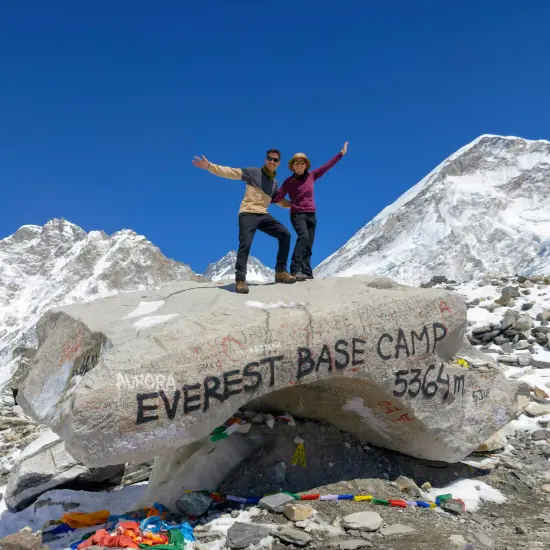
It's the right question to ask. Here's the honest answer: yes, the Everest Base Camp trek is safe for the large majority of reasonably fit, well-prepared trekkers who acclimatize properly, travel with a licensed guide, and carry the right insurance. It is not risk-free — nothing at 5,364 m is — and it is not a trek to walk into casually. But it is not mountaineering, it does not require technical climbing skill, and the real risks on this route are well understood, well managed, and mostly preventable.
This guide breaks down every genuine risk on the EBC trail — what causes it, how often it actually happens, how it's prevented, and what to do if it happens to you — without the two failure modes most articles fall into: either scaring you off a trek that's well within reach, or pretending a 5,545 m mountain trail carries no risk at all. We'll also flag where the honest answer is "it depends," because pretending otherwise wouldn't serve you.
Quick Answer: Is Everest Base Camp Safe?
Yes — for prepared trekkers, with a guide, with the right insurance, and with a sensible itinerary. Our internal safety rating: 8.5/10 for a well-prepared trekker on a 14-day (or longer) itinerary with a licensed guide. The rating drops closer to 6/10 for anyone attempting a compressed itinerary, skipping acclimatization days, or trekking without insurance that explicitly covers helicopter evacuation above 5,000 m.
Technical climbing required?
No — this is a walking trek, not mountaineering
Biggest real risk
Altitude sickness (AMS), caused almost entirely by ascending too fast
Most overrated risk
Lukla flight safety — no fatal passenger accident since 2019
Non-negotiable safety item
Travel insurance with helicopter evacuation coverage to at least 6,000 m
Fitness required
Moderate-to-good cardiovascular fitness; no technical skills
Guide required?
Yes, by law, since Sagarmatha National Park requires a licensed guide for all foreign trekkers
Typical AMS rate on rushed itineraries
Roughly a third to a half of trekkers on 12-day itineraries report at least mild symptoms
Trek the Everest Base Camp Trek
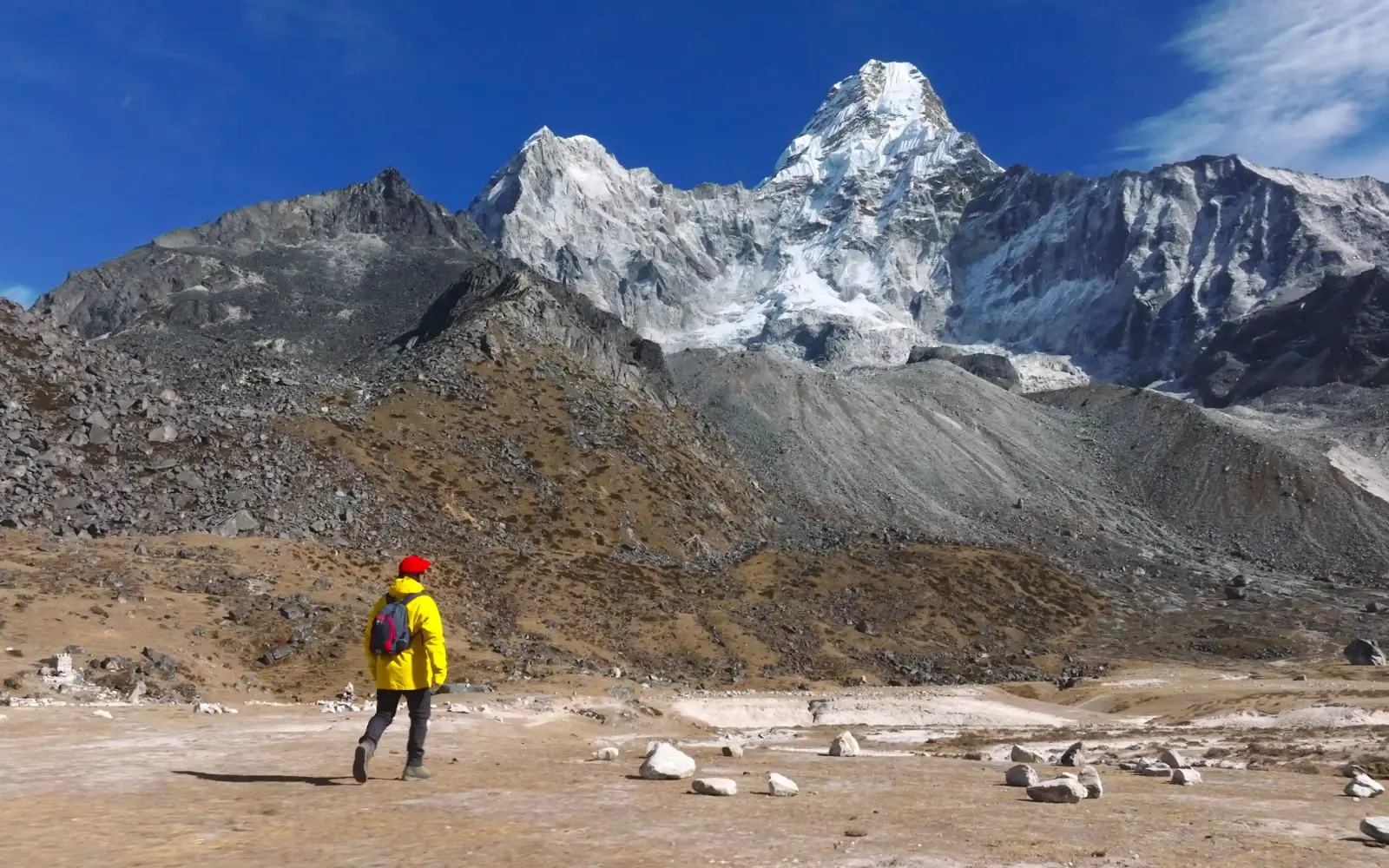
This classic trek takes you through the heart of the Khumbu region, past vibrant Sherpa villages, ancient monasteries, and towering Himalayan peaks.
Is Everest Base Camp Dangerous? Trekking vs. Climbing Mount Everest
This confusion is the single biggest source of unnecessary fear around this trek, so let's clear it up first.
Climbing Mount Everest means roped travel through the Khumbu Icefall, fixed-line ascents above 7,000 m, supplemental oxygen, weeks in the "death zone" above 8,000 m, and a fatality rate that has hovered around 1% of summit attempts historically. It requires mountaineering qualifications, specialized equipment, and a permit that in 2026 requires prior experience on a 7,000 m peak.
Trekking to Everest Base Campmeans walking — on maintained trails, through villages, with teahouse accommodation every night — to the foot of the mountain at 5,364 m, well below where technical climbing begins. You never touch a rope, a crampon, or the Icefall itself (unless you separately book a peak-climbing add-on like Island Peak). The primary hazard is altitude, not technical terrain.
These are two entirely different activities that happen to share a location. Confusing them is like assuming a hike to a ski resort's base lodge carries the same risk as skiing an Olympic downhill course. The Everest Base Camp trek is a serious high-altitude trek. It is not an expedition.
Biggest Risks on the Everest Base Camp Trek
Here's every genuine risk on the route, ranked by how much it actually affects the average trekker — not by how dramatic it sounds.
Risk
Likelihood
Severity
Prevention
What to do if it happens
Altitude sickness (AMS)
High (30–50% mild symptoms on fast itineraries)
Low–High (mild to fatal if ignored)
Gradual ascent, acclimatization days, hydration, Diamox if prescribed
Stop ascending; descend if symptoms worsen; tell your guide immediately
Cold exposure
Moderate
Low–Moderate
Proper down layers, gloves, headwear above 4,000 m
Add layers, get to shelter, treat early signs of frostbite/hypothermia
Dehydration
Moderate–High
Low–Moderate
3–4 litres of fluid daily; avoid alcohol above 3,500 m
Rehydration salts, rest, fluids
Slips, falls, ankle injuries
Moderate
Low–Moderate
Trekking poles, broken-in boots, careful footing on moraine
First aid, guide-assessed descent or evacuation if serious
Lukla flight delays
High (routine)
Very low (safety, not danger)
Buffer days before and after the trek
Wait it out; your guide manages rebooking
Gastrointestinal illness
Moderate
Low–Moderate
Boiled/treated water, careful food choices, hand hygiene
Rehydration salts, antibiotics if prescribed, rest
Sun exposure / snow blindness
Moderate
Low
SPF 50+, sunglasses with UV/side protection, buff
Treat sunburn; rest eyes if irritated
Yak and mule train collisions
Low
Low–Moderate
Always move to the uphill side, stay still
First aid; these incidents are rare with basic trail etiquette
Suspension bridge crossings
Low
Low
Cross one at a time, don't stop mid-span for photos
N/A — well-engineered, maintained bridges
HAPE (High Altitude Pulmonary Edema)
Low
Very high (life-threatening)
Gradual ascent, recognizing early breathlessness/cough
Immediate descent and evacuation — this is a medical emergency
HACE (High Altitude Cerebral Edema)
Low
Very high (life-threatening)
Gradual ascent, never ignore confusion or loss of coordination
Immediate descent and evacuation — this is a medical emergency
Exhaustion / overexertion
Low–Moderate
Low–Moderate
Realistic fitness prep, pacing, rest days
Rest, adjust pace, consider itinerary extension
Frostbite
Low
Moderate–High
Quality gloves/boots, avoiding prolonged exposure at Kala Patthar/Gorakshep
Rewarm gradually, seek medical attention, never rub the area
Landslides / trail damage
Low (monsoon season mainly)
Moderate
Avoid monsoon-season trekking (June–August)
Follow guide's rerouting decisions
The honest summary: altitude is the dominant risk by a wide margin. Everything else on this list is manageable with ordinary trail sense.
Altitude Sickness on the Everest Base Camp Trek
This is the section that matters most, so we're going into real depth.
Why altitude sickness happens
Air pressure drops as you climb, meaning each breath delivers less oxygen. At Everest Base Camp (5,364 m), oxygen availability is roughly 47% of what it is at sea level. Your body needs days, not hours, to adapt — producing more red blood cells, breathing faster, and adjusting circulation. Acute Mountain Sickness (AMS) happens when you ascend faster than your body can adapt.
AMS, HAPE, and HACE — what's the difference?
AMS (Acute Mountain Sickness) is common and, on its own, not dangerous if respected. Symptoms: headache, nausea, fatigue, loss of appetite, disturbed sleep, mild dizziness. It typically appears above 3,000 m and can hit anyone regardless of fitness level — age, gender, and athletic ability don't reliably predict who gets it.
HAPE (High Altitude Pulmonary Edema) is fluid buildup in the lungs. Symptoms: breathlessness even at rest, a persistent cough (sometimes producing pink or frothy sputum), extreme fatigue, chest tightness. This is a medical emergency requiring immediate descent.
HACE (High Altitude Cerebral Edema) is fluid buildup in the brain. Symptoms: severe headache unresponsive to painkillers, confusion, loss of coordination (an inability to walk a straight line is a classic sign), hallucinations in severe cases. This is a medical emergency requiring immediate descent — HACE can become fatal within hours if ignored.
Both HAPE and HACE are rare on a properly paced EBC itinerary. They are also almost always preceded by worsening AMS symptoms that were pushed through rather than reported.
Prevention: what actually works
Ascend gradually. The rule of thumb above 3,000 m is no more than 300–500 m of net sleeping-altitude gain per day, with a rest day roughly every 3–4 days.
"Climb high, sleep low." Day hikes to a higher altitude followed by a return to sleep lower are one of the most effective acclimatization tools available — it's why the Hotel Everest View excursion (Day 4) and the Nangkartsang Hill hike (Day 7) exist on a well-designed itinerary.
Hydrate aggressively. 3–4 litres a day. Dehydration symptoms mimic and worsen AMS symptoms.
Avoid alcohol and sedatives above 3,000 m. Both suppress breathing and disrupt the body's acclimatization response.
Consider Diamox (acetazolamide). Many trekkers use it prophylactically on faster itineraries, under medical advice. It's not a substitute for proper pacing — it assists acclimatization, it doesn't override the need for it.
Never ignore symptoms. The single biggest cause of serious altitude illness on this route isn't the altitude itself — it's trekkers who feel a headache coming on and decide to push through rather than tell their guide.
Altitude profile — a real 14-day EBC itinerary
Day
Location
Altitude
Net change
1
Kathmandu
1,350 m
—
2
Phakding
2,610 m
+1,260 m (flight + short trek)
3
Namche Bazaar
3,440 m
+830 m
4
Namche (acclimatization, day hike to 3,880 m)
3,440 m (sleep)
0 m net
5
Tengboche
3,867 m
+427 m
6
Dingboche
4,410 m
+543 m
7
Dingboche (acclimatization, day hike to 5,091 m)
4,410 m (sleep)
0 m net
8
Lobuche
4,910 m
+500 m
9
Gorakshep / Everest Base Camp
5,364 m (EBC) / 5,164 m (sleep)
+454 m to EBC
10
Kala Patthar (5,545 m) → Pheriche
4,252 m (sleep)
−1,293 m net
11–14
Descent to Namche, Lukla, Kathmandu
—
—
Two built-in acclimatization days (Namche and Dingboche) keep the daily net gain within safe limits for most trekkers. This is why we don't recommend compressed 10–11 day itineraries for first-time high-altitude trekkers — the acclimatization math simply doesn't work as well, and studies of Khumbu trekkers on faster itineraries have found roughly a third to a half develop at least mild AMS symptoms.
Trail Safety on the Everest Base Camp Route
The EBC trail is a maintained, well-marked route walked by tens of thousands of people every year — it is not backcountry wilderness navigation. That said, a few trail-specific realities matter:
Suspension bridges are frequent, engineered, and safe, but sway noticeably in wind. Cross one person at a time, keep moving, and don't stop mid-span for photos.
Glacial moraine near Gorakshep and Everest Base Camp is loose rock and uneven footing — this is where trekking poles earn their keep and where most minor ankle-twist injuries on the route actually happen, not on the lower, better-graded trail sections.
Yak and mule trains have absolute right of way. Always move to the uphill side of the trail and stand still as they pass. Standing on the downhill side risks being pushed off the trail edge — this is a real, if uncommon, cause of injury on the route.
Snow and ice appear seasonally, mainly in winter (December–February) and occasionally in shoulder-season storms. Microspikes are worth packing if you're trekking outside peak season.
Narrow sections exist near Namche's approach and on the Gorakshep–EBC glacier trail, but are wide enough for single-file passage with normal caution.
Lukla Flights: Are They Actually Dangerous?
This is the risk most trekkers worry about before departure and worry about least once they're on the trail — because the reputation is significantly out of proportion to the current record.
The honest safety record: there has been no fatal accident involving a Lukla passenger flight since April 2019, when a Summit Air aircraft struck two parked helicopters during a runway excursion. Before that, the deadliest incident was the October 2008 Yeti Airlines crash. The "world's most dangerous airport" label traces back to a 2010 television programme and has been repeated so often it now floats free of the current facts — the airport's short, sloped runway and thin mountain air are genuinely demanding for pilots, which is precisely why Lukla-certified aircrews go through specialized short-field training, and why the airport operates under strict Visual Flight Rules that ground flights the moment visibility drops.
Why delays happen (and this is the real risk — inconvenience, not danger): Lukla has no instrument landing system, so every flight requires clear visual conditions. Cloud typically builds through the morning, which is why flights depart as early as 6:00 AM and why the entire schedule compresses into a narrow morning window. Delays of a few hours are routine in shoulder season; full-day cancellations happen several times each trekking season.
During peak season (March–May and September–November), Kathmandu's domestic terminal gets congested and flights are often redirected through Manthali Airport in Ramechhap instead — a roughly 4–5 hour road transfer followed by a shorter 20-minute hop into Lukla. We handle this logistics shift for you, but it does mean an occasional 1:00 AM hotel pickup.
Practical tips:
Never book a tight international connection on your return day from Nepal. Build in at least one buffer day in Kathmandu after the trek.
Helicopter charter is available as a backup if flights are grounded for multiple days and you're at risk of missing an international flight — at real cost, so factor this into your trip budget if your schedule is inflexible.
If flight anxiety is a genuine concern, the trek can also be done by road via Jiri or Salleri, adding several days but avoiding the flight into Lukla entirely — worth discussing with your guide before booking if this matters to you.
Weather Safety by Season
Weather on this route changes with altitude and season simultaneously — the temperature gap between Phakding (2,610 m) and Kala Patthar (5,545 m) can exceed 30°C on the same day, in any season.
Season
Trail conditions
Visibility
Key risk
Spring (late March–May)
Good — dry, occasional late-May haze
Very good
Crowded trail; pre-monsoon haze builds by late May
Autumn (late Sept–Nov)
Excellent — dry, stable
Excellent
Busiest season on the route; sharp temperature drop from late October
Summer/Monsoon (June–Aug)
Poor — muddy, landslide risk
Poor, cloud-obscured peaks
Leeches at lower elevations; flight disruption from cloud
Winter (Dec–Feb)
Difficult — snow at altitude
Good on clear days
Extreme cold above 4,000 m (down to −20°C to −30°C at night near EBC); fewer trekkers on trail for support
Practical rule: even in peak season, Khumbu weather can shift from clear to snowing within hours. Pack full wet-weather and cold-weather gear regardless of the season you're booking, and follow your guide's judgment whenever conditions look uncertain — this is one of the most valuable, least visible things a good guide does on this trek.
Health and Hygiene on the Trail
Gastrointestinal illness is one of the more common (and most preventable) reasons trekkers cut a trip short.
Water: Bottled water is discouraged past Namche for environmental reasons — carry a filter, SteriPen, or purification tablets and treat all drinking water, including teahouse-boiled water if you're unsure of the source.
Food: Stick to fully cooked, hot food. Dal bhat, soups, and noodle dishes are the safest staples; raw vegetables and unpeeled fruit carry more risk the higher you go.
Hand hygiene: Hand sanitizer before every meal is one of the single most effective, least glamorous things you can do to avoid a trip-ending stomach bug.
Toilets: Basic squat toilets become the norm above Namche. Pack your own toilet paper and hand sanitizer — teahouses don't always supply either.
The "Khumbu cough": A dry, persistent cough from cold, low-humidity air is extremely common at altitude. Throat lozenges and a buff over the mouth and nose help; it's uncomfortable but not dangerous on its own.
Is Everest Base Camp Safe for Beginners?
Yes, with the right preparation — this trek does not require prior high-altitude experience, but it does require honest fitness prep.
What "beginner-safe" actually requires:
Solid cardiovascular fitness — comfortably running 10 km or hiking 15–20 km with elevation gain
3–6 months of training beforehand: hiking with a loaded pack, stair climbing, strength work for legs and core
Realistic expectations about basic teahouse conditions (unheated bedrooms, shared or cold-water bathrooms above Namche, limited Wi-Fi)
A longer itinerary (14–16 days rather than 10–12) to build in acclimatization buffer
Common beginner mistakes: underestimating the cumulative fatigue of consecutive 5–7 hour trekking days, packing too much (weight matters both for your own back and for Lukla's 15 kg flight baggage limit), assuming fitness alone prevents altitude sickness (it doesn't — AMS is not a fitness-correlated illness), and skipping acclimatization days to "make better time."
A first-timer who trains properly, picks a 14-day-or-longer itinerary, and travels with a guide who actively monitors symptoms is generally in a safer position than an experienced hiker who rushes a compressed schedule.
Is Everest Base Camp Safe for Solo Travelers?
Legally, a licensed guide is required. Since April 2023, Nepal's mandatory-guide rule has applied to all national parks and conservation areas for foreign trekkers, and the Everest Base Camp route runs entirely through Sagarmatha National Park — so independent, unguided trekking on this route is not a legal option for foreign nationals, regardless of experience level.
That doesn't mean you can't travel as a solo individual — you absolutely can, and it's one of the most common ways people do this trek. What it means is that "solo" on EBC means trekking without a group of friends or family, not trekking without professional support. In practice:
You can join a fixed group departuredesigned for solo travelers, trekking alongside others booked independently, at a lower per-person rate.
You can book a private trek with your own guide (and optional porter USD$300 extra) on your own schedule, still solo in the sense of no travel companions.
Either way, you're never actually alone on the mountain — you have a licensed guide monitoring your acclimatization, making real-time decisions about pace and rest days, and coordinating any emergency response.
Emergency support for solo trekkers is, if anything, stronger with a guide present — the guide is trained to recognize deteriorating AMS symptoms in someone traveling without companions who might otherwise push through symptoms unnoticed. Trekkers who meet others on the trail (extremely common — teahouses are social by nature) often end up with an informal support network on top of their guide.
Is Everest Base Camp Safe for Women?
Yes. Nepal's trekking regions, and the Khumbu in particular, are among the more straightforward parts of the country for solo female travelers, and EBC is one of the most-trekked routes in the world with a large, established female solo and small-group travel community.
Practical context:
Teahouses are family-run, social spaces where solo female trekkers are a completely normal, everyday sight — not a novelty.
Sherpa culture in the Khumbu is generally warm and hospitality-oriented; harassment reports on this specific route are rare compared to lower-altitude, more touristed parts of Nepal.
A guide (mandatory, as above) adds a further layer of practical support — help with logistics, translation, and someone with local knowledge to flag if any situation on the trail feels off.
Female-only trekking groups and female guide requests are both things reputable agencies, including ours, can arrange — ask if this matters to you.
Practical tips specific to solo female trekkers: carry menstrual supplies for the full trek (availability drops sharply past Namche), dress in layers that suit both the culture and the cold rather than for warm-weather hiking norms, and — as anywhere — trust your instincts about any situation that feels wrong and involve your guide immediately if it does.
Emergency Response on the Everest Base Camp Trek
How rescues actually work
If a guide identifies a genuine emergency — worsening AMS, HAPE/HACE symptoms, a serious injury — the process is well-established: the guide calls the agency's Kathmandu office and, separately, the trekker's insurance provider. Insurance authorization for evacuation typically takes 30 minutes to two hours, faster in a genuine emergency. Once authorized, a helicopter is dispatched from Kathmandu (roughly 45 minutes flight time to the Khumbu) or from a closer base if one is available. Flight time from most points on the route back to Kathmandu or Lukla is under an hour once airborne.
The one hard limit on rescue speed is weather. Helicopters in this region fly under visual conditions only, and mornings (roughly 6:00–10:00 AM) offer the best lift in cold, dense air. If cloud or wind grounds the helicopter, your guide manages your condition on the ground — this is one of the most important, least discussed reasons a licensed guide with wilderness first-aid training matters on this route.
What it costs
Be aware going in: a helicopter evacuation from the upper Khumbu to Kathmandu typically runs USD 3,000–10,000, depending on your exact location, weather, and time of day — rescues from Gorakshep or near Everest Base Camp itself often sit toward the higher end of that range, and the bill is frequently due before the helicopter operator will release you, even with insurance in hand. This is precisely why the insurance section below isn't optional reading.
A note on trust
Nepal's Central Investigation Bureau opened an investigation in early 2026 into a small number of rescue-adjacent operators over irregular evacuation practices. It's a useful reminder to book only with an established, TAAN-registered agency and a guide who has an obvious, ongoing incentive to get your acclimatization right in the first place — not one who benefits from an unnecessary rescue call. A reputable guide's entire professional interest is in you never needing that helicopter.
Travel Insurance for Everest Base Camp
This is the least glamorous and most important item on this entire list.
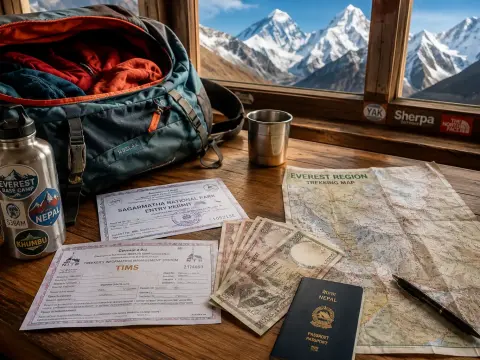
Why it's essential: Nepal has no blanket law requiring trekking insurance, but it is practically mandatory — reputable agencies, including Places Nepal, require proof of adequate coverage before confirming your booking, and without it you are personally liable for a rescue bill that commonly runs into five figures USD.
What to check in your policy, specifically:
Altitude coverage to at least 6,000 m. Everest Base Camp sits at 5,364 m and Kala Patthar at 5,545 m — most standard travel insurance policies cap altitude coverage at 3,000–4,000 m and will simply reject a claim from anywhere on this route. Read the actual altitude figure in the policy wording; don't assume a policy covers you just because it mentions "Nepal" or "the Himalaya" generically.
Helicopter evacuation, specifically named. Medical evacuation and search-and-rescue are sometimes separate clauses — confirm both are included.
Medical treatment coverage, separate from evacuation — a minimum of USD 100,000 is a reasonable benchmark for each.
Trip cancellation/interruption, useful given how routine Lukla flight delays are.
We recommend asc360 as a starting point for policy shopping, though any reputable provider explicitly covering high-altitude trekking to 6,000 m and helicopter evacuation is acceptable. Insurance is not included in the trek cost — it's on you to arrange, and it's the one line item on this entire list we'd never suggest skipping to save money.
How Guides Improve Safety on This Trek
A licensed guide isn't a legal formality you tolerate — on this specific trek, the guide is doing real, continuous safety work that isn't obvious from the outside:
Acclimatization monitoring: trained to recognize the early, easy-to-dismiss signs of AMS before they become HAPE or HACE, and empowered to call a rest day or descent even when a trekker wants to push on.
Local weather reading: years of daily experience reading Khumbu cloud patterns that a generic weather app doesn't capture.
Emergency coordination: knows exactly who to call, in what order, and how to communicate a medical situation clearly enough to get a helicopter dispatched fast.
Permit and checkpoint handling: one less thing for you to manage while your body is working hard to adapt to altitude.
Route judgment: knows which sections need extra caution in current conditions (icy patches, yak traffic timing, bridge conditions after weather).
This is the case for hiring a guide even on the (currently disputed) claim that one isn't strictly required — the safety value has very little to do with the legal requirement.
Safety Checklist Before the Trek
Cardiovascular fitness benchmark met (10–15 km hiking/running comfortably, weekly, for 8–12 weeks pre-trek)
Travel insurance confirmed for 6,000 m altitude coverage + helicopter evacuation
Diamox and personal medications discussed with a doctor
Nepal tourist visa funds ready (USD 30/50/125 cash, depending on duration)
Broken-in trekking boots — never new boots on the trail
Full cold-weather layering system (down jacket, thermal base layers, waterproof shell)
Personal medical kit (rehydration salts, altitude headache medication, blister care, antihistamine)
Emergency contact details shared with your guide and agency
Copy of passport and insurance documents (physical and digital)
Realistic itinerary chosen — 14 days or longer if this is your first high-altitude trek
Buffer day built in after your return flight from Lukla
Common Mistakes That Increase Risk
Ascending too quickly — the single largest cause of preventable AMS.
Ignoring early symptoms — a headache "isn't a big deal" until it's HACE.
Skipping acclimatization days to save time — the most common reason trekkers turn back before EBC.
Drinking too little water — dehydration masks as, and worsens, altitude symptoms.
Drinking alcohol above 3,000 m — dehydrates you and suppresses breathing exactly when you need both working well.
Choosing a 10–11 day itinerary as a first-timer — not enough acclimatization buffer.
Not purchasing insurance, or buying a policy without altitude/helicopter coverage.
Wearing brand-new boots on the trail — blisters compound every other risk by slowing you down and distracting from symptom awareness.
Overpacking — extra weight fatigues you faster and risks Lukla excess-baggage fees.
Underpacking cold-weather gear — assuming "spring" or "autumn" means it won't get seriously cold above 4,000 m.
Walking with headphones on — you lose awareness of approaching yak trains and trail conditions.
Standing on the downhill side of a yak train — always move uphill and stand still.
Rushing the Gorakshep–EBC glacier trail — loose moraine rewards careful footing, not speed.
Skipping meals due to altitude-suppressed appetite — your body needs fuel more, not less, at altitude.
Self-treating worsening symptoms instead of telling your guide — guides can only help with information they have.
Assuming fitness prevents AMS — it doesn't; pace does.
Not carrying cash past Namche — ATMs become unreliable, and teahouses above Namche are cash-only.
Booking a tight return flight home — Lukla delays cascade; you need buffer days, not a tight connection.
Photographing on suspension bridges instead of moving through them.
Ignoring your guide's call to turn back — the guide's judgment exists precisely for the moments you're least able to judge your own condition clearly.
Trekking without checking your policy's specific altitude limit — "Nepal coverage" is not the same as "6,000 m coverage."
Choosing the cheapest possible teahouse food option over hot, cooked meals — raw or lukewarm food is where most GI illness on this route starts.
Safety Tips From Experienced Trek Leaders
Start every trekking day with a full water bottle, not an empty one you'll fill "later."
The "Khumbu shuffle" — a deliberately slow, rhythmic pace above 4,000 m — isn't laziness, it's the correct technique.
Layer up before you're cold, not after — by the time you feel cold, you're already losing core heat.
Trekking poles aren't optional gear on the steep descents (Namche approach, Thukla Pass, the final descent to Lukla) — they measurably reduce knee strain and fall risk.
Sleep lower than your highest point every day this is scheduled — it's the entire logic of the acclimatization itinerary.
Eat the dal bhat. It's calorie-dense, hot, and usually the safest, most reliably cooked option on the menu.
A pulse oximeter (often carried by your guide) is a useful early-warning tool, but it supplements symptom awareness — it doesn't replace it.
Report a headache the day it starts, not the day it becomes unbearable.
Dress warmer than feels necessary for the pre-dawn Kala Patthar climb — temperatures there commonly sit at −15°C to −20°C before sunrise.
Carry a headlamp with spare batteries — cold drains batteries faster than you'd expect, and teahouse power cuts are routine.
Withdraw more cash in Namche than you think you'll need — it's your last reliable ATM on the route.
Attend the Tengboche evening puja if your schedule allows — remove shoes, sit quietly at the back, and don't photograph without permission.
Buy or top up a Nepali SIM in Thamel before you leave Kathmandu — connectivity on the trail is patchy but useful when it works.
Break in your boots on training hikes, not on the trail itself.
A buff or neck gaiter over the mouth and nose helps meaningfully with the dry, cold-air "Khumbu cough."
Don't schedule a same-day or next-day international flight after your Lukla return — build in the buffer.
If you're offered a helicopter "upgrade" mid-trek for reasons that don't match your actual symptoms, ask direct questions before agreeing.
Photograph the mountain views during the morning weather window — afternoon cloud builds reliably most days.
Tip your guide and porter in cash, in an envelope, at the end of the trek — it's standard practice and genuinely appreciated.
If traveling solo, introduce yourself to other trekkers at teahouses — an informal support network forms naturally on this route.
Keep your down jacket accessible in your daypack, not buried in your duffel, on any day above 4,000 m.
Trust your guide's call on rest days even when you feel fine — altitude effects can lag symptoms by hours.
Carry your own water purification method rather than relying on buying bottled water — it's both safer and better for the environment on a fragile trail.
A short pre-trek Kathmandu buffer day helps you adjust to jet lag and altitude (1,350 m) before the real ascent starts.
Menstrual products, specific medications, and any personal medical needs should be packed for the entire trip — availability drops sharply above Namche.
If in doubt about a symptom, always err toward telling your guide. The worst outcome of over-reporting a mild symptom is a wasted conversation. The worst outcome of under-reporting is HACE.
Myths vs. Facts
Myth: "Everest Base Camp is as dangerous as climbing Mount Everest." Fact: EBC involves no technical climbing, no fixed ropes, and no exposure to the Khumbu Icefall or the death zone above 8,000 m. It's a high-altitude trek, not a mountaineering expedition.
Myth: "Only elite athletes can complete the trek." Fact: Moderate, sustained cardiovascular fitness and honest training over several months are what matter — not elite athleticism. Trekkers across a wide age and fitness range complete this route every season.
Myth: "Everyone gets altitude sickness." Fact: On a properly paced 14–16 day itinerary with built-in acclimatization days, most trekkers experience mild symptoms at worst. Rates rise meaningfully on rushed itineraries, which is exactly why we don't recommend them for first-timers.
Myth: "Helicopters can always fly immediately in an emergency." Fact: Rescue helicopters operate under visual flight rules and can be grounded by cloud or wind for hours at a time. Morning windows offer the best flying conditions — this is one more reason not to ignore early symptoms.
Myth: "You don't need insurance if you're fit and careful." Fact: AMS, HAPE, and HACE aren't fitness-correlated, and a helicopter evacuation costs USD 3,000–10,000 regardless of how careful you were. Insurance covers a risk that preparation reduces but never eliminates.
Myth: "Lukla is the world's most dangerous airport, so flying there is genuinely risky." Fact: There has been no fatal passenger accident at Lukla since April 2019. The reputation traces to a 2010 TV programme and older accidents; the operational reality since is a strictly weather-governed, well-regulated short-field airport with a strong recent safety record.
Frequently Asked Questions
Is the Everest Base Camp trek dangerous? It carries real but manageable risk, dominated almost entirely by altitude. With proper acclimatization, a guide, and insurance, most trekkers complete it without serious incident.
Can children safely trek to Everest Base Camp? It's possible for older, fit children accustomed to multi-day hiking, but the altitude risk applies to children just as it does to adults, and most agencies set a practical minimum age around 10–12 with a longer, slower itinerary. Discuss this directly with your operator before booking.
What is the safest month to trek Everest Base Camp? Late September through November (autumn) and March through May (spring) offer the most stable weather and clearest visibility. Winter is trekkable for experienced, well-equipped trekkers; monsoon season (June–August) is not recommended due to poor visibility and trail conditions.
Is the trek safe after heavy rain? Trail conditions can turn slippery, and landslide risk rises in the lower, forested sections during and after monsoon rains. This is largely a non-issue during the recommended spring and autumn windows.
How many trekkers require evacuation each season? Exact figures vary by source, but helicopter evacuations are a routine, non-rare occurrence in the Everest region each season — most commonly for altitude-related symptoms rather than trauma injuries.
Can older adults complete the Everest Base Camp trek? Yes, with realistic fitness preparation and, ideally, a longer itinerary that allows more gradual acclimatization. Age alone isn't disqualifying; cardiovascular fitness and a sensible pace matter more.
Is Wi-Fi or phone signal available in an emergency? Coverage is patchy but present in most villages through Dingboche; higher up, guides typically carry a means of contacting the agency directly even where personal signal fails.
Are there medical posts along the trail? Yes — notably in Namche Bazaar and near Dingboche/Pheriche (the Himalayan Rescue Association runs a well-known seasonal aid post in the Pheriche area), in addition to your guide's own first-aid training and kit.
Do I need a guide for Everest Base Camp? Yes. Since April 2023, a licensed guide has been legally required for foreign trekkers throughout Nepal's national parks and conservation areas, including Sagarmatha National Park, which the EBC route passes through entirely.
Is solo trekking (without a group) safe on this route? Yes, when "solo" means without travel companions rather than without a guide. You'll trek with a licensed guide either way, and the route is social enough that most solo trekkers meet others along the way.
Is Everest Base Camp safe for women traveling alone? Yes. It's one of the more straightforward routes in Nepal for solo female travelers, with an established community of women trekking it independently every season, and a guide adds a further layer of practical support.
What's the biggest real danger on this trek? Altitude sickness, specifically the version where symptoms are ignored rather than reported. Nearly every serious incident on this route traces back to that pattern.
Is altitude sickness medication necessary? Not universally, but many trekkers use Diamox (acetazolamide) prophylactically on faster itineraries, under a doctor's guidance. It assists acclimatization; it doesn't replace a sensible pace.
How cold does it get at Everest Base Camp? Daytime temperatures near EBC range from roughly −5°C to 10°C depending on season; nights can drop to −20°C to −30°C in winter. Gorakshep and Lobuche, where you'll actually sleep, see similarly harsh overnight lows.
What happens if I can't continue due to altitude sickness? Your guide manages descent — sometimes on foot with support, sometimes via helicopter evacuation for more serious symptoms. This is exactly why insurance and a licensed guide both matter.
Is the Lukla flight the most dangerous part of the trek? No — despite the reputation, it's statistically one of the lower-risk parts of the trip relative to altitude-related illness, given the clean safety record since 2019.
Can I trek Everest Base Camp without any high-altitude experience? Yes. Most first-time EBC trekkers have no prior high-altitude experience. What matters is fitness preparation and choosing a well-paced itinerary.
Is travel insurance legally required for this trek? Not by Nepali law directly, but it's a practical requirement enforced by reputable agencies, and financially essential given rescue costs.
What's the minimum insurance altitude coverage I need? At least 6,000 m, with helicopter evacuation specifically named in the policy — Everest Base Camp and Kala Patthar both exceed 5,000 m.
Are there ATMs on the trail? Yes, in Namche Bazaar, but not reliably above it. Withdraw what you need there.
Is the drinking water safe? Not untreated. Use a filter, SteriPen, or purification tablets for all drinking water on the trail, regardless of source.
How common are Lukla flight delays? Very common — routine delays of a few hours happen regularly in shoulder seasons, and full-day cancellations occur several times per trekking season. Always build in buffer days.
Is it safe to trek during monsoon season (June–August)? Not recommended. Poor visibility, muddy trails, and landslide risk in the lower forested sections make this the least advisable season for this specific trek.
What should I pack that most people forget? A proper down jacket rated for well below freezing, a personal water purification method, and enough Nepali cash for the full trek — teahouses above Namche are cash-only.
Can I get cell signal to call for help if needed? Not reliably in your own hands above the mid-route villages, but your guide has established channels to contact the agency and, from there, emergency services and insurance providers.
Is the trek safe for someone with a pre-existing heart or lung condition? This requires a direct conversation with your doctor before booking — altitude places real physiological stress on cardiovascular and respiratory systems, and some conditions warrant additional caution or medical clearance.
What's the single best thing I can do to make this trek safer? Choose a 14-day-or-longer itinerary with built-in acclimatization days, and report every symptom to your guide immediately rather than waiting to see if it passes.
Trek the Everest Base Camp Trek
This classic trek takes you through the heart of the Khumbu region, past vibrant Sherpa villages, ancient monasteries, and towering Himalayan peaks.
The honest picture: Everest Base Camp is a serious high-altitude trek with one dominant risk — altitude sickness — and a long list of smaller, well-understood risks that ordinary trail sense handles easily. It is not mountaineering, it does not require technical skill, and its most feared hazard (the Lukla flight) has a considerably better safety record than its reputation suggests.
What actually keeps trekkers safe on this route isn't luck. It's a realistic itinerary with proper acclimatization days, a licensed guide who's trained to catch deteriorating symptoms before they become emergencies, insurance that actually covers the altitude you're trekking at, and a willingness to report symptoms honestly instead of pushing through them.
If you're weighing whether this trek is right for you, our 14-day Everest Base Camp itinerary has the full day-by-day route and cost breakdown, and our best time to trek Everest Base Camp guide can help you pick a season that matches your risk tolerance and experience level. We're also happy to talk it through directly — reach out before you book, not just after.