Planning the Everest Three Passes Trek? The trek costs US$1,550–$1,750 per person, depending on group size, with a realistic total budget of around US$2,100–$2,700 including insurance, tips, visa, and personal expenses. Here’s a complete breakdown of the trek cost, permits, guide, flights, gear, daily spending, and optional extras for 2026/27.
Places Nepal's Everest Three Passes Trek starts at US$1,650 per person (groups of 2–5), ranging from US$1,550 (groups of 6–10) up to US$1,750 for a solo private departure. A fixed group-joining departure (set dates) is priced at US$1,650. That package covers your Lukla flights, guide, all permits, 16 nights of teahouse accommodation, and three meals a day for 17 days.
It does not cover everything you'll actually spend in Nepal. Add travel insurance, tips, personal spending on the trail, and your Nepal visa, and a realistic total trekking budget lands between roughly US$2,100 and US$2,700 for a no-frills trip on the group package — more if you add a porter, gear, or a helicopter transfer. Below, every one of those extra line items is broken down separately so you know exactly what you're budgeting for before you book.
Places Nepal prices the Everest Three Passes Trek by group size, not by season or month. A March departure costs the same as a November one.
| Group Size | Price Per Person |
|---|---|
| 1 (solo, private) | US$1,750 |
| 2–5 | US$1,650 |
| 6–10 | US$1,550 |
| Group joining (fixed departure dates) | US$1,650 |
The trek runs 17 days, covers roughly 170 km, and crosses three high passes above 5,300 m. See the full itinerary and book on the trip page.
A solo trekker isn't stuck paying the top rate. Joining one of Places Nepal's fixed group-departure dates gets a solo trekker the US$1,650 group-joining rate instead of the US$1,750 private solo rate — worth checking before assuming you have to pay the top tier.
| Included | Details |
|---|---|
| Domestic flights | Kathmandu (or Ramechhap/Manthali in peak season) ↔ Lukla, round trip |
| Guide | Professional English-speaking, high-altitude trekking guide for all 17 days |
| Permits | All required Everest region permits, including the Khumbu Pasang Lhamu Rural Municipality entry permit |
| Meals | Breakfast, lunch, and dinner plus tea/coffee for 16 days on the trail |
| Accommodation | 16 nights teahouse, twin-bed sharing |
| Transfers | Private airport pickup and drop-off in Kathmandu |
| Taxes & fees | Domestic airport taxes, government taxes, and company service charges |
| Guide/porter insurance | Comprehensive insurance for your guide and porter (not the trekker — see Travel Insurance below) |
That's a comprehensive package — the three biggest fixed costs of any Everest region trek (flights, guide, permits) are all locked in at the price you see.
| Not Included | Why it matters |
|---|---|
| Nepal visa fee | Paid in cash on arrival at Kathmandu airport |
| International flights | To and from Nepal |
| Travel insurance | Required — must cover emergency helicopter evacuation |
| Porter service | Optional, US$400 for the full 17 days |
| Personal expenses | Snacks, drinks, Wi-Fi, hot showers, charging, laundry |
| Tips | For your guide and porter, paid at trek's end |
| Extra costs from delays | Flight delays, weather, illness, or other disruption |
| Optional activities | Sightseeing, add-on adventure activities |
This is the list that actually determines your real budget — not the headline price. Everything below breaks these categories down individually.
These are two different numbers, and conflating them is the single most common budgeting mistake trekkers make.
Trek package cost. What Places Nepal charges to run the organized 17-day trek: US$1,550–$1,750 depending on group size, per the table above.
Pre-trip costs (before you even land in Lukla). International flights to Kathmandu, your Nepal visa (US$30–$125 depending on duration), travel insurance with high-altitude helicopter rescue cover, and any gear you buy or rent in Kathmandu.
On-trail additional spending. Hot showers, device charging, Wi-Fi, snacks, bottled or boiled water, and any drinks beyond what's included in the meal plan — all personal expenses paid directly to teahouses as you go.
Emergency or optional costs. An extra night in Kathmandu if your Lukla flight is delayed, a helicopter upgrade, or — in a genuine medical emergency — evacuation costs if your insurance doesn't cover the full bill upfront.
Add all four together and the real number a trekker should have available is meaningfully higher than the US$1,650 headline price. The next section puts real ranges on that gap.
Three realistic scenarios, all built on top of the 2–5 person package rate (US$1,650). These are planning ranges, not guaranteed totals — actual spending depends on your habits on the trail.
For trekkers keeping personal spending to a minimum and skipping every optional extra.
For trekkers who want hot showers most nights, regular Wi-Fi, and don't want to think twice about a beer in Namche.
For solo private departures, a hired porter, one or both helicopter transfers, and no compromises.
Add a return helicopter leg instead of one, and this tier moves comfortably past $4,500. None of these figures include international airfare to Nepal — see the next section.
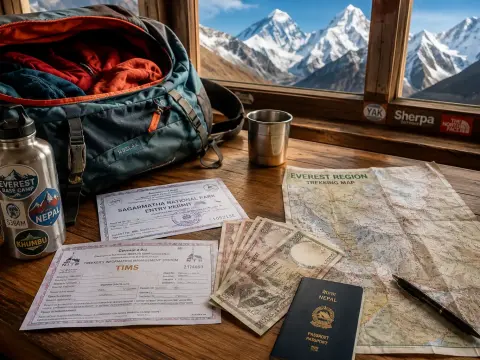
The two permits required for the Everest region — covering the Three Passes route, Gokyo Valley, and Everest Base Camp alike, since it's all inside Sagarmatha National Park — are:
| Permit | Cost (foreign nationals) | Where checked |
|---|---|---|
| Sagarmatha National Park Entry Permit | NPR 3,000 (~US$25–30) | Monjo, Day 2 |
| Khumbu Pasang Lhamu Rural Municipality Entry Permit | NPR 2,000 (~US$15–20) | Lukla or Monjo, Day 1–2 |
| Total | ~NPR 5,000 (~US$40–45) |
Both are included in every Places Nepal Three Passes package. You don't pay these separately, and you don't need to arrange them yourself — your guide carries both permits and handles every checkpoint over the full 17 days. Bring two passport photos and your original passport; that's the only paperwork required of you.
A professional, English-speaking, high-altitude guide for all 17 days is included in every Places Nepal package tier — this isn't an add-on.
If you were arranging a guide independently in Kathmandu (not something Places Nepal recommends given the route's technical passes and altitude, but useful for comparison), market rates for licensed Everest-region guides generally run $30–40 per day. Over 17 days that's $510–680 for the guide's daily wage alone — before covering the guide's own flight, permits, food, accommodation, and insurance, all of which a package trekker doesn't have to separately account for. A guide is not just a legal formality here: Sagarmatha National Park has required a licensed guide since April 2023, and the Three Passes route's three high crossings above 5,300 m make experienced route-finding and altitude judgment a safety essential, not a luxury.
A porter is optional on the Places Nepal Three Passes package, priced at a flat US$400 for the full 17-day trek. Places Nepal supplies the duffel bag when you hire a porter.
Independently, porter day rates in the Khumbu generally run $25–30 per day, with one porter carrying for one or two trekkers and a weight limit in the region of 20 kg total (10 kg per trekker if shared). Whatever your porter carries — spare clothing, your sleeping bag, non-essential gear — stays out of your own pack; your daypack still needs water, snacks, a camera, and layers for the day.
Given the trek's cumulative fatigue over 17 days and four strenuous days (Kongma La, the EBC/Kala Patthar push, Cho La, and Renjo La), a porter is one of the more defensible upgrades on this specific route — trekking with just a daypack noticeably reduces fatigue on the pass days that matter most.
The Lukla flight is included in every Places Nepal package — but which airport you fly from depends on the season, and that logistics difference is worth understanding before you land in Kathmandu.
Peak season (March–May, September–November): Manthali departure. Flights to Lukla operate from Manthali Airport (RHP) in Ramechhap rather than Kathmandu, to manage congestion at Kathmandu's domestic terminal. Places Nepal runs a shared shuttle from your Kathmandu hotel, departing around 1:00–3:00 AM for the 5–6 hour drive, followed by a 20-minute flight.
Off-season (January–February, June–August, December): Kathmandu departure. Flights depart directly from Tribhuvan International Airport's domestic terminal — a 35-minute scenic flight with a far more relaxed 5:00–6:00 AM start.
If arranging this independently (not part of a Places Nepal package), the round-trip Lukla flight — including the Manthali transfer where applicable — generally runs $450–550 on the open market. Since it's included in your package, this is money you don't spend separately.
Helicopter upgrade — Kathmandu to Lukla: an optional US$590 per person (based on 5 people sharing), available for trekkers who want to skip the pre-dawn Manthali drive during peak season. This is a comfort upgrade, not a cheaper option — it costs more than the standard flight, not less.
All Lukla flights, regardless of departure airport, are weather-dependent. Delays of a few hours are routine in peak season, and full-day cancellations happen several times each trekking season — a real cost risk covered in the Emergency / Delay Budget section below.
All meals during the 16 days on the trail — breakfast, lunch, and dinner, plus tea and coffee — are included in the Places Nepal package. You do not carry cash for food at any point on the route; your guide handles every payment directly with teahouses.
What that buys, in practice: dal bhat (unlimited refills, the most reliable option at every altitude), thukpa and noodle soups, fried rice, eggs and porridge at breakfast, and a varied menu at lower stops like Namche and Tengboche that narrows to the essentials above 5,000 m at Lobuche and Gorak Shep.
If you're budgeting for personal food purchases beyond the included meals — extra snacks, chocolate, or a celebratory beer — expect prices to rise sharply with altitude. A tea or coffee that costs a dollar or two in Phakding can run $4–5 at Gorak Shep; a beer or soft drink that's a few dollars in Namche climbs into double digits higher up. This is where a meaningful share of "personal spending" on the daily budget table below actually goes.
Not included in the package. Every teahouse on the route sells boiled water and bottled water, but the cost compounds meaningfully across 17 days and rises with altitude — a liter of bottled water in Phakding costs a fraction of the same bottle at Gorak Shep.
Places Nepal's own trip notes recommend a personal water filter or purification tablets, and it's one of the better cost-saving decisions available on this route: it cuts daily spending, reduces plastic waste on a trail already managing a serious litter problem, and guarantees safe water even when a teahouse is out of bottled stock. Minimum recommended intake is 3–4 litres per day above 4,000 m — treating stream or tap water yourself instead of buying it bottled at every stop adds up to a real saving over 17 days.
16 nights of twin-bed-sharing teahouse accommodation are included in the package — you don't pay separately for a bed on any night of the trek.
Standards vary sharply by altitude. Phakding and Namche Bazaar (Days 1–3, and the Day 14 return) have the best facilities on the route — some rooms with attached bathrooms, reliable hot showers, and working Wi-Fi. The highest stops — Lobuche, Gorak Shep, and Dzongla (Days 7–9) — are basic by any measure: shared bathrooms only, cold water likely, and charging and Wi-Fi not guaranteed. This isn't a Places Nepal shortfall; it reflects genuine infrastructure limits at 4,800–5,140 m.
The only accommodation-related cost outside the package is a hot shower where teahouses charge for it (at the mid-altitude and higher stops), covered under Small Costs That Add Up below.
Not included, and non-negotiable on this specific route. Places Nepal's own trip notes are explicit: comprehensive travel insurance including high-altitude helicopter rescue cover is mandatory, and your policy must explicitly cover rescue to a minimum of 6,000 m — confirm this before booking your international flights, not after arriving in Kathmandu.
Why the altitude threshold matters here specifically: the Three Passes route crosses three passes above 5,300 m and includes a night at Gorak Shep (5,140 m), all terrain where a standard travel policy — the kind that caps coverage at 3,000–4,000 m — simply won't pay out. This is a materially higher bar than most travel insurance is written for.
What it costs without coverage: Places Nepal's own guidance states that a helicopter evacuation from above 5,000 m runs US$3,000–$6,000 — paid immediately, in cash or via guarantee of payment, before a helicopter will be dispatched.
What a policy with the right coverage costs: for a trip of this length (17 trekking days plus buffer days in Kathmandu, so roughly 3 weeks of total coverage), specialist high-altitude adventure travel policies with helicopter rescue riders generally run in the range of $100–250, depending on provider, coverage limits, and your home country. Confirm in writing — not just from the marketing page — that your specific provider covers your policy to at least 6,000 m and explicitly includes helicopter search-and-rescue, not just emergency medical transport. Places Nepal doesn't sell insurance or receive commission from any provider, so shop this independently and read the altitude clause carefully before buying.
Not included in the package price. What you need for this specific route is meaningfully more demanding than a standard Everest Base Camp packing list, because of the sustained time above 4,500 m and three glaciated-terrain pass crossings.
Buy (items worth owning, not renting): broken-in trekking boots (at least 100 km walked in before departure — this is not optional on a 17-day route), quality hiking socks, base layers, and trekking poles.
Rent in Kathmandu: a four-season sleeping bag rated to at least −15°C and a down jacket are the two big-ticket rental items, and renting is the standard choice for most trekkers rather than buying gear that will be used once. Thamel rental shops typically charge $1–2 per day per item — a sleeping bag and down jacket rented together for the full 17 days runs roughly $35–70 total, against $150–400+ to buy equivalent branded gear at home. Microspikes or lightweight crampons for the Cho La glaciated section are carried and provided by your guide as part of the package rather than something you need to separately rent — confirm this with Places Nepal at your pre-trek briefing.
Gear on this trek is not the place to cut corners — a sleeping bag underrated for −15°C nights at Gorak Shep or Dzongla is a real safety issue, not just a comfort one.
Yes — teahouse rooms above 4,500 m (Gorak Shep, Dzongla, Thagnak, Chhukung) are unheated, and only the communal dining room has a stove. Places Nepal's equipment guidance specifies a rating of at least −15°C, and relying on teahouse blankets alone at these altitudes — particularly in October, November, or March — is not recommended.
Renting is the economical option for almost every trekker on this route: a high-quality −15°C-rated bag runs roughly $1.50–2 per day in Thamel, working out to $25–35 across the 17-day trek.
None of these are included, and all of them are personal, pay-as-you-go expenses paid directly to teahouses:
Individually these are small. Across 17 days at rising per-item prices, they're the single most common reason a trekker's actual on-trail spending runs higher than they planned.
Tipping is a genuine expectation on Nepal treks — separate from the package price, and not included in it. There's no single mandatory rate, but as a planning guideline, many trekkers budget somewhere in the region of $150–250 for a guide and $100–150 for a porter on a trek of this length, adjusted upward for a private trip and pooled across the group on a shared departure. Treat this as a recommendation to plan around, not a fixed fee — it depends on group size, service, and personal judgment. Tips are given directly, in cash, at the end of the trek.
Namche Bazaar has ATMs and is the last reliable place to withdraw cash on the entire route — both on the way up and on your return through on Day 14. Above Namche, teahouses and shops are cash-only, and ATM access should not be relied on.
A practical strategy: withdraw more than you think you'll need in Namche (both visits), covering personal spending — showers, charging, Wi-Fi, snacks, drinks, and any incidentals — for the days on either side where no ATM exists, plus a reasonable emergency buffer. Since your package already covers accommodation and meals, the cash you're carrying is purely for personal extras and contingencies, not core trek costs.
These are independent, personal-spending planning estimates — not fixed prices, and not what the Places Nepal package itself costs per day. Actual daily spending varies with altitude, personal habits, and how many showers you take.
| Daily Expense | Budget Range | Notes |
|---|---|---|
| Hot shower | $0–5 | Free at some lower stops, charged higher up when available |
| Wi-Fi | $2–5 | Where available — not guaranteed above ~4,700 m |
| Device charging | $0–4 | Often free at lower stops, small fee higher up |
| Snacks / chocolate | $3–7 | Rises sharply with altitude |
| Extra drinks (tea, soda) | $2–6 | A beer above Namche can run into double digits |
| Bottled/boiled water | $2–5 | A filter or purification tablets cut this close to zero |
| Miscellaneous | $3–8 | Buffer for anything unplanned |
| Total (lean day) | ~$8–12 | Minimal spending, most nights |
| Total (comfortable day) | ~$18–25 | Regular showers, Wi-Fi, occasional drinks |
Multiply the comfortable-day range across 17 days and personal spending alone runs roughly $300–425 — the figure already built into the Comfortable Budget tier above.
The line items trekkers most often forget to plan for aren't the big ones — they've usually accounted for the package price, insurance, and tips. It's the accumulation of small things that catches people out:
None of these are large individually. Budgeting an extra 10–15% buffer on top of your Comfortable Budget total absorbs almost all of them without requiring precise tracking of every dollar.
Beyond day-to-day spending, it's worth holding a separate reserve for genuine disruption — not because it's likely, but because Lukla flight delays specifically are common enough that planning around them, rather than hoping to avoid them, is the more realistic approach.
A sensible reserve covers: one to two extra nights of Kathmandu accommodation and meals if your return flight is delayed past your planned departure day, additional trail costs if a pass crossing is postponed a day for weather, and a buffer against the kind of unplanned transport or medical costs that a good insurance policy should absorb but that require you to pay upfront in the moment. Places Nepal's own guidance is direct on this point: never schedule an international departure on the same calendar day as your Lukla return flight, and build in a full buffer day. The cost of that extra hotel night is a far smaller problem than the cost of a missed international connection.
Two entirely different things get called "helicopter cost" on this route, and confusing them leads to bad planning.
Scheduled helicopter upgrade. A planned, optional transport choice: US$590 per person (based on 5 sharing) for a direct Kathmandu–Lukla or Lukla–Kathmandu flight, skipping the Manthali road transfer during peak season. This is a comfort and convenience purchase — it costs more than the standard included flight, not less, and it's booked in advance as part of your trip planning.
Emergency helicopter evacuation. A completely different situation: an unplanned medical rescue from altitude, generally costing $3,000–$6,000 from above 5,000 m according to Places Nepal's own guidance (broader market estimates run as high as $10,000+ for the most complex rescues). This is what your mandatory travel insurance exists to cover — it is not something you plan for or pay out of pocket in a normal trip, and it should never be budgeted as a discretionary line item the way the scheduled upgrade is.
| Cost Category | Independent | Places Nepal Package |
|---|---|---|
| Guide | Not required by park regulation to be a company guide, but Sagarmatha NP requires a licensed guide since April 2023 — market rate ~$30–40/day (~$510–680 for 17 days) | Included |
| Permits | ~$40–45, arranged yourself at Kathmandu NTB office or Monjo/Lukla checkpoints | Included |
| Lukla flights | ~$450–550 round trip, booked and reconfirmed yourself, including Manthali transfer logistics in peak season | Included |
| Accommodation | Pay per night at each teahouse, self-negotiated | Included, 16 nights |
| Meals | Pay per meal, prices rising with altitude | Included, 16 days |
| Porter | ~$25–30/day if hired independently | Optional, $400 flat for 17 days |
| Trip planning & logistics | Your own responsibility — flight rebooking, teahouse availability, route decisions on pass days | Handled by Places Nepal and your guide |
| Emergency support | Dependent on your own arrangements and insurance | Guide manages descent decisions and evacuation coordination on route |
| Estimated total (excluding insurance, tips, personal spending) | Roughly $1,000–1,300, before accounting for the time, planning, and risk of self-managing three glaciated high-pass crossings | $1,550–1,750, fully organized |
The independent total looks cheaper on paper — but it excludes the value of a guide who has crossed Kongma La, Cho La, and Renjo La before, who reads pass conditions and makes the call to turn back if needed, and who handles teahouse booking during a peak-season crunch when rooms at Dingboche and Gokyo fill fast. On a trek where Cho La involves technical, sometimes glaciated terrain, that's not a minor convenience.
Not always — and this is where headline prices across different operators can mislead. A very low advertised price for an Everest Three Passes package may exclude one or more of: permits, the return Lukla flight, all 16 nights of accommodation, all meals, or a licensed high-altitude guide.
The right comparison isn't the number on the homepage — it's the total included cost once you add back whatever's missing. A package quoted several hundred dollars below Places Nepal's rate that doesn't include flights or all meals can easily end up costing the same or more once you've paid those separately, with none of the coordination benefit of having them pre-arranged. Compare line by line against the What's Included table above before assuming a lower number is a better deal.
The guide's daily rate, permit processing time, and a share of fixed logistics costs are spread across more people in a larger group — which is why the per-person price drops from $1,750 (solo) to $1,550 (6–10 people) on the same itinerary. A private solo departure carries the full weight of a dedicated guide's time; a group of 6–10 splits that same guide's day rate across far more people.
This is a genuine trade-off, not just a pricing trick: a larger group generally means less flexibility on pace and rest stops, while a private or small group gives more control over exactly how each acclimatization day and pass-day start time is handled — which matters more on a technical route like this than on a standard trek.
At the 2–5 person rate (and the fixed group-joining rate), $1,650 across 17 days works out to roughly $97 per day. At the solo rate, $1,750 across 17 days is about $103 per day. At the 6–10 person tier, $1,550 across 17 days is about $91 per day.
This is a useful comparison metric between operators and between trek packages — but it is not the same thing as your actual daily personal spending, which is a separate number covered in the Daily Budget table above. The package-price-per-day figure already includes your flights, guide, permits, meals, and accommodation; it isn't cash you carry with you.
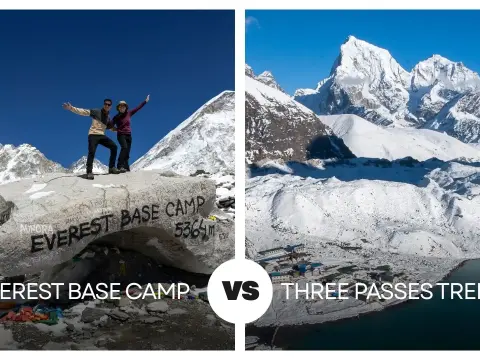
<a id="three-passes-vs-ebc"></a>The two treks share the same Lukla gateway, the same permits, and much of the same lower trail — but the Everest Base Camp Trek runs 14 days from $1,100–$1,499, while Everest Three Passes runs 17 days from $1,550–$1,750. The gap comes down to route complexity, not markup:
For a direct side-by-side comparison of the two routes — difficulty, itinerary, and who each one actually suits — see the dedicated Everest Base Camp vs Three Passes Trek comparison.
| Trek | Duration | Starting Price (group rate) | Max Altitude |
|---|---|---|---|
| Everest Base Camp | 14 days | ~$1,260 | 5,555 m |
| Everest Three Passes | 17 days | $1,650 | 5,555 m |
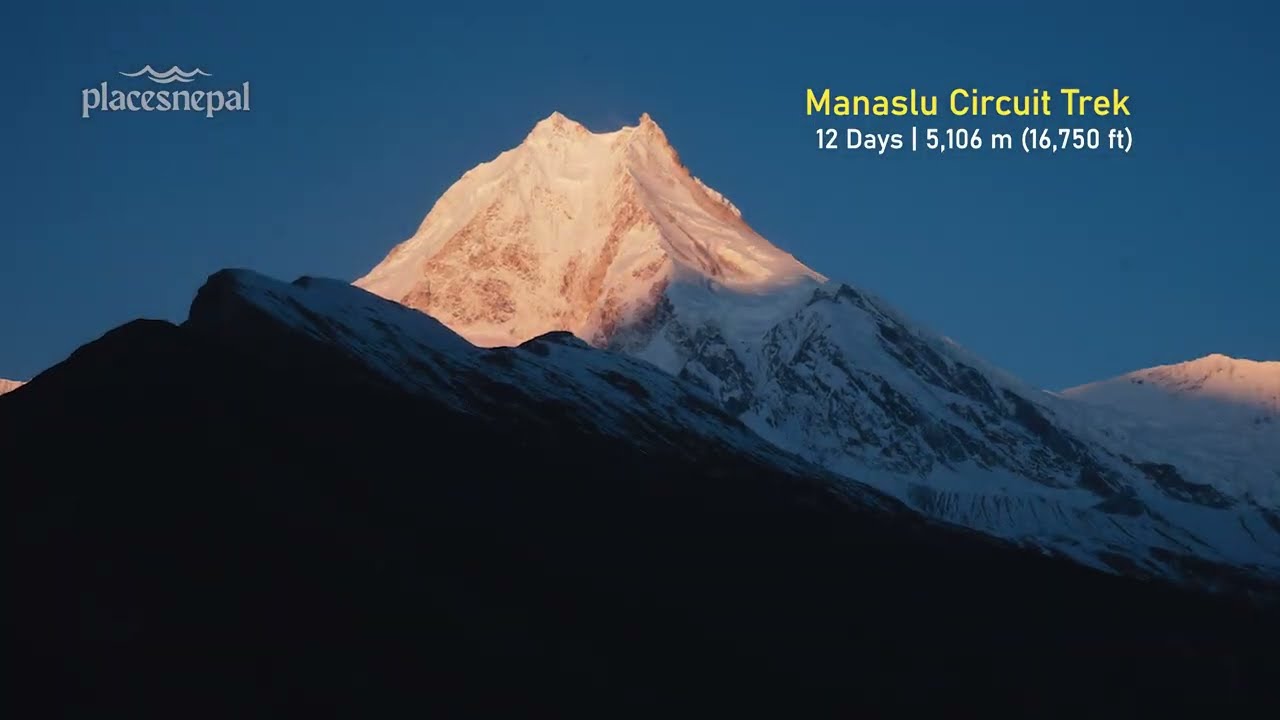
| Manaslu Circuit | 12 days | ~$980 | 5,106 m (Larkya La) |
| Annapurna Circuit | 10 days | ~$820 | 5,416 m (Thorong La) |
Everest Three Passes sits at the expensive end of Nepal's classic teahouse treks for the same reasons it costs more than EBC specifically: length, technical high-pass terrain, and altitude exposure. It's priced closer to Manaslu and above Annapurna Circuit for comparable reasons — more trekking days and harder terrain generally mean a higher package cost across the board, not just on this one route.
The price buys considerably more than a bed and three meals a day. It buys route-finding across three technical high passes — Cho La in particular involves glaciated terrain that can require crampons — a circular route through the Khumbu, Gokyo, and Imja valleys that a standard EBC trek doesn't touch, and a guide's judgment on when conditions on an exposed 5,300 m+ pass are safe to cross versus when to wait or turn back.
For a trekker with prior experience above 4,000 m, strong fitness, and time for a demanding 17-day itinerary, that's a fair trade for the price difference over EBC. For a first-time high-altitude trekker, or anyone with a tighter Nepal window, the standard Everest Base Camp Trek or the Gokyo Lake Trek delivers most of the same core Everest-region experience — Sherpa culture, high-altitude scenery, teahouse trekking — at a lower cost and a gentler technical demand.
Genuine ways to bring the total down without compromising safety:
What not to cut corners on: travel insurance with genuine high-altitude helicopter rescue cover, the permits (already included and non-negotiable regardless), a properly rated sleeping bag for nights above 4,500 m, and adequate food and water intake at altitude. None of these are the place to save money on a route that spends this much time above 5,000 m.
The pricing throughout this guide — $1,550–$1,750 depending on group size — reflects Places Nepal's current, live 2026 rates as of publication. Nepal trek pricing typically holds steady across a full year rather than shifting month to month, but next year's rate is not guaranteed to match this year's.
If you're booking a spring or autumn 2027 departure, use this guide for realistic budget planning, then confirm the exact current rate on the live trip page or directly with Places Nepal before finalizing payment.
Package prices aren't arbitrary and can shift year to year for legitimate operational reasons: permit fee revisions from park and municipal authorities, Lukla/Manthali flight pricing set by domestic airlines, teahouse rate increases at altitude, guide and porter wage adjustments, currency exchange movements against the US dollar, and general inflation on goods that all have to be carried into the Khumbu by plane, yak, or porter. None of these are within an operator's direct control, which is why confirming the current rate before booking — rather than relying on last year's number — matters more on a route like this than on lower-altitude, more easily supplied treks.
Solo trekkers who want maximum flexibility and a dedicated guide relationship should expect the $1,750 private rate — or join one of Places Nepal's fixed group-departure dates for $1,650 instead.
Small groups of 2–5 get the best balance of per-person savings and a still-manageable group size for pace and acclimatization flexibility, at $1,650 per person.
Larger groups of 6–10 unlock the lowest per-person rate ($1,550) — the strongest financial case if you're already traveling with a group of friends, a club, or an organized departure.
A porter makes the most financial and physical sense on this specific trek given its 17-day length and four strenuous days — $400 well spent for most trekkers who can afford the add-on.
A helicopter upgrade is a convenience purchase, not a cost-saving one — choose it for comfort and time savings during peak-season Manthali congestion, not because it's cheaper than the standard flight.
Once you know your total budget, the next step is checking exactly what's covered by the trekking package. Places Nepal's current Everest Three Passes Trek itinerary lists the inclusions, group rates, and full 17-day route in detail.
The commercial advantage of booking through a transparent package is straightforward: you know exactly what you're paying for before you land in Kathmandu. Permits, flights, guide, meals, and accommodation are all locked into one number — the only variable costs left are the personal ones covered throughout this guide.
If the 17-day technical demand of Three Passes doesn't match your timeline or experience level, a few alternatives worth comparing:
How much does the Everest Three Passes Trek cost? Places Nepal's Everest Three Passes Trek starts at US$1,650 per person for groups of 2–5, ranging from US$1,550 (groups of 6–10) to US$1,750 for a solo private departure. A fixed group-joining departure is $1,650. The package covers Lukla flights, guide, all permits, 16 nights of teahouse accommodation, and all meals across the 17-day trek.
How much does Three Passes Trek cost in 2026? Current 2026 rates are $1,550–$1,750 depending on group size, as shown in the pricing table above. These are the live, current rates as of this guide's publication — confirm on the trip page before booking.
How much is the Places Nepal Three Passes Trek? $1,550–$1,750 per person depending on group size (or $1,650 on a fixed group-joining departure) — see the full pricing table above for exact tiers.
What is included in the Three Passes Trek price? Lukla flights, a professional high-altitude guide, all required permits, 16 nights of teahouse accommodation, all meals on the trail, airport transfers, and all government and service taxes. Full breakdown above.
What is not included? Nepal visa, international flights, travel insurance, an optional porter ($400), personal expenses, tips, and any extra costs from flight delays or illness.
How much are permits? Roughly NPR 5,000 (~$40–45) total for the Sagarmatha National Park Entry Permit and the Khumbu Pasang Lhamu Rural Municipality Permit — both fully included in the Places Nepal package price.
Is the guide included? Yes, a professional English-speaking high-altitude guide for all 17 days is included in every package tier.
How much does a porter cost? $400 for the full 17-day trek if added to a Places Nepal package — optional, not included by default. Independently, porters generally charge $25–30 per day.
How much does the Lukla flight cost? Included in the package. Independently arranged, round-trip Lukla flights (including Manthali transfer logistics in peak season) generally run $450–550.
Do I fly from Kathmandu or Manthali? Manthali (Ramechhap) during peak season (March–May, September–November); Kathmandu directly during quieter months (January–February, June–August, December). Places Nepal handles all logistics either way.
How much does food cost each day? All meals are included in the package. If budgeting for extra personal food purchases, expect $3–8 per snack or drink item, rising with altitude.
How much does accommodation cost? 16 nights are included in the package. No separate accommodation cost applies to the core trek itinerary.
How much does water cost? Not included. Bottled or boiled water runs roughly $2–5 per liter depending on altitude; a personal filter or purification tablets significantly reduce this.
How much cash should I carry? Enough to cover personal spending between Namche visits, since Namche is the last reliable ATM access point on the route. Withdraw more than you expect to need on both the outbound and Day 14 return visits.
How much should I budget for tips? As a planning guideline, many trekkers budget roughly $150–250 for a guide and $100–150 for a porter on a trek of this length — adjust for group size and service. Tips are separate from the package price.
How much does insurance cost? Specialist high-altitude policies with helicopter rescue cover to at least 6,000 m generally run $100–250 for a trip of this length, depending on provider and coverage.
How much does Three Passes trekking gear cost? Renting a sleeping bag and down jacket in Thamel runs roughly $35–70 total for the 17-day trek. Buying equivalent gear new costs several times more.
Do I need to rent a sleeping bag? Most trekkers should, yes — a −15°C-rated bag is recommended for nights above 4,500 m, and renting in Thamel is far more economical than buying gear you'll likely use only once.
How much are showers and charging? Free at some lower-altitude stops, typically $0–5 for showers and $0–4 for charging at higher stops where a fee applies.
Is Three Passes cheaper independently? The headline cost looks lower — roughly $1,000–1,300 for permits, flights, and independent guide/porter fees combined — but that excludes accommodation, meals, trip planning time, and the safety value of an experienced guide on three technical high-pass crossings.
Is a guided Three Passes trek worth it? For a route with three passes above 5,300 m, glaciated terrain on Cho La, and remote teahouse logistics, most trekkers find the guide and pre-arranged logistics worth the cost difference over a fully independent trip.
Is Three Passes more expensive than EBC? Yes — $1,550–$1,750 versus $1,100–$1,499 for the standard 14-day EBC trek — reflecting three additional trekking days and three extra high-pass crossings.
Why does Three Passes cost more than EBC? More trekking days, three additional technical high-pass crossings not on the standard EBC route, and more remote teahouse stops that cost more to service. Full breakdown above.
Can I do Three Passes on a budget? Yes, within limits — joining a larger group departure, renting rather than buying gear, and carrying a water filter meaningfully reduce cost. Insurance, permits, and safety-critical gear are not areas to cut.
What is the cheapest way to do Three Passes? Join the largest available group departure (6–10 people, $1,550/person) or a fixed group-joining date ($1,650), rent gear instead of buying, skip the helicopter upgrade, and keep personal on-trail spending disciplined.
Should I join a group or book privately? A group departure meaningfully lowers the per-person price and suits trekkers comfortable with a shared pace. A private booking costs more but offers full control over timing — particularly valuable for pass-day weather decisions.
Is a helicopter upgrade worth the extra cost? Only for comfort and time — it costs more than the standard included flight, not less. Worth it if avoiding the pre-dawn Manthali drive matters to you; skip it if budget is the priority.
How much emergency money should I carry? Enough to cover one to two extra nights in Kathmandu if your Lukla flight is delayed, plus a general contingency buffer — a specific dollar figure depends on your own risk tolerance, but this should not be treated as optional given how routine seasonal flight delays are.
What is a realistic total budget for Three Passes? Roughly $2,070–$2,200 for a lean, package-focused trip; $2,410–$2,695 for a comfortable trip with reasonable personal spending; $3,800–$4,400+ for a private departure with a porter and helicopter upgrades. Full breakdown in the budget tiers above.
This guide reflects live Places Nepal pricing and inclusions as of September 2026. Permit fees, flight costs, and package rates are set by outside authorities and airlines and can be revised — always confirm current figures on the Everest Three Passes Trek trip page before booking.
Both of these treks start in Lukla. Both pass through Namche Bazaar. Both end with a pre-dawn climb to Kala Patthar for the same sunrise view of Evere...
Everest Base Camp Trek cost for 2026/2027 — real package pricing, permits, guide and porter wages, hidden costs, and how to budget accurately.
Hear what our travelers had to say about us.