Planning the EBC trek in September? Week-by-week weather, Lukla flight advice, crowd levels, packing tips and honest advice from a Kathmandu trekking team.
September is an odd month on the Everest Base Camp trail. Walk it on the 2nd and you're still finishing off the monsoon — warm, damp, cloud sitting low in the valleys by mid-morning. Walk the same trail on the 28th and you're in what many guides consider the single best stretch of trekking weather Nepal produces all year: cold, dry, dust-free air and mountains that look close enough to touch. Most articles about "Everest Base Camp in September" flatten this into one paragraph about "the start of autumn." It isn't one month — it's two, stitched together, and which half you land in changes almost everything about your trip.
This guide breaks September down week by week rather than treating it as a single block, because that's the only way to actually answer the question you came here with: should you book this month, and if so, when in it?
Quick Answer: Is September a Good Time to Trek Everest Base Camp?
Yes, with a caveat on timing. We'd rate September a 7.5 out of 10 overall for the Everest Base Camp trek — but that number splits sharply across the month: closer to 6/10 in the first ten days, and 9/10 from around the 20th onward.
The reason is simple. Nepal's summer monsoon doesn't stop on August 31st; it fades out gradually, and the Khumbu usually isn't fully clear of it until the third week of September. Book a trip starting September 3rd and you should expect some rain, some socked-in afternoons, and greener but muddier trails at lower elevation. Book a trip starting September 22nd and you're arriving right as the sky clears, the trails dry out, and the valley explodes into the sharpest, most saturated green of the entire year — before the October crowds arrive.
If you can only pick one takeaway from this entire guide: for the same trek, same guide, same price, late September consistently outperforms early September on every measure that matters — visibility, trail conditions, and flight reliability. If your dates are flexible at all, push toward the back half of the month.
Trek the Everest Base Camp Trek
This classic trek takes you through the heart of the Khumbu region, past vibrant Sherpa villages, ancient monasteries, and towering Himalayan peaks.
Why Trek Everest Base Camp in September
In one line: September is the handoff month — monsoon exits, autumn arrives, and the Khumbu looks better than it will again until spring.
A few things happen simultaneously as September progresses, and they're worth understanding rather than just accepting as a marketing line:
- The monsoon genuinely retreats. Nepal's monsoon typically begins withdrawing from the country through September, with the Khumbu usually clear of sustained monsoon rainfall by the final third of the month. This isn't a fixed calendar date — it varies year to year by a week or two — but the pattern is consistent enough to plan around.
- The landscape is at its greenest. Three months of monsoon rain leave the lower valleys — Phakding, the Dudh Koshi gorge, the forests below Namche — more lush than at any other trekking season. Waterfalls that are a trickle in November are full-throated in September. If you've seen Everest Base Camp photos with grey, dusty hillsides, that's spring or winter; September's version is green.
- Air quality improves fast. Monsoon rain scrubs dust, agricultural burning smoke, and haze out of the atmosphere. Once the rain stops, that clean air doesn't immediately get replaced with pre-monsoon dust the way it does by April or May — so the visibility window in late September can be exceptional, arguably better than October on a given clear day, simply because there's been less time for haze to build back up.
- It's the quiet edge of peak season. October and November are objectively the busiest months on this trail. September, especially the first three weeks, sees meaningfully fewer trekkers — you get autumn's stability without autumn's crowd density.
- Everest's climbing season is beginning. September through October is one of Nepal's two mountaineering windows (the other is spring). Depending on your dates, you may cross paths with expedition teams beginning their approach to Base Camp — an atmosphere that doesn't exist in the quieter shoulder months.
The honest counterpoint: none of this is guaranteed on any single date. September is a transition, not a locked-in season, and the first-half caveats below are real.
Weather in September: What to Actually Expect
In one line: expect roughly 24–28°C by day and 17–19°C at night in Kathmandu, dropping to well below freezing at night above Dingboche — and expect the whole range to trend drier and colder as the month goes on.
The table below gives typical conditions at each overnight stop on the standard route. These are seasonal planning ranges built from regional climate patterns and elevation, not a specific day's forecast — mountain weather in the Khumbu is genuinely local and shifts year to year, so treat this as a packing and expectation-setting guide, and check an actual short-range forecast in the final week before you fly.
| Location (altitude) | Day temp | Night temp | Rainfall trend | Humidity | Wind | Trend across the month |
|---|
| Kathmandu (1,350 m) | 24–28°C / 75–82°F | 17–19°C / 63–66°F | Moderate–heavy early, tapering sharply after ~day 20 | High early (75–85%), dropping to ~55–65% late | Light | Humid and hazy start, clear and warm by month's end |
| Lukla (2,860 m) | 14–17°C / 57–63°F | 6–9°C / 43–48°F | Frequent short showers early, mostly dry late | High early, moderate late | Light–moderate, picks up afternoons | Cloud burns off later each morning as the month goes on |
| Namche Bazaar (3,440 m) | 12–16°C / 54–61°F | 3–7°C / 37–45°F | Occasional afternoon showers early; dry late | Moderate | Moderate | Noticeably crisper and clearer from mid-month |
| Dingboche (4,410 m) | 9–13°C / 48–55°F | −3 to 1°C / 27–34°F | Rare by mid-month | Low–moderate | Moderate, gusty afternoons | Nights sharpen quickly once skies clear |
| Lobuche (4,910 m) | 5–9°C / 41–48°F | −7 to −3°C / 19–27°F | Rare | Low | Moderate–strong | Cold, dry, and increasingly still air late in the month |
| Gorakshep (5,164 m) | 3–7°C / 37–45°F | −10 to −6°C / 14–21°F | Rare, occasional light snow flurry late month | Low | Moderate–strong | Overnight cold builds through September |
| Everest Base Camp (5,364 m) | 1–5°C / 34–41°F (daytime only — no overnight stay) | — | Rare | Low | Variable, can gust hard on the glacier | Clearest, calmest conditions typically come in late-month mornings |
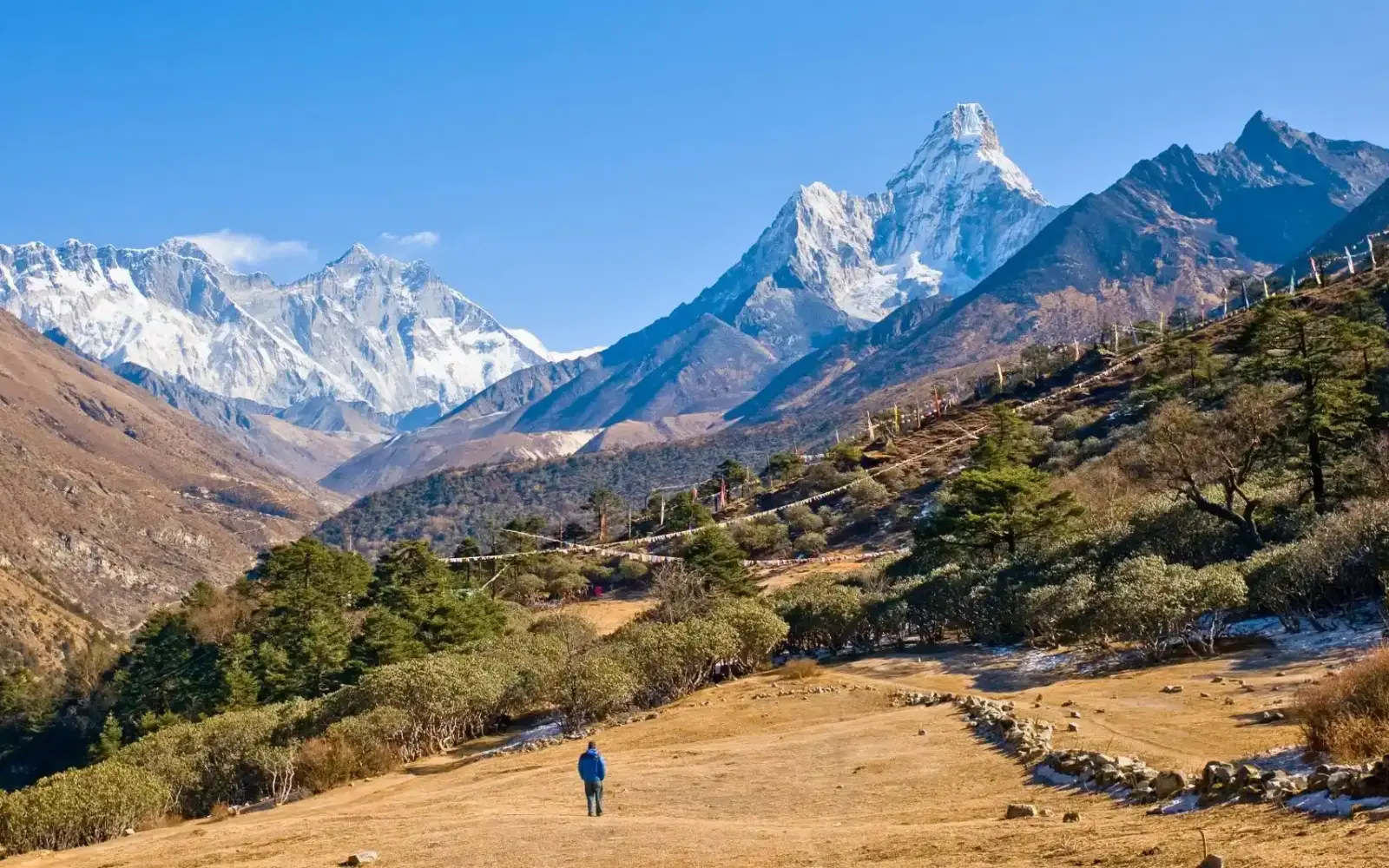
Why the swing between "early" and "late" matters this much: the difference between a 3rd-of-September departure and a 25th-of-September departure isn't a few degrees — it's the difference between hiking in a rain shell through cloud at Namche and standing on a bone-dry trail with Ama Dablam sharp against a cloudless sky. Both are "September." They are not the same trek.
Early vs. Mid vs. Late September: Which Is Actually Best?
In one line: late September (roughly the 20th onward) is the strongest window; early September is the greenest and quietest but the wettest.
| Early September (1–10) | Mid-September (11–20) | Late September (21–30) |
|---|
| Rain | Regular, sometimes daily short bursts | Intermittent, decreasing | Rare — mostly dry |
| Cloud cover | Frequent, especially afternoons | Breaking up, clear mornings common | Mostly clear, especially mornings |
| Mountain visibility | Inconsistent, best in early morning windows | Good, improving daily | Excellent, close to peak-autumn quality |
| Lukla flights | More weather delays and diversions to Manthali | Fewer disruptions | Most reliable of the three windows |
| Trekker crowds | Lowest of the year outside monsoon | Building steadily | Approaching October's busier levels |
| Trail conditions | Muddy below Namche, leeches possible in forest sections | Drying out fast | Firm, dry, dusty in places |
| Photography | Dramatic cloud and light, but unpredictable | Improving contrast and clarity | Sharpest air, best for distant peak shots |
| Best suited to | Trekkers prioritizing solitude and green scenery over guaranteed views | A solid middle-ground choice for most trekkers | Trekkers who want autumn's best conditions before the October rush |
If someone asks us "should I go early or late September," the honest answer is: late, if you have any flexibility at all. The one legitimate reason to choose early September on purpose is if avoiding crowds matters more to you than guaranteed mountain views — the trail genuinely empties out in the first ten days of the month in a way it won't again until next summer's monsoon.
Trek the Everest Base Camp Trek
This classic trek takes you through the heart of the Khumbu region, past vibrant Sherpa villages, ancient monasteries, and towering Himalayan peaks.
Mountain Visibility in September
In one line: mornings are reliably clearer than afternoons all month, and by late September the whole day tends to stay clear.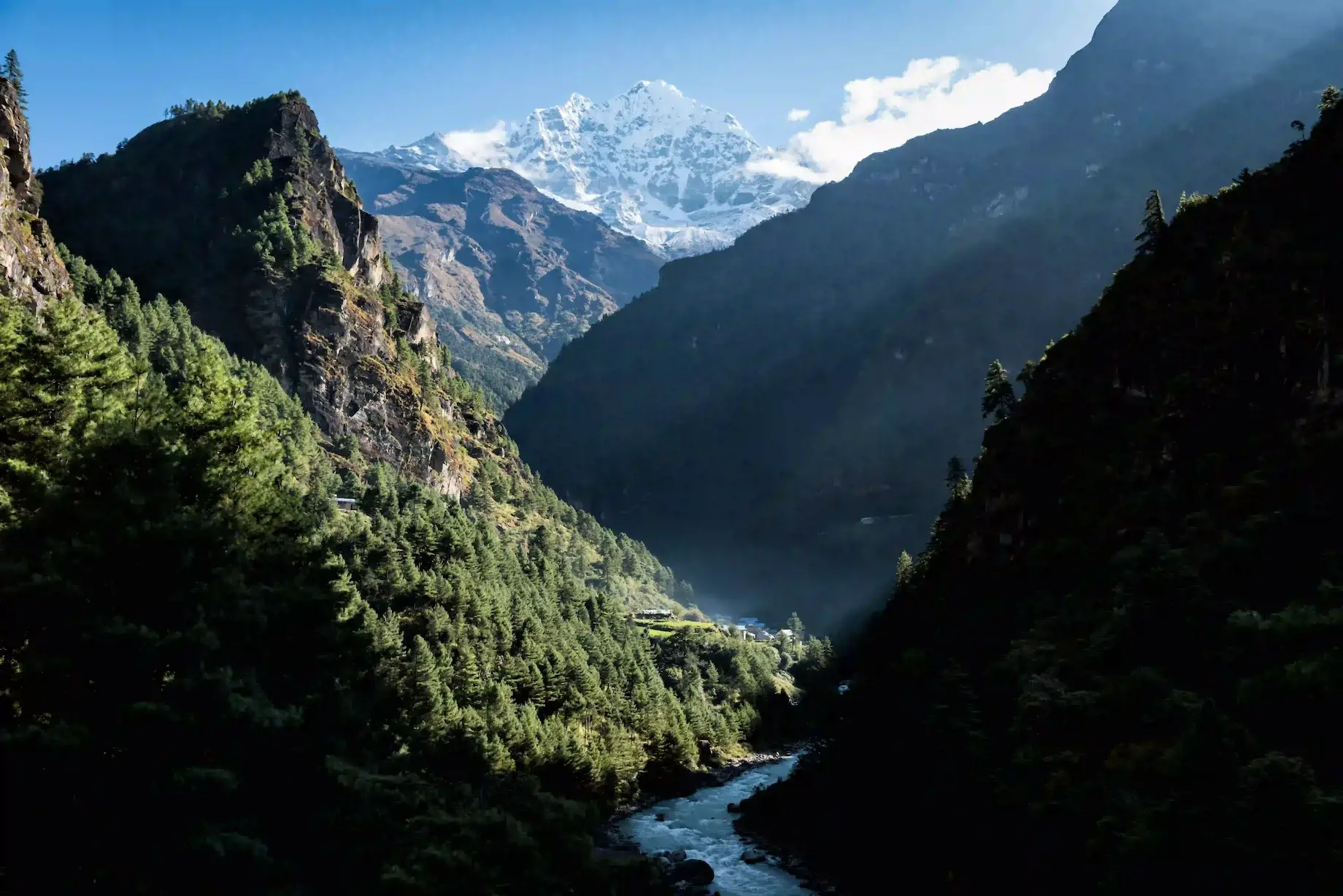 Cloud in the Khumbu follows a daily rhythm more than a monthly one, especially early in September: valley air heats up through the morning, moisture rises off the still-saturated ground and forest, and by late morning to early afternoon cumulus builds against the high peaks. This is why every experienced guide in the region pushes early starts — the Namche-to-Tengboche ridge walk, the Nangkartsang Hill acclimatization hike, and above all the Everest Base Camp and Kala Patthar pushes are all timed to beat the cloud, not because trekkers enjoy alarm clocks.
Best viewpoints and their September behavior:
- Kala Patthar (5,545 m) at sunrise — the single best mountain view on the route, and pre-dawn timing sidesteps the daily cloud cycle almost entirely. This holds true throughout September.
- Tengboche Monastery ridge — walk it before 10 AM; by late morning cloud typically starts filling in from the south.
- Hotel Everest View (3,880 m) — a breakfast-hour viewpoint for exactly this reason; go early or the panorama can be gone by 11 AM.
- Nangkartsang Hill (5,091 m) — the 360° acclimatization-hike panorama above Dingboche is best in the first two hours after sunrise.
By late September, the cloud cycle weakens noticeably — some days stay clear from dawn to dusk, which almost never happens in the first two weeks of the month.
Trail Conditions in September
In one line: expect mud and the odd leech below Namche early in the month; expect dry, dusty trail everywhere by late month.
- Mud and slippery sections — the Lukla–Phakding–Namche stretch runs through forest and crosses several streams; this section holds the most residual monsoon moisture and is the muddiest part of the route in the first half of September.
- Leeches — a genuine, if minor, early-September annoyance in the lower forested sections (below roughly Namche). They largely disappear as the forest floor dries out through the month. Gaiters and a pinch of salt in your sock top handle this easily; it's not a reason to avoid the trek, just something to know about.
- River crossings and suspension bridges — all bridges on the standard route (including the Hillary Suspension Bridge) are permanent structures well above flood level; September's higher river volume doesn't create a safety issue, just louder, more dramatic water below you.
- Landslide risk — low on the maintained EBC trekking trail itself, which runs well above the access roads where most monsoon-season landslide news in Nepal actually originates. Risk is highest, if anywhere, in the first half of the month on any exposed slope sections after heavy rain; your guide will reroute around anything questionable.
- Above the treeline (Dingboche and higher) — this terrain is rock, scree, and glacial moraine, not soil, so September's residual monsoon moisture barely registers here. This section trends dry all month.
- High alpine trail (Lobuche–Gorakshep–EBC) — dry and stable all month, though a light snow flurry becomes possible (not common) in the final week of September as overnight temperatures at 5,000 m+ start dropping toward winter norms.
Net effect: trekking poles and gaiters earn their keep more in early September than in October, but nothing here is technically harder — just wetter underfoot.
Lukla Flights in September
In one line: September is one of the peak-season months when flights are routinely rerouted through Manthali Airport, and weather delays are more common early in the month than late.
This is one of the most practically important sections of this whole guide, because it affects your actual trip logistics from Day 2.
- Manthali diversions apply to September. During the busiest trekking months — March, April, May, September, October, and November — Lukla flights are frequently redirected from Kathmandu's domestic terminal to Manthali Airport in Ramechhap to ease congestion. If your dates fall into this pattern, expect a roughly 1:00 AM hotel pickup, a 4–5 hour road transfer to Manthali, and a short 20-minute flight into Lukla from there — rather than the more relaxed 35-minute flight direct from Kathmandu. Your guide confirms which applies the evening before departure; the logistics are handled for you, but the wake-up call is real, so plan your Day 1 evening accordingly.
- Weather delays are more common early in the month. Lukla operates under Visual Flight Rules — pilots need to see the runway and surrounding terrain, full stop. Morning cloud buildup, more frequent in the first half of September, causes short delays and occasional full cancellations more often than it will later in the month once skies clear up.
- Helicopter alternatives exist but aren't a guaranteed backup. When fixed-wing flights are grounded for an extended period, shared or private helicopter transfers to Lukla become available (at a significantly higher cost) — but helicopters fly under similar visibility rules, so in genuinely poor weather even this option can be delayed.
- Minimizing delays: book flights as early in the day as your schedule allows (cloud builds through the morning, so the 6 AM wave is more reliable than the 10 AM one), build at least one buffer day into your Kathmandu schedule after your return flight, and never book a same-day international connection out of Kathmandu on your return.
If your travel dates are rigid — a wedding, a return-to-work deadline — that alone is a reason to lean toward late September over early, purely for flight reliability.
Crowds on the Everest Base Camp Trail in September
In one line: early September is one of the quietest windows of the entire trekking calendar; by late September, numbers are climbing back toward October's peak-season levels.
The EBC trail's crowd pattern is almost a mirror of its weather pattern. The first two weeks of September see meaningfully fewer trekkers than any other point in the March–November trekking calendar outside of monsoon itself — teahouses are rarely full, viewpoints aren't crowded, and there's a genuine quiet-trail experience available if that's what you're after. From roughly the third week onward, numbers build steadily as word gets out that conditions have turned, and by the very end of the month the trail is approaching the density you'd see in October — still nowhere near as packed as the Dashain/Tihar-adjacent weeks in mid-to-late October, but noticeably busier than September 1st.
Accommodation in September
In one line: teahouses have plenty of availability for most of September, and advance booking isn't the necessity it becomes in peak October.
Every teahouse on the standard route operates year-round, so availability isn't a binary yes/no the way it can feel in the busiest fortnight of October. Through most of September, rooms are easy to come by even without pre-booking — your guide typically arranges each night's stop a day or so ahead as you go. As crowd levels climb in the last week of the month, popular stops (Namche, Tengboche, Dingboche, and above all Gorakshep, which has genuinely limited capacity) start filling earlier in the day, so arriving at your destination by early-to-mid afternoon rather than pushing into evening becomes a more useful habit than it is in the quiet first half of the month.
Food in September
Menus don't change by season — dal bhat, noodle soup, fried rice, momos, pancakes, garlic soup, and (at lower altitude) pizza and pasta are available throughout, with the widest selection in Namche Bazaar and a simpler, more repetitive menu the higher you climb. What does shift slightly in September is freshness: lower-elevation teahouses, freshly resupplied after monsoon transport disruptions ease, tend to have better vegetable availability than in the driest, most remote stretches of winter. Garlic soup — the traditional Khumbu remedy trekkers swear by for altitude and general immune support — is worth ordering nightly above Namche regardless of season.
Packing List for Everest Base Camp in September
In one line: pack for autumn cold at altitude, but weight the first half of your kit list toward rain and moisture protection that October and November trekkers can mostly skip.
The September-specific difference from a standard EBC packing list is emphasis, not a totally different kit: you need everything a November trekker needs (down jacket, four-season sleeping bag, full glove and hat system for sub-zero nights above Dingboche) plus genuine rain protection for the first half of the month, which drier-season trekkers can pack lighter on.
| Category | September-specific priorities | Why it matters this month |
|---|
| Rain protection | Waterproof/windproof hard shell (not just water-resistant), pack rain cover, dry bags for electronics and documents | Early-September showers are real; a soft-shell alone won't cut it below Namche |
| Footwear | Broken-in waterproof boots, gaiters | Mud and stream splash on the lower trail through mid-month; gaiters also help with leeches |
| Layering system | Base layer, fleece/softshell mid-layer, down jacket, hard shell — all four, packed to be added/removed independently | The temperature swing between a humid Phakding afternoon and a −8°C Gorakshep night is extreme even by Himalayan standards in September |
| Electronics protection | Ziplock bags or a dry sack specifically for your phone/camera | Humidity and rain risk is highest of any trekking season except monsoon itself |
| Sun protection | SPF 50+, lip balm with SPF, sunglasses with UV protection | Once the cloud clears mid-to-late month, high-altitude UV is intense even in cooler air |
| Warmth for altitude | 4-season sleeping bag (rated −15°C or lower), insulated gloves, warm hat | Night temperatures above Dingboche are already firmly sub-zero by mid-September and only get colder toward month's end |
| Footwear extras | Camp shoes/sandals | Getting boots off and feet dry each evening matters more when boots have been wet during the day |
This is a September-focused priority list, not the full gear inventory — see the complete Equipment List on the Everest Base Camp Trek trip page for the full packing checklist covering clothing, medical kit, and miscellaneous items.
Does September Change the Difficulty of the Trek?
In one line: no — the physical and altitude challenge is identical year-round; September mainly adds a small amount of extra effort underfoot in the first half of the month.
The Everest Base Camp trek's core difficulty comes from three fixed factors that don't change with the calendar: total altitude gain (Lukla at 2,860 m to Kala Patthar at 5,545 m), daily walking hours (5–7 hours most days), and reduced oxygen above 4,000 m. None of that is easier or harder in September than in October.
What September does change slightly: mud on the lower trail and occasional wet, slippery stone steps add a small amount of extra caution and energy expenditure through mid-month, and humidity at lower elevation can make the first two days feel more physically taxing than the same days would in the crisp, dry air of November. None of this changes the trek's fundamental grading — it's still a moderate-to-challenging trek, not a technical one, at any point in September.
Altitude Sickness in September
In one line: your AMS risk is driven by altitude and ascent rate, not by the month — the same acclimatization rules apply in September as any other season.
This is worth stating plainly because a few competitor articles imply that "good weather months" are somehow lower-risk for altitude sickness. They aren't — Acute Mountain Sickness is a function of how fast your body ascends and how high it goes, not air temperature or cloud cover. Roughly a third to half of trekkers on faster itineraries develop at least mild AMS symptoms regardless of season; a properly staged itinerary with acclimatization days at Namche Bazaar (3,440 m) and Dingboche (4,410 m) is what reduces that risk, not the calendar.
Core prevention rules, unchanged by season:
- Climb high, sleep low — the entire logic of the built-in acclimatization hikes to Hotel Everest View and Nangkartsang Hill.
- Hydrate aggressively — 3–4 litres a day from Namche upward; altitude suppresses thirst before it suppresses your need for water.
- Ascend gradually — no more than roughly 400–500 m of net sleeping-altitude gain per day above 3,000 m, which is exactly what a well-built itinerary is designed around.
- Know the danger signs — a headache that doesn't respond to standard pain relief, vomiting, loss of coordination, or confusion are not "push through it" symptoms; they require immediate descent and should be reported to your guide the moment they appear, not after they get worse.
- Consider Diamox (acetazolamide) — a conversation to have with a travel medicine doctor before you go, particularly on shorter itineraries with less built-in acclimatization buffer.
Photography in September
In one line: mornings are your window all month, and the light gets progressively sharper and more reliable as September goes on.
Early-to-mid September rewards photographers willing to work with drama rather than clarity — building cumulus against the peaks, shafts of light through breaking cloud, and the deepest green valley color of the year. Late September shifts toward the classic postcard conditions: crystalline air, sharp contrast on snow and rock, and the kind of long-lens clarity on distant 8,000 m peaks that photographers specifically time trips around. Kala Patthar at sunrise remains the single best framing of Everest itself in any week of September; the Tengboche ridge and the Nangkartsang Hill panorama are the next-best options, both needing an early start to beat the day's cloud buildup.
Wildlife and Nature in September
Post-monsoon September is the Khumbu's greenest month — expect full waterfalls, saturated forest color on the lower trail, and late-season alpine wildflowers above the treeline that won't be there by November. Wildlife sightings are a genuine possibility rather than a guarantee: Himalayan tahr and, more rarely, musk deer on the steeper forested slopes; pika scurrying through rock fields above Dingboche; and several pheasant species, including the vividly colored Impeyan pheasant (Danphe, Nepal's national bird), in the rhododendron and juniper zones. Raptors — lammergeier (bearded vulture) and Himalayan griffon vultures riding the thermals above the high valleys — are a near-daily sight from Dingboche upward. None of this is scripted; treat sightings as a bonus, not an itinerary item.
Advantages of Trekking Everest Base Camp in September
- Greenest, most vivid landscape of the entire trekking calendar
- Fewer trekkers than October or November, especially in the first two weeks
- Improving weather trend through the month, with late September rivaling peak autumn
- Waterfalls and rivers at their fullest and most dramatic
- Start of Everest's autumn climbing season — a chance to see expedition activity building at Base Camp
- Cleaner, dust-free air once the monsoon lifts
- No pre-monsoon spring haze to compete with mountain visibility
Disadvantages of Trekking Everest Base Camp in September
- Early-month rain and cloud are a real possibility, not a rare exception
- Mud and occasional leeches on the lower forested trail through roughly mid-month
- Higher chance of Lukla flight delays in the first half of the month than in late September or October
- Less predictable than booking a guaranteed-dry October or November date
- Crowds build fast in the back half of the month, eroding some of the early-September solitude advantage
- Not the ideal month if your travel dates are fixed and inflexible — weather variance is genuinely higher than in peak autumn
September vs. Other Months for Everest Base Camp
| Month | Weather | Crowds | Visibility | Trail conditions | Best for |
|---|
| March | Warming, occasional late-winter snow at altitude | Moderate, building | Good | Good, some snow patches above Dingboche | Early-spring trekkers wanting fewer crowds than April/May |
| April | Peak spring — rhododendrons blooming | High | Very good, some pre-monsoon haze late in the month | Excellent, dry | Flower season, classic spring trekking |
| May | Warm, pre-monsoon haze builds | High, tapering late month | Good early, hazier late | Good | Trekkers prioritizing warmth over crystal-clear views |
| September | Wet early, clearing fast, greenest scenery | Low early, building late | Inconsistent early, excellent late | Muddy early, dry late | Trekkers who value quiet trails and can accept early-month weather risk |
| October | Peak autumn — driest, clearest, most stable | Very high (busiest month of the year) | Excellent | Excellent, dry and dusty | Trekkers wanting the most reliable weather window of the year |
| November | Cold, very clear, dry | High, tapering by late month | Excellent | Excellent, increasingly cold and frosty | Trekkers wanting autumn clarity with fewer crowds than October |
The honest positioning: October is the safest bet for guaranteed clear weather in a single trip. September is the better choice if quiet trails and lush green scenery matter to you more than a guarantee of zero rain — and if your dates land in the back half of the month, you get most of October's payoff without October's crowds.
Who Should Trek Everest Base Camp in September?
| Traveler type | September verdict | Why |
|---|
| Beginners / first-time high-altitude trekkers | Good, favor late September | The trek's difficulty is unchanged, but a beginner benefits from the more predictable footing and visibility of the back half of the month |
| Families with older children/teens | Good, favor late September | Fewer crowds ease logistics (teahouse space, pace flexibility); avoid early-month if traveling with young children sensitive to rain and cold-wet exposure |
| Solo travelers | Very good | Places Nepal's fixed group departures let solo trekkers join others at the same per-person rate; September's quieter trail also makes for easier group camaraderie without October's crowd density |
| Couples | Good | Late September in particular offers a quieter, more intimate trail experience than the busier autumn peak |
| Photographers | Best in the back half of the month | Early September's unpredictable cloud can frustrate a photography-focused itinerary; late September rivals October for clarity with far fewer other trekkers in your shots |
| Experienced trekkers seeking solitude | Excellent, especially the first two weeks | This is genuinely one of the quietest windows on the entire calendar outside monsoon itself |
| Trekkers on a fixed, non-negotiable travel date | Proceed with realistic expectations if the date falls before ~September 15 | Build in extra buffer days for Lukla flight delays and pack full rain protection regardless of forecast |
Everest Base Camp Trek Cost in September
In one line: pricing is set by group size, not by season, so a September departure costs the same as booking any other month of the year.
Places Nepal's Everest Base Camp Trek is priced in tiers based on group size rather than by calendar month:
| Group size | Price per person |
|---|
| 1 trekker (private) | US$1,499 |
| 2–5 trekkers | US$1,260 |
| 6–10 trekkers | US$1,180 |
| 11–15 trekkers | US$1,100 |
Solo trekkers can join a fixed group departure at the 2–5 person rate rather than paying the solo-private tier — check current September departure availability on the Everest Base Camp Trek trip page. What is and isn't included, and the exact current permit fee schedule, are also listed there, since permit costs are set by local authorities and can be revised.
What September doesn't change:
- Flights — Lukla flight costs are the same regardless of month; what changes is the likelihood of a Manthali diversion, which adds a road transfer rather than a fare difference.
- Guides and porters — day rates for guides and porters don't fluctuate with season; a porter is optional and shared between two trekkers if you'd like to reduce your own pack weight.
- Accommodation — teahouse rates are broadly consistent across the trekking calendar; you won't pay a September discount or an October surcharge on the standard package.
Expert Tips for Trekking Everest Base Camp in September
- Push your start date past the 20th if you have any flexibility at all. This single decision does more for your trip quality than any gear choice.
- Pack your rain shell at the top of your bag, not the bottom — you'll likely need it within the first two trekking days if you start early in the month.
- Bring gaiters even if they're not on a generic packing list — they solve mud, stream splash, and leeches in one piece of gear.
- Start every day's walk as early as your itinerary allows. Cloud builds through the morning in September more than in any other trekking month except monsoon.
- Don't skip either acclimatization day (Namche or Dingboche) to "make up time" after a weather-delayed start. This is the single most common reason trekkers turn back before reaching Base Camp, in any month.
- Withdraw more cash in Namche than you think you'll need. ATMs stop after Namche, and early-September's quieter season doesn't change how much cash the higher teahouses expect.
- Build a genuine buffer day into your Kathmandu schedule, both before and after the trek. Early-September flight delays are more common than late-month ones.
- If your dates fall before mid-September, expect a Manthali departure and set your alarm accordingly — the 1:00 AM pickup is non-negotiable when it applies.
- Treat leeches as a minor annoyance, not a reason to change plans. A pinch of salt at your sock tops and gaiters handle it completely.
- Pack a proper 4-season sleeping bag regardless of how mild Kathmandu feels when you land. Gorakshep nights are already well below freezing by mid-September.
- Dry-bag your electronics separately from your clothing. September has the highest humidity risk of any trekking-season month.
- Book Namche and Tengboche as two-night, not one-night stops if your itinerary allows — the extra flexibility helps you dodge a rainy travel day without losing acclimatization value.
- Attend the Tengboche evening puja if your schedule allows it — remove shoes, sit quietly at the back, and don't photograph without asking; it's one of the most genuine cultural moments on the entire route.
- If you're flying into Kathmandu in the days around September 23–30, expect Indra Jatra street festivities in the old city — a striking, worthwhile detour before you head to the mountains, but budget extra time for crowded streets around Durbar Square if you want to see the chariot procession.
- Trekking poles matter more in September than in October — the extra stability on wet stone steps below Namche is worth the minor inconvenience of carrying them.
- Photograph the lower valley on your way up, not just the mountains. September's waterfalls and forest color are genuinely better than any other trekking season and easy to overlook once base camp is on your mind.
- Eat the garlic soup. It's a Khumbu trekking tradition for a reason, and appetite tends to dip at altitude regardless of month.
- If AMS symptoms appear, report them immediately — don't wait to see if a "good weather day" makes you feel better. Weather has no bearing on altitude physiology.
- Pack camp shoes. Getting out of wet boots each evening matters more in a month where boots are more likely to have gotten wet during the day.
- Confirm your return flight the evening before, every time — Manthali-season logistics shift more often, and your guide will have the latest information.
- If you want guaranteed clear skies for photography above all else, shift to October instead — that's an honest trade-off, not a sales pitch, and we'd rather tell you now than have you disappointed on day nine.
- Consider the 16-day itinerary over the 12-day if this is your first high-altitude trek — the extra acclimatization buffer matters more when weather has already added a day of uncertainty into your schedule.
Common Mistakes Trekkers Make in September
- Assuming "September" means one uniform weather experience. It's genuinely two different trips depending on which half of the month you book.
- Skipping rain gear because "it's autumn, not monsoon." Early September is still functionally monsoon-adjacent at lower elevation.
- Booking a rigid, tight international connection for the return flight. Lukla delays cascade, and September's are more frequent early in the month.
- Underestimating night temperatures because daytime Kathmandu still feels warm. Gorakshep is well below freezing regardless of what Kathmandu felt like on Day 1.
- Cutting an acclimatization day short to recover time lost to a flight delay. This trades a manageable inconvenience for a genuine safety risk.
- Ignoring leeches as "not a real issue" and then being caught without gaiters. They're minor, but only if you're prepared.
- Packing only a water-resistant jacket instead of a genuinely waterproof shell. The difference matters in early-September showers.
- Assuming ATMs work reliably above Namche. They don't — carry enough cash for the entire trip above that point.
- Pushing through worsening AMS symptoms because "the views are supposed to be great this week." Weather quality has zero bearing on whether you should descend.
- Not checking whether your dates fall in a Manthali-diversion window. Being surprised by a 1:00 AM pickup is avoidable with one question to your guide in advance.
- Booking the fastest, most crowds-averse 12-day itinerary purely to "beat" September's shoulder-season crowds — when the 14 or 16-day options offer meaningfully lower AMS risk for a similar overall experience.
- Photographing only the high mountains and skipping the lower valley. September's green valley and waterfalls are a genuine, easily missed highlight.
- Assuming late-September conditions will match early-September expectations from a friend's trip report. The two halves of the month are different enough that one person's "September was rainy" and another's "September was perfect" can both be true.
- Not building a Kathmandu buffer day at either end of the trip. This is the single easiest insurance policy against the entire trek's biggest logistical risk.
- Assuming a guide isn't necessary because trail conditions "look fine in photos." Permit checkpoints, route-finding around any weather-affected sections, and altitude monitoring are all part of why a licensed guide is standard practice on this route.
- Underpacking sun protection because it's been cloudy the first few days. Once the sky clears at altitude, UV exposure is intense even in cool air.
Frequently Asked Questions
Is September a good time for the Everest Base Camp Trek? Yes, particularly from around the third week onward. Early September carries real rain and cloud risk; late September rivals peak autumn conditions with noticeably fewer crowds.
Is early or late September better for Everest Base Camp? Late September is better on almost every measure — visibility, trail conditions, and flight reliability. Early September's advantage is quieter trails and the greenest scenery of the year, if you're willing to accept more weather variability.
What is the weather like on the Everest Base Camp trek in September? Expect roughly 24–28°C by day in Kathmandu cooling with altitude to well below freezing at night above Dingboche, with a wetter, cloudier first half of the month giving way to a drier, clearer second half.
What is the temperature at Everest Base Camp in September? Daytime temperatures at Base Camp itself (5,364 m) typically run 1–5°C. No one overnights at Base Camp — trekkers sleep at Gorakshep (5,164 m), where overnight lows fall to roughly −6 to −10°C in September.
Does it rain a lot on the EBC trek in September? Rain is common in the first half of the month, especially at lower elevations below Namche, and becomes rare by the third week as the monsoon fully withdraws.
Is September better than October for Everest Base Camp? October offers more consistently dry, clear weather across the whole month, but it's also the busiest month of the year on the trail. Late September delivers similar conditions to October with a noticeably quieter trail.
Can you see Everest clearly in September? Yes, especially from mid-month onward and particularly in the early morning before daily cloud buildup. Kala Patthar at sunrise is the most reliable clear-mountain viewpoint throughout the month.
Are Lukla flights reliable in September? Less reliable in the first half of the month than in late September or October, due to more frequent morning cloud. September is also one of the months when flights are commonly rerouted through Manthali Airport due to peak-season congestion.
Why do Lukla flights sometimes depart from Manthali instead of Kathmandu in September? During the busiest trekking months — including September — flight volume through Kathmandu's domestic terminal is eased by rerouting some Lukla flights through Manthali Airport in Ramechhap, which involves a road transfer and an earlier departure time.
Is Everest Base Camp crowded in September? Early September is one of the quietest windows of the entire trekking year. Crowds build steadily through the month and approach October's busier levels by the final week.
What should I pack for the Everest Base Camp trek in September? Everything a standard EBC packing list requires — four-season sleeping bag, down jacket, full layering system — plus genuine waterproof (not just water-resistant) outer layers, gaiters, and extra electronics protection for the wetter first half of the month.
Do I need rain gear for Everest Base Camp in September? Yes, particularly if your trek starts before mid-month. A proper waterproof shell, not a water-resistant one, is worth the pack weight.
Are there leeches on the Everest Base Camp trail in September? Occasionally, in the lower forested sections below Namche Bazaar, mostly in the first half of the month. Gaiters handle this easily, and they largely disappear as the trail dries out.
Is the Everest Base Camp trek harder in September than other months? No — the altitude and distance are unchanged. Early-September mud and humidity add a small amount of extra effort at lower elevation, but the trek's core difficulty rating doesn't change with the season.
Does September change the risk of altitude sickness? No. AMS risk is driven by ascent rate and elevation, not weather or season. The same acclimatization protocol (Namche and Dingboche rest days, hydration, gradual ascent) applies regardless of month.
What is the best viewpoint for Everest in September? Kala Patthar (5,545 m) at sunrise, throughout the month. Tengboche Monastery ridge and Nangkartsang Hill above Dingboche are strong secondary options, both best walked early in the morning.
How much does the Everest Base Camp trek cost in September? Pricing is based on group size, not season — from US$1,499 for a solo private trek down to US$1,100 per person for larger groups, with solo trekkers able to join a fixed group departure at the smaller-group rate.
Is September good for photography on the Everest Base Camp trek? Yes, especially the back half of the month, which offers the sharp, clear air photographers associate with peak autumn. Early September rewards those who enjoy dramatic, changeable light over guaranteed clarity.
What permits do I need for Everest Base Camp in September? The same two permits required year-round: the Sagarmatha National Park Entry Permit and the Khumbu Pasang Lhamu Rural Municipality Permit. A TIMS card is not required for this route. Current fees are listed on the main trip page.
Is there a festival in Kathmandu during September that affects the trek? Indra Jatra, Kathmandu's major Newar street festival, typically falls in the second half of September (around the 23rd–30th, dates shift with the lunar calendar). It affects Kathmandu city logistics around Durbar Square, not the mountain trail itself, and is worth a look if your Day 1 or Day 14 falls during it.
Can beginners trek Everest Base Camp in September? Yes. The trek's difficulty doesn't change with season; beginners benefit most from choosing a longer itinerary (14–16 days) and, where possible, targeting the more predictable back half of the month.
Is Everest Base Camp trekking safe in September? Yes, with standard high-altitude precautions. The main September-specific risk is weather-related flight delay and lower-trail mud, not a change in the trek's fundamental safety profile.
What's the difference between trekking Everest Base Camp in September versus the monsoon months (June–August)? September marks the shift out of monsoon — by the back half of the month, mountain visibility, trail conditions, and flight reliability are all meaningfully better than June, July, or August, when cloud and rain dominate most days.
Should I book a 12-day, 14-day, or 16-day itinerary for a September trek? The 14-day standard itinerary suits most first-time high-altitude trekkers. The 16-day version adds extra acclimatization buffer worth considering given September's added weather variability; see the 12 vs. 14 vs. 16-day comparison for the full trade-offs.
Is there an alternative to the full trek if I only have a few days in September? Yes — the Everest Base Camp Trek with Helicopter Return compresses the return journey, and the Everest View Panorama Trek offers Everest views without the full push to Base Camp itself, for a shorter September window.
Trek the Everest Base Camp Trek
This classic trek takes you through the heart of the Khumbu region, past vibrant Sherpa villages, ancient monasteries, and towering Himalayan peaks.
Conclusion: Should You Trek Everest Base Camp in September?
If you can time your departure for the back half of the month, September is genuinely one of the best windows of the year — you get most of October's clarity and stability with a fraction of October's crowd density, plus the greenest scenery the trail produces. If your dates fall in the first two weeks and can't move, go in with realistic expectations: pack real rain gear, build in flight buffer days, and treat the quiet trail and lush valley as the trade-off for less guaranteed visibility.
If guaranteed clear skies matter more to you than anything else on this list, October is the safer bet, plain and simple — that's not a sales pitch, it's the honest comparison. But for trekkers who want autumn's payoff without autumn's peak-season crowds, late September is very hard to beat.
Ready to look at dates? The full day-by-day itinerary, current departure availability, and group pricing for the Everest Base Camp Trek are on the main trip page — or read our complete guide to choosing the best time to trek Everest Base Camp if you're still weighing September against the rest of the calendar.