Yes, women trek to Everest Base Camp — thousands every year, solo and in groups, first-time trekkers and experienced ones. The Everest Base Camp trek is a demanding high-altitude walk, not a technical climb, and the main challenge for anyone attempting it is altitude and physical preparation, not gender. That said, women planning this trek do have a few genuinely practical questions that generic EBC guides skip over: managing a period in a teahouse with shared facilities, what privacy actually looks like on the trail, whether to request a female guide, and how to read current guide and permit rules if you're considering trekking solo.
A well-planned itinerary and an experienced local guide make a real difference on all of it. This guide covers it honestly — what's straightforward, what takes some planning, and what's genuinely uncomfortable regardless of how well you prepare.
Is the Everest Base Camp trek safe for women?
In broad terms, yes, with the same caveats that apply to any remote trekking destination. The classic EBC route is one of the most heavily trekked trails in the world — teahouses every few hours, other trekkers around you throughout the main seasons, and Sherpa communities that have hosted international visitors for over five decades. That established infrastructure genuinely reduces risk compared to a lesser-known route. No trek anywhere is completely risk-free, and it's worth being specific about what the actual risks are rather than offering blanket reassurance.
Environmental risks (these affect every trekker, regardless of gender):
- Altitude sickness — the dominant risk on this trek by a wide margin
- Falls on uneven, sometimes icy terrain
- Cold exposure, particularly at higher elevations
- Weather-related delays, including Lukla flight cancellations
- Dehydration and fatigue from consecutive trekking days
Personal safety risks:
- Theft, though generally uncommon on the main trail given how closely-knit teahouse communities are
- Unwanted attention or harassment — this can happen, as it can on any trekking route or travel destination anywhere in the world; it isn't accurate to say it never happens, and it isn't accurate to characterize it as common or expected on this specific route
- The genuine risk of isolation if trekking somewhere remote alone
- Poor judgment that comes with exhaustion or altitude-related impairment
- Occasionally, unsafe or inconsiderate behavior from other trekkers, not local communities
We're not going to cite crime or harassment statistics for this route — we don't have reliable, verifiable numbers to offer, and neither, generally, do the sites that do cite them. The honest, useful thing to know is what to do if something does happen, which is covered later in this guide. 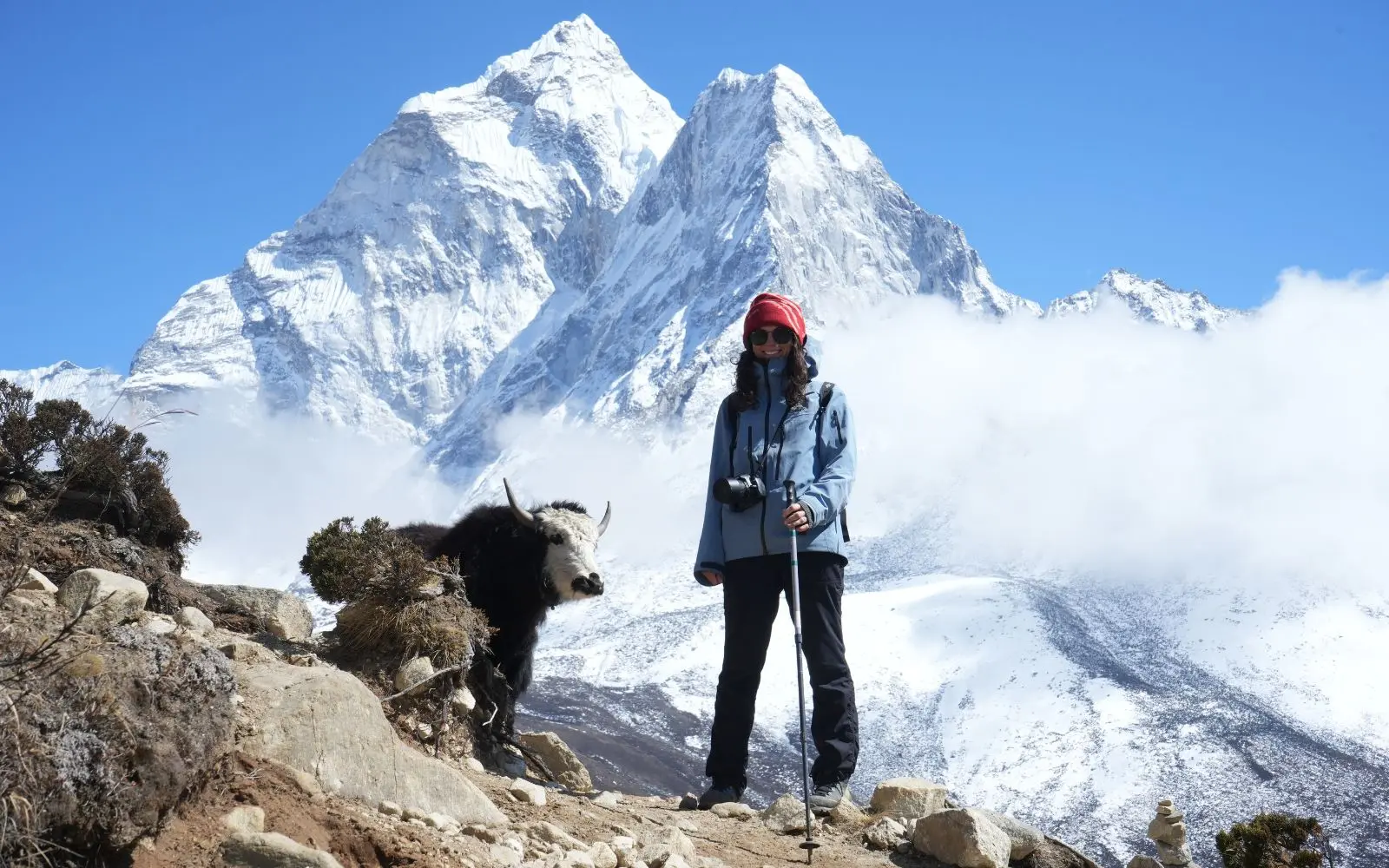
What's the biggest risk for women on the EBC trek?
Altitude, without much competition. This matters more than any gender-specific consideration, and it's worth being precise about where it actually bites:
| Location | Elevation |
|---|
| Namche Bazaar | 3,440 m |
| Dingboche | 4,410 m |
| Lobuche | 4,940 m |
| Gorak Shep | 5,164 m |
| Everest Base Camp | 5,364 m |
| Kala Patthar | 5,545 m |
At Kala Patthar, oxygen availability sits at roughly 47% of sea level. Acute Mountain Sickness (AMS) — headache, nausea, fatigue, disturbed sleep — affects a real proportion of trekkers on this route regardless of fitness, age, or gender, and mild symptoms are a normal, expected part of the trek rather than a sign something's gone wrong. The warning signs that mean stop or descend, not push on, are the same for everyone: a headache that's more than mild, vomiting, confusion, loss of coordination, or breathlessness at rest. HAPE and HACE are genuine medical emergencies where immediate descent is the only reliable response. Our altitude and acclimatization guide covers this in full detail, including how the itinerary's built-in rest days at Namche and Dingboche are specifically designed to manage it. 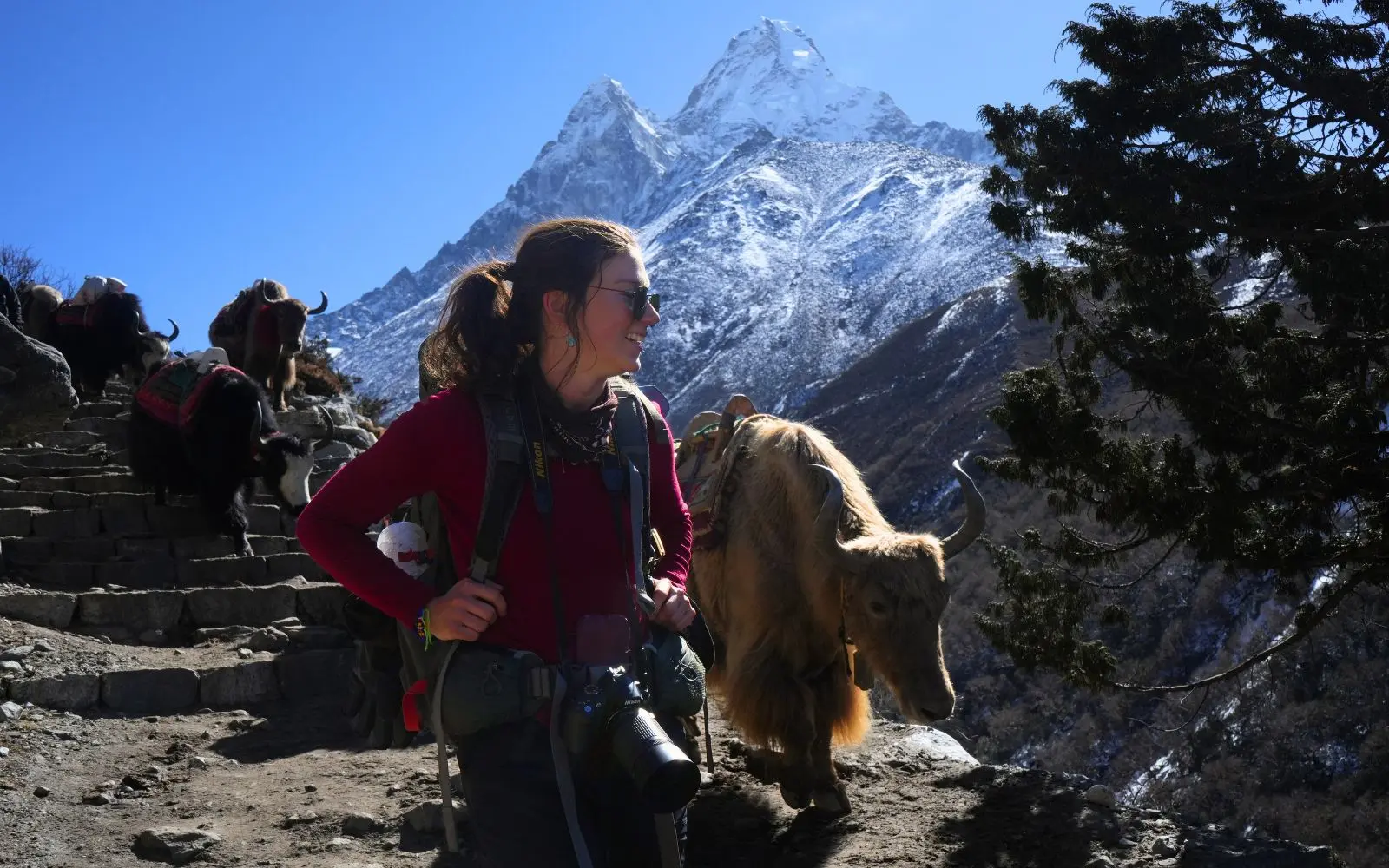
Are women more likely to get altitude sickness?
No reliable evidence supports the idea that gender predicts AMS risk. Altitude sickness can affect anyone — regardless of gender, age, general fitness, or prior trekking experience. Being generally fit does not protect you from AMS; some very fit trekkers get it, and some less conventionally fit trekkers pace well and don't. What actually matters is ascent rate, hydration, and honest reporting of symptoms. Treat any claim that women are "more" or "less" susceptible to altitude sickness with real skepticism — it isn't well supported.
Trek the Everest Base Camp Trek
This classic trek takes you through the heart of the Khumbu region, past vibrant Sherpa villages, ancient monasteries, and towering Himalayan peaks.
Can a beginner woman do the Everest Base Camp trek?
Yes. Previous Himalayan trekking experience isn't mandatory. What matters more is genuine physical preparation and consecutive-day walking stamina, since the trek involves 12–14 days of walking, not a single hard day. Training that actually helps:
- Regular walking, building toward longer sessions over weeks, not days
- Stair climbing or hill repeats for sustained uphill conditioning
- Cardiovascular training — running, cycling, swimming, brisk walking
- Basic strength training, particularly for the legs and core
- Weekend hikes on real, varied terrain rather than flat ground
- At least a few training walks with a loaded daypack, to get a feel for sustained weight-bearing effort
Start this 8–12 weeks before departure if you can. Our Everest Base Camp difficulty guide covers exactly where the trek's real physical demands come from, day by day.
How fit do you need to be?
Fit enough to walk 5–7 hours a day, several days in a row, on uneven terrain, with some sustained climbing. You don't need athletic-level fitness — you need consistency in the months before you go. What actually helps:
- Cardio: the base of everything else; aim for 3–4 sessions a week building toward longer durations
- Leg strength: squats, lunges, step-ups — directly relevant to the trek's climbs and descents
- Core stability: helps with balance on uneven ground and carrying a daypack comfortably
- Downhill conditioning: genuinely underrated — descents stress your knees more than ascents stress your lungs
- Recovery habits: sleep and hydration in the weeks before you go matter more than most people expect
The goal isn't peak athletic performance. It's showing up with a body that's used to sustained daily effort.
Getting your period during the Everest Base Camp trek
This deserves real, direct treatment rather than a vague mention, so here it is.
Menstruating at altitude, in a teahouse environment, is manageable with a bit of planning — genuinely one of the more solvable logistics on this trek, even though it can feel like a bigger unknown before you go than it turns out to be in practice.
A few honest realities:
- Privacy in teahouses is limited but workable — most rooms are twin-share, and bathrooms are frequently shared, particularly at higher elevations
- Changing sanitary products in a shared or basic bathroom is normal on this route; carrying what you need discreetly (a small opaque bag) makes it straightforward
- Washing facilities are limited at altitude — plan around wipes and hand sanitizer rather than assuming reliable water access, particularly above Dingboche
- Cold affects comfort more than function — cramping can feel worse in cold conditions, and staying warm and hydrated genuinely helps
Does altitude stop your period? No — this is a persistent myth worth correcting directly. Altitude does not automatically stop or delay menstruation. What can genuinely affect your cycle — timing, flow, or symptoms — is the combination of physical exertion, travel-related stress, changes in sleep and routine, and shifts in nutrition, all of which are real, well-documented influences on the menstrual cycle generally, not specific to this trek.
Irregular timing around a big trip, including arriving early, late, or with an unusually light or heavy flow, is common and not usually a cause for concern. If something feels genuinely wrong rather than just different from usual, that's a conversation for a healthcare professional, not something to self-diagnose on the trail. 
Pads, tampons, or menstrual cups on EBC?
| Product | Advantages | Challenges at altitude |
|---|
| Pads | Familiar, no insertion required, easy to use in basic conditions | Bulkier to pack and pack out; disposal requires more planning |
| Tampons | Compact, lightweight | Requires reasonably clean hands/water access for changing; disposal needs care |
| Menstrual cup | Reusable, less frequent changing, less waste to carry out | Requires clean water for rinsing, which is limited at altitude; needs a private moment to manage |
| Period underwear | Reusable, comfortable as a backup or light-flow option | Requires washing and drying, which is genuinely difficult above the mid-altitude teahouses given cold and limited hot water |
The single most useful piece of advice here: bring the product you already know how to use well. This is not the trip to try a menstrual cup for the first time — altitude, limited water access, and basic facilities are exactly the wrong conditions to be learning a new insertion technique. Many women bring a combination — for example, tampons or a cup for the higher, more water-limited days, with a few pads as backup, or period underwear as a comfortable low-flow option on rest days. There's no single universally correct choice; there's a right choice for what you already use confidently.
How do you dispose of period products on the EBC trek?
- Never leave products on the trail or bury them — this is exactly the kind of impact that damages a route this heavily used.
- Don't flush sanitary products, even where a Western-style toilet exists — teahouse plumbing and waste systems at altitude generally can't handle it.
- Carry a small, discreet, opaque bag (a dedicated pouch, a couple of resealable bags, or a scented waste bag) specifically for this — pack it before you leave, not after you need it.
- Follow whatever waste disposal system a given teahouse has in place — this genuinely varies lodge to lodge, and asking your guide to check on your behalf, if you're not comfortable asking directly, is completely normal.
- Assume you may need to carry used products with you until the next proper disposal point, rather than assuming every stop has identical facilities.
What are toilets like on the Everest Base Camp trek for women?
Honestly, and by elevation:
- Lower villages (Phakding, Namche): Generally Western-style, sometimes attached to your room, reasonably clean by trekking-trail standards.
- Mid-route (Tengboche to Dingboche): A mix of squat and Western-style, usually shared rather than private, sometimes located outside the main building.
- Higher villages (Lobuche, Gorak Shep): Basic, almost always squat-style, shared, and cold — this is where facilities are at their most rudimentary on the entire route.
Toilet paper availability is inconsistent — carry your own, and don't assume it can be flushed even where flush toilets exist; a small bin or bag for that is standard practice at altitude, not an imposition. Privacy is real but basic — doors and locks exist, but walls are thin and facilities are shared with other trekkers passing through the same teahouse.
Can women shower on the Everest Base Camp trek?
Yes, at most lower and mid-altitude teahouses, usually for a small extra fee. Availability drops noticeably with altitude — hot water becomes limited or unavailable above roughly Dingboche or Lobuche, and by Gorak Shep, a hot shower generally isn't realistic to expect. Showering at very high altitude also isn't always a good idea practically — going out with wet hair into sub-zero night temperatures is genuinely uncomfortable and not worth the risk of getting properly chilled.
Practical hygiene alternatives that work well:
- Body wipes or wet wipes for a genuine daily refresh without a full shower
- A small washcloth and a bit of warm water from your teahouse's kitchen (usually available on request)
- Dry shampoo for hair, particularly useful above the last reliable shower point
- Clean underwear daily — pack more of this specifically than you think you need
- Deliberate foot hygiene each evening — dry, clean feet matter more than most people expect for both comfort and blister prevention over consecutive trekking days
This isn't a "you'll never shower" situation — it's a "shower when it's available and sensible, and have a solid backup plan for when it isn't" situation.
Trek the Everest Base Camp Trek
This classic trek takes you through the heart of the Khumbu region, past vibrant Sherpa villages, ancient monasteries, and towering Himalayan peaks.
How much privacy do women have on the EBC trek?
Realistically: some, not a lot, and it decreases with altitude. Twin-share rooms are standard (private single rooms are sometimes available, particularly on a private rather than fixed-group departure, but aren't guaranteed at every stop), dining rooms are communal and often the only heated space in the building, and bathrooms are frequently shared. Higher-altitude lodges are more basic across the board.
Practical tips that genuinely help:
- A lightweight sarong or change wrap makes changing in a shared room considerably easier
- A small dry bag or pouch keeps toiletries and period supplies organized and quick to grab
- A headlamp is essential for night bathroom trips, most of which involve walking outside your room
- A simple personal lock for your duffel, where your room has a door that locks, adds a bit of peace of mind for valuables
- Communicate directly with your guide about anything you need — room preferences, timing, or general comfort — this is a normal, expected conversation, not an imposition
Accommodation for women on the Everest Base Camp trek
Teahouses throughout the route offer twin-sharing rooms as standard, with shared bathrooms becoming more common at higher elevations. Room availability tightens during peak season (October–November, April–May), which is part of why booking through an operator with established teahouse relationships matters — arriving without a reservation during a busy week can mean limited options. On a group departure, you'll typically share a room with another woman in your group where possible; on a private trek, room arrangements can be discussed and set in advance. We can't promise a private room at every single stop — some of the highest, most basic lodges simply don't have the capacity — but we can tell you honestly where private rooms are realistic to expect and where they aren't, before you book.
Should women request a female guide for Everest Base Camp?
A female guide isn't necessary for safety — plenty of women trek safely and comfortably with male guides every season, and guide competence, licensing, and professionalism matter far more than gender. That said, some women genuinely prefer a female guide for reasons that are entirely valid: cultural comfort, easier conversations around menstruation or other personal needs, a different kind of rapport, or simply personal preference. Places Nepal has stated publicly that it offers women-friendly trekking arrangements led by trained female guides for solo women or female groups — if this matters to you, raise it directly when booking so we can confirm availability for your specific dates, since female guide availability varies by season and demand rather than being guaranteed for every departure.
Can women trek with a male guide?
Yes, straightforwardly. This is the norm, not an exception, and it works well for the vast majority of women who trek this route. What actually matters is the same as with any guide: professionalism, clear boundaries, good communication, real licensing and experience, and a working relationship you trust. You should feel entirely comfortable raising any concern directly with your guide or with our office — that's a normal part of a well-run trek, not an awkward imposition.
Trek the Everest Base Camp Trek
This classic trek takes you through the heart of the Khumbu region, past vibrant Sherpa villages, ancient monasteries, and towering Himalayan peaks.
Can a woman trek to Everest Base Camp alone?
This needs a careful, current answer rather than a confident-sounding old one, since guide and permit regulations for the Everest region have genuinely shifted more than once in recent years, and different sources online — including some of our own older content — don't always agree.
What's consistent across current guidance: a licensed guide is standard, expected practice for trekking in the Khumbu, and has been treated as a requirement for major Nepal trekking routes, including Everest, since regulatory changes introduced in 2023. Where sources genuinely diverge is on some of the finer detail — exact TIMS card requirements and how national-level rules interact with local Khumbu Pasang Lhamu Rural Municipality requirements specifically. Rather than state a precise legal claim here that risks being wrong or already out of date by the time you read this, we'd point you to confirming current, specific requirements directly with your operator or the Nepal Tourism Board before departure — this is genuinely a "check current rules for your dates" situation, not a fixed, unchanging answer.
What we can say clearly: "trekking alone" and "trekking without a guide" aren't the same question. A woman can trek independently of a large tour group — arranging her own private guide, setting her own pace, making her own decisions about the itinerary — while still having a licensed guide with her, which is both the current standard practice and, by most accounts, the safer and more comfortable way to do this trek solo regardless of what the precise legal requirement turns out to be for your specific dates.
Group trek vs. private trek for women
| Option | Advantages | Considerations |
|---|
| Group trek | Social, structured, shared experience with other trekkers, generally the most affordable per person | Less flexibility on pace and daily schedule |
| Private trek | Fully flexible pace, more control over rest days and room arrangements | Higher cost per person than a group departure |
| Women-only group | Shared experience specifically with other women, often a comfortable option for first-time solo trekkers | Availability depends on demand for your specific dates |
| Solo client + private guide | Fully personalized pace and itinerary, most flexibility | The most expensive per-person option |
We offer both group departures and fully private arrangements, including the option to request a women-only group or a female guide where availability allows — ask directly about what's realistic for your dates when you're planning.
Trek the Everest Base Camp Trek
This classic trek takes you through the heart of the Khumbu region, past vibrant Sherpa villages, ancient monasteries, and towering Himalayan peaks.
Women's safety checklist for Everest Base Camp
Before the trek:
- Comprehensive travel insurance covering high-altitude trekking and helicopter evacuation
- A named emergency contact who knows your itinerary and check-in plan
- Passport copies (physical and digital), kept separately from the original
- Any regular or as-needed medication, packed with enough supply for the full trip plus a buffer
- Period supplies for the full trip (bring more than you think you'll need — supplies aren't reliably available on the trail)
- Weather-appropriate clothing, layered for the full altitude range
- An offline map downloaded before you leave Kathmandu
- A power bank
- Emergency cash in small denominations — ATMs exist only at Namche Bazaar on this route
During the trek:
- Stay with your guide or group, particularly on exposed or less obvious sections of trail
- Keep valuables secured, particularly overnight
- Tell your guide directly if something feels uncomfortable — don't wait to see if it resolves on its own
- Avoid walking alone after dark
- Take altitude symptoms seriously and report them honestly rather than pushing through
- Stay deliberately hydrated — easy to under-do at altitude
- Follow your guide's weather-related decisions, even when they mean a delay you weren't expecting
Teahouse safety tips for women
- Keep valuables secure, ideally in a bag you can keep with you or lock rather than left visibly in an open room
- Lock your room where a lock is available
- Don't leave your passport or significant cash unattended in a shared space
- Know where your guide is staying each night, and how to reach them quickly if needed
- Keep your phone charged where possible, specifically for emergencies rather than routine use
- Carry a headlamp for night bathroom trips — most teahouse layouts require stepping outside your room
- If another guest makes you uncomfortable, tell your guide or the lodge owner directly and promptly — this is a completely normal, expected request, not an overreaction
What if a woman feels uncomfortable or is harassed?
This deserves a direct, practical answer rather than either dismissal or alarm. If something happens that makes you uncomfortable:
- Move toward a public, populated area of the teahouse or trail rather than staying isolated
- Tell your guide immediately and specifically — describe what happened, not just that something felt off
- Tell lodge staff or ownership if the situation involves another guest or someone at the teahouse
- Stay near people you trust — your group, your guide, other trekkers you've gotten to know
- Leave the immediate situation if you can do so safely
- If needed, escalate to your trekking agency's office and, where appropriate, local authorities — a well-run agency should take this seriously and help you navigate it, not minimize it
This kind of situation isn't the norm on this route, and it isn't something to expect. It's also not something to be unprepared for, which is the entire reason to have a clear, practical plan rather than either false reassurance or unnecessary fear.
What happens if a woman gets sick on EBC?
The same protocol applies regardless of gender: tell your guide immediately, don't push through worsening symptoms, and trust the assessment your guide makes based on training and experience. If altitude illness is suspected, the standard response is to stop ascending and, if symptoms don't improve or worsen, descend — this is not a judgment call to argue with in the moment. For anything beyond mild symptoms, your guide will coordinate with the office and, where medically appropriate and logistically possible, arrange evacuation, which in the Khumbu typically means helicopter evacuation from the nearest feasible point. We can't guarantee helicopter availability in every situation — weather, timing, and coordination all play a role — which is exactly why comprehensive travel insurance covering high-altitude evacuation is essential before you fly, not something to sort out afterward. Our Everest Base Camp travel insurance guide covers what to check in a policy before you buy.
What should women wear on the Everest Base Camp trek?
The same core layering system works for everyone on this trek — there's no need for a separate "women's" trekking wardrobe beyond fit and personal preference:
- Base layer: moisture-wicking, next to skin
- Mid layer: fleece or light insulation
- Insulating layer: a proper down jacket for the higher, colder sections
- Shell: waterproof, windproof outer layer
- Bottoms: trekking trousers, with thermal leggings as a base layer for colder days
- Warm socks: proper trekking socks, plus extras
- Gloves: a liner pair plus a heavier insulated outer pair for altitude
- Hat and buff: for sun and cold both
The clothing priority, in order, is warmth, comfort, weather protection, and mobility — not appearance. On cultural considerations: modest clothing (shoulders and knees covered) is appropriate in villages and especially at monasteries, which is straightforward to manage within a normal trekking layering system without needing separate "modest" trekking clothes.
Trek the Everest Base Camp Trek
This classic trek takes you through the heart of the Khumbu region, past vibrant Sherpa villages, ancient monasteries, and towering Himalayan peaks.
Packing list for women
| Category | What to pack |
|---|
| Clothing | Layered system as above, plus 3–4 changes of underwear, a sports bra or two suited to sustained activity, and a lightweight sarong for privacy/changing |
| Hygiene | Wet wipes, hand sanitizer, a small quick-dry towel, dry shampoo, toothbrush/paste, deodorant |
| Period care | Your preferred product in full trip quantity, a discreet opaque disposal bag, a spare set of underwear specifically for period days, pain relief you already use at home |
| Toiletries | Sunscreen (high SPF — UV is intense at altitude), lip balm with SPF, moisturizer for dry mountain air |
| Health | Personal medication in full supply, basic first aid items, any regular prescriptions with a doctor's note if relevant for customs |
| Electronics | Phone, headlamp with spare batteries, power bank, camera if separate from phone |
| Documents | Passport, insurance details (physical and digital copies), permit paperwork (usually arranged by your operator), emergency contact info |
| Sleeping | A sleeping bag rated to at least −15°C, a liner for extra warmth and hygiene |
| Daypack | 25–35L, rain cover, water bottle or bladder, snacks, layers for the day |
Well broken-in waterproof trekking boots — not new ones straight out of the box — are non-negotiable. Pack proper trekking socks (not cotton), a few spare pairs, and basic blister treatment (moleskin or blister plasters) in your daypack, not buried in your main bag. Camp shoes or sandals for evenings at teahouses make a genuine difference to comfort after a day in boots.
Should women hire a porter for Everest Base Camp?
The same logic applies regardless of gender: a porter carries your main bag, leaving you with just a light daypack, which genuinely makes long, high-altitude days easier — particularly valuable for first-time high-altitude trekkers. It's not something women specifically need because they're women; it's a genuinely useful option for anyone who'd rather save their energy for the altitude itself. Pack sensibly even with a porter, since your daypack still needs to carry water, layers, and anything you want access to during the day. Our Everest Base Camp Without a Porter guide covers the full decision in detail if you're weighing it either way.
Food and drinking water on EBC for women
The standard teahouse menu applies to everyone: dal bhat (the reliable, filling staple), rice, potatoes, pasta and noodles, eggs, soup, and simple snacks, with vegetarian and most common dietary requirements manageable with advance notice to your guide. Caloric needs increase meaningfully during sustained high-altitude trekking — this isn't the trip to under-eat, regardless of your usual eating habits at home. Hydration matters more than most people expect at altitude, where thirst is a poor real-time indicator; electrolyte supplements are worth packing alongside plenty of water.
Trek the Everest Base Camp Trek
This classic trek takes you through the heart of the Khumbu region, past vibrant Sherpa villages, ancient monasteries, and towering Himalayan peaks.
Will I lose weight on the Everest Base Camp trek?
Some trekkers do, some don't — it varies by individual, appetite response to altitude, and how much you're eating relative to what the trek demands. High-altitude exertion genuinely increases energy needs, and appetite can go either way at altitude: some people eat less than usual, others more. This is not a trip to approach with any kind of intentional dieting or calorie restriction — a demanding multi-day high-altitude trek is exactly the wrong context for that, and under-fueling increases both the difficulty of the trek and, potentially, altitude-related risk. If you notice unintentional weight loss during or after the trek, that's a normal physiological response to sustained exertion at altitude, not something to pursue or optimize for.
Trekking performance on this route depends far more on endurance, preparation, pacing, recovery, and having the right equipment than on body size or shape. Women of a wide range of fitness starting points and body types complete this trek successfully every season — what predicts success is training and pacing, not how you look going in.
Cultural tips for women trekking in Nepal
- Dress modestly in villages and especially at monasteries — shoulders and knees covered is the safe default
- Ask before photographing people directly, not just monasteries or general scenery
- Be polite and patient in teahouses, which are genuinely someone's home and family business, not a hotel chain
- Follow basic monastery etiquette — walk clockwise around mani walls and stupas, remove hats before entering prayer halls, keep noise down
- Avoid unnecessarily confrontational behavior if a cultural misunderstanding arises — a calm, direct conversation, often through your guide, resolves most things
- Learning a handful of Nepali phrases (a simple "Namaste" goes a long way) is genuinely appreciated
Sherpa and broader Nepali culture in the Khumbu is not a monolith, and it's worth approaching with curiosity rather than assumptions either way — about how conservative or how liberal you expect it to be.
Best time for women to trek to Everest Base Camp
The seasonal considerations here are the same for every trekker — season doesn't shift by gender — but worth summarizing with an eye to the practical considerations covered throughout this guide:
Spring (March–May): Stable weather, warming temperatures, the busiest and most social season, which some solo women trekkers specifically prefer for the built-in company of a busy trail.
Monsoon (June–September): Not generally recommended — frequent rain, poor visibility, and increased Lukla flight disruption. Quieter trails and lower prices, if you're specifically seeking solitude and can accept the trade-offs.
Autumn (September–November): Widely considered the most reliable season — clear skies, stable trail conditions, and the busiest crowds of the year, alongside spring.
Winter (December–February): Very cold, particularly above 4,500 m, with some high-altitude teahouses reducing service. Quiet, clear, and a real option for well-prepared trekkers, though not the default recommendation for a first attempt.
There's no single universally "best" month — the right choice depends on your priorities around crowds, cost, and weather reliability, same as for any trekker. Our full best time to trek guide covers month-by-month conditions in depth.
Trek the Everest Base Camp Trek
This classic trek takes you through the heart of the Khumbu region, past vibrant Sherpa villages, ancient monasteries, and towering Himalayan peaks.
Permits for women trekking to Everest Base Camp
Requirements here apply equally regardless of gender, and — as covered in the solo-trekking section above — the specifics have genuinely shifted in recent years and are worth confirming directly rather than relying on an older article, including some of our own. The core, currently stable facts: EBC requires the Sagarmatha National Park Entry Permit and the Khumbu Pasang Lhamu Rural Municipality Permit, both of which we arrange as a standard part of any Places Nepal booking. For the most current, specific detail on guide requirements and any additional documentation, we'd point you to our dedicated permits resource and to confirming directly with us for your specific travel dates, rather than treating any fixed statement here as guaranteed to still be accurate by the time you read it.
Travel insurance for women trekking to EBC
Whatever policy you choose, confirm it specifically covers high-altitude trekking (to at least 6,000 m, which gives real margin above Kala Patthar's 5,545 m), emergency medical treatment, and helicopter evacuation — and, where relevant to your trip, trip interruption coverage. This applies to every trekker regardless of gender; there's no women-specific insurance consideration here beyond making sure any regular medication or condition you disclose is accurately reflected in your policy. Our Everest Base Camp travel insurance guide covers exactly what to check before you buy.
Does altitude affect your period?
Worth restating plainly, since it's one of the more persistent myths around this topic: altitude does not automatically stop or delay menstruation. What genuinely can shift your cycle — timing, flow, associated symptoms — includes physical exertion, travel-related stress, disrupted sleep patterns, and changes in diet and nutrition, all well-documented general influences on the menstrual cycle, not specific to high altitude or this trek in particular. Irregularity around a big trip like this is common and usually not a concern on its own. If you experience genuinely concerning symptoms — unusually severe pain, unusually heavy bleeding, or anything that feels distinctly abnormal for you — that's a conversation for a healthcare professional, ideally before you travel if you have any reason for concern in advance.
Medication and contraception
A few general points, kept deliberately general since individual medical needs vary and deserve a real conversation with a healthcare provider, not a blog article:
- Bring a full supply of any regular prescription medication for the entire trip, plus a reasonable buffer for delays
- If you use hormonal contraception, altitude and travel don't inherently interact with it in a way that requires changing your routine, but any specific concerns are worth raising with your prescribing doctor before you go
- Period pain relief: bring whatever over-the-counter option already works for you at home, in trip-length quantity
- Discuss any pre-existing condition or medication with a doctor familiar with high-altitude travel specifically, not just a general practitioner, if you have any reason for concern
We're not going to recommend specific medications or doses here — that's genuinely a conversation for you and a healthcare professional who knows your history, not a travel blog.
Trek Everest Base Camp with Places Nepal
We're a Kathmandu-based, government-licensed trekking operator, a member of the Nepal Mountaineering Association, and TAAN-registered, running treks across the Everest, Annapurna, Manaslu, Langtang, and other Himalayan regions. Booking locally, with an operator based where the trek actually happens, has real practical advantages: guides with genuine, current route knowledge, permit handling that doesn't require you to navigate Nepali bureaucracy yourself, accommodation coordination during busy season when rooms can be tight, ground-level transportation arrangements, and real emergency support if something goes wrong mid-trek.
We offer both structured group departures and fully private, customized arrangements — including the option to request a female guide or a women-only group where availability allows for your specific dates, worth raising directly when you get in touch. You can see the complete itinerary and current pricing on our Everest Base Camp Trek page.
Trek the Everest Base Camp Trek
This classic trek takes you through the heart of the Khumbu region, past vibrant Sherpa villages, ancient monasteries, and towering Himalayan peaks.
Frequently asked questions
Is Everest Base Camp safe for women? Broadly yes, on one of the most heavily trekked, well-supported routes in the world — with the same general trekking risks (mainly altitude) that apply to anyone, and the same need for ordinary personal safety awareness that applies to travel anywhere.
Can a woman trek to Everest Base Camp alone? Yes, in the sense of trekking independently of a large tour group with her own private guide — current regulations treat a licensed guide as standard practice for this route, so confirm the specific current requirement for your dates directly with your operator.
Can a beginner woman do the EBC trek? Yes, with genuine physical preparation over 8–12 weeks beforehand — prior Himalayan trekking experience isn't mandatory.
Is Everest Base Camp harder for women? No — the trek's difficulty comes from altitude, distance, and consecutive trekking days, which affect every trekker regardless of gender.
Do women need a female guide? No, not for safety specifically — many women trek comfortably and safely with male guides. Some prefer a female guide for personal comfort reasons, which is a legitimate preference to raise when booking.
Can I request a female guide? Yes — raise it directly when planning your trip, since availability depends on your specific dates and current guide scheduling.
What are toilets like on EBC? Western-style and reasonably comfortable lower down, increasingly basic and squat-style with altitude, generally shared rather than private, especially above Dingboche.
Can women shower during the trek? Yes, at most lower and mid-altitude teahouses for a small fee, with hot water becoming limited or unavailable above roughly Dingboche or Lobuche.
How do I manage my period on EBC? Bring the product you already know how to use in full trip quantity, a discreet disposal bag, and plan around wipes rather than reliable shower access at higher elevations.
Can I use menstrual cups at altitude? Yes, if you already use one confidently at home — this isn't the trip to try one for the first time, given limited clean water access.
How do I dispose of sanitary products? Never leave them on the trail or flush them; carry a discreet opaque bag and follow each teahouse's specific waste guidance, which varies by lodge.
Does altitude affect menstruation? Not directly or automatically — exertion, stress, disrupted sleep, and nutrition changes can affect your cycle, which is a general travel effect, not an altitude-specific one.
What should women pack for EBC? The same core layering and gear as any trekker, plus trip-length period supplies, a sarong for privacy, wipes and dry shampoo for limited-shower days, and extra underwear.
Should women hire a porter? It's a genuinely useful option for anyone, not a gendered necessity — it reduces daypack weight and saves energy for the altitude itself.
What should women wear? A standard layering system (base, mid, insulating, shell) prioritizing warmth and mobility over appearance, with modest coverage in villages and monasteries.
Can I trek EBC during my period? Yes — plenty of women do, with the product and disposal planning covered above. It doesn't need to change your itinerary or pace.
Is there privacy in teahouses? Some, decreasing with altitude — twin-share rooms and shared bathrooms are standard, with private rooms more available lower down and on private (versus fixed-group) departures.
Are there private rooms? Sometimes, particularly lower down or on a private trek — not guaranteed at every stop, especially the most basic, highest-altitude lodges.
Can women trek with male guides? Yes, this is the norm and works well for most women — professionalism, clear communication, and trust matter more than the guide's gender.
Is a women-only EBC group better? Not inherently "better," but many women find it more comfortable, particularly for a first solo trip — availability depends on demand for your specific dates.
Is a private trek better for women? It offers more flexibility and privacy at a higher cost — whether it's "better" depends on your budget and preferences, not a universal answer.
How fit do I need to be? Fit enough for 5–7 hours of daily walking, several consecutive days, on uneven terrain — consistency in training matters more than peak athletic fitness.
Can women get altitude sickness? Yes — anyone can, regardless of gender, age, or fitness level. There's no reliable evidence that gender predicts AMS risk.
What happens if I get sick? Tell your guide immediately; mild symptoms are managed with rest and monitoring, while worsening symptoms mean immediate descent and, if needed, evacuation.
What travel insurance do I need? A policy covering high-altitude trekking to at least 6,000 m, emergency medical treatment, and helicopter evacuation — the same requirement for every trekker.
What are the biggest safety concerns? Altitude, by a wide margin, followed by standard travel-safety awareness (valuables, personal boundaries, situational awareness) that applies anywhere.
Is harassment a concern? It can happen, as it can anywhere in the world — it isn't accurate to say never, and it isn't accurate to characterize it as common or expected on this specific route. Know your options (move to public areas, tell your guide, escalate if needed) rather than assuming it won't come up.
What should I do if I feel uncomfortable? Move toward people you trust, tell your guide directly and specifically, and escalate to your agency or local authorities if the situation warrants it.
What is the best season for women? The same considerations apply as for any trekker — spring and autumn for reliability and company, winter for solitude with real cold-weather preparation, monsoon generally not recommended.
How cold is Everest Base Camp? Genuinely cold at altitude regardless of season — expect sub-zero nights at Gorak Shep and above even in the warmer trekking months, and −15°C to −20°C or colder before dawn at Kala Patthar.
How do women wash clothes during EBC? Limited hand-washing is possible lower down; above the mid-route, plan to wear the same trekking layers repeatedly and rely on quick-dry, odor-resistant fabrics rather than regular laundry.
Can I wash my hair? Where hot showers are available, yes; above that point, dry shampoo is the practical alternative most trekkers rely on.
What hygiene products should I carry? Wet wipes, hand sanitizer, a quick-dry towel, dry shampoo, and your usual toiletries in travel sizes.
Can I wear shorts on the trek? Generally fine on the trail itself in warmer, lower sections; more modest coverage (knees covered) is appropriate in villages and required at monasteries.
Is Nepal culturally comfortable for female trekkers? Generally yes, particularly on an established route like EBC with regular international trekker traffic — respectful, modest dress in villages and basic cultural awareness go a long way, same as anywhere.